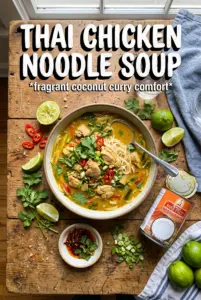
Thai chicken noodle soup lands in the bowl with everything you want from a comforting soup: a fragrant coconut broth, tender chicken, and slippery rice noodles that soak up just enough of the curry flavor without turning heavy. The finish is bright and layered, with lime, basil, and chili cutting through the richness so every spoonful stays lively. It’s the kind of dinner that tastes like it took a long time, even though most of the work is just letting the pot do its thing.
What makes this version work is the order. The curry paste goes into the hot oil first, which wakes up the spices before the liquid ever hits the pot. Then the coconut milk and broth simmer long enough to mellow the curry and perfume the base, while the chicken cooks gently so it stays juicy instead of stringy. The rice noodles go in at the very end so they stay tender with a little bite instead of collapsing into mush.
Below, I’ve included the small details that matter most here: how to keep the broth balanced, how to avoid overcooking the noodles, and a few smart swaps if you need to work with what’s already in the kitchen.
The broth tasted balanced right away, and the rice noodles stayed springy even after sitting in the bowl for a few minutes. The lime at the table made the whole soup pop.
Save this Thai Chicken Noodle Soup for the nights when you want coconut curry broth, tender chicken, and fresh herbs in one bowl.
The Curry Paste Needs Heat Before the Broth Joins In
Red curry paste can taste flat if it goes straight into liquid. Heating it in oil first pulls out the aromatics and gives the soup a deeper, rounder flavor before anything else is added. That one minute of sizzle is what keeps the broth from tasting like flavored water.
The other trap is overboiling once the coconut milk goes in. Coconut milk likes a gentle simmer, not a hard, rolling boil. Keep the heat moderate and you’ll get a broth that stays smooth instead of splitting or turning greasy on top.
What Each Ingredient Is Doing in the Bowl
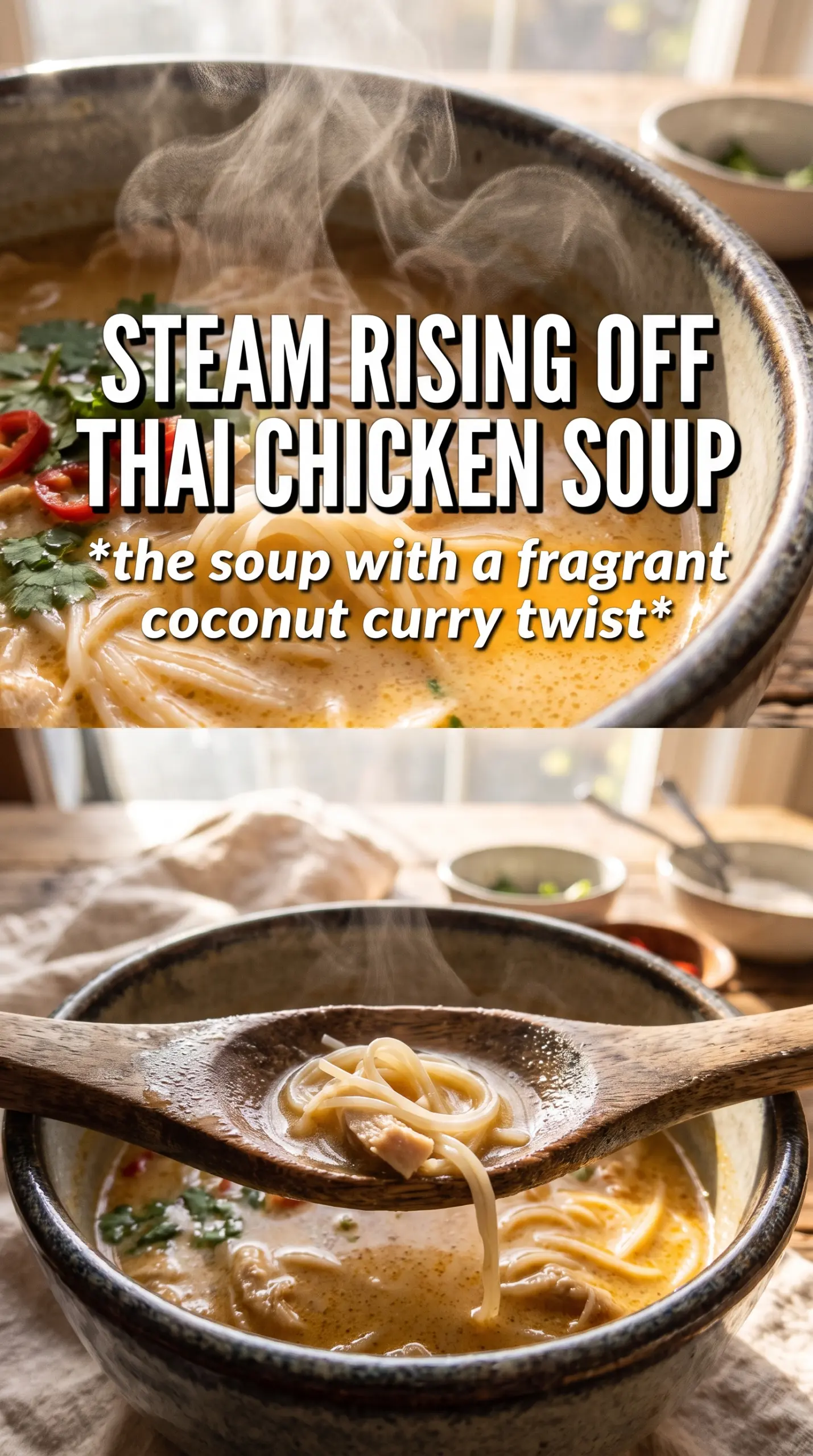
- Chicken breast or thighs — Thighs give you a little more forgiveness and stay juicier if the soup simmers a minute too long. Breast works fine too, but slice it thin so it cooks through quickly without turning dry.
- Red curry paste — This is the backbone of the broth. Different brands vary a lot in heat and saltiness, so taste the soup before adding more fish sauce at the end.
- Coconut milk — Full-fat coconut milk gives the broth its body and softens the curry heat. Light coconut milk makes the soup thinner and less silky, so I wouldn’t use it here unless you have to.
- Lemongrass and galangal — These are what make the soup taste unmistakably Thai-inspired instead of just creamy and spicy. If you can’t find galangal, fresh ginger is the best stand-in, though it’s warmer and less citrusy.
- Rice noodles — They should be soaked first, not boiled from dry in the soup. That keeps the broth from getting starchy and gives you better control over the final texture.
- Fish sauce and lime juice — Fish sauce brings salt and depth; lime brightens everything and keeps the broth from tasting heavy. If you skip one, the soup loses balance fast.
Building the Broth Without Overcooking the Noodles
Waking Up the Aromatics
Start by soaking the rice noodles in warm water so they’re flexible but not fully soft. Then cook the curry paste in oil until it smells bold and slightly toasted, not raw or pasty. Add the garlic, lemongrass, and galangal next and keep them moving for about a minute; if the garlic browns hard, it turns bitter and the whole pot suffers.
Letting the Broth Simmer Gently
Pour in the coconut milk and broth, then season with fish sauce, lime juice, and brown sugar. The broth should come to a gentle simmer, with small bubbles around the edges, not a violent boil. That gentle heat gives the flavors time to blend without breaking the coconut milk.
Cooking the Chicken Through Cleanly
Add the sliced chicken once the broth is seasoned and simmering. Thin slices cook fast, so watch for the pieces to turn opaque all the way through and lose their pink centers, usually in about 8 to 10 minutes. If you cut the chicken thick, the outside will get overdone before the center is done, so keep the slices slender.
Finishing With Noodles and Fresh Garnishes
Pull out the lemongrass and galangal before adding the noodles. They’ve done their job by then, and leaving them in makes the soup awkward to eat. Add the drained noodles just long enough to heat through, then ladle the soup into bowls and top it with bean sprouts, green onions, Thai basil, cilantro, lime wedges, and sliced chili for crunch, brightness, and heat.
How to Adapt This for a Broader Range of Kitchens
Make It Dairy-Free Without Changing Anything
This soup is already dairy-free as written, which is part of why the coconut broth feels so clean and comforting. Stick with full-fat coconut milk so the texture stays silky and substantial, not thin.
Use Chicken Thighs for a Richer Bowl
Thighs bring a little more flavor and stay tender if the soup hangs out on the stove for a few extra minutes. They’re the better choice if you want a slightly richer broth and more forgiving texture.
Swap the Rice Noodles for a Low-Carb Bowl
For a lower-carb version, skip the noodles and add extra bean sprouts or shredded cabbage at the end. You lose the soft noodle chew, but the broth and toppings still carry the dish well.
Use Ginger When You Can’t Find Galangal
Fresh ginger is the easiest substitute for galangal, and it works well in a pinch. The soup will taste a little warmer and less citrusy, but the broth still comes together beautifully.
Storage and Reheating
- Refrigerator: Store the soup for up to 3 days. The noodles will keep soaking up broth, so it gets thicker as it sits.
- Freezer: The broth and chicken freeze well, but the noodles don’t. Freeze the soup base without the noodles, then cook fresh noodles when you reheat it.
- Reheating: Warm it gently over medium-low heat until just steaming. If the noodles are already in the soup, add a splash of broth or water so they loosen back up instead of clumping into a soft block.
Questions I Get Asked About This Recipe
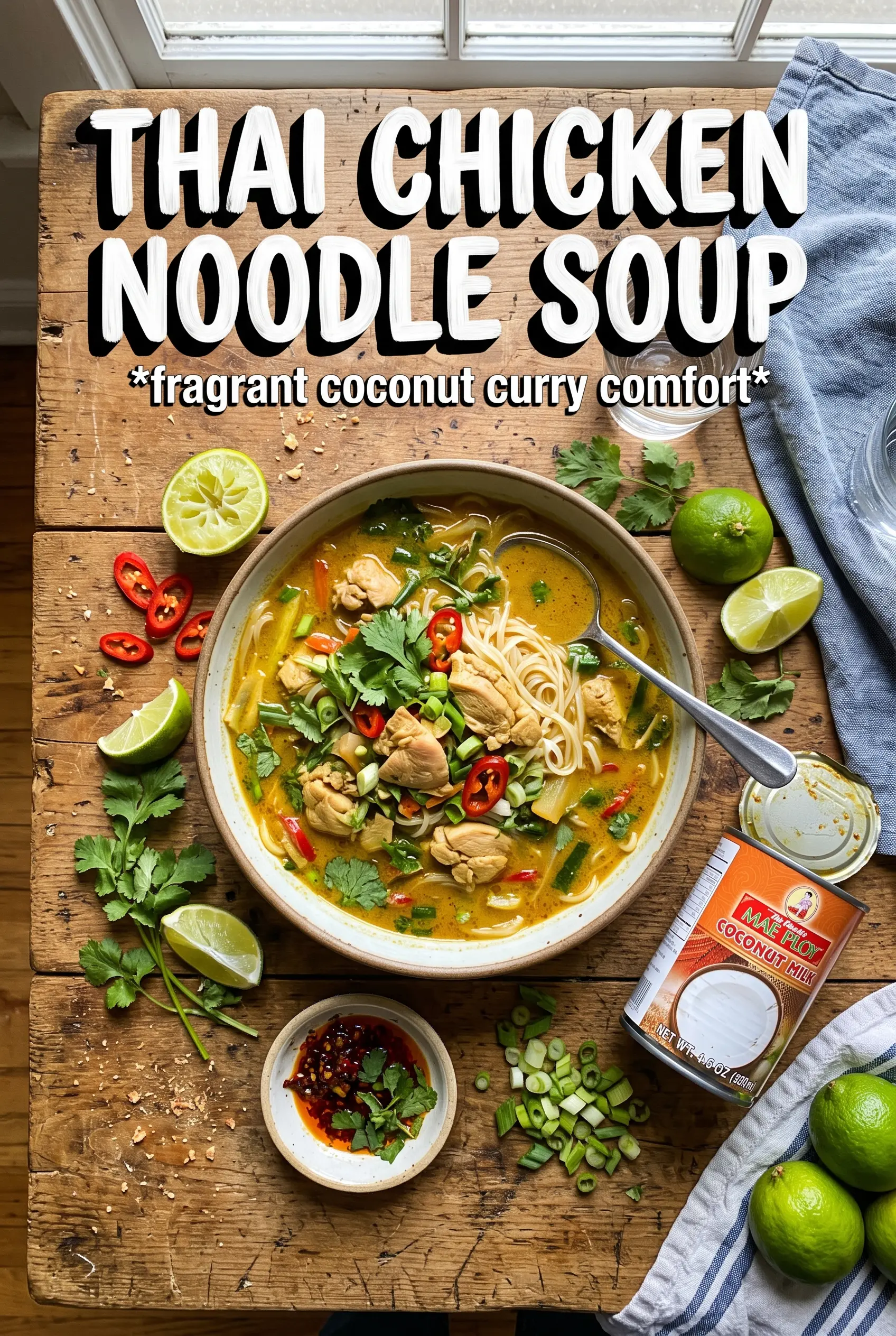
Thai Chicken Noodle Soup
Ingredients
Equipment
Method
- Soak the rice noodles in warm water for 15 minutes, then drain and set aside.
- Set the drained rice noodles aside so they can be reheated at the end for the best springy texture.
- Heat 1 tablespoon oil in a large pot, then cook the red curry paste for 1-2 minutes until fragrant.
- Add the garlic, bruised lemongrass, and galangal (or fresh ginger), and cook for 1 minute.
- Pour in the coconut milk and chicken broth, then add fish sauce, lime juice, and brown sugar.
- Simmer the broth for 10 minutes.
- Add the sliced chicken and cook for 8-10 minutes until cooked through.
- Remove the lemongrass and galangal (or fresh ginger) from the soup.
- Add the drained rice noodles and heat through for 2-3 minutes.
- Serve hot with bean sprouts, sliced green onions, Thai basil, cilantro, lime wedges, and sliced red chili.