Golden chicken thighs over creamy orzo make this skillet dinner feel a lot more finished than the 45 minutes it takes to get to the table. The orzo turns silky as it simmers in broth and cream, and the sun-dried tomatoes bring a deep, concentrated sweetness that keeps the dish from tasting heavy. Every bite lands somewhere between cozy and bright, with parmesan and basil pulling everything together.
The part that matters most is the sequence. Searing the chicken first builds flavor in the pan, and toasting the orzo for a minute before the liquid goes in gives it a little edge so it doesn’t go flat. The garlic and onion stay in the background, but they matter; they soften the sauce and keep the cream from tasting one-note. Spinach goes in at the end for color and a fresh finish, not because it needs cooking time.
Below you’ll find the exact point where the orzo should still have a little bite before the parmesan goes in, plus a few smart swaps if you’re working with what you have on hand. The difference between a good skillet and a great one is usually timing, and this dish gives you a very forgiving window.
The orzo stayed creamy without turning mushy, and the sun-dried tomatoes gave the sauce such a good depth. I used boneless thighs and they stayed juicy right through the final simmer.
Save this Tuscan chicken and orzo skillet for the nights when you want creamy one-pan comfort with a golden sear and almost no cleanup.
The Reason the Orzo Stays Creamy Instead of Clumping
Orzo behaves more like a risotto ingredient than a standard pasta here. It wants enough liquid to hydrate fully, but if you dump in all the heat and all the dairy at once, the starch tightens up and you end with a gluey skillet instead of a silky one. Toasting the orzo for a minute in the pan helps it hold its shape, and simmering it in broth first lets the pasta absorb seasoning before the cream joins the party.
The other thing that keeps this dish from going off the rails is the chicken going back into the skillet only near the end. If it sits in the sauce from the start, it can overcook before the orzo is done. Nestling it on top for the final covered simmer keeps the meat juicy and gives the pan time to finish like one unified dish.
What Each Ingredient Is Actually Doing in This Skillet
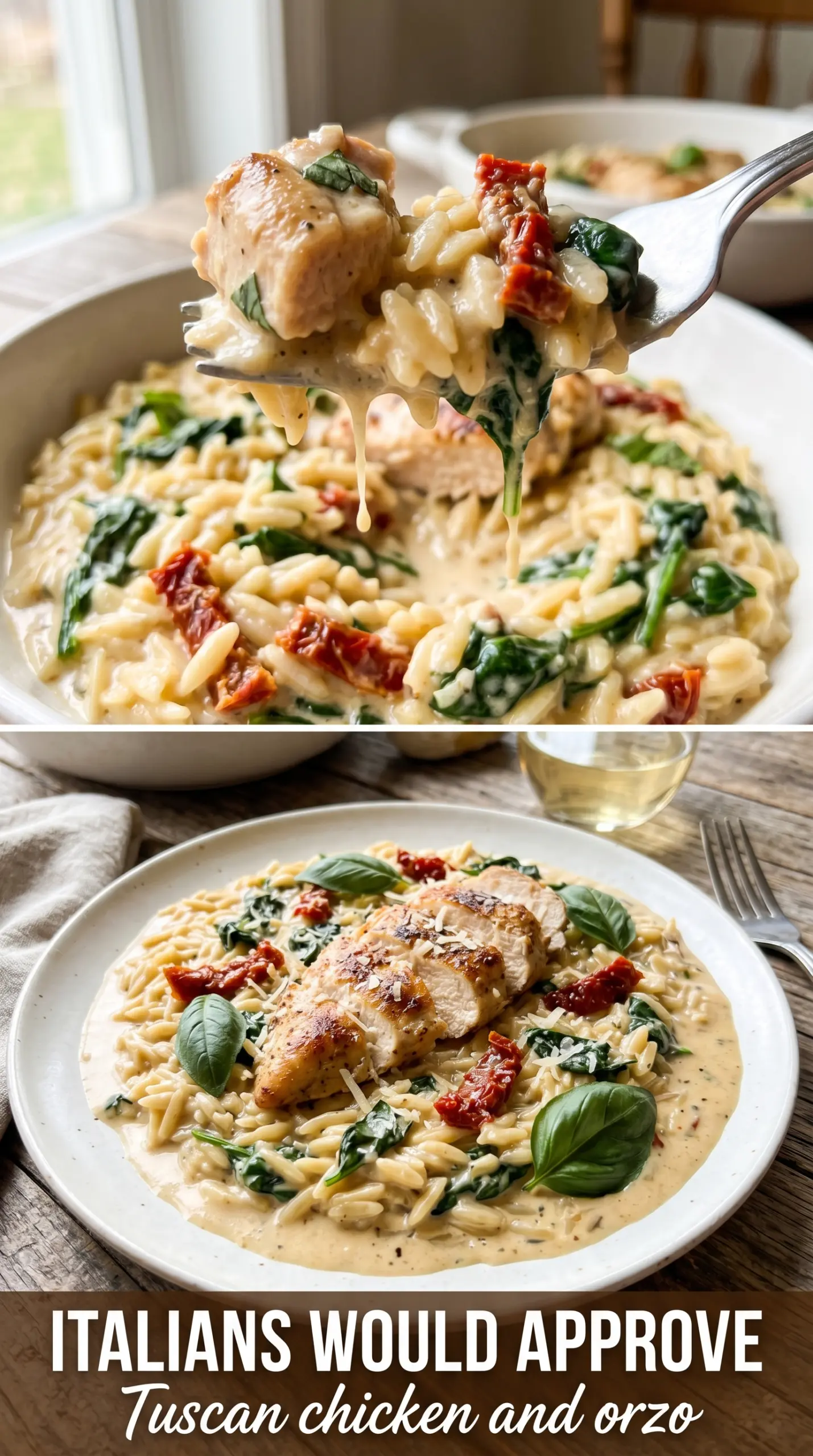
- Boneless chicken thighs — Thighs stay tender through the final simmer and give you enough fat to develop a good sear. Chicken breasts will work, but they dry out faster, so pull them off the heat as soon as they reach temperature.
- Orzo — This is the backbone of the skillet and the reason it eats like a full meal. There isn’t a substitute that behaves exactly the same, though small pasta shapes like ditalini can work in a pinch if you adjust the liquid and cook time.
- Sun-dried tomatoes — These bring concentrated tomato flavor and a little chew. Use the oil-packed kind if you can; if yours are dry, soak them in hot water for 10 minutes first so they don’t stay leathery.
- Heavy cream and parmesan — This is the sauce structure. Cream gives body, parmesan adds salt and thickness, and both need gentle heat. If the pan is boiling hard when you add the cheese, the sauce can turn grainy.
- Baby spinach — Spinach disappears into the sauce without taking over. Stir it in at the end and let the residual heat wilt it; cooking it longer strips away the fresh green note.
- Chicken broth — Broth seasons the orzo from the inside out. Water will cook the pasta, but the dish tastes flatter unless you add extra seasoning somewhere else.
Building the Skillet in the Right Order
Searing the Chicken First
Season the chicken well before it hits the pan, then sear it in hot olive oil until the outside turns deep gold and releases easily. If it sticks, it’s not ready to flip yet. That crust does more than look nice; it leaves browned bits in the skillet that become the base of the sauce. Pull the chicken out once it has color on both sides, even though it isn’t cooked through yet.
Softening the Aromatics and Toasting the Orzo
Cook the onion until it turns translucent and loses its raw edge, then add the garlic and sun-dried tomatoes just long enough to wake up their flavor. The garlic should smell fragrant, not browned. Stir in the orzo and let it toast briefly in the fat and drippings before the liquid goes in. That quick toasting step keeps the pasta from tasting boiled and gives the final dish a little more depth.
Simmering into a Creamy Base
Pour in the broth and cream, then bring the skillet to a gentle simmer, not a hard boil. Stir occasionally so the orzo doesn’t settle and scorch on the bottom. If the heat is too high, the dairy can reduce too quickly before the pasta cooks, which leaves you with thick sauce and underdone orzo. The mixture should look loose at first and thicken as the starch works its way out of the pasta.
Finishing with Cheese, Greens, and Chicken
Stir in the parmesan and spinach once the orzo is nearly tender. The cheese should melt smoothly into the sauce, and the spinach should wilt in a minute or two. Nestle the chicken back on top, cover the skillet, and let it finish over low heat until the chicken is cooked through and the orzo is tender but still has a small bite at the center. Let it sit uncovered for a couple of minutes before serving so the sauce settles instead of running everywhere on the plate.
How to Adjust This Skillet for What You Have on Hand
Use chicken breasts instead of thighs
Chicken breasts work if that’s what you have, but they need a gentler finish. Sear them just until golden, then let the covered simmer do the rest. Thighs give you more forgiveness and richer flavor, while breasts give you a leaner result that can dry out if they stay in the pan too long.
Make it gluten-free with a different pasta
Orzo is wheat-based, so this isn’t gluten-free as written. Small gluten-free pasta shapes can stand in, but they usually need less simmer time and sometimes a splash more liquid. Watch the texture closely, because gluten-free pasta can go from firm to soft faster than you expect.
Skip the cream for a lighter skillet
You can replace part of the cream with more broth and a splash of whole milk, but the sauce will be thinner and less rich. The parmesan still helps it cling to the pasta, though the final texture will lean more brothy than velvety. Keep the heat low if you use milk so it doesn’t separate.
Use kale instead of spinach
Kale brings a sturdier bite and holds up better if the skillet sits a few minutes before serving. Strip out the stems, chop it fine, and add it a little earlier than spinach so it has time to soften. The dish will taste heartier and a touch more rustic.
Storage and Reheating
- Refrigerator: Store leftovers in an airtight container for up to 4 days. The orzo will absorb more sauce as it sits, so it gets thicker by the next day.
- Freezer: It freezes, but the cream sauce loses some of its smoothness after thawing. If you freeze it, cool it completely first and reheat gently with a splash of broth or cream.
- Reheating: Warm it low and slow on the stove with a little broth to loosen the sauce. Microwaving in one long blast tends to make the chicken tough and the sauce oily; short bursts with stirring work better.
Questions I Get Asked About This Recipe
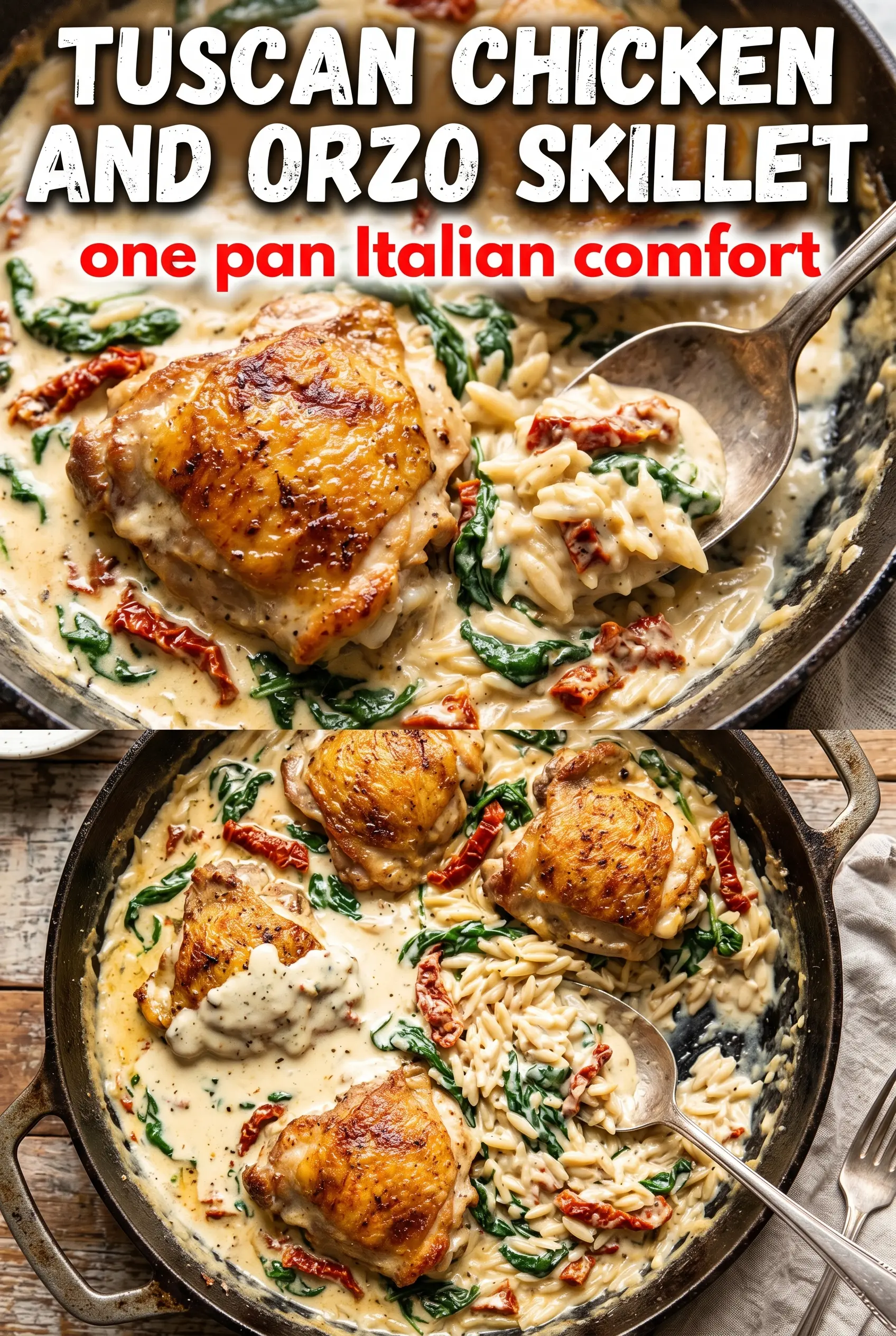
Tuscan Chicken And Orzo Skillet
Ingredients
Equipment
Method
- Season the boneless chicken thighs with smoked paprika, Italian seasoning, salt, and pepper.
- Heat olive oil in a large skillet and sear chicken for 5-6 minutes per side until golden; remove to a plate.
- Sauté diced onion for 3 minutes, then add minced garlic and chopped sun-dried tomatoes and cook for 2 minutes.
- Add orzo pasta and toast briefly, then pour in chicken broth and heavy cream.
- Simmer for 10 minutes, stirring occasionally, until the orzo is nearly tender.
- Stir in grated parmesan and baby spinach until the spinach wilts.
- Nestle the seared chicken thighs back on top, cover, and cook for 5 more minutes until the chicken is cooked through.
- Garnish with fresh basil for serving.