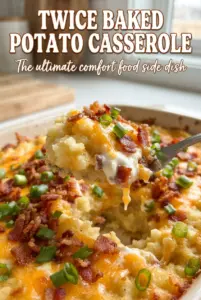
Twice baked potato casserole gives you all the best parts of a loaded baked potato in a dish that feeds a crowd without the fussy scooping and stuffing. The potatoes turn fluffy and rich in the middle, then bake into a hot, bubbling casserole with sharp cheddar, smoky bacon, and just enough sour cream to keep every bite creamy instead of heavy.
The trick is starting with russet potatoes that are fully baked, not underdone. That dry, starchy interior mashes up light and absorbent, which is exactly what you want once the butter, milk, and sour cream go in. The first batch of cheese melts into the base, while the second batch on top gives you that browned, savory lid people keep going back for.
Below, I’ve included the small details that keep the texture right, plus the swaps that work when you need them. If you’ve ever had potato casserole turn gluey or flat, the notes here will help you avoid both.
I loved how the potatoes stayed fluffy instead of turning gummy, and the cheddar on top browned up around the edges while the bacon stayed crisp. I made it for Sunday dinner and there wasn’t a spoonful left.
Save this twice baked potato casserole for the nights when you want creamy potatoes, sharp cheddar, and crispy bacon in one bubbling dish.
The Part That Keeps This Casserole Fluffy Instead of Dense
Twice baked potato casserole lives or dies on how you handle the potatoes after they come out of the oven. Russets need to be fully tender so the flesh mashes smoothly, but they also need time to cool just enough that you can work with them without turning them into paste. If you mash them while they’re piping hot and keep stirring hard, the starch tightens up and the casserole turns heavy.
The other thing people miss is that this is a loaded potato dish, not mashed potatoes wearing cheese on top. The flavor has to be built into the base: butter for richness, sour cream for tang, milk for loosening, and some of the cheddar and bacon mixed right through so every scoop tastes finished. That’s what keeps the top from feeling like an afterthought.
- Russet potatoes — These are the right choice because their dry, fluffy flesh mashes cleanly and soaks up the dairy without turning gluey. Waxy potatoes stay too firm and give you a tighter texture.
- Sour cream — This brings the tang that makes the casserole taste like loaded potatoes instead of plain mash. Greek yogurt works in a pinch, but it’s a little sharper and slightly less silky.
- Sharp cheddar — Sharp cheddar stands up to the potatoes and bacon. Mild cheddar melts fine, but it disappears faster in the finished casserole.
- Bacon and green onions — Add these to the filling, not just the top. Mixed through, they season the whole dish instead of sitting in a single layer.
What Each Ingredient Is Doing in the Bowl
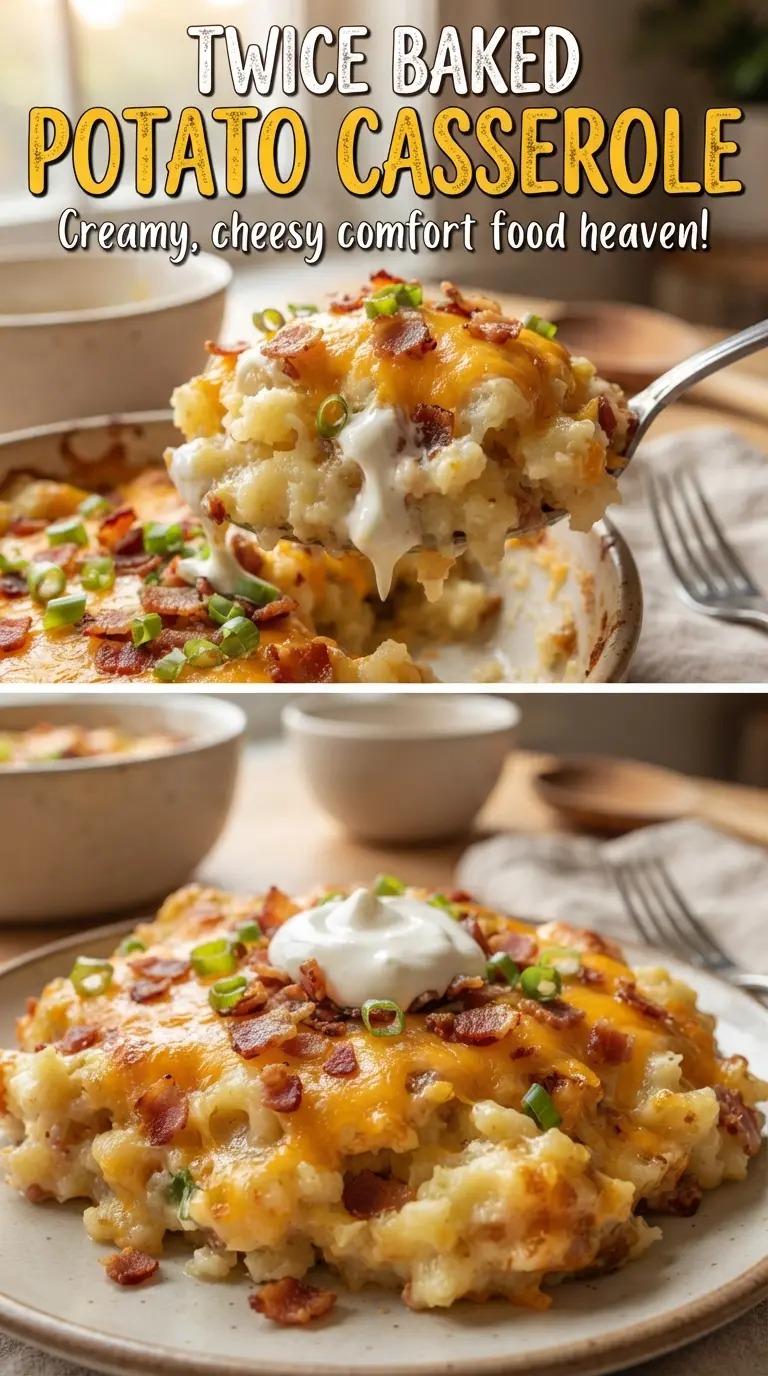
- Butter — Softened butter coats the potato flesh and gives the base a richer, rounder taste. Cold butter won’t blend as evenly, so let it soften before you start mashing.
- Milk — This loosens the potatoes just enough to make them spoonable and helps the casserole bake up light. Whole milk gives the best texture, but 2 percent will work if that’s what you have.
- Cheddar — One cup goes into the filling for melt and flavor, while the rest goes on top for browning. Pre-shredded cheese works, but freshly shredded cheddar melts more smoothly.
- Bacon — Crisp-cooked bacon gives the casserole salt, smoke, and crunch. If it’s undercooked before it goes in, it softens in the oven and you lose that contrast.
- Green onions — These brighten the richness and keep the dish from tasting flat. Save some for the end so you get fresh onion flavor on top as well.
Building the Casserole So the Texture Stays Light
Baking the Potatoes All the Way Through
Start with potatoes that are baked until a fork slides in easily from edge to center. If they’re even a little underdone, the scooped flesh won’t mash evenly and you’ll chase lumps all the way through the bowl. Let them cool just enough to handle, then split and scoop while the insides are still warm and soft.
Mashing Without Beating the Starch
Mash the potatoes with the butter, sour cream, and milk until the mixture looks fluffy and cohesive, but stop as soon as it comes together. Overmixing is what makes potato casseroles thick and gummy instead of light. A potato masher gives you more control than a mixer, which can turn them past the point of no return fast.
Layering in the Good Stuff
Stir in the first measure of cheddar, half the bacon, and half the green onions before the casserole goes into the dish. That way every serving has seasoning and texture all the way through. Spread it evenly into the pan so the top bakes at the same rate from corner to corner, then finish with the remaining cheese and bacon for the browned lid everyone reaches for first.
Baking Until the Top Bubbles
Drop the oven temperature to 350F for the second bake and let the casserole heat through until the cheese is fully melted and bubbling around the edges. If you bake it too hot, the top browns before the center is hot. The casserole is done when it’s steaming in the middle and the surface has those blistered, golden spots that smell like dinner is ready.
How to Adapt It When You Need a Different Version
Make It Gluten-Free Without Changing the Texture
This recipe is naturally gluten-free as written, as long as your bacon and shredded cheese don’t carry any hidden additives. That’s one of the nice parts of a potato casserole like this — the texture comes from the potatoes themselves, not flour or a roux.
Swap in Greek Yogurt for a Tangier Finish
You can replace the sour cream with plain Greek yogurt in the same amount. The casserole will taste a little sharper and the filling will set up slightly looser, but it still bakes up creamy and rich.
Make It Meatless Without Losing the Savory Edge
Skip the bacon and add extra cheddar plus a handful of sautéed mushrooms or caramelized onions if you want more depth. The casserole loses the smoky crunch, so I’d add a pinch of smoked paprika to bring back some of that savory note.
Stretch It for a Bigger Crowd
You can double this and bake it in two 9×13-inch pans instead of trying to cram everything into one dish. A deeper pan takes longer to heat through, and the center can stay cool even when the top looks ready.
Storage and Reheating
- Refrigerator: Store covered for up to 4 days. The potatoes will firm up as they chill, but the flavor holds well.
- Freezer: It freezes well. Cool completely, wrap tightly, and freeze for up to 2 months. Thaw overnight in the refrigerator before reheating.
- Reheating: Cover and warm in a 350F oven until hot in the center. Uncover for the last few minutes if you want the top to crisp again. The biggest mistake is blasting it in the microwave too long, which can make the potatoes dry and the cheese greasy.
Answers to the Questions Worth Asking
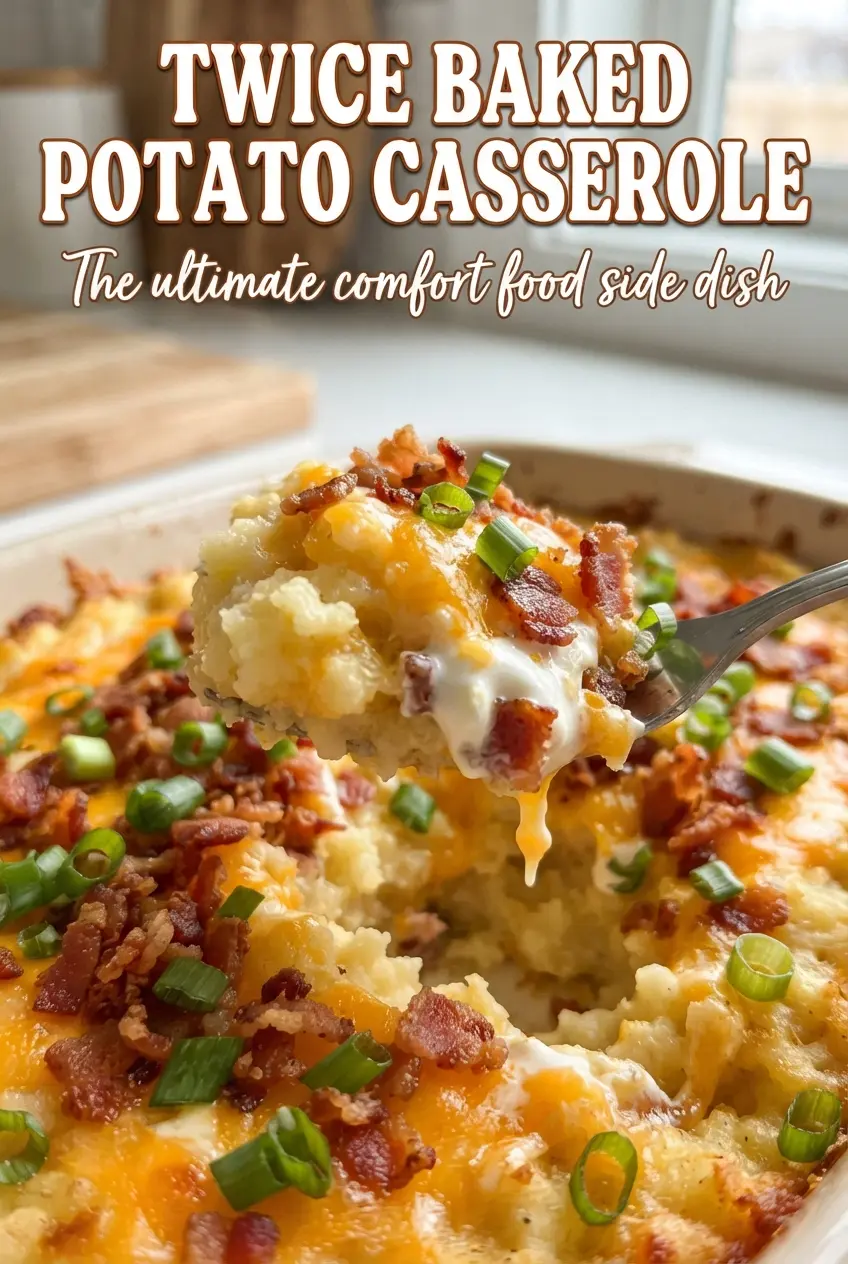
Twice Baked Potato Casserole
Ingredients
Equipment
Method
- Preheat the oven to 400°F, then place the scrubbed russet potatoes on a sheet pan. Bake for 50-60 minutes until fork-tender.
- Cool the potatoes slightly, then scoop out the flesh into a bowl and mash with softened butter, sour cream, and whole milk until smooth.
- Stir in 1 cup shredded sharp cheddar, half the cooked and crumbled bacon, half the sliced green onions, salt, and black pepper until evenly combined.
- Spread the mashed potato mixture into a buttered 9x13-inch baking dish and top with the remaining shredded cheddar and bacon. Reduce the oven to 350°F.
- Bake for 20-25 minutes until hot throughout and the cheese is bubbly, with a golden top. Sprinkle with the remaining sliced green onions and serve.