Caramelized whiskey pineapple chicken lands on the plate with sticky edges, smoky grill marks, and that sweet-savory glaze that keeps pulling you back for one more bite. The chicken stays juicy because the marinade does more than flavor the meat; it also gives the surface enough sugar to turn glossy and browned over the fire. Add the grilled pineapple on the side, and the whole dish gets that bright, tropical finish that makes the whiskey taste deeper instead of harsher.
The trick here is balance. Pineapple juice brings acidity and natural sweetness, whiskey adds warmth and a little bite, and soy sauce keeps the glaze from tasting flat. I like to reserve part of the marinade before the chicken goes in so there’s a clean basting sauce for the grill. That matters, because once raw chicken has touched the marinade, you don’t want to brush it back onto finished meat.
Below, you’ll find the small details that keep the glaze from burning and the chicken from drying out, plus a few practical swaps if you want to work with what’s already in the kitchen.
The marinade made the chicken so tender, and the glaze turned sticky and caramelized without burning. I was nervous about the whiskey, but it mellowed out beautifully once it hit the grill.
Save this whiskey pineapple chicken for the nights when you want sticky grilled chicken with a sweet smoky glaze and barely any cleanup.
The Marinade Needs a Clean Basting Plan
Sweet marinades can go from glossy to scorched fast, especially on a grill where the heat lives in short bursts and hot spots show up everywhere. The move that keeps this dish steady is reserving part of the marinade before the chicken goes in, then using that clean portion for basting. Once raw chicken has touched the bowl, that liquid stays raw unless you cook it separately first.
The other mistake is cooking over heat that’s too aggressive. Whiskey and brown sugar will caramelize beautifully, but they also darken quickly, so medium heat gives you control. You want browned edges and a sticky surface, not blackened sugar stuck to the grates.
What Each Ingredient Is Actually Doing Here
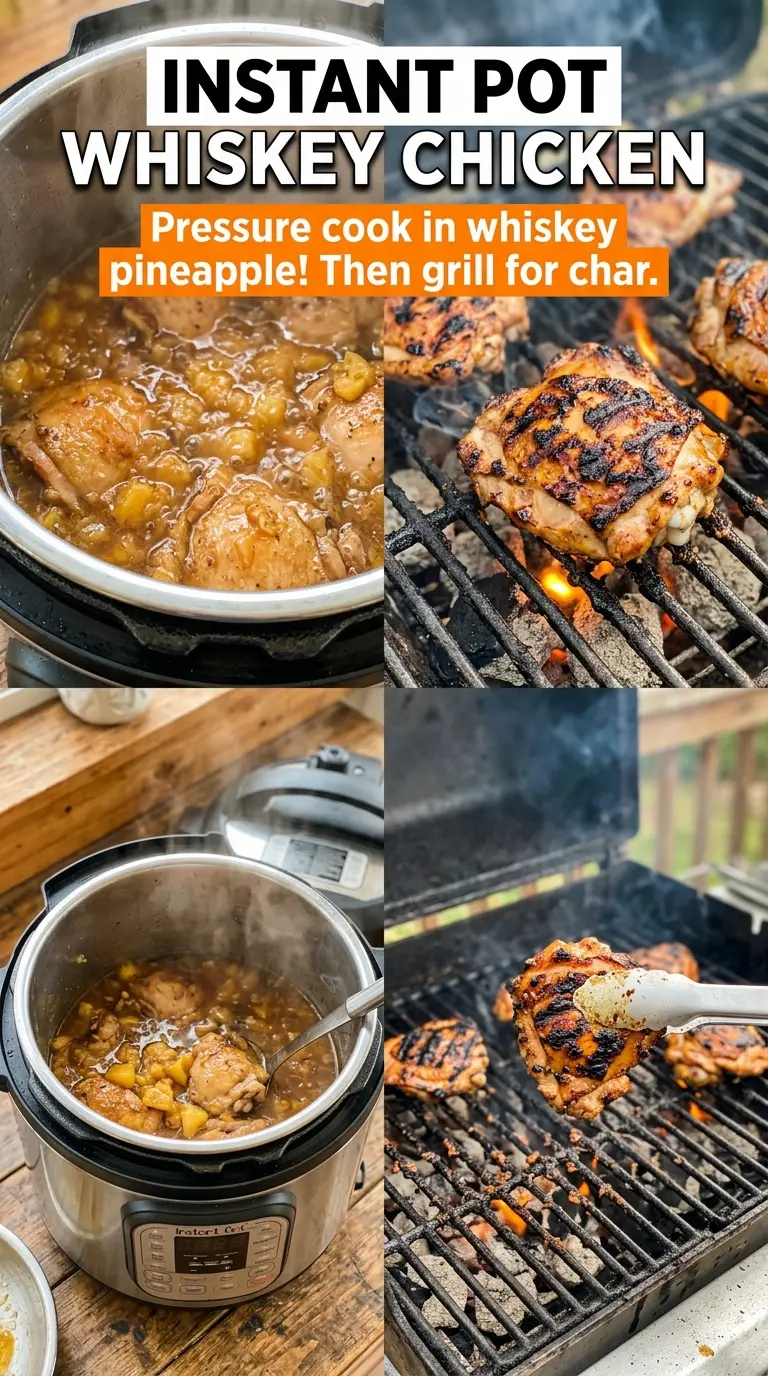
- Chicken thighs — Thighs stay juicier than breasts on the grill and handle the sweetness of the glaze without drying out. If you use breasts, pound them to an even thickness and pull them earlier so they don’t turn stringy.
- Pineapple juice — This is the backbone of the marinade because it brings both acidity and fruit sweetness. Fresh or canned both work, but avoid pineapple juice blends with added sugar; they push the glaze into candy territory fast.
- Whiskey — You don’t need an expensive bottle, just something you’d actually drink. The alcohol cooks off, leaving warmth and depth, but too much can make the marinade taste sharp, so stick to the measured amount.
- Brown sugar — This is what gives you that lacquered finish on the grill. Light or dark brown sugar both work, though dark brown sugar gives a little more molasses flavor and deeper color.
- Soy sauce — It keeps the sweetness in check and gives the marinade a savory base. Low-sodium soy sauce is the easiest swap if you want a little more control over saltiness.
- Garlic and ginger — These cut through the sugar and make the glaze taste layered instead of flat. Fresh ginger matters here; powdered ginger won’t give the same bright bite.
- Grilled pineapple slices — They’re not garnish. The heat concentrates the fruit, and those caramelized edges echo the glaze on the chicken.
From Marinade to Grill Marks Without Burning the Glaze
Mixing the Marinade
Stir the pineapple juice, whiskey, brown sugar, soy sauce, garlic, and ginger until the sugar is dissolved and the mixture looks smooth. If the sugar is still grainy when the chicken goes in, it’ll cling unevenly and can burn in patches on the grill. Reserve a portion first, then add the chicken to the rest and turn it until every piece is coated.
Letting the Chicken Soak
Marinate the chicken for 1 to 4 hours. One hour gives you good surface flavor, while the longer end gives the meat more chance to pick up the sweet-savory balance. Don’t leave it much longer than that, because pineapple juice can start to make the texture too soft and mushy.
Grilling Over Medium Heat
Set the chicken over medium heat and cook it for 6 to 7 minutes per side, basting with the reserved marinade as it cooks. You’re looking for caramelized edges, clear grill marks, and juices that run mostly clear when the thickest part is pierced. If the glaze starts to darken too quickly, shift the pieces to a cooler part of the grill and let them finish there.
Finishing the Pineapple
Grill the pineapple slices for about 2 minutes per side, just until they pick up color and soft char. They should still hold their shape; if they turn soft and collapse, they’ve gone too long. Serve them with the chicken so the sweet fruit keeps each bite bright and balanced.
How to Adapt the Sweet-Smoky Glaze to What You’ve Got
Make It Dairy-Free and Naturally Gluten-Free
This recipe already lands naturally in that lane as written if you use a gluten-free soy sauce or tamari. The texture and flavor stay the same, so you don’t lose anything by making that swap. It’s one of those cases where the adaptation is easy because the base recipe is already built on clean, simple ingredients.
Use Chicken Breasts Instead of Thighs
Chicken breasts work, but they need more attention because they dry out faster on the grill. Pound them to an even thickness and start checking early so you can pull them as soon as they’re cooked through. You’ll get a leaner result, but you give up some of the juicy richness that thighs bring.
Swap the Grill for a Grill Pan
A grill pan gives you the same caramelized look if outdoor grilling isn’t an option. Preheat it well so the chicken sears instead of steaming, and wipe the pan if sugary marinade starts to pool and darken too fast. You won’t get the exact same smoke, but you’ll still get a sticky, browned finish.
Storage and Reheating
- Refrigerator: Store leftovers for up to 4 days. The glaze will thicken as it chills, which is normal.
- Freezer: Freeze the cooked chicken for up to 2 months, wrapped well and sealed airtight. The pineapple can soften after thawing, but the flavor still holds up.
- Reheating: Reheat gently in a covered skillet over low heat with a splash of water or extra pineapple juice. High heat dries out the chicken and can make the sugar in the glaze turn sticky-hard.
Questions I Get Asked About This Recipe

Whiskey Pineapple Chicken
Ingredients
Equipment
Method
- Whisk pineapple juice, whiskey, brown sugar, soy sauce, minced garlic, and grated ginger together until the sugar dissolves and the mixture looks smooth.
- Reserve 1/3 cup of the marinade for basting, then set the remaining marinade aside for marinating.
- Coat the chicken thighs with the reserved marinade (the larger remaining portion) and refrigerate for 1-4 hours to let the flavors soak in.
- Preheat the grill to medium heat and grill the chicken thighs for 6-7 minutes per side, basting frequently with the reserved 1/3 cup so the surface caramelizes.
- Place pineapple slices on the grill and cook for 2 minutes per side, until they show grill marks and look lightly caramelized.
- Serve the grilled whiskey-pineapple chicken with the grilled pineapple slices on the side.