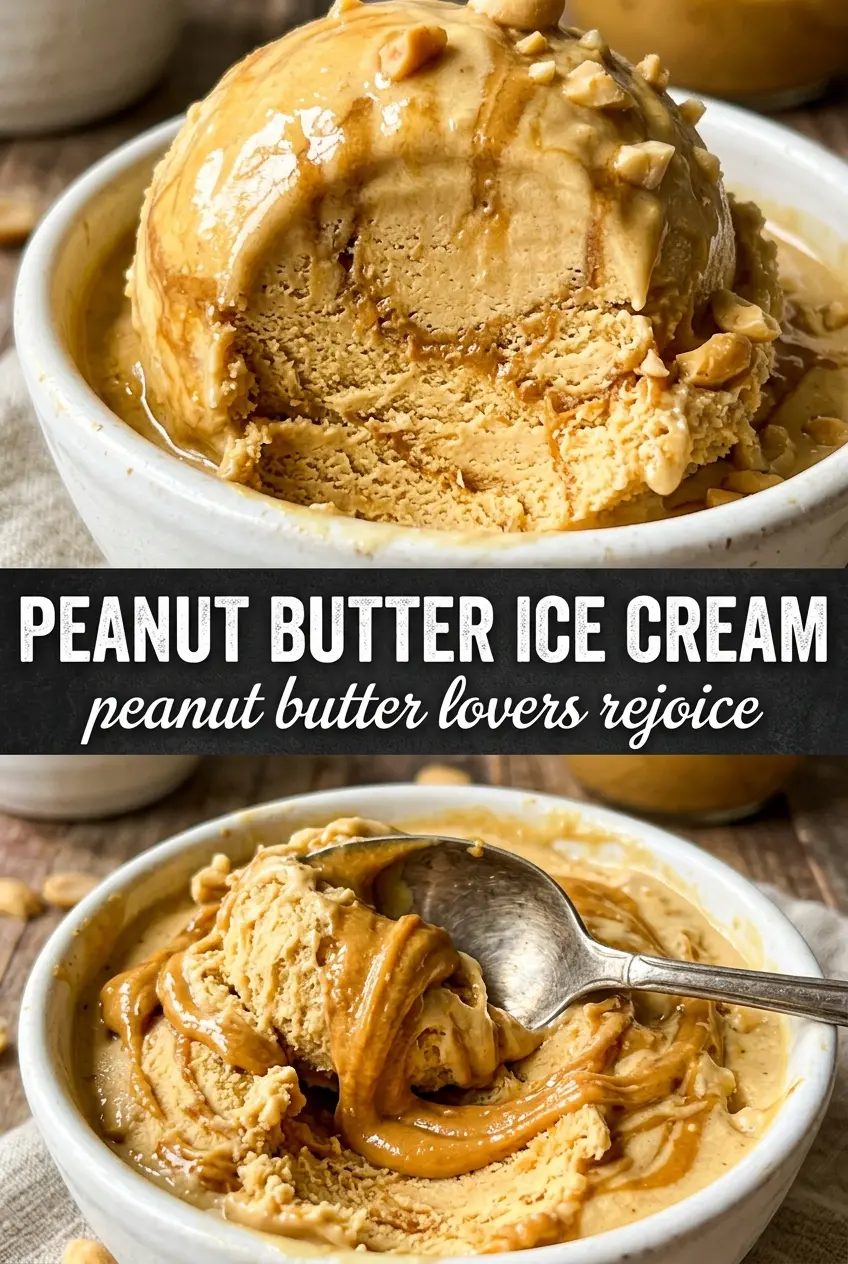
Ingredients
Equipment
Method
Cook the custard
- Heat the heavy cream and whole milk in a saucepan until steaming. Keep it at a gentle simmer, with small bubbles around the edges, not a rolling boil.
- In a bowl, whisk the egg yolks and granulated sugar until smooth, then slowly whisk the steaming dairy into the yolks. Pour in a thin stream while whisking to avoid scrambling.
- Return the mixture to the saucepan and cook over medium-low heat, stirring constantly, until the custard reaches 175°F. The custard should coat the back of a spoon and look slightly thicker with a steady temperature climb.
Add peanut butter and chill
- Remove the custard from heat and whisk in the creamy peanut butter until completely smooth. Scrape the bottom and corners so no streaks remain.
- Strain the custard through a fine mesh sieve, then whisk in the vanilla extract and salt. Discard any solids and keep whisking until the mixture looks uniform.
- Cool the custard in an ice bath, stirring occasionally until it feels much colder. The surface should stop steaming and the bowl should cool down quickly against the ice.
- Refrigerate at least 4 hours or overnight until thoroughly chilled. Cover it so a skin doesn’t form and the texture stays smooth.
Churn and freeze
- Churn the chilled custard in an ice cream maker according to the manufacturer’s instructions. Stop when it reaches a thick, soft-serve consistency.
- Transfer to a freezer-safe container and freeze until firm. The ice cream should scoop cleanly after it hardens.
Notes
Pro tip: keep the custard at medium-low and stir continuously—175°F is the sweet spot for a silky, spoon-coating texture. Store in the freezer, covered, for up to 2 months; thaw 5–10 minutes before scooping. Not recommended to refreeze after repeated melting. For a dietary swap, use reduced-sugar peanut butter and reduce sugar slightly to taste, but expect a softer sweetness profile.