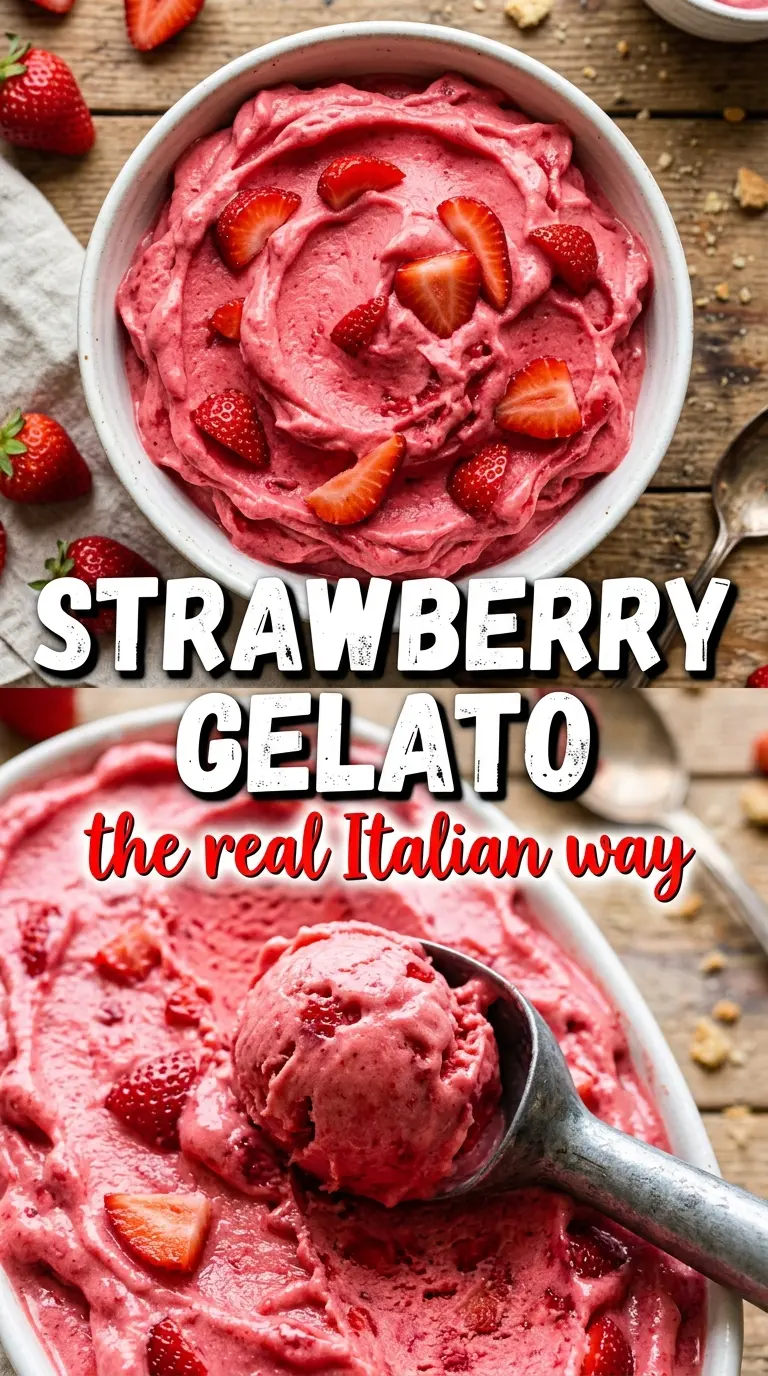
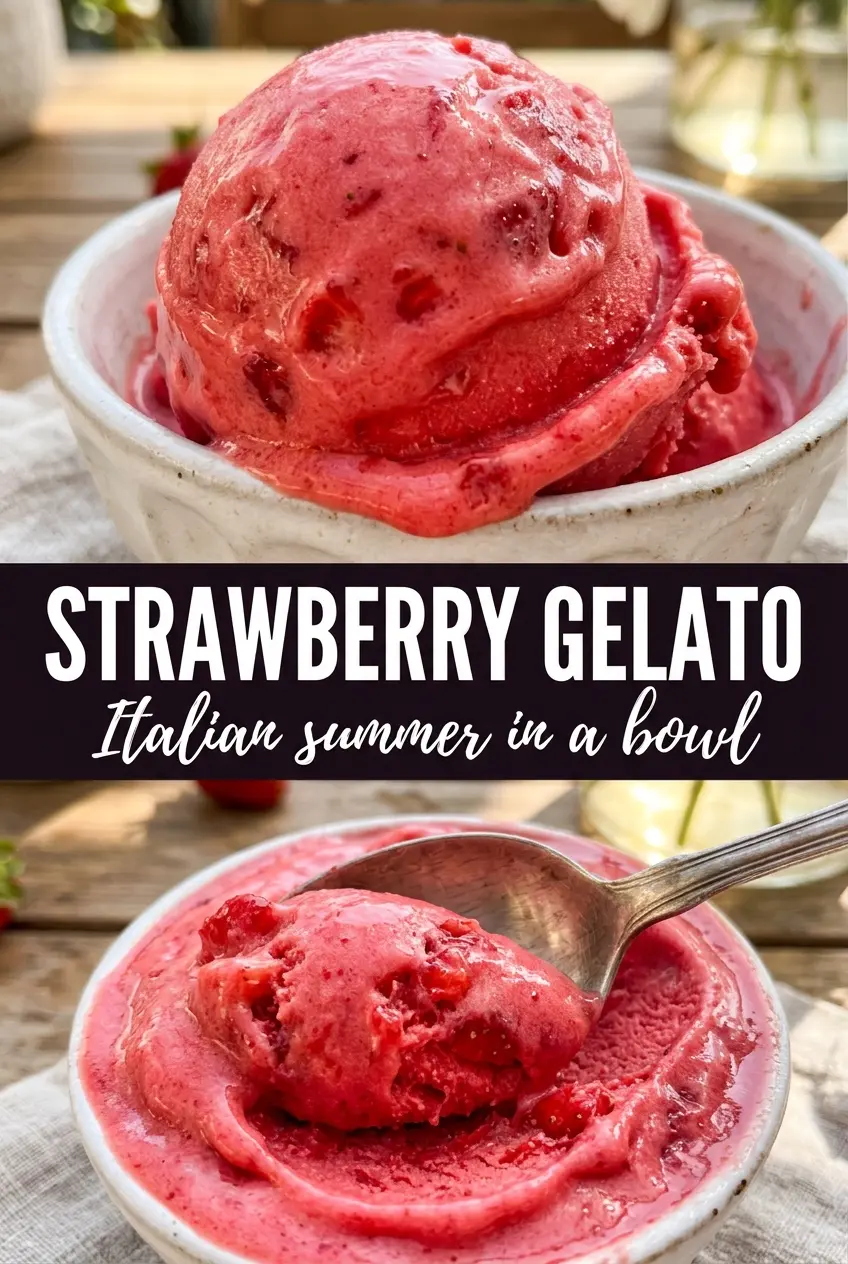
Dense strawberry gelato hits differently than a loose, airy ice cream. The flavor stays on the front of your tongue, the texture lands silky instead of fluffy, and the color comes out that vivid pink-red you only get when the berries are actually carrying the dessert. This version keeps the strawberry flavor bright and concentrated, with enough richness from milk, cream, and egg yolks to feel luxurious without tasting heavy.
The trick is building a quick custard base first, then folding in the strawberry puree after the mixture has thickened. That keeps the fruit flavor fresh instead of cooked-flat. A little cornstarch helps the base set up with that classic gelato density, and straining the berries pays off with a smoother finish that churns into something spoonable and clean.
Below, I’ve included the small details that matter most: how to keep the custard from turning grainy, why the puree goes in after cooking, and what to expect if you want a softer scoop or a firmer freezer set.
The strawberry flavor came through so clearly, and the custard thickened up beautifully without getting eggy. I churned it a little longer for that dense gelato texture, and it scooped like the kind you pay for at a good Italian shop.
Love the vivid color and silky texture of this strawberry gelato? Save it to Pinterest for the days when you want a bright, dense dessert that churns up like the real thing.
The Reason This Gelato Stays Dense Instead of Icy
Gelato gets its signature texture from restraint. If you treat it like American ice cream and load it with too much fat or whip a lot of air into it, you lose the dense, smooth body that makes gelato special. This recipe leans on a cooked custard base plus a little cornstarch, which helps the mixture freeze with a tighter texture and less iciness.
The other thing that matters is when the strawberries go in. Purée the berries with sugar and lemon first, then stir them into the custard after it thickens and comes off the heat. That keeps the fruit flavor vivid instead of muted, and it helps preserve that bright berry aroma that disappears when strawberries are cooked too long.
- Egg yolks — These give the base richness and help it set with a satin finish. Don’t rush the heating step once they’re in the pot; high heat can scramble them and give you grainy custard.
- Cornstarch — This is the quiet helper that gives the gelato more body. You need only a tablespoon, but it makes a real difference in how the finished gelato scoops after freezing.
- Fresh strawberries — Fresh berries keep the color brighter and the flavor sharper. If you use frozen, thaw them completely and drain off excess liquid before blending so the base doesn’t freeze too hard.
- Lemon juice — It doesn’t make the gelato taste lemony. It wakes up the strawberries and keeps the flavor from going flat under the dairy.
What Each Ingredient Is Actually Doing in This Frozen Dessert
- Base ingredient (cream, milk, or non-dairy) — This provides the foundation and richness. Quality matters.
- Sweetener (sugar, honey, or other) — This sweetens and prevents ice crystals. The ratio is critical.
- Flavor element (vanilla, fruit, or other) — This defines the ice cream personality. Use quality ingredients.
- Stabilizers (egg yolks, cornstarch, or gelatin) — These prevent melting and large ice crystals. Optional but helpful.
- Churning (if using ice cream maker) — This incorporates air and prevents ice crystals. Critical for smooth texture.
- Freezing temperature and time — Proper freezing prevents rock-hard texture. Store at 0°F or below.
- Mix-ins (chocolate, cookies, or fruit) — These add texture and prevent monotone flavor. Add near end of churning.
- No-churn method (if using whipped cream or condensed milk) — This creates creamy texture without ice cream maker. Freezing time is longer.
Cooking the Custard Without Scrambling the Eggs
Build the strawberry puree first
Blend the strawberries with part of the sugar and the lemon juice until smooth, then strain out the seeds if you want the cleanest texture. The puree should taste bright and slightly sweet, not cloying. If the berries are bland to begin with, the finished gelato will be bland too, because freezing never improves weak fruit.
Heat the dairy gently
Warm the milk and cream until steaming, not boiling. You want heat coming off the pan, but you don’t want bubbling around the edges. Boiling makes the next step harder to control and can leave you with a rough custard.
Temper, then thicken the base
Whisk the egg yolks, remaining sugar, and cornstarch until smooth, then slowly stream in the hot dairy while whisking constantly. This gradually raises the temperature of the yolks so they don’t seize. Return everything to the saucepan and cook, stirring all the time, until it turns thick like pudding and coats the back of a spoon.
Finish with the fruit
Take the pan off the heat before stirring in the strawberry puree and vanilla. If the custard is still ripping hot when the berries go in, the fresh flavor dulls fast. Cool it over an ice bath, then refrigerate until fully cold before churning; a warm base never freezes as smoothly in the machine.
What to Change When You Want a Different Kind of Strawberry Gelato
Dairy-Free Strawberry Gelato
Swap the milk and cream for full-fat coconut milk, using the same total volume. The texture will still be creamy, but you’ll pick up a light coconut note, so this works best when the strawberries are extra ripe and fragrant. The custard will also set a touch softer than the dairy version.
Strawberry Cheesecake-Style Gelato
Blend in a couple tablespoons of softened cream cheese after the custard comes off the heat. It adds a subtle tang and a slightly richer body, but too much will crowd out the strawberry flavor, so keep it light. This version tastes more dessert-shop than fruit-forward.
Lower-Sugar Version
You can reduce the sugar slightly, but don’t cut it too hard or the gelato will freeze overly firm and lose its smooth scoop. Sugar isn’t just sweetness here; it also controls texture. If you want a less sweet result, rely on very ripe berries and trim the sugar by a few tablespoons, not half the bowl.
Storage and Reheating
- Refrigerator: Chill the base up to 24 hours before churning, but once it’s churned, move it to the freezer. It doesn’t hold well as a liquid base for more than a day.
- Freezer: The finished gelato keeps for about 1 to 2 weeks with the best texture in the first few days. Press parchment or plastic wrap directly on the surface to slow ice crystals.
- Reheating: Gelato doesn’t need reheating. For serving after a long freeze, let it sit at room temperature for 5 to 10 minutes so the texture softens enough to scoop without tearing.
Questions I Get Asked About This Recipe
Strawberry Gelato
Ingredients
Equipment
Method
- Blend the hulled fresh strawberries with 1/4 cup of granulated sugar and the lemon juice until smooth.
- Strain the strawberry mixture to remove seeds, then set the puree aside.
- Heat the whole milk and heavy cream together over medium heat until steaming.
- Whisk the egg yolks with the remaining 1/2 cup granulated sugar and the cornstarch until smooth.
- Slowly whisk the hot milk into the yolk mixture to temper it.
- Return everything to the saucepan and cook over medium heat, stirring constantly, until thickened like a pudding (about 5 minutes).
- Remove the saucepan from the heat and stir in the strained strawberry puree and the vanilla extract.
- Cool completely over an ice bath until no longer warm to the touch.
- Refrigerate at least 4 hours to fully chill the base.
- Churn the chilled base in an ice cream maker on the lowest setting until it reaches a dense, gelato-style texture.
- Serve soft right away, or freeze for 1-2 hours for a firmer scoopable texture.