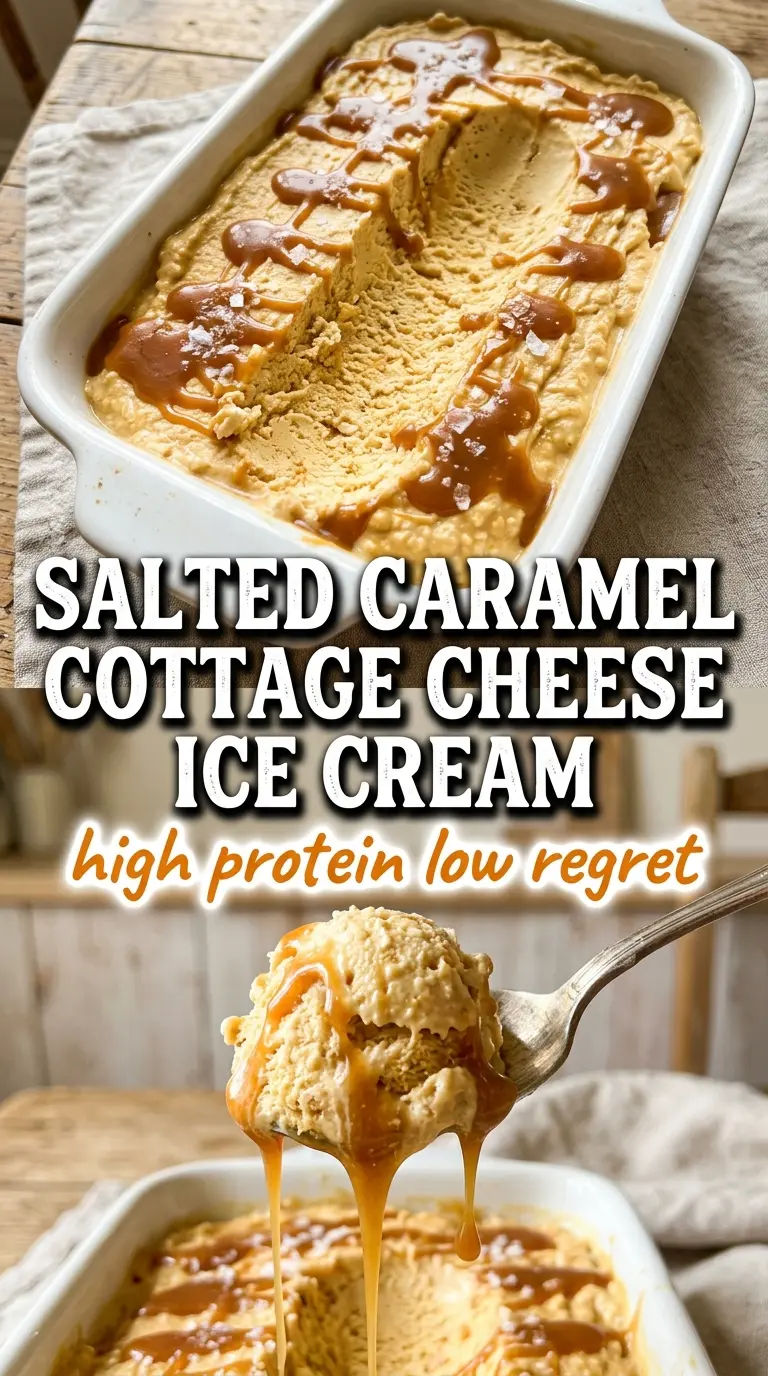
Salted caramel cottage cheese ice cream has that rare frozen-dessert trick where the first spoonful tastes rich and familiar, then the second one makes you wonder how something this creamy came from cottage cheese. The caramel comes through first, warm and buttery, and the salt keeps it from turning cloying. What you end up with is a scoopable, velvety ice cream that scratches the same itch as the classic version without needing an ice cream maker.
The key is blending long enough that the cottage cheese turns completely smooth. If you stop while the mixture still looks even slightly grainy, those curds will freeze into tiny icy bits and the texture won’t be nearly as good. Brown sugar helps deepen the caramel note, while a little cream cheese adds body if you want an even richer finish. This is one of those recipes that rewards a careful blend and a patient freeze.
Below, I’m breaking down the exact ingredients that matter, the freezing time that gives you the best scoop, and a couple of smart variations if you want to adjust the sweetness or make it a little more decadent.
I was skeptical about blending cottage cheese into ice cream, but it came out unbelievably smooth after 2 minutes in the blender. The caramel flavor was spot on, and the flaky salt on top made it taste like a fancy dessert instead of a protein snack.
Love the creamy caramel flavor? Save this salted caramel cottage cheese ice cream for the nights when you want a high-protein dessert that still feels indulgent.
The Secret to Creamy Frozen Cottage Cheese Instead of Icy Curds
The biggest mistake with cottage cheese ice cream is under-blending. Cottage cheese needs more time than most people think, and the mixture should look glossy and completely uniform before it goes anywhere near the freezer. If you can still spot tiny curds, those curds will freeze hard and give you a sandy texture instead of a smooth scoop.
The other thing that matters is balance. Caramel sauce adds flavor, but brown sugar gives the base a deeper, rounder sweetness that reads more like caramel once it’s frozen. The salt isn’t there just to be trendy; it keeps the dessert from tasting flat after freezing dulls the sweetness a little.
- Full-fat cottage cheese — This is the base, and full-fat gives you the richest texture. Low-fat versions can work, but they freeze firmer and taste a little sharper.
- Caramel sauce — Use a sauce you actually like eating on its own, because its flavor carries the whole dessert. A thicker sauce blends into the base cleanly and helps with body.
- Brown sugar — This deepens the caramel note in a way white sugar won’t. If you swap it for white sugar, the ice cream tastes sweeter but less layered.
- Sea salt — Fine sea salt goes into the base so the caramel tastes fuller, while flaky salt belongs on top for contrast. Don’t skip the finishing salt if you want that salted caramel effect to come through.
- Cream cheese — Optional, but it adds a little extra richness and helps the final texture stay softer after freezing. If you use it, blend it in completely so there’s no tangy streak left behind.
- Vanilla extract — Vanilla rounds out the caramel and keeps the dessert from tasting one-note. It doesn’t need to be fancy, just fresh.
What Each Ingredient Is Actually Doing in This Frozen Dessert
- Base ingredient (cream, milk, or non-dairy) — This provides the foundation and richness. Quality matters.
- Sweetener (sugar, honey, or other) — This sweetens and prevents ice crystals. The ratio is critical.
- Flavor element (vanilla, fruit, or other) — This defines the ice cream personality. Use quality ingredients.
- Stabilizers (egg yolks, cornstarch, or gelatin) — These prevent melting and large ice crystals. Optional but helpful.
- Churning (if using ice cream maker) — This incorporates air and prevents ice crystals. Critical for smooth texture.
- Freezing temperature and time — Proper freezing prevents rock-hard texture. Store at 0°F or below.
- Mix-ins (chocolate, cookies, or fruit) — These add texture and prevent monotone flavor. Add near end of churning.
- No-churn method (if using whipped cream or condensed milk) — This creates creamy texture without ice cream maker. Freezing time is longer.
How to Blend, Freeze, and Scoop It Without Losing the Silky Texture
Blending Until No Curds Remain
Add everything to the blender and let it run long enough to turn the mixture completely smooth, usually at least 2 minutes depending on the machine. Scrape down the sides once or twice if needed, because the thicker bits near the top tend to hide unblended cottage cheese. The finished base should look like a thick milkshake with no visible grain. If it still looks speckled, keep blending; that is the difference between creamy and chalky.
Adjusting the Sweet-Salt Balance
Taste the base before freezing and decide whether it needs a touch more caramel or salt. Frozen desserts taste less sweet than the mixture does at room temperature, so a base that tastes slightly bolder now usually lands better later. If the caramel sauce you used is very sweet, add the salt in tiny pinches rather than dumping in more sugar. The goal is a salted caramel flavor that stays clean, not one that tastes sugary and heavy.
Freezing for a Scoopable Finish
Pour the mixture into a freezer-safe container and freeze it for about 4 hours. Wider containers freeze more evenly than deep ones, which helps the center set without the edges turning icy first. If your freezer runs cold, start checking around the 3 1/2-hour mark; you want it firm enough to scoop but not rock-solid. Let it sit for 5 minutes before serving so the spoon can slide through without chipping the top.
Three Smart Ways to Change the Base Without Ruining the Texture
Make it dairy-free with a thick plant-based yogurt
You can swap in a thick dairy-free yogurt, but the result won’t have quite the same body as cottage cheese. Choose an unsweetened version with some tang so the caramel still tastes balanced, and expect a softer, less dense freeze. It works best if you keep the freeze time short and serve it as soon as it’s scoopable.
Use maple caramel for a deeper, less sugary flavor
If you want a more rounded sweetness, replace part of the caramel sauce with maple syrup or use a maple-forward caramel sauce. The flavor gets a little darker and less candy-like, which works well with the salt. Just don’t thin the base too much, or you’ll lose some of the creamy scoopable texture.
Skip the cream cheese for a lighter frozen dessert
The cream cheese is optional, so you can leave it out and still get a good result. Without it, the ice cream will freeze a little firmer and the finish will be slightly less rich, but the caramel flavor comes through more directly. This is the version to use if you want the cleanest cottage cheese protein dessert possible.
Storage and Reheating
- Refrigerator: Not recommended, since this is meant to be frozen and will turn loose and watery in the fridge.
- Freezer: Keeps for up to 2 weeks in a sealed container, though the texture is best in the first few days before ice crystals can build up.
- Reheating: Don’t reheat it. Let it sit at room temperature for 5 to 10 minutes until the edges soften, then scoop. If it freezes too hard, a brief rest works better than microwaving, which ruins the texture fast.
Answers to the Questions Worth Asking
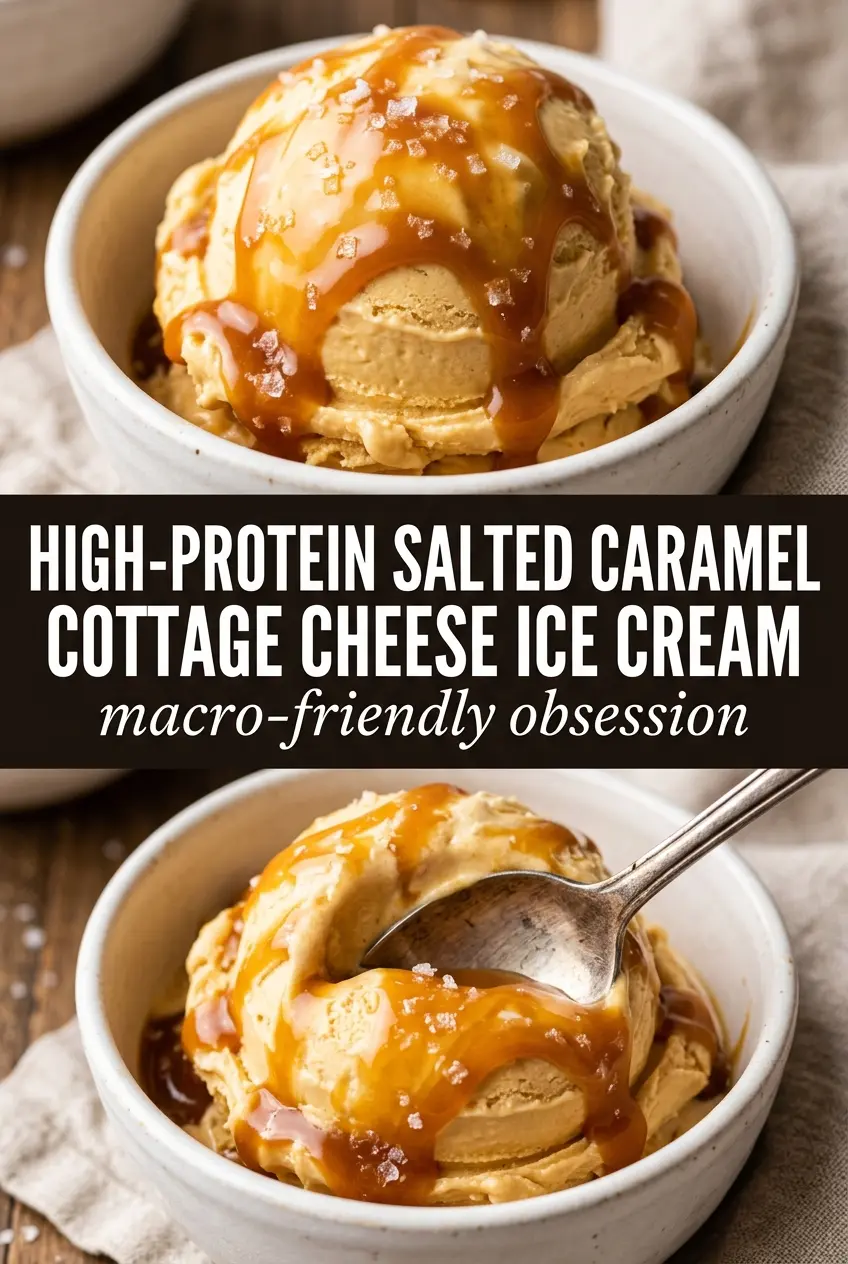
High-Protein Salted Caramel Cottage Cheese Ice Cream
Ingredients
Equipment
Method
- Add full-fat cottage cheese, caramel sauce, brown sugar, vanilla extract, sea salt, and (if using) cream cheese to a blender or stand mixer. Blend continuously until completely smooth, at least 2 minutes, with no visible lumps.
- Stop and taste the mixture. Adjust caramel sweetness or saltiness by adding more caramel sauce or a pinch of sea salt as needed, until the flavor balance is right.
- Pour the blended mixture into a freezer-safe container and spread it level. Freeze for 4 hours, until firm enough to scoop.
- Remove the container from the freezer and let it sit for 5 minutes before scooping. The surface should soften slightly while the ice cream stays scoopable.
- Scoop into bowls and drizzle with extra caramel sauce. Finish with a pinch of flaky sea salt so the salty notes pop against the caramel.