Chicken thighs take a marinade better than almost any cut on the chicken, and this one earns its name. The balance of soy, balsamic, Worcestershire, and Dijon gives the meat a deep savory edge, while a little brown sugar helps the surface caramelize instead of drying out. What you get after a good soak is chicken that turns dark and glossy on the outside, juicy in the middle, and full of flavor all the way through.
The trick is using enough acid and seasoning to work into the meat without leaning so hard on vinegar that the chicken turns muddy or tight. Olive oil carries the garlic and spices, while the sugar rounds out the salt and sharpness so the grilled or baked finish tastes balanced, not punchy. Marinating for at least four hours matters here; that’s the difference between chicken that tastes coated and chicken that tastes seasoned from within.
Below, I’ll walk through the ingredient choices, the exact marinating window that gives the best payoff, and the simple adjustment I use when cooking these thighs in the oven instead of on the grill.
The marinade clung to the thighs beautifully and the sugar gave me those sticky charred edges on the grill without burning. I only had about 5 hours to marinate and they still came out juicy and full of flavor.
Save this Killer Chicken Thigh Marinade for juicy chicken with caramelized edges and a bold garlic-soy glaze.
The Reason This Marinade Gets Deep Flavor Without Turning the Chicken Tough
Marinades fail when they chase flavor with too much acid and not enough balance. Balsamic and Worcestershire bring depth here, but the oil, brown sugar, and mustard keep the chicken from tasting sharp or stringy after it sits. That matters with boneless thighs, which can go from richly seasoned to oddly dense if the marinade is harsh.
The other detail that makes a difference is the sugar dissolving fully before the chicken goes in. If you leave gritty sugar in the bowl, it tends to cling in uneven spots and can burn before the thighs finish cooking. Whisk until the marinade looks smooth and slightly glossy, and you’ll get a better crust on the grill or in the oven.
What Each Ingredient Is Actually Doing in the Bowl

- Chicken thighs — Boneless, skinless thighs stay juicy under high heat and soak up marinade better than chicken breasts. If you swap in breasts, pull them earlier and expect a leaner, less forgiving result.
- Olive oil — This carries the spices and helps the chicken brown instead of drying out. A basic olive oil is fine; save the pricey finishing oil for something where its flavor will matter more.
- Soy sauce + Worcestershire sauce — These are the backbone of the savory flavor. They add salt, umami, and a little fermented depth that plain salt can’t replicate.
- Balsamic vinegar — It brings sweetness and acidity in one shot, which helps the surface caramelize. Red wine vinegar will work in a pinch, but the finished flavor will be sharper and less rounded.
- Dijon mustard — Dijon helps emulsify the marinade so it clings to the chicken instead of sliding off the bowl. Yellow mustard won’t taste wrong, but it will lose some of the subtle bite that makes this one interesting.
- Brown sugar — This is what gives the edges that lacquered, charred finish. Don’t add much more than listed or the exterior can darken too quickly before the thighs cook through.
- Garlic and dried spices — Fresh garlic gives punch, while smoked paprika and Italian herbs build the background. If you use pre-minced jarred garlic, the flavor will be flatter, but it’ll still work.
How to Get the Charred Edges Without Overcooking the Thighs
Whisk Until the Marinade Looks Smooth
Start with the marinade itself and whisk until the sugar disappears and the mixture looks cohesive, not streaky. You want the oil and vinegar to stay mixed long enough to coat every piece evenly. If the sugar stays grainy, it tends to settle at the bottom and the first thighs in the bowl can end up over-seasoned while the last ones taste bland.
Let the Chicken Sit Long Enough to Matter
Coat the thighs completely, then marinate for at least four hours or overnight if you want the deepest flavor. Less than that and the seasoning mostly stays on the surface. Much longer than overnight isn’t helpful here because the acid can start to change the texture in a way that makes the chicken less tender, not more.
Cook Over Strong Heat, Not a Gentle One
Grill over medium-high heat or bake hot at 425F so the exterior browns before the meat dries out. On the grill, you’re looking for dark char marks and a little sticking that releases once the crust forms. In the oven, the thighs should turn deeply golden with caramelized edges; if they look pale, the heat is too low or the pan is overcrowded.
Rest Before You Slice
Give the chicken five minutes off the heat before serving. That short rest lets the juices settle back into the meat instead of running out onto the board. If you cut too early, even perfectly cooked thighs can seem less juicy than they really are.
How to Adapt This Marinade for Different Pans, Grills, and Diets
Oven-Baked Thighs for a Weeknight Dinner
Bake at 425F for 20 to 25 minutes, depending on thickness. If the thighs are crowded on the pan, they’ll steam before they brown, so leave space between them and use a rimmed sheet pan. You’ll lose a little grill-like smokiness, but the marinade still turns sticky and deeply browned.
Gluten-Free Version That Still Tastes Full
Use a certified gluten-free soy sauce or tamari and check that your Worcestershire sauce is gluten-free too. The flavor stays bold and salty, and you won’t lose the glossy finish. Skip this step and you can easily end up with a marinade that tastes right but doesn’t fit your table.
Lower-Sugar Adjustment
Cut the brown sugar to 2 teaspoons if you want less sweetness, but don’t eliminate it entirely. That little bit of sugar helps the marinade caramelize and balances the vinegar. Without it, the finished chicken tastes flatter and the surface browns less evenly.
Storage and Reheating
- Refrigerator: Store cooked chicken thighs for up to 4 days. The exterior softens a little in the fridge, but the flavor stays strong.
- Freezer: Freeze cooked thighs for up to 2 months in an airtight container. Thaw overnight in the fridge so they reheat evenly instead of turning rubbery at the edges.
- Reheating: Warm in a 325F oven, covered loosely with foil, until heated through. The common mistake is blasting them in the microwave, which dries out the meat and wipes out the caramelized surface.
Answers to the Questions Worth Asking
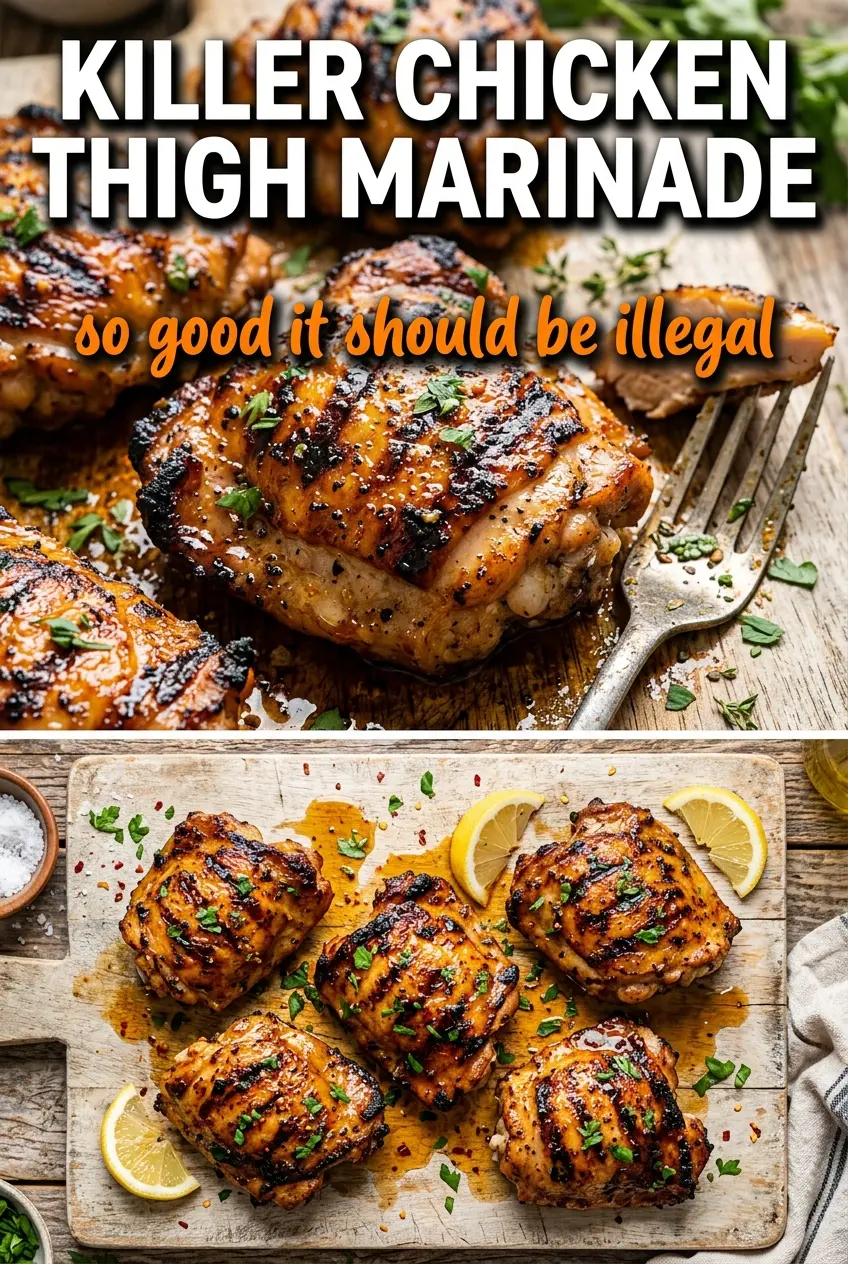
Killer Chicken Thigh Marinade
Ingredients
Equipment
Method
- Whisk olive oil, soy sauce, balsamic vinegar, Worcestershire sauce, Dijon mustard, and brown sugar with the minced garlic, smoked paprika, dried Italian herbs, garlic powder, onion powder, salt, black pepper, and red pepper flakes until evenly combined and the sugar dissolves.
- Add chicken thighs to the bowl and coat completely, then marinate covered in the refrigerator at least 4 hours or overnight for deepest flavor.
- Preheat the grill to medium-high heat, then grill chicken thighs for 6-7 minutes per side, flipping once, until the outside is caramelized and the thickest part reaches 165F.
- Preheat the oven to 425F, then bake chicken thighs on a sheet pan for 20-25 minutes until deeply golden and the thickest part reaches 165F.
- Rest the cooked chicken thighs for 5 minutes before serving to let the juices redistribute, then slice or serve whole.