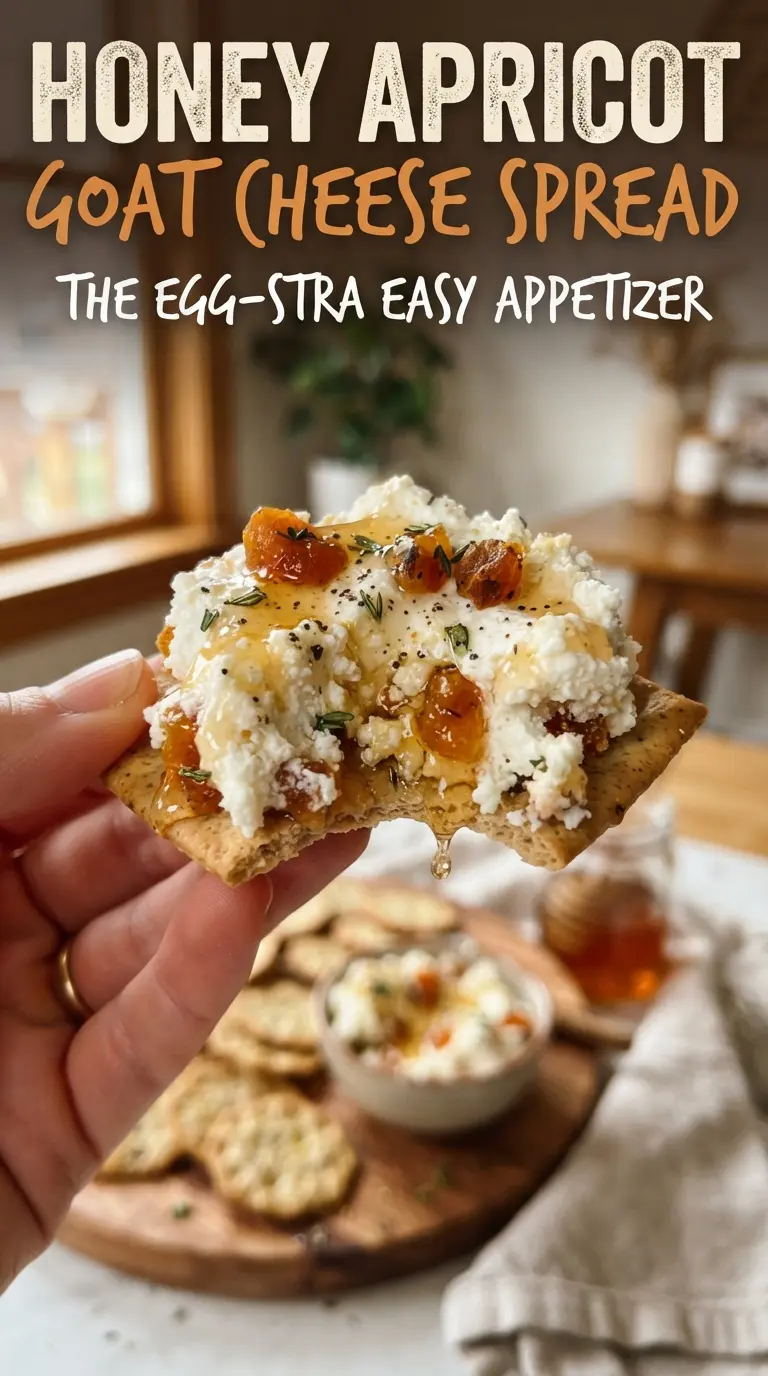
Honey apricot goat cheese spread hits that sweet-savory edge that disappears fast from a snack table. The base turns light and whipped instead of dense, and the apricot honey on top brings a glossy, fruity layer that plays against the tang of the cheese. With crunchy pistachios, chewy dried apricots, and a little thyme, every bite lands somewhere between creamy, bright, and just a little luxurious.
The trick is treating the goat cheese and cream cheese like a dip base, not a block. Softening both fully and beating them with a splash of milk keeps the texture smooth enough to swoop with crackers. Warming the preserves with honey for just a few seconds matters too, because it loosens the mixture without cooking the fruit flavor away. That topping should still taste fresh and sticky, not like jam from a jar straight onto the cheese.
Below, I’ve included the little details that make this appetizer work every time, plus a few smart swaps if you want to change the texture or adjust it for what’s already in your kitchen.
The goat cheese whipped up fluffy, and the warm apricot topping stayed glossy instead of sliding off. I used crostini and it tasted like something from a nice wine bar.
Save this honey apricot goat cheese spread for your next appetizer board — it’s creamy, tangy, and fast enough to make right before guests arrive.
The Reason This Spread Stays Creamy Instead of Turning Grainy
Goat cheese can go from silky to chalky if it’s too cold or overworked. The fix is simple: soften it fully, then beat it with cream cheese and milk until it loosens into something spreadable and airy. Cream cheese gives the base body and helps round out the sharpness of the goat cheese, while the milk keeps the mixture from feeling stiff on the spoon.
The other place this recipe succeeds is the topping. Apricot preserves warmed with honey become pourable, which lets them settle into the swirl instead of sitting in a thick mound on top. If the fruit layer is too cold, it drags through the cheese instead of draping over it. A short warm-up keeps the look clean and the texture balanced.
What Each Ingredient Is Doing in the Bowl
- Goat cheese — This gives the spread its tang and signature bite. Fresh chèvre works best because it softens smoothly and keeps the flavor bright. If yours is very firm, let it sit at room temperature until it yields easily to a spoon before beating.
- Cream cheese — This softens the tang and creates the plush, stable base that holds up under the fruit topping. You can swap in mascarpone for a richer, sweeter result, but the spread will lose some of that classic cheesecake-like structure.
- Milk — Just enough milk turns the cheeses into something you can swoop with crackers instead of cut with a knife. Start with the full amount only after the cheeses are softened; adding it to cold cheese tends to leave little lumps behind.
- Apricot preserves and honey — Together they make a glossy topping with more depth than either ingredient alone. The preserves bring fruit body, and the honey keeps the finish floral and smooth. Warm them briefly so they loosen without boiling.
- Dried apricots, pistachios, and thyme — These are the texture and aroma finish. The dried apricots echo the fresh fruit note in the preserves, the pistachios add crunch, and the thyme keeps the whole thing from reading like dessert.
Building the Swirl So the Topping Stays Where It Belongs
Whipping the Cheese Base
Beat the goat cheese, cream cheese, and milk until the mixture looks pale, fluffy, and smooth enough to hold soft peaks on a spoon. If you still see little white flecks, keep mixing before you move on; those flecks become grainy spots once the spread chills or sits out. A hand mixer makes this easy, but a sturdy spoon and some patience will work if everything is properly softened.
Making the Center Dip
Spoon the cheese into a shallow bowl and use the back of the spoon to create a low swirl in the center. That little dip gives the topping somewhere to pool instead of running straight to the edges. Don’t press so hard that you compact the cheese. You want grooves that catch the fruit, not a flat surface.
Loosening the Apricot Honey
Warm the apricot preserves and honey for just 20 to 30 seconds, then stir until the mixture looks loose and glossy. If it’s still thick enough to mound, give it a few more seconds, but stop before it starts bubbling. Overheating can make the sugar taste harsh and the fruit flavor dull. You’re looking for spoonable, not hot jam.
Finishing and Serving
Spoon the topping into the center and let some of it spill naturally across the top of the cheese. Add the chopped dried apricots, pistachios, thyme, and a pinch of flaky salt just before serving so the nuts stay crunchy and the thyme stays fragrant. Serve right away with crackers or crostini. If it sits too long after assembling, the topping can sink a little, though it will still taste great.
Three Ways to Adjust This Appetizer Without Losing What Makes It Good
Make it dairy-free with a whipped almond-based spread
Use a dairy-free cream cheese and a soft, tangy vegan cheese that whips smoothly. The flavor won’t have the same goat-cheese bite, but the fruit, honey, and herbs still do the heavy lifting. Skip anything overly salty or firm, or the spread will turn pasty instead of creamy.
Make it sweeter and more dessert-like
Add an extra teaspoon of honey and use a little more apricot preserves on top. This pushes the spread toward a brunch board or dessert cheese board, but it also softens the tang from the goat cheese. Keep the thyme light if you go this route so the herbs don’t compete with the sweeter finish.
Swap the nuts for a different crunch
Pistachios are especially good here because they echo the green herb notes, but chopped almonds or walnuts work too. Almonds give a cleaner crunch, while walnuts make the spread taste a little earthier. Toasting the nuts first deepens the flavor, but it’s optional if you’re short on time.
Storage and Reheating
- Refrigerator: Store covered for up to 3 days. The cheese will firm up a little, but the flavor stays good.
- Freezer: I don’t recommend freezing this spread. Goat cheese and cream cheese can turn crumbly and wet after thawing.
- Reheating: This doesn’t need reheating. If it’s been chilled, let it sit at room temperature for 20 to 30 minutes before serving so the texture turns creamy again. Cold cheese spread tastes blunt and feels stiff on the cracker.
Questions I Get Asked About This Recipe

Honey Apricot Goat Cheese Spread
Ingredients
Equipment
Method
- Beat goat cheese, cream cheese, and milk until light and smooth, scraping the sides as needed so the mixture turns creamy and uniform.
- Spread the whipped mixture into a shallow serving bowl and swirl in the center so it’s ready for the apricot topping.
- Warm the apricot preserves with honey for 20-30 seconds, then stir until loose and pourable with a glossy look.
- Spoon the apricot-honey over the center of the goat cheese, letting it drift into the swirl.
- Top with dried apricots, pistachios, thyme leaves, and flaky sea salt so the surface shows a mix of colors and crunchy texture.
- Serve with crackers or crostini around the bowl for dipping and easy grabbing.