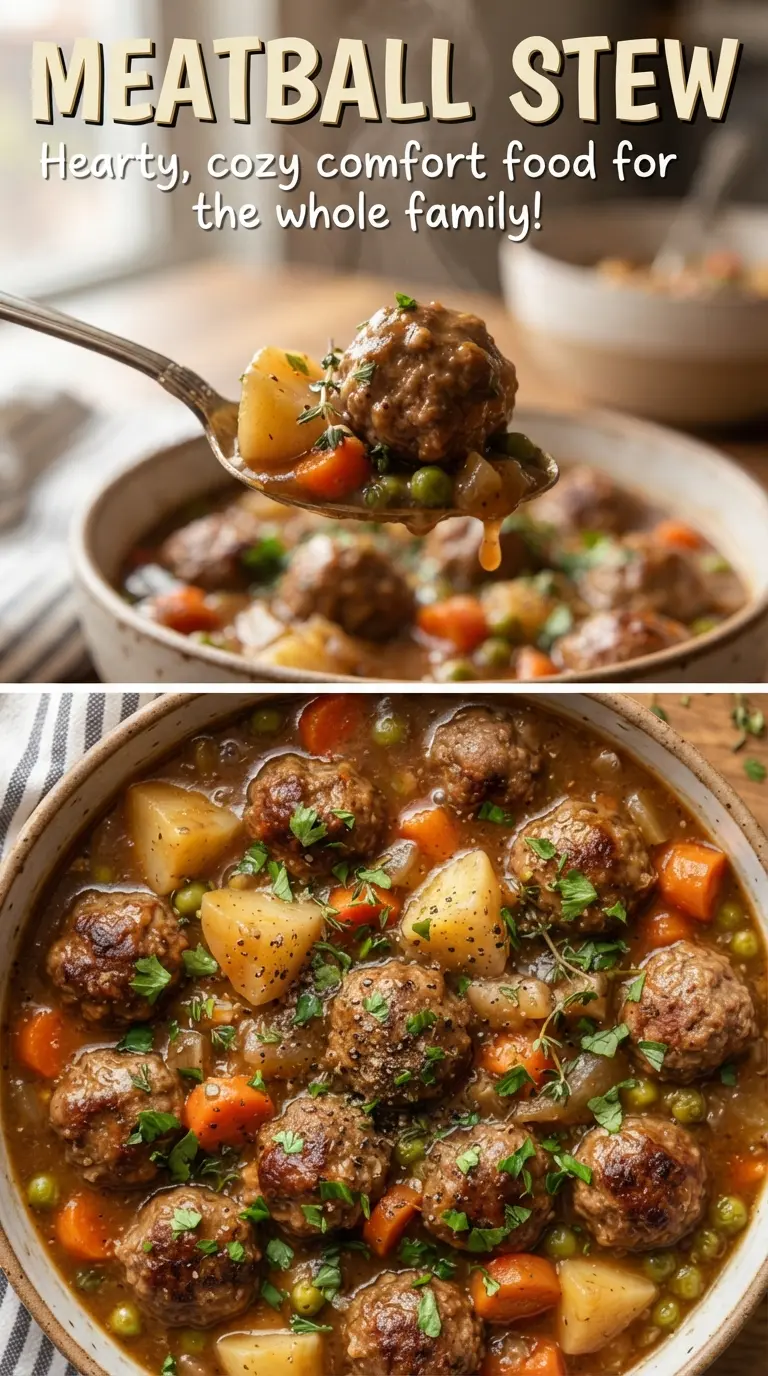
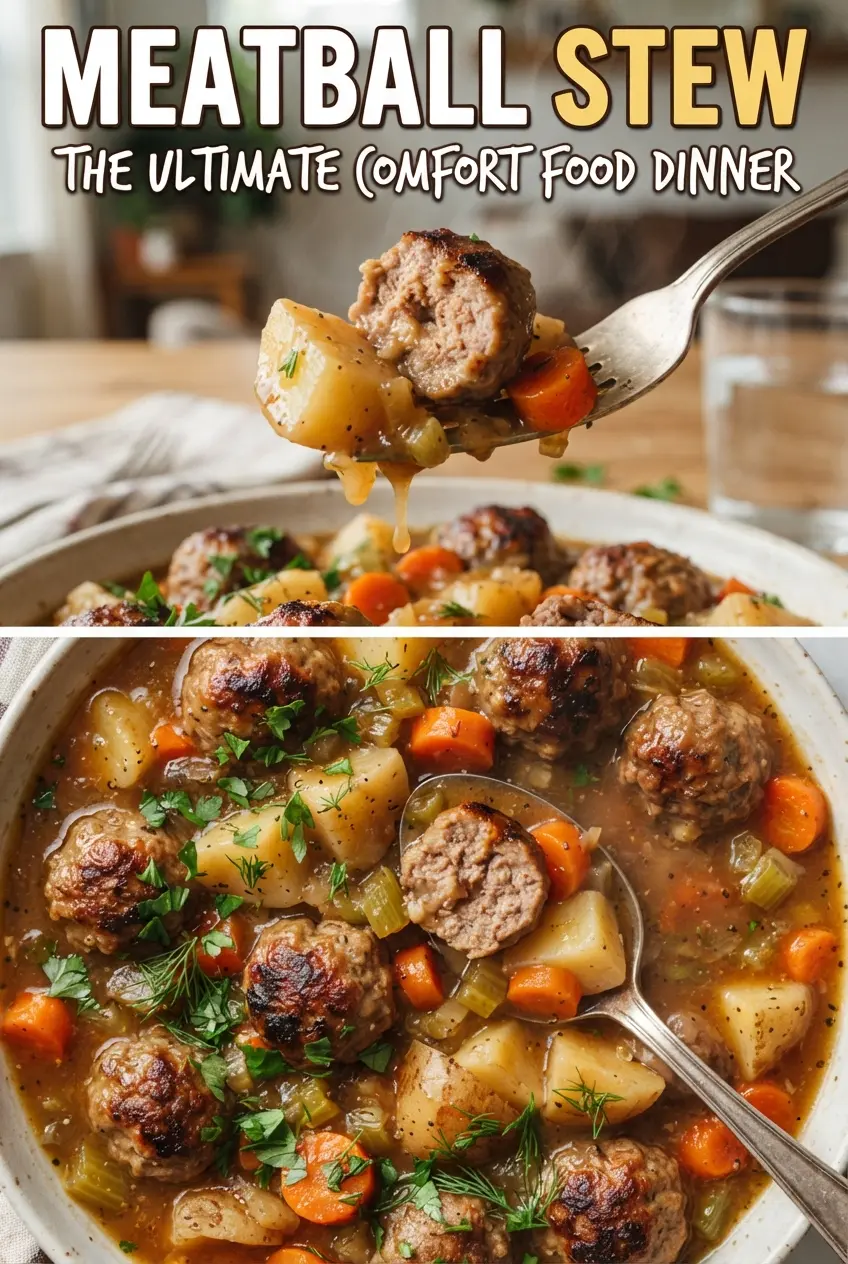
Meatball stew lands in that sweet spot between a weeknight dinner and a true stick-to-your-ribs meal. The meatballs stay tender, the vegetables hold their shape, and the broth turns into a rich brown gravy that tastes like it took a lot more effort than it did. It’s the kind of pot that comes to the table steaming hot and gets scraped clean without any coaxing.
The key is building flavor in layers. Browning the meatballs first gives the stew a deeper base, and the flour cooked with the onion keeps the broth from tasting thin or raw. Tomato paste and Worcestershire add just enough backbone to make the gravy taste rounded, while the potatoes and carrots simmer until they’re soft without collapsing.
Below, I’ve included the small details that keep the meatballs tender and the gravy smooth, plus a few swaps that make this work with what’s already in your kitchen.
The gravy turned out silky and the meatballs stayed tender all the way through. I added the peas at the end like you said, and they stayed bright instead of going mushy.
Save this meatball stew for the nights when you want tender meatballs, soft potatoes, and a thick brown gravy in one pot.
The Browning Step That Keeps the Stew from Tasting Flat
The biggest mistake with meatball stew is rushing past the browning stage. Those meatballs need a little color on the outside before they go into the broth, or the whole pot tastes one-note. Browning isn’t about cooking them through; it’s about building the savory base that makes the gravy taste deep instead of watery.
The other place people lose flavor is the flour. It needs a full minute with the onion so it loses that raw taste and can thicken the broth properly. If the flour clumps, the liquid goes in too fast. Whisk in the broth gradually and keep scraping the bottom of the pan so the browned bits dissolve into the stew instead of sticking there.
What the Meatballs, Roux, and Vegetables Each Bring to the Pot
- Ground beef — Use beef with enough fat to stay juicy, not ultra-lean beef that dries out in the stew. If you want a slightly lighter pot, 90/10 still works, but anything leaner starts to lose that tender meatball texture.
- Breadcrumbs, egg, and milk — This is the binder set that keeps the meatballs soft. The milk hydrates the breadcrumbs before the meat hits the pan, which helps prevent dense, springy meatballs.
- Flour — The flour turns the broth into gravy. All-purpose flour is the right tool here because it thickens smoothly without making the stew heavy, and it has to cook for that minute before the liquid goes in.
- Tomato paste and Worcestershire sauce — Tomato paste adds body and a little sweetness, while Worcestershire brings savory depth. Don’t skip either one; together they make the broth taste like stew instead of seasoned broth.
- Potatoes and carrots — Waxy potatoes hold their shape better than russets, which can break apart and cloud the gravy. Cut the vegetables into even pieces so they finish at the same time.
- Frozen peas — Add them at the end. They need just a few minutes to warm through, and if they simmer too long they turn dull and mealy.
Building the Pot in the Right Order
Mixing the Meatballs Without Packing Them Tight
Combine the beef, breadcrumbs, egg, milk, salt, and garlic powder just until the mixture comes together. Overmixing makes the meatballs dense, and you’ll feel it the first time one hits your spoon. Roll them gently into 1 1/2-inch rounds and keep them uniform so they brown and finish at the same rate.
Getting Color Before the Simmer
Brown the meatballs in batches in the oil. Leave space between them so they sear instead of steam; if the pan is crowded, they turn gray and release too much moisture. You’re looking for a deep brown crust on the outside, not full cooking through, because the stew finish finishes them later.
Making the Gravy in the Same Pan
Cook the onion in the drippings until it softens and turns translucent, then sprinkle in the flour and stir for a full minute. That short cook gets rid of the raw flour taste and helps the stew thicken evenly. When you whisk in the broth, go a little at a time at first so the flour disperses cleanly and the sauce stays smooth.
Letting the Pot Simmer Until Everything Merges
Add the potatoes, carrots, and browned meatballs, then cover and simmer gently until the vegetables are tender. Keep the heat low enough that the stew barely bubbles; a hard boil can break the meatballs apart and make the potatoes fray at the edges. Stir in the peas at the end and give them just enough time to heat through and turn bright green.
How to Adapt Meatball Stew Without Losing the Good Part
Gluten-Free Meatball Stew
Use gluten-free breadcrumbs in the meatballs and swap the all-purpose flour for a 1:1 gluten-free flour blend. The stew will still thicken, though the gravy may look a touch less silky than the wheat version. Let it simmer an extra few minutes if needed so the starch can fully hydrate.
Ground Turkey or Chicken Version
You can swap the beef for ground turkey or chicken, but add a little extra salt and don’t overcook the meatballs while browning them. The stew will taste lighter and less beefy, so lean on the tomato paste and Worcestershire to keep the broth from tasting thin.
Extra-Hearty Vegetable Add-In
Mushrooms or celery fit in well with the onion at the start. Mushrooms deepen the savory flavor and celery adds a little freshness, but either one soaks up broth, so expect a thicker, chunkier stew rather than a looser gravy.
Storage and Reheating
- Refrigerator: Store covered for up to 4 days. The gravy thickens as it chills, so it may look a little firmer the next day.
- Freezer: It freezes well for up to 3 months. Cool it completely, portion it into airtight containers, and leave a little space for expansion.
- Reheating: Warm it gently on the stove over low heat with a splash of broth or water. The biggest mistake is blasting it over high heat, which can toughen the meatballs and make the potatoes break down.
Answers to the Questions Worth Asking
Meatball Stew
Ingredients
Equipment
Method
- In a bowl, mix ground beef, breadcrumbs, large egg, milk, salt, and garlic powder until evenly combined and no dry crumbs remain.
- Roll the mixture into 1 1/2-inch meatballs and set them on a plate while you heat the pot.
- Heat vegetable oil in a Dutch oven over medium-high heat, then brown the meatballs in batches until browned on all sides; set aside as they finish.
- Add onion to the Dutch oven and cook for 4 minutes, stirring, until softened and lightly golden.
- Sprinkle in all-purpose flour and stir for 1 minute until it smells toasty and clings to the onions.
- Whisk in beef broth, tomato paste, Worcestershire sauce, and dried thyme, scraping up browned bits from the bottom.
- Add potatoes and carrots, bring to a simmer, then return the browned meatballs to the pot.
- Simmer covered at a steady bubbling for 25-30 minutes until potatoes and carrots are tender and the gravy thickens; cover stays on for consistent cooking.
- Stir in frozen peas and cook for 5 minutes until bright green and heated through, then serve hot.