Greek feta roast potatoes land with the kind of contrast that makes a side dish steal the plate: crisp, browned edges, soft centers, bright lemon, and salty feta melting just enough to cling to every wedge. The lemon and oregano don’t sit on top of the potatoes; they get pulled into the pan juices, where they reduce and coat the wedges as they roast.
The trick is letting the potatoes roast in the liquid long enough for the broth and lemon juice to disappear without drowning the potatoes at the start. Yukon golds hold their shape well and turn creamy inside, while the olive oil helps the cut sides brown instead of drying out. The feta goes on at the end so it stays crumbled and punchy instead of disappearing into the pan.
Below you’ll find the part that matters most: how to get the potatoes browned without burning the garlic, how to know when the liquid has cooked down enough, and what to change if you want to make these dairy-free or use a different potato.
The potatoes turned out crisp on the edges and fluffy inside, and the lemon-garlic juices baked right into the pan. I kept sneaking pieces before dinner because the feta and dill on top made them taste finished the second they came out of the oven.
Save these Greek feta roast potatoes for the nights when you want crispy lemon-oregano wedges with salty feta and almost no cleanup.
The Step That Keeps the Potatoes Crispy Instead of Soupy
The most common mistake with roast potatoes like these is crowding them in a pan full of liquid and expecting them to brown at the same time. They won’t. The first part of this roast is basically a steam-and-bake phase, and the second part is where the crisping happens once the broth has cooked off and the oil is left to do its job.
Use a roasting pan or a wide dish with enough room for the wedges to sit in a single layer. If they pile up, the bottoms soften and the edges never get that roasted grip you want. Flip them halfway through so the cut sides can catch color, and leave them alone near the end so the edges can dry out and crisp.
What the Lemon, Broth, and Feta Are Each Doing Here

- Yukon gold potatoes — These stay creamy inside while still holding their shape through a long roast. Russets can work, but they’re drier and more likely to break down at the edges.
- Olive oil — This is what helps the potato surfaces brown once the liquid is gone. Use a decent extra-virgin olive oil if you want the finished dish to taste round and peppery, but don’t waste your most expensive bottle here.
- Lemon juice — Fresh lemon brightens the potatoes as they roast and cuts through the saltiness of the feta. Bottled juice tastes flatter and can turn harsh under heat, so fresh matters here.
- Chicken broth — The broth keeps the potatoes from drying out during the first part of roasting and carries seasoning into the wedges. Vegetable broth works if you want a vegetarian version, but use one that tastes clean and not overly sweet.
- Feta — Add it at the end so it stays tangy and crumbly instead of melting away. A block of feta crumbled by hand usually tastes better and stays creamier than pre-crumbled feta, which can be drier.
Roasting the Potatoes So They Brown, Soak, and Finish Right
Coating the Wedges
Toss the potato wedges with the olive oil, lemon juice, broth, garlic, oregano, salt, and pepper right in the roasting pan so every cut surface gets coated. The pan should look wet but not flooded. If the seasoning seems uneven, use your hands or a spatula to turn everything a few times before spreading it out, because dry patches won’t absorb flavor the same way.
Letting the Oven Do Two Jobs
Roast at 425F until the liquid is mostly absorbed and the potatoes start to take on color around the edges. During this stage, the potatoes are softening in the broth while the garlic and oregano infuse the pan juices. If the pan still looks soupy at 35 minutes, keep going; pulling them too early leaves you with seasoned boiled potatoes instead of roast potatoes.
Flipping for Color
Turn the wedges halfway through roasting so both sides can catch heat and brown. The undersides should show deep gold and a little crust before you move them around. If the wedges stick, leave them for another few minutes; they’ll release more easily once the crust forms.
Finishing with Feta and Herbs
When the potatoes are crisp at the edges and the liquid is gone, scatter the feta and herbs over the top while they’re still hot. The residual heat softens the cheese just enough to make it cling without melting into the pan. Fresh dill gives the cleanest Greek-style finish, but parsley keeps the flavor brighter and less herbal if that’s what you have.
Three Ways to Make These Greek Feta Potatoes Fit the Night
Dairy-Free Version
Skip the feta and finish with extra dill, a pinch more salt, and a drizzle of olive oil. You lose the salty creaminess, but the lemon and oregano still carry the dish, and the potatoes stay bright and satisfying.
Vegetarian Swap
Use vegetable broth instead of chicken broth. Choose a broth with a clean, savory taste so the lemon doesn’t turn sharp and thin; a heavy mushroom broth will push the flavor away from the bright Greek profile.
Using Russet Potatoes
Russets roast up a little fluffier and more fragile than Yukon golds, so cut them into larger wedges and check them a few minutes early. They’ll still crisp, but they’re more likely to break at the edges if you stir too aggressively.
Making Them Ahead
Roast the potatoes until they’re just tender and the liquid has mostly cooked off, then cool and refrigerate. Reheat them in a hot oven until the edges re-crisp, then add the feta and herbs right before serving so they taste freshly finished.
Storage and Reheating
- Refrigerator: Store leftovers in an airtight container for up to 4 days. The potatoes soften a bit as they sit, but the flavor holds well.
- Freezer: These freeze, but the texture turns mealy after thawing, so I don’t recommend freezing them.
- Reheating: Reheat on a sheet pan in a 400F oven until hot and re-crisped. The mistake to avoid is microwaving them, which warms the centers but leaves the edges limp.
Answers to the Questions Worth Asking
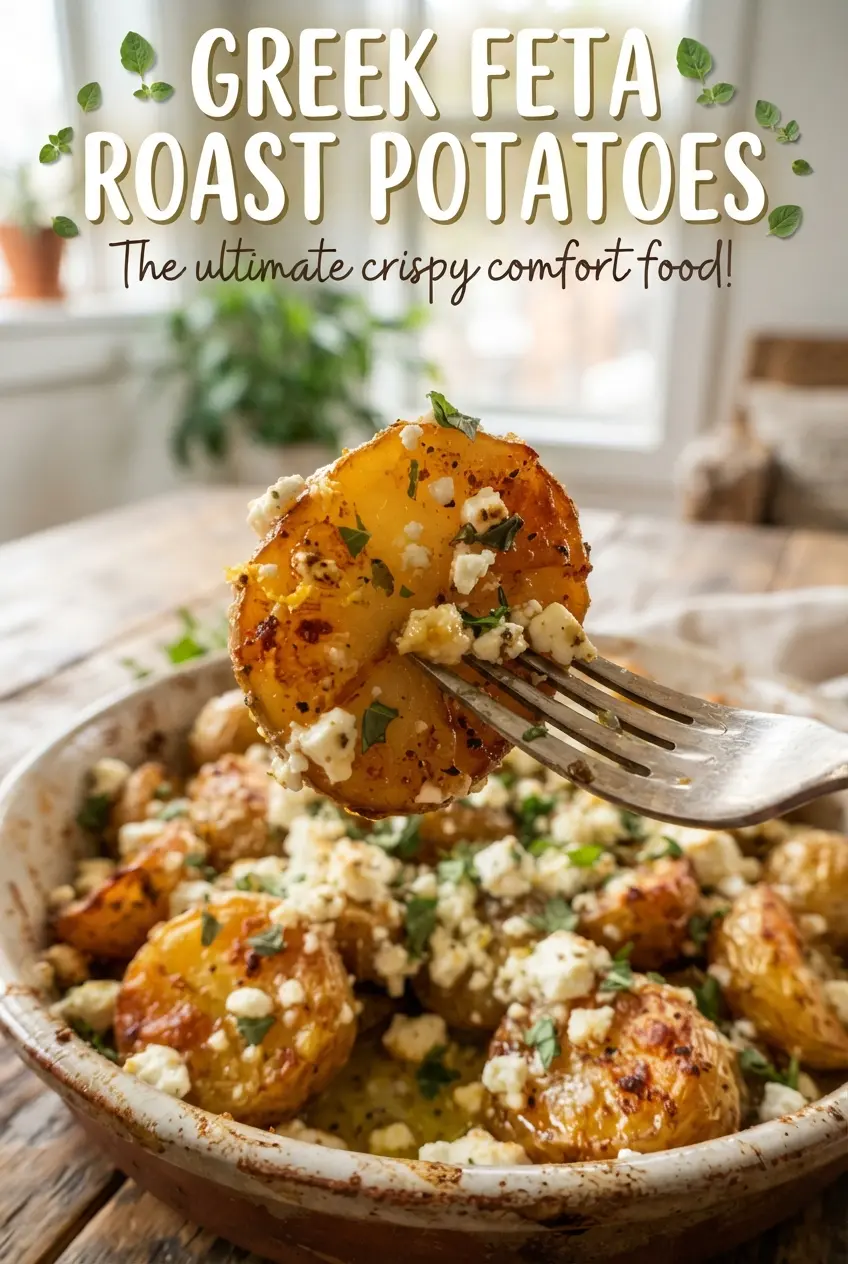
Greek Feta Roast Potatoes
Ingredients
Equipment
Method
- Preheat the oven to 425F so it reaches full heat before the potatoes go in.
- In a roasting pan, toss the Yukon gold potatoes with olive oil, fresh lemon juice, chicken broth, minced garlic, dried oregano, salt, and black pepper until evenly coated.
- Spread the potatoes in a single layer in the roasting pan so they roast instead of steam.
- Roast for 45-50 minutes at 425F, flipping halfway, until the liquid is absorbed and the edges are crispy and golden.
- Top the hot potatoes with crumbled feta and fresh dill or parsley for a fresh, herby finish.
- Serve the Greek feta roast potatoes hot right out of the pan.