Au gratin potatoes land on the table with tender layers, a creamy center, and a browned cheese crust that crackles a little when you spoon into it. The best versions don’t just taste rich; they slice cleanly enough to hold their shape while still melting together at the edges, which is exactly what makes them worth keeping in the rotation.
This version leans on Yukon Gold potatoes because they stay creamy instead of turning mealy, and the sauce starts with a proper flour-and-butter base so it thickens enough to coat every slice instead of pooling at the bottom of the dish. Sharp cheddar brings the bold flavor, while Gruyere gives the top a deeper, nuttier finish that tastes more French-inspired than plain cheese casserole.
Below, I’ve included the little timing details that keep the sauce smooth and the potatoes tender all the way through. If you’ve ever had au gratin potatoes turn watery or slide apart, the process notes will help you avoid both problems.
The sauce stayed silky, the potatoes cooked through without falling apart, and that Gruyere on top browned into the best crust. I made it for Sunday dinner and there wasn’t a spoonful left.
Save these creamy au gratin potatoes for the dinner when you want a bubbling Gruyere crust and tender Yukon Gold layers.
The Sauce Has to Thicken Before It Touches the Potatoes
Thin cream sauce is the fastest way to end up with a casserole that looks rich but eats watery. The sauce needs to coat the back of a spoon before it gets layered with the potatoes, because the starch from the potatoes will loosen it a little as everything bakes. If you stop too early, the finished dish can slide apart on the plate and leave liquid behind in the pan.
The flour-butter base does the heavy lifting here. Cook it for a full minute so the raw flour taste disappears, then whisk in the milk and cream slowly so the mixture stays smooth. Once it simmers, it should look glossy and lightly thickened, not stiff. That texture is what lets each slice hold together after the 15-minute rest.
What Each Ingredient Is Actually Doing in This Recipe

- Primary ingredient (the star) — Quality matters most. Choose the best you can find.
- Cooking medium (oil, butter, or broth) — This carries flavors and prevents dryness.
- Seasonings (salt, pepper, spices, herbs) — Layer flavors so nothing overpowers. Build depth gradually.
- Aromatics (garlic, onion, herbs) — Cook with fat to bloom flavors. Become the foundation.
- Supporting ingredients — Complement the main ingredient without overpowering it.
- Sauce or liquid (if applicable) — Brings flavors together. Balance richness with acid.
- Acid (lemon, vinegar, wine, or other) — Brightens and prevents flat-tasting results.
- Final finish (garnish, glaze, or sauce) — Prevents one-dimensional taste and adds visual appeal.
What the Potatoes and Cheeses Are Each Doing Here
- Yukon Gold potatoes — These are the best choice because they turn creamy without falling apart. Russets can work, but they bake up softer and can break down more, which makes the dish less cleanly sliced.
- Sharp cheddar — This gives the sauce its bold, familiar flavor. Mild cheddar won’t taste as complete after baking, and pre-shredded cheese can make the sauce grainier because of the anti-caking coating.
- Gruyere — Gruyere melts smoothly and gives the top a deeper, nuttier finish. If you need a substitute, Swiss is the closest option, though the flavor will be a little milder.
- Fresh thyme — Thyme keeps the dish from tasting flat. Dried thyme can work in a pinch, but use less because the flavor is more concentrated.
Building the Layers So They Bake Evenly
Starting the Sauce
Melt the butter and cook the garlic just until fragrant, about 30 seconds. If the garlic browns, it turns bitter fast and that bitterness hangs around in a dish this rich. Whisk in the flour and let it bubble for a minute; that step keeps the finished sauce from tasting pasty. When you add the milk and cream, pour slowly while whisking so the base stays smooth instead of going lumpy.
Watching for the Right Thickness
Let the sauce simmer gently until it visibly thickens and lightly coats a spoon. Don’t rush this part with higher heat, because boiling can make the dairy taste scorched and can make the sauce separate later in the oven. Once it thickens, pull it off the heat before stirring in the cheese. Cheese melts best off the burner or over very low heat; too much heat can make it grainy.
Layering the Potatoes
Arrange the potatoes in even layers and spoon the sauce over each third as you build the dish. The goal is full coverage, not swimming potatoes, so nudge the slices around with the back of a spoon to help the sauce slip between them. If you pile the potatoes too tightly, the middle can stay undercooked while the top browns too fast. A 9×13-inch dish gives the layers room to settle.
Baking and Resting
Cover the dish with foil for the first part of baking so the potatoes soften before the top browns. Then uncover it for the final 25 to 30 minutes until the top is deep golden and the edges bubble. The center should feel tender when pierced with a knife, not stiff. Let it rest for 15 minutes before serving so the sauce sets up and doesn’t run everywhere when you scoop it.
How to Adapt These Au Gratin Potatoes Without Losing the Creamy Center
Make It Gluten-Free
Swap the all-purpose flour for a gluten-free 1:1 blend and whisk it into the butter the same way. The sauce should thicken at nearly the same pace, though some blends need an extra minute on the stove before they stop tasting raw. Don’t skip the simmer, because that’s what gives the sauce its body.
Use All Cheddar for a Sharper Finish
If you don’t have Gruyere, use all cheddar instead. The dish will still be creamy and browned on top, but it loses some of the nutty depth that makes the original taste a little more polished. Choose a sharp block of cheddar so the flavor doesn’t flatten out in the oven.
Make It Ahead for a Holiday Table
You can assemble the casserole a few hours ahead, cover it, and refrigerate it before baking. Let the dish sit at room temperature for about 30 minutes before it goes into the oven so the center doesn’t start cold. Add a little extra bake time if it’s still chilled in the middle.
Skip the Heavy Cream for a Lighter Version
You can replace the heavy cream with more whole milk, but the sauce will be less lush and the finished dish a little lighter. Keep the total liquid amount the same so the potatoes still bake evenly. The top may brown a touch faster, so watch the final uncovered bake closely.
Storage and Reheating
- Refrigerator: Store leftovers covered for up to 4 days. The sauce will firm up in the fridge, but that’s normal.
- Freezer: It can be frozen, though the texture softens a bit after thawing. Cool completely, wrap tightly, and freeze for up to 2 months.
- Reheating: Reheat covered at 350°F until hot in the center, then uncover for a few minutes to bring back the top. The biggest mistake is blasting it in the microwave, which makes the sauce separate and the potatoes dry out unevenly.
Questions I Get Asked About This Recipe
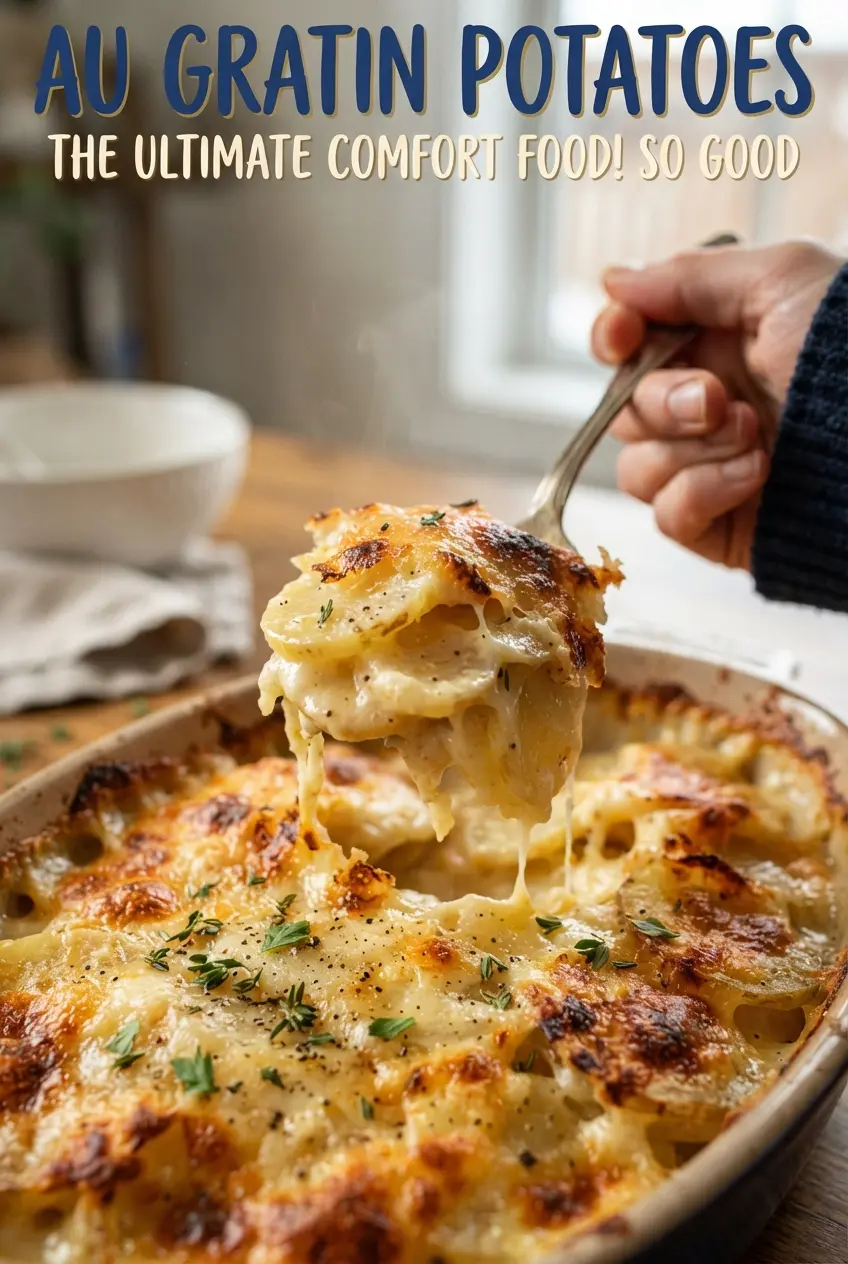
Au Gratin Potatoes
Ingredients
Equipment
Method
- Preheat the oven to 375°F, then butter a 9x13-inch baking dish with the butter. Set the dish aside while you make the sauce.
- Melt the butter, then cook the minced garlic for 30 seconds until fragrant. Keep the heat gentle so the garlic doesn’t brown.
- Whisk in the all-purpose flour and cook for 1 minute to remove the raw flour taste. The mixture should look smooth and slightly thickened.
- Slowly whisk in the whole milk and heavy cream, then simmer until thickened. Visual cue: the sauce should coat a spoon and cling in a creamy layer.
- Remove the sauce from heat, then season with salt, black pepper, and fresh thyme leaves. Stir until the herbs are evenly distributed.
- Stir in 1 cup sharp cheddar and 1/2 cup Gruyere until fully melted. The sauce should be glossy and smooth.
- Layer a third of the potato slices in the buttered baking dish, then spoon over a third of the sauce. Spread the sauce gently so it reaches the edges.
- Repeat the potato-and-sauce layering two more times, using up all potatoes and sauce by the end of the third layer. Visual cue: the dish should be evenly filled with creamy layers.
- Top with the remaining sharp cheddar and Gruyère so the surface bakes into a browned crust. Make sure cheese covers most of the top.
- Cover the dish with foil and bake for 45 minutes at 375°F. Visual cue: the potatoes should be mostly tender with bubbling sauce under the foil.
- Uncover and bake 25 to 30 minutes at 375°F until golden and tender. Visual cue: the top should be deeply golden with active bubbling around the edges.
- Rest the au gratin potatoes for 15 minutes before serving. This helps the creamy layers set so each slice holds together.