Crispy air fryer Korean soy garlic chicken thighs hit that sweet spot where the skin turns deeply caramelized while the meat stays juicy underneath. The glaze clings instead of sliding off, and every bite gets that punch of soy, garlic, ginger, and a little gochujang heat. It’s the kind of dinner that tastes like you spent a lot more effort than you actually did.
The trick here is giving the chicken time to marinate so the seasoning gets inside the meat, then air frying it hot enough to render the skin and concentrate the sugars without burning the glaze. Bone-in thighs hold up better than breasts in the air fryer, and that matters here because the marinade has sugar in it. Too much heat too early and you’ll scorch the outside before the inside finishes. This version keeps the flavor bold and the texture balanced.
Below, I’ll show you how to keep the glaze sticky instead of watery, which ingredient matters most if you want that classic Korean-style finish, and what to do if you want the same dinner with a little less heat.
The marinade turned into that sticky glaze I was hoping for, and the skin got crisp without drying out. I used the extra simmered sauce on rice and my husband asked if I could make it again next week.
Save these sticky air fryer Korean soy garlic chicken thighs for the nights when you want crispy skin, a glossy glaze, and one pan of big flavor.
The Part That Keeps the Skin Crisp Instead of Steaming
The biggest mistake with air fryer chicken thighs is rushing straight from marinade to basket with too much liquid clinging to the meat. That excess marinade turns into steam first, and steam is the enemy of crisp skin. Shake off the chicken well before it goes in, then let the air fryer do the rest of the work at a full 400°F so the skin can render and caramelize.
Bone-in thighs are the right cut here because they stay juicy while the outside browns. If you use boneless thighs, the cook time drops and the edges will crisp faster, but you lose some of that rich, roast-like texture. The sugar in the marinade helps with color, but it also means the difference between caramelized and burnt is a few minutes, not a lot. Watch for dark sticky edges and use temperature, not just the clock.
What Each Ingredient Is Actually Doing in This Glaze
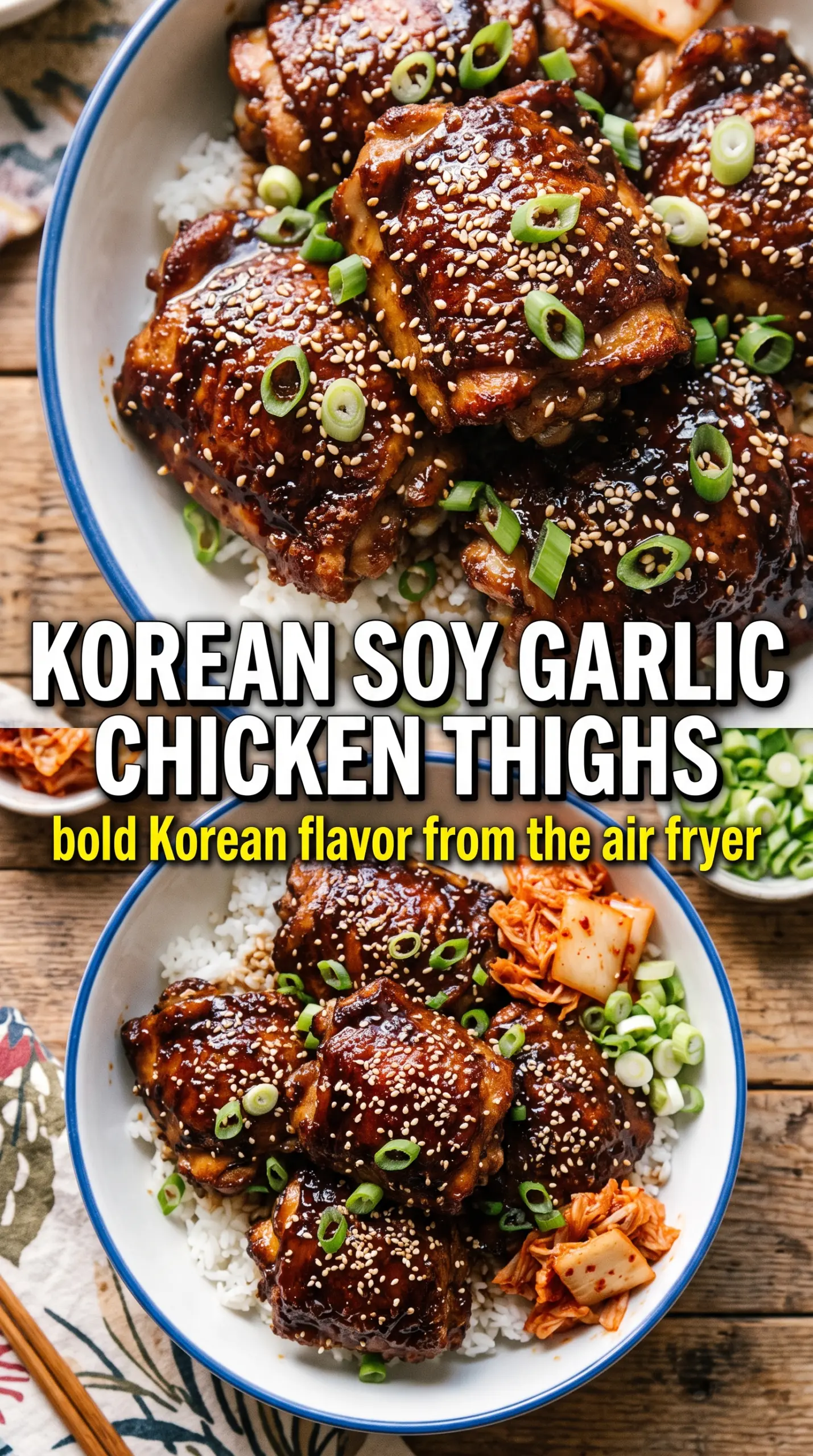
- Soy sauce — This gives the chicken its deep savory base and the salt needed to season the meat from the inside out. Low-sodium soy sauce works fine if that’s what you keep on hand, but don’t swap in something much thinner like coconut aminos without expecting a milder, less salty result.
- Sesame oil — A little goes a long way here. It adds that nutty Korean-style aroma that you can’t fake with another oil, so use the real thing and keep the amount measured; too much will make the marinade heavy instead of balanced.
- Brown sugar and mirin — These are what help the glaze turn sticky and glossy in the air fryer. If you don’t have mirin, rice vinegar works, but the finish will be sharper and less round; the brown sugar is what keeps the tang from reading too aggressively.
- Garlic, ginger, and gochujang — Garlic and ginger build the backbone, while gochujang brings heat, color, and that unmistakable Korean barbecue character. If you need a milder version, cut the gochujang back to 1/2 tablespoon, but don’t leave it out entirely or the glaze loses depth.
- Chicken thighs — Bone-in, skin-on thighs are what make this recipe work. They can handle the high heat, stay juicy through the full cook, and give you the crispy, crinkled edges that plain breast meat just can’t match here.
Building the Glaze So It Sticks After the Air Fryer
Mix the marinade until the sugar disappears
Whisk the soy sauce, sesame oil, brown sugar, mirin, garlic, ginger, gochujang, and black pepper until the sugar starts dissolving and the mixture looks cohesive, not grainy. If the sugar stays sitting on the bottom, it won’t cling evenly to the chicken and you’ll end up with patches of sweetness instead of a balanced glaze. Coat the thighs well and let them marinate at least an hour, or overnight if you want the flavor deeper and the surface darker.
Let the chicken lose the excess liquid before cooking
When the chicken comes out of the marinade, let the extra drip off instead of dumping a wet puddle into the air fryer basket. Too much liquid slows browning and can make the skin rubbery. Arrange the thighs skin-side down first so the fat can render into the basket, then flip them halfway through to finish crisping the top.
Use the leftover marinade as a quick glaze
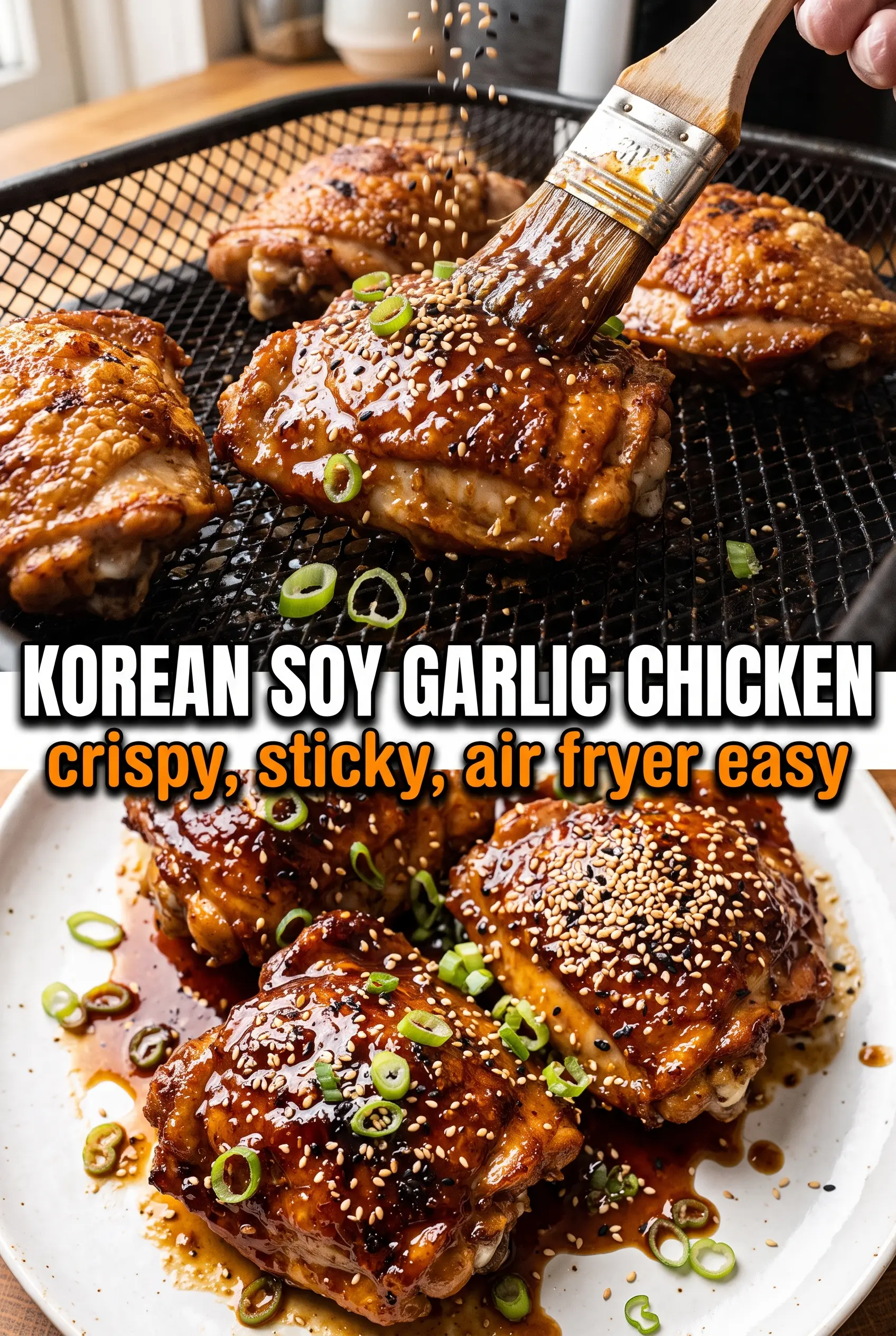
Don’t brush raw marinade onto the finished chicken. Simmer any leftover marinade for about 3 minutes first so it thickens slightly and becomes safe to use. Once it cools a little, brush it over the hot chicken so it catches on the skin instead of running off the plate.
How to Adapt the Chicken Without Losing the Sticky Finish
Make it less spicy
Cut the gochujang to 1/2 tablespoon for a gentler heat that still keeps the glaze savory and deep. The chicken will still have that Korean-style backbone, just without the lingering burn on the back of the throat.
Use boneless thighs instead
Boneless thighs work well if you want a faster dinner, and they still stay juicy. Pull them earlier and start checking around the 16-minute mark, because they’ll brown faster and can overshoot before the glaze gets glossy.
Gluten-free version
Use a certified gluten-free soy sauce or tamari and check your gochujang label, since some brands contain wheat. The texture and cooking method stay the same, so this swap doesn’t cost you anything in the final result.
Dairy-free and meal-prep friendly
This recipe is naturally dairy-free, and the flavor holds up well for leftovers. Store the glaze separately if you can, then rewarm the chicken in the air fryer so the skin wakes back up instead of turning soft in the microwave.
Storage and Reheating
- Refrigerator: Store in an airtight container for up to 4 days. The skin softens a bit, but the flavor stays strong.
- Freezer: Freezes well for up to 2 months if you cool the chicken first and wrap it tightly. Freeze without the garnish, and keep extra glaze in a separate container if possible.
- Reheating: Reheat in the air fryer at 350°F for 5 to 7 minutes until hot and the skin tightens back up. The common mistake is using the microwave, which makes the glaze sticky but the skin limp.
Answers to the Questions Worth Asking
Air Fryer Korean Soy Garlic Chicken Thighs
Ingredients
Equipment
Method
- In a bowl, whisk soy sauce, sesame oil, brown sugar, mirin or rice vinegar, garlic, ginger, gochujang, and black pepper until smooth and glossy.
- Add the chicken thighs to the marinade, ensuring each piece is coated, then cover and refrigerate for at least 1 hour or overnight.
- Preheat the air fryer to 400F, then shake off excess marinade from the chicken.
- Place thighs skin-side down and air fry for 10 minutes to render and crisp the skin.
- Flip the chicken and air fry for 10 to 12 minutes, until the skin is crispy and caramelized and the internal temperature reaches 165F.
- Pour any remaining marinade into a saucepan and simmer for 3 minutes to thicken into an extra glaze.
- Brush the glaze over the hot chicken and garnish with sesame seeds and green onions.