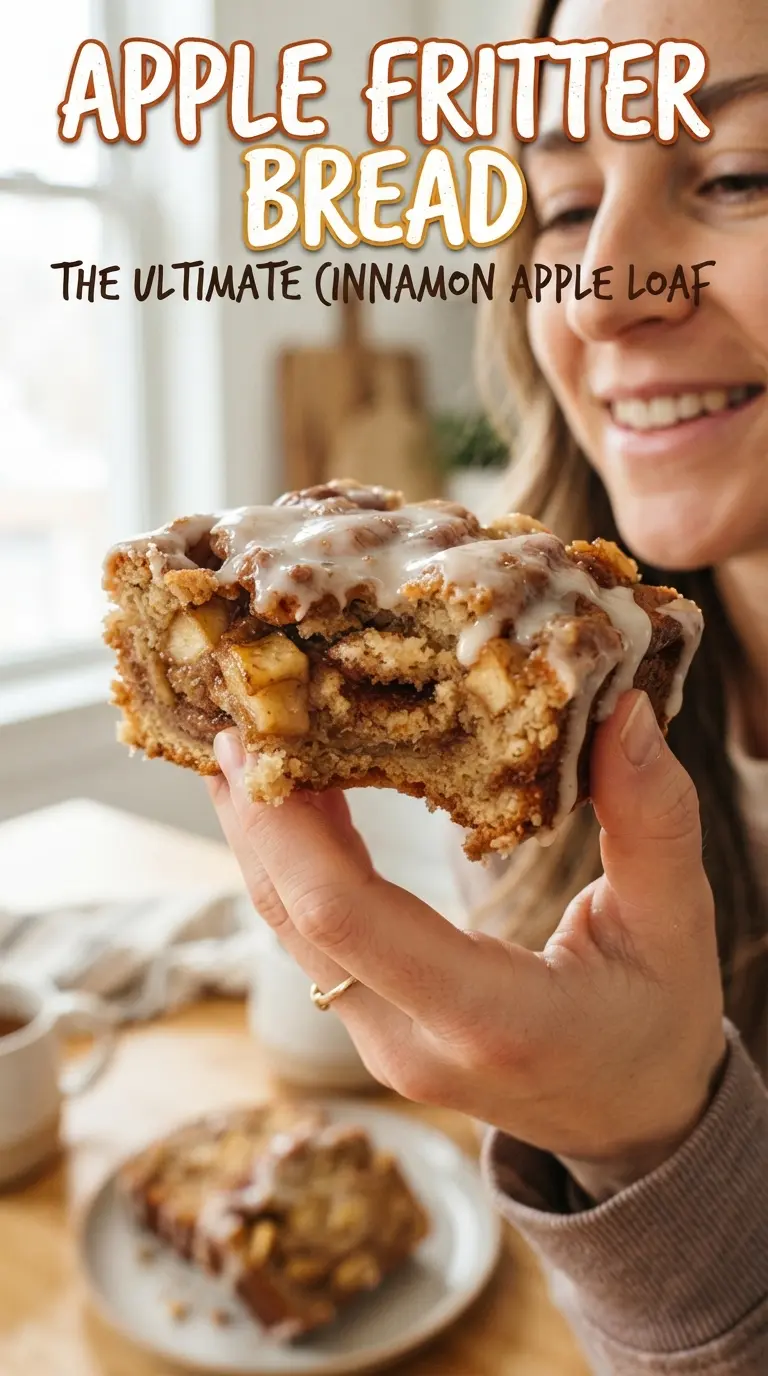
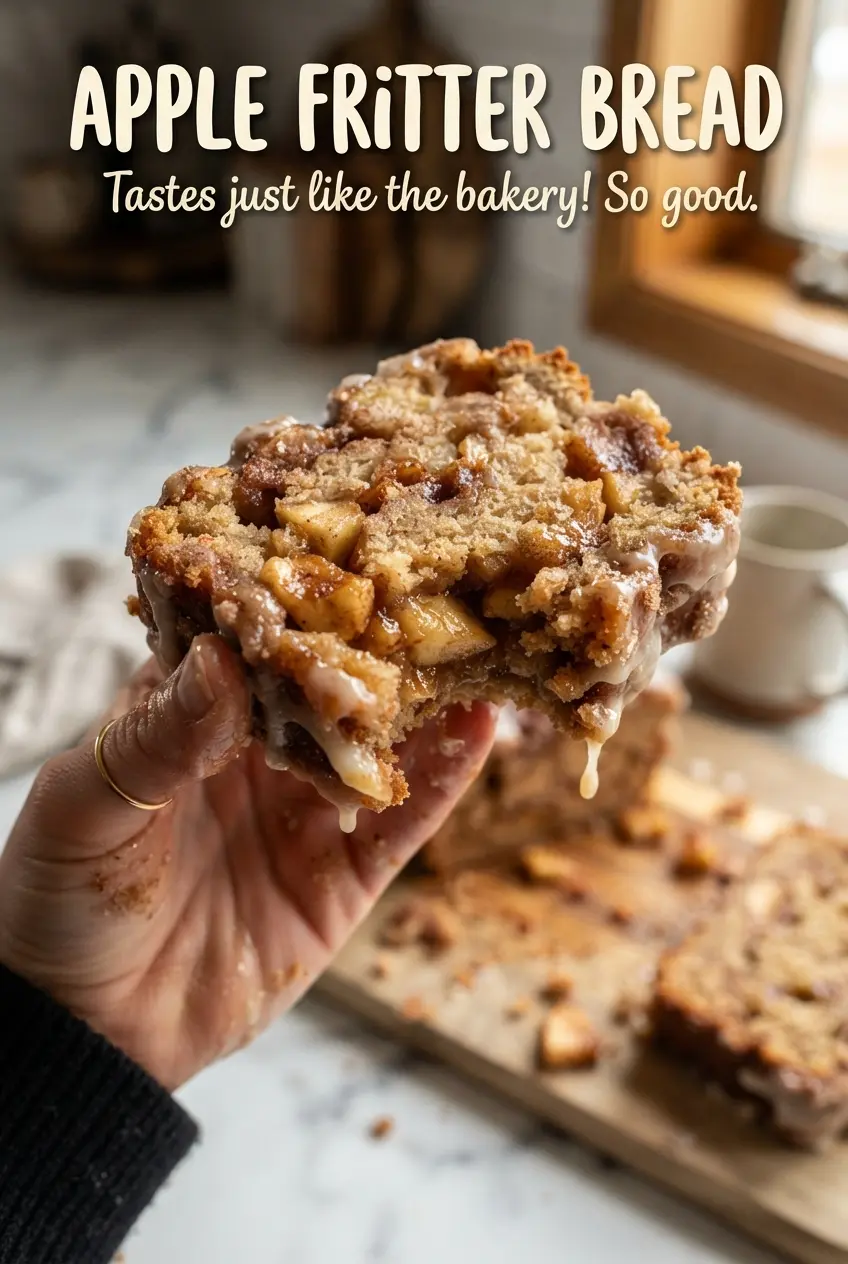
Apple fritter bread bakes up with a tender crumb, warm cinnamon swirls, and juicy apple pockets that make every slice taste like it came from a bakery case. The thick vanilla glaze on top gives it that classic fritter finish without any frying, and the loaf stays soft enough to slice cleanly once it cools.
The trick is keeping the cinnamon sugar layered instead of fully mixed into the batter. Some of it gets tossed with the apples first, which keeps the fruit from sinking and gives you little bursts of spiced sweetness throughout the loaf. The rest is scattered between the batter layers, then swirled just enough to create ribbons without muddying the batter.
Below, I’ve included the part that matters most: how to keep the apples distributed, when to stop swirling, and how to get that glaze thick enough to drip without disappearing into the loaf.
The cinnamon sugar stayed in distinct swirls and the apples were evenly spread through the loaf instead of sinking to the bottom. The glaze set up just enough to look bakery-style without making the bread soggy.
Save this apple fritter bread for a loaf with cinnamon swirls, tender apples, and that thick vanilla glaze dripping over the top.
The Reason the Apple Layers Stay Put Instead of Sinking
Apple bread goes wrong when the fruit is too wet, the batter is too thin, or everything gets stirred together in one pass. This loaf avoids all three. Tossing the chopped apples with part of the cinnamon sugar helps coat the pieces and pulls off some of their surface moisture, which keeps them from sliding straight to the bottom. Layering the batter instead of folding the apples through also gives the loaf structure, so the fruit stays suspended where you want it.
The other thing that matters is the swirl. You want visible ribbons of cinnamon sugar, not a fully marbled batter. A few gentle turns with a knife are enough. If you overdo it, the brown sugar melts into the batter and you lose the pockets that make this taste like an apple fritter instead of plain spice bread.
What Each Ingredient Is Doing in This Loaf
- Apples — Use a firm baking apple that holds its shape. Softer apples can turn mushy and disappear into the loaf. Peel them so the texture stays even and the pieces bake tender instead of chewy.
- Brown sugar and cinnamon — This is the fritter flavor in the loaf. The brown sugar brings moisture and a deeper caramel note, while the cinnamon creates the warm ribboned filling. Don’t swap in all granulated sugar here if you want that classic bakery taste.
- Butter — Softened butter is what gives the crumb its rich, cake-like texture. Cold butter won’t cream properly, and melted butter makes the bread denser. The goal is pale and fluffy before the eggs go in.
- Milk — Milk loosens the batter just enough to keep the loaf tender. Whole milk gives the best texture, but 2% works. If you need a dairy-free version, unsweetened oat milk is the closest swap.
- Powdered sugar — This makes the glaze smooth and pourable. Granulated sugar won’t dissolve the same way, so the finish won’t look as clean or glossy.
Building the Loaf Without Overmixing the Batter
Creaming the Butter and Sugar
Beat the softened butter and granulated sugar until the mixture looks pale and fluffy, not just combined. That step traps air and gives the loaf lift, which matters because the apples add weight. If the butter is still cool and lumpy, stop and let it soften longer before you move on. Beat in the eggs one at a time so the batter stays smooth instead of curdled.
Layering the Batter and Apples
Spread half the batter into the pan first, then add half the apples and half the remaining cinnamon sugar. Repeat with the rest of the batter and toppings. This order keeps the fruit from clumping in the center and gives you distinct swirls in each slice. Don’t dump all the apples on top at once or they’ll sink before the loaf sets.
Baking Until the Center Sets
Bake until the top is deeply golden and a toothpick inserted into the center comes out clean or with just a few moist crumbs. If the top browns too fast before the middle is done, lay a loose sheet of foil over the pan for the last 10 to 15 minutes. Pull the loaf too early and the center will collapse when you slice it. Let it cool in the pan for 15 minutes so it firms up enough to glaze.
Finishing With the Glaze
Whisk the powdered sugar and milk until you get a thick ribboning glaze that falls from the spoon in a slow stream. If it’s too thin, it will soak in and vanish; if it’s too thick, it will sit in clumps on top. Drizzle it over the warm loaf, not piping hot, so it clings instead of melting straight off the sides.
Three Ways to Adjust Apple Fritter Bread Without Losing the Good Part
Make it dairy-free
Use plant butter and unsweetened oat milk in both the batter and glaze. Oat milk has enough body to keep the crumb soft, while thinner milks can make the glaze runny and the loaf a little less rich.
Use pears instead of apples
Firm pears can stand in for apples if that’s what you have, but choose ones that are still slightly underripe. They bake softer and sweeter than apples, so the loaf will taste a little more delicate and less tangy.
Skip the glaze for a less sweet loaf
Leave off the glaze and dust the cooled loaf with a little powdered sugar instead. The bread itself is still sweet, but this version tastes more like coffee cake and less like a bakery-style dessert loaf.
Make it gluten-free
A good 1:1 gluten-free baking blend works here, but don’t use a single-ingredient flour swap. You need the starches and binders in the blend to keep the loaf from turning crumbly, especially with the extra moisture from the apples.
Storage and Reheating
- Refrigerator: Store covered for up to 4 days. The glaze will soften a little, but the loaf stays moist.
- Freezer: Freeze slices or the whole loaf tightly wrapped for up to 2 months. Skip the glaze before freezing and add it after thawing for the best texture.
- Reheating: Warm slices in the microwave for 10 to 15 seconds or in a low oven until just heated through. Don’t overheat it or the apples can turn dry and the glaze can melt away.
Questions I Get Asked About This Recipe
Apple Fritter Bread
Ingredients
Equipment
Method
- Preheat the oven to 350F, then grease and line a 9x5-inch loaf pan for easy release.
- Mix the brown sugar and ground cinnamon, then toss the chopped apples with 2 tablespoons of the cinnamon sugar so the apples taste evenly seasoned.
- Beat the softened butter and granulated sugar until fluffy, about 1–2 minutes, so the base traps air for a tender crumb.
- Beat in the eggs one at a time, then mix in the vanilla extract until the batter looks smooth and glossy.
- Whisk the all-purpose flour, baking powder, and salt together, then add to the batter alternately with the milk just until combined to avoid overmixing.
- Spread half of the batter into the prepared loaf pan, then top with half the apples and half of the remaining cinnamon sugar.
- Spread the remaining batter on top, then add the remaining apples and remaining cinnamon sugar to create layered apple-fritter pockets.
- Swirl gently with a knife through the batter in a few passes to create cinnamon streaks without fully mixing the layers.
- Bake for 50–55 minutes at 350F, until a toothpick comes out clean with only a few moist crumbs.
- Cool the loaf for 15 minutes, then whisk the powdered sugar with 2–3 tablespoons of milk until thick and pourable.
- Drizzle the vanilla glaze over the warm loaf so it sets into a lightly glossy finish.