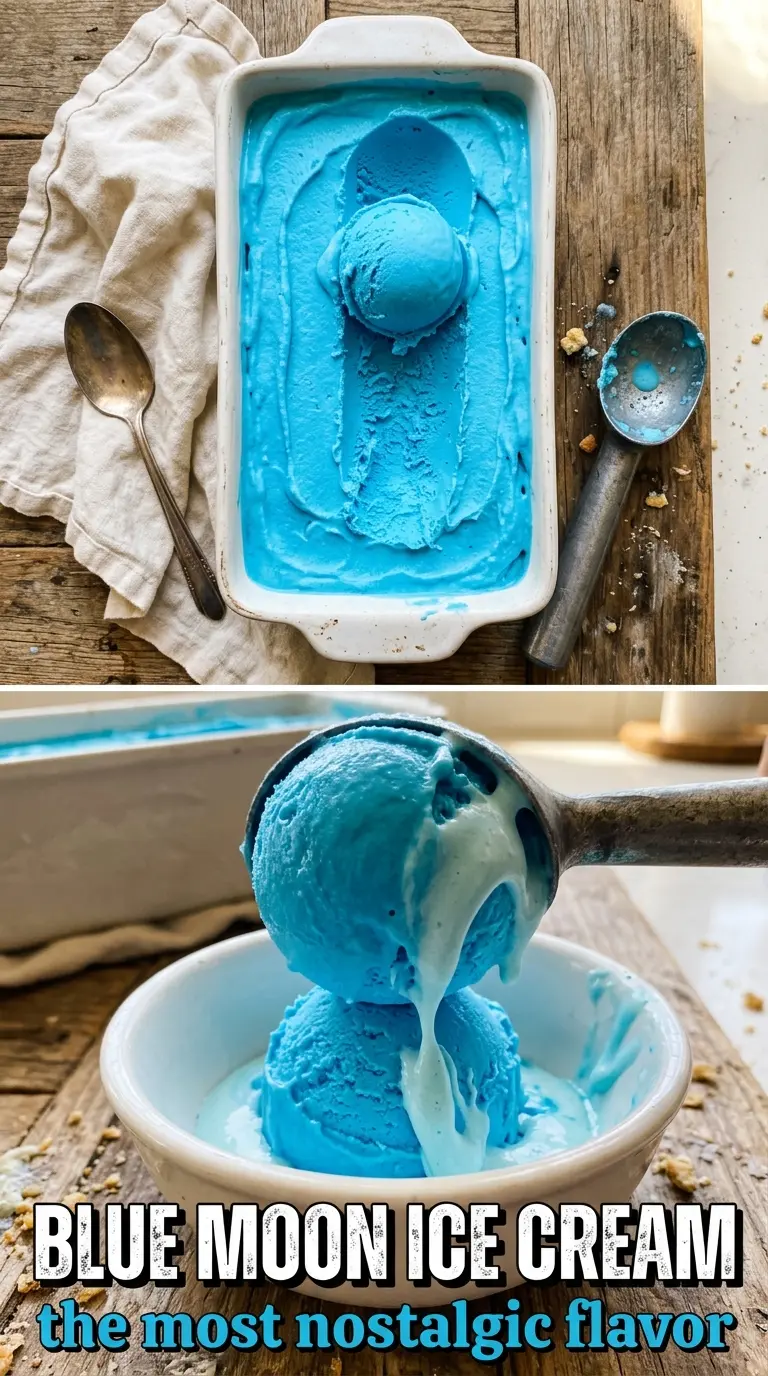
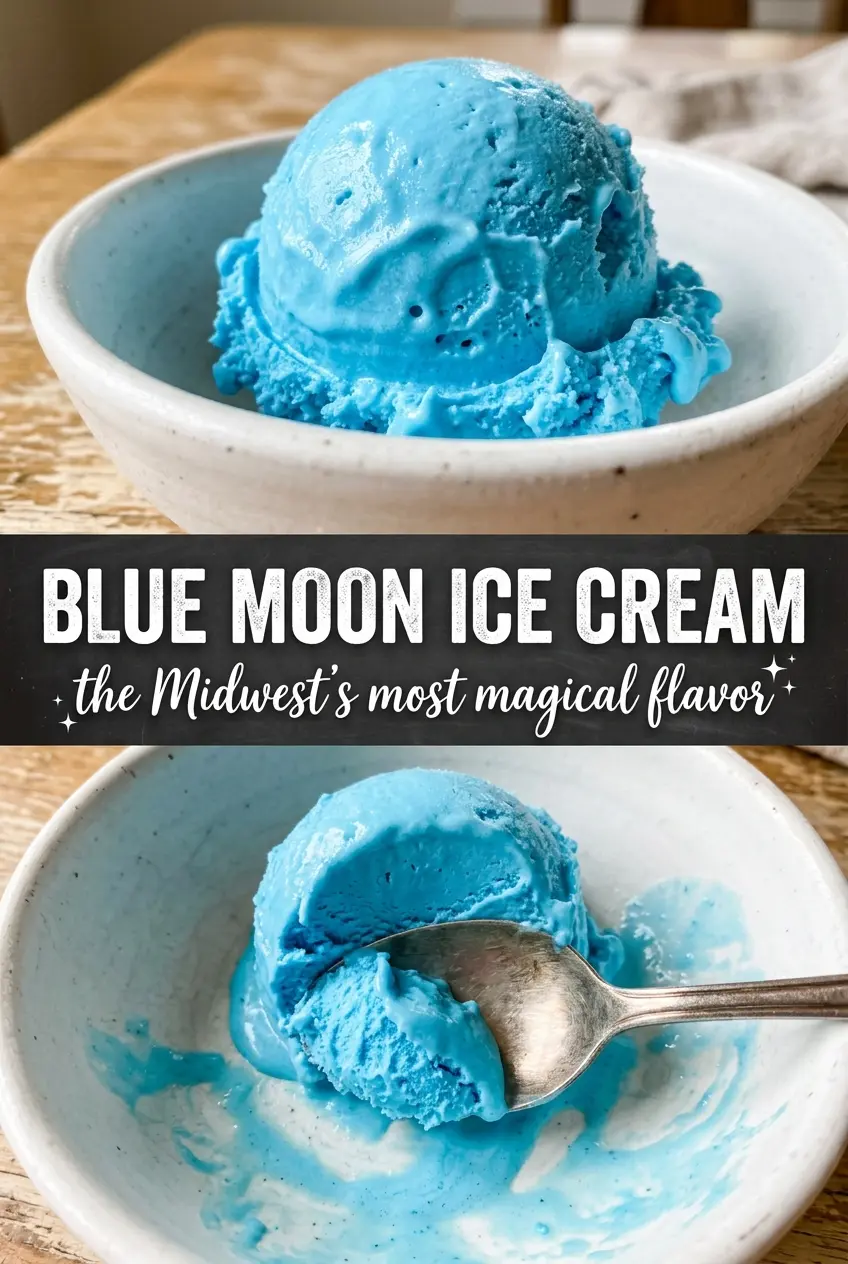
Blue Moon ice cream lands with that unmistakable electric-blue color and a flavor that’s hard to pin down in the best possible way: almond, vanilla, a little citrus, and that soft fruity note that makes every scoop taste nostalgic. It’s the kind of ice cream people remember from childhood trips to the scoop shop, but homemade version has a fresher, creamier finish and a cleaner flavor than the overly sweet versions that lean too hard on artificial notes.
The trick is keeping the base simple and custardy so the extracts can shine without tasting flat. Egg yolks give the ice cream body, and cooking the custard to 175°F thickens it just enough for a dense, scoopable texture after churning. The extracts go in after cooking, once the base has come off the heat, which keeps the almond and lemon from turning bitter and lets you control the flavor balance before the blue coloring goes in.
Below, I’ve included the spots where Blue Moon flavor can go sideways, how to keep the custard silky, and a few ways to adapt the batch if you want to push the color more boldly or pull the flavor slightly more toward almond-vanilla.
The custard came out silky and the Blue Moon flavor was spot on — almond, a little citrus, and that fruity note without tasting fake. I chilled it overnight and it churned into the creamiest scoopable ice cream I’ve made at home.
Blue Moon ice cream with that electric color and nostalgic almond-citrus flavor belongs in your freezer lineup.
The Custard Temperature That Keeps Blue Moon Ice Cream Silky Instead of Eggy
Blue Moon ice cream needs enough body to freeze creamy, but not so much heat that the yolks scramble or the flavor turns heavy. The sweet spot is 175°F: thick enough to coat a spoon, still fluid enough to strain cleanly. If the custard goes much higher, you’ll smell cooked egg before you taste the extracts, and that mutes the whole point of the recipe.
The other place people run into trouble is impatience after cooking. Warm custard churns poorly and takes on an icy texture because the fat hasn’t had time to settle back into the mixture. Chill it completely before it goes into the ice cream maker. That rest also gives the almond, vanilla, raspberry, and lemon time to settle into one cohesive flavor instead of tasting like separate additions.
What Each Extract Is Actually Doing in Blue Moon Flavor
The extracts matter more than the food coloring here. The color gives you the memory; the extracts give you the flavor people recognize. Almond is the backbone, vanilla softens it, raspberry or blue raspberry adds that fruity edge, and lemon keeps the whole thing from tasting flat or one-note.
- Heavy cream gives the ice cream its rich, dense texture. Don’t swap in half-and-half if you want a scoopable freeze with that classic creamy finish.
- Whole milk lightens the base just enough so it doesn’t eat like frozen custard. Lower-fat milk will work in a pinch, but the texture turns a little icier.
- Egg yolks build the custard body. They’re what make this taste polished instead of fluffy and sweet.
- Almond extract is the defining note. Use a fresh bottle if yours has been sitting in the cabinet for years, because stale almond extract tastes dusty fast.
- Raspberry extract or blue raspberry flavoring supplies that elusive fruity thread. If you only have raspberry extract, use it sparingly so the flavor doesn’t drift into sorbet territory.
- Lemon extract brightens the whole batch. A tiny amount goes a long way, and it’s what keeps the ice cream from tasting heavy.
- Blue food coloring is purely for the look, so add it gradually. You can always deepen the shade; you can’t pull it back once it goes too dark.
Building the Custard, Balancing the Flavor, Churning It Cold
Heating the Dairy Without Scorching It
Warm the cream and milk until they’re steaming and just beginning to move around the edges. You don’t want a boil; you want enough heat to temper the yolks smoothly. Whisk the hot dairy into the yolks and sugar in a slow stream so the eggs don’t tighten into bits. If you dump it in all at once, the yolks will curdle before the custard ever reaches the pan.
Cooking to the Right Thickness
Return the mixture to the saucepan and cook, stirring constantly, until it reaches 175°F. The custard should coat the back of a spoon and hold a clean line when you drag a finger through it. If you overcook it, the texture gets grainy and the egg flavor takes over. Pull it from the heat as soon as it hits temperature, then strain it to catch any tiny cooked bits before they end up in the freezer.
Adding the Flavor After the Heat Is Off
Stir in the almond, vanilla, raspberry, and lemon extracts after the custard has cooled slightly. That timing protects the brighter notes and keeps the almond from getting harsh. Add the blue food coloring drop by drop and stop when the color looks electric, not navy. It will look a shade lighter once frozen, so don’t be shy, but don’t overdo it to the point where the base looks muddy.
Chilling and Churning for the Cleanest Scoop
Refrigerate the base for at least 4 hours, or until it’s fully cold all the way through. Cold base churns faster, traps more air evenly, and freezes with a smoother texture. If you churn a lukewarm base, it takes longer in the machine and tends to freeze coarse. After churning, freeze the ice cream until firm enough to scoop cleanly, which usually takes a few hours.
How to Adapt This Blue Moon Ice Cream Without Losing the Character
Make It a Little More Almond-Forward
Increase the almond extract by a small amount and hold back a touch on the raspberry flavoring. That pushes the ice cream toward the classic Midwest scoop-shop version, with a rounder, more nostalgic finish. Don’t add too much almond at once or it starts to taste perfumey instead of mellow.
Use Blue Raspberry if You Want a Brighter Finish
Blue raspberry flavoring gives you a sharper, candy-shop style note that reads more modern and a little more obvious. It’s a good swap if you want the flavor to stand out next to sprinkles or a sugar cone, but it will taste less like the old-fashioned ice cream shop version.
Dairy-Free Version
Use full-fat canned coconut milk in place of the cream and milk, then choose a dairy-free ice cream base that behaves similarly to egg yolks if needed. The texture will be a little softer and the coconut will show through, but the almond-citrus flavor still works well with the blue color and nostalgic profile.
Storage and Reheating
- Refrigerator: Keep the custard base covered for up to 2 days before churning. The flavor stays good, but the mixture should be stirred before it goes into the machine.
- Freezer: The churned ice cream keeps well for about 2 weeks. Press parchment directly on the surface before sealing to reduce ice crystals.
- Reheating: Ice cream doesn’t reheat, but it does need a short softening period at room temperature before scooping. Let it sit 5 to 10 minutes; if you rush it, you’ll tear the texture and get ragged scoops.
Answers to the Questions Worth Asking
Blue Moon Ice Cream
Ingredients
Equipment
Method
- In a saucepan, heat the heavy cream and whole milk until steaming, then slowly whisk into the egg yolks beaten with granulated sugar.
- Return the mixture to the saucepan and cook, stirring constantly, until it reaches 175°F.
- Strain the custard into a clean container and cool slightly, until it’s no longer scorching hot.
- Stir in the almond extract, vanilla extract, raspberry extract or blue raspberry flavoring, and lemon extract.
- Add blue food coloring a few drops at a time, stirring well between additions, until the color becomes electric blue.
- Cool completely at room temperature, then cover and refrigerate for 4 hours.
- Churn the chilled custard in an ice cream maker according to the manufacturer’s instructions until thickened.
- Transfer to a freezer-safe container and freeze until firm.