Deeply golden chicken thighs and a garlic cream sauce make this one of those skillet dinners that feels a little more special than the effort it takes. The skin turns crisp in the pan first, then the chicken finishes gently in a sauce that’s savory, silky, and full of roasted garlic flavor. Every bite has contrast: crackly skin, tender meat, and a sauce that clings instead of pooling on the plate.
The trick here is building the sauce in the same skillet after the chicken sears. Those browned bits left behind carry the flavor, and the garlic gets a short, controlled cook so it turns fragrant and sweet instead of bitter. A splash of white wine lifts everything off the pan, and the cream simmers just long enough to thicken before the parmesan goes in.
Below, I’ll walk through the sear that gives you crispy skin, the exact moment to add the cream, and a few smart swaps if you want to change up the herbs or make it without wine.
The skin stayed crisp even after it went back into the sauce, and the garlic cream thickened up beautifully without turning grainy. I served it over mashed potatoes and my husband asked if there was enough for leftovers.
Save these skillet chicken thighs for the night you want crispy skin and a creamy garlic sauce with restaurant-style payoff.
The Sear That Keeps the Skin Crisp After the Sauce Goes In
The biggest mistake with skillet chicken thighs is rushing the first sear. If the pan isn’t hot enough, the skin steams and stays soft; if you move it too soon, it tears and leaves half the crust behind. Let the thighs sit skin-side down until the fat renders and the skin turns deep golden, then flip just long enough to finish the second side before they come out.
That crisp skin is what keeps this dish from feeling heavy. Once the chicken returns to the pan, it should sit skin-side up so the sauce stays underneath and around it instead of soaking the top. Medium-low heat at the end matters here, because a hard simmer can tighten the meat and break the cream sauce.
What Each Ingredient Is Actually Doing in This Sauce

- Bone-in, skin-on chicken thighs — These give you the best texture for this recipe. The skin renders into the pan, and the bones help the meat stay juicy through the final simmer. Boneless thighs work in a pinch, but they cook faster and won’t give you the same rich pan flavor.
- Garlic — Halved cloves soften and sweeten in the butter, so they taste roasted instead of sharp. Thinly sliced garlic cooks faster and can scorch before the sauce is built, so keep the pieces fairly large.
- Dry white wine — This lifts the browned bits from the pan and adds brightness so the cream doesn’t taste flat. If you skip it, use extra broth plus a small splash of lemon juice at the end, but the sauce will be a little less layered.
- Heavy cream — This is what gives the sauce its velvety body. Half-and-half can curdle more easily and won’t cling as well, especially once parmesan goes in.
- Parmesan — The cheese thickens the sauce and adds a salty, nutty finish. Grate it finely so it melts cleanly; pre-shredded parmesan can make the sauce grainy.
- Smoked paprika and thyme — The paprika seasons the chicken from the start, while thyme gives the sauce a fresh, savory edge. Don’t overdo either one; the garlic and parmesan should stay in front.
Building the Sauce Without Losing the Crispy Skin
Season and Sear the Thighs
Pat the chicken dry before it hits the pan, then season it generously with salt, pepper, and smoked paprika. Lay the thighs skin-side down in hot oil and leave them alone until the skin is deeply golden and releases on its own. If you try to move them too early, the skin sticks and the crust breaks. After the first side is crisp, flip briefly, then transfer the chicken to a plate while you build the sauce.
Cook the Garlic in the Chicken Fat
Add the butter and garlic to the same skillet and let the cloves cook until they turn fragrant and lightly golden at the edges. This is where the sauce picks up its roasted garlic base. If the pan is screaming hot, pull it back for a moment before adding the garlic; burnt garlic turns the whole dish sharp and bitter.
Deglaze, Then Let the Cream Thicken
Pour in the wine and scrape up every browned bit from the bottom of the pan. Add the broth and cream, then let the sauce simmer until it starts to coat the back of a spoon. Stir in the parmesan and thyme once the sauce has had a minute to settle, because cheese over a hard boil can turn the sauce gritty.
Finish the Chicken in the Sauce
Return the chicken skin-side up and spoon some sauce around it, not over the skin. Let it simmer gently until the thighs are cooked through and the juices run clear near the bone. The sauce should be thick enough to cling but still loose enough to pool around the chicken. Finish with parsley and more parmesan right before serving.
How to Adapt This Chicken for Different Nights
No-Wine Version
Use an extra 1/4 cup chicken broth plus 1 teaspoon lemon juice instead of the wine. You’ll lose a little of the sharp, restaurant-style depth, but the sauce still comes out rich and balanced.
Dairy-Free Swap
Use a full-fat unsweetened coconut cream or a dairy-free cooking cream, and skip the parmesan or replace it with a dairy-free hard cheese alternative. The sauce will be a little less savory and slightly sweeter if you use coconut cream, so keep the garlic and thyme front and center.
Gluten-Free by Default
This recipe is naturally gluten-free as written, as long as your broth is certified gluten-free. That small check matters more than people think, because broth is where gluten often sneaks in.
Storage and Reheating
- Refrigerator: Store leftovers in an airtight container for up to 3 days. The skin will soften, but the sauce keeps the chicken moist.
- Freezer: The chicken freezes well for up to 2 months, but the cream sauce may separate a little when thawed. Freeze in portions and whisk the sauce while reheating to bring it back together.
- Reheating: Warm gently on the stove over low heat with a splash of broth or cream. Don’t blast it in the microwave, or the sauce can split and the chicken can dry out around the edges.
Answers to the Questions Worth Asking
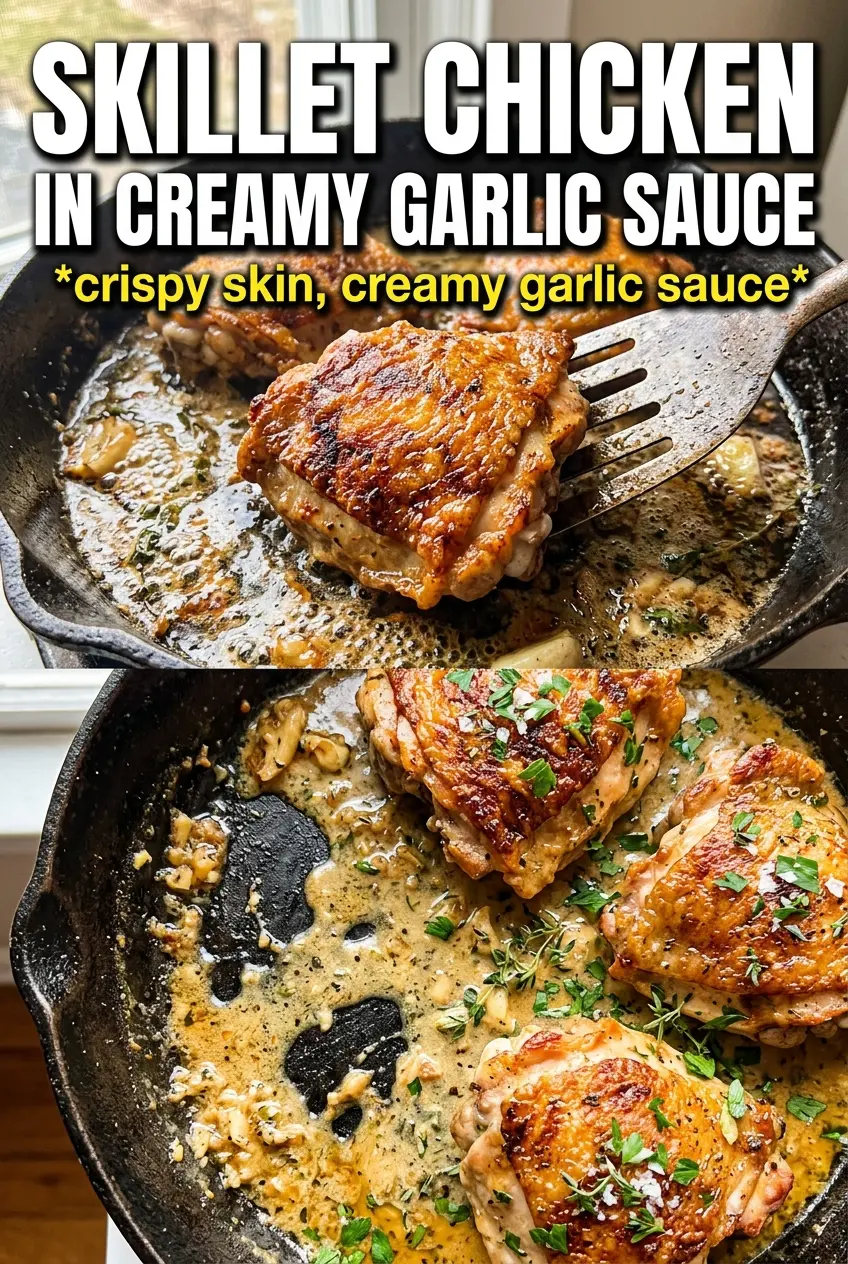
Bobby Flay Skillet Chicken Thighs in Creamy Garlic Sauce
Ingredients
Equipment
Method
- Season the chicken thighs generously with salt, pepper, and smoked paprika. Pat them dry beforehand to help the skin crisp.
- Heat the olive oil in a large heavy skillet over medium-high heat. Sear the chicken skin-side down for 7-8 minutes until the skin is deeply golden and crispy.
- Flip the chicken briefly, then remove from the skillet. This prevents overcooking before the sauce finishes the thighs.
- Add the butter and the halved garlic to the pan. Cook over medium heat for 3-4 minutes until the garlic is golden and fragrant.
- Deglaze with the white wine, scraping up browned bits from the pan. Add the chicken broth and heavy cream.
- Simmer the sauce for 3-4 minutes until slightly thickened. Stir in the grated parmesan and fresh thyme leaves.
- Return the chicken to the skillet skin-side up. Simmer on medium-low for 15-18 minutes until cooked through.
- Garnish with fresh parsley and extra parmesan to serve. Let the sauce cling to the chicken for a glossy, restaurant-style finish.