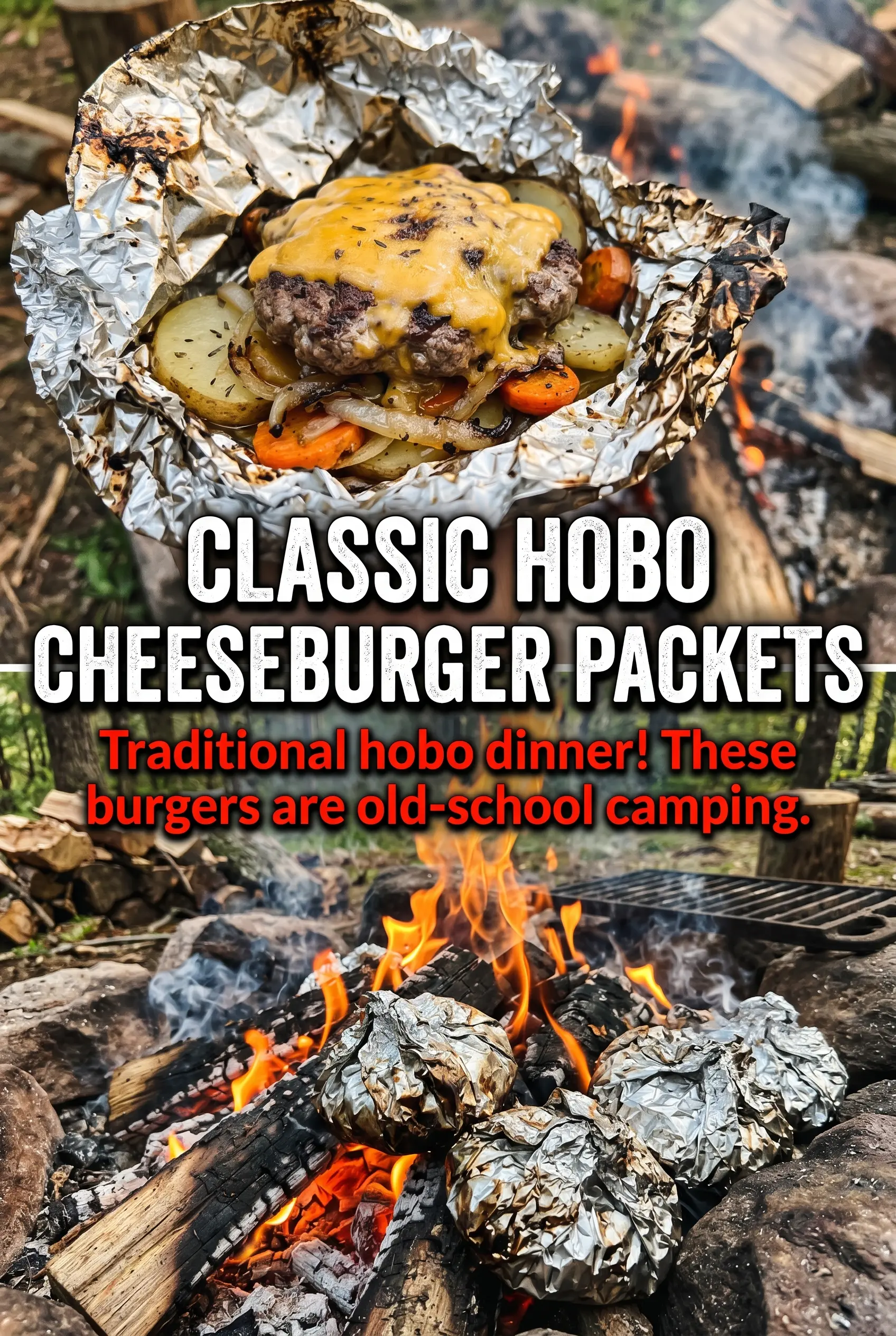
Campfire cheeseburger hobo packets give you all the best parts of a backyard burger and a foil packet dinner in one tidy bundle: juicy beef, tender potatoes, sweet onions, and cheese melted right over the top. The foil does the work of holding in steam, which means the potatoes cook through without drying out the meat. When you open the packet, you get that little burst of smoky heat and melted cheddar that makes everyone lean in.
What makes this version worth making is the order of the layers. The potatoes go on the bottom because they need the most direct contact with the heat and the most time to soften. Thin slices matter here; thick chunks stay firm while the beef is already done. The ketchup and mustard go in before sealing, where they loosen into a quick, savory sauce instead of sitting on top like a cold topping.
Below, I’ll walk through the foil setup that keeps these packets sealed, the one prep detail that helps the potatoes cook evenly, and a few variations if you’re cooking over a campfire, grill, or even in the oven.
The potatoes were tender all the way through and the cheese melted perfectly after just a couple minutes back on the grate. I liked that the ketchup and mustard turned into a little sauce instead of staying separate.
Save these campfire cheeseburger packets for the nights when you want smoky foil packets, tender potatoes, and melted cheddar with almost no cleanup.
The Packet Order That Keeps the Potatoes Soft and the Beef Juicy
Foil packet dinners fail when everything is stacked in a way that asks the beef to cook at the same pace as the potatoes. That almost always leaves you with one of two problems: dry meat or underdone potatoes. Here, the sliced potatoes and onions sit at the bottom, right where the heat can reach them first, and the burger patty rides on top so its drippings season the vegetables as it cooks.
The other trap is sealing the packet too loosely. You need enough room for steam to circulate, but not so much space that the heat escapes before the potatoes soften. Heavy-duty foil matters because the packets flip better and hold together when the bottom gets hot over a grate. If your potatoes are sliced thicker than about 1/8 inch, the cook time stretches and the meat can overcook before the center of the potatoes turns tender.
What Each Ingredient Is Actually Doing in These Foil Packets
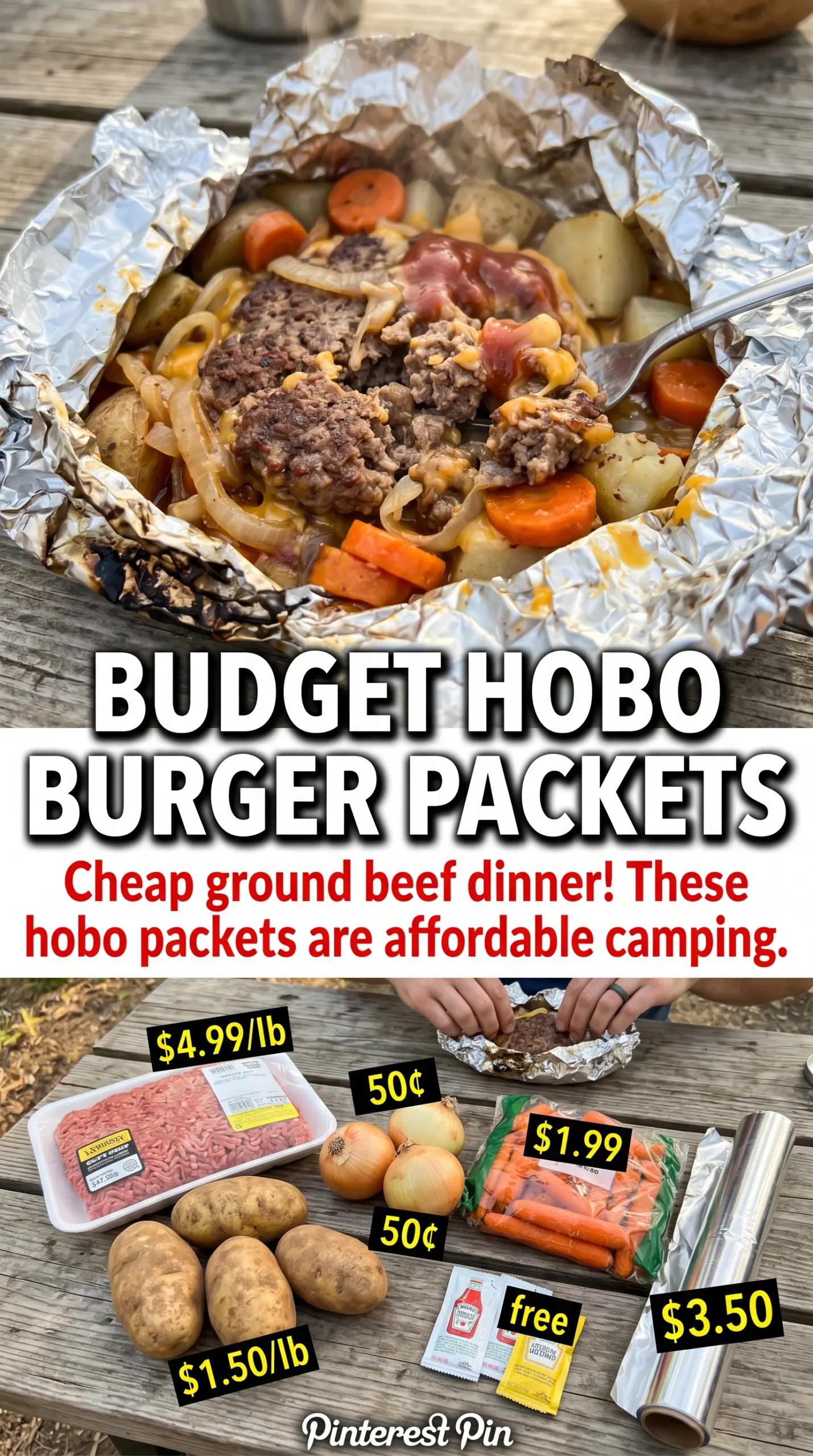
- Ground beef — Use regular ground beef, not extra-lean, if you want a juicier packet. The beef cooks gently in its own juices and seasons the potatoes underneath, so lean meat can taste flat by the time the cheese goes on.
- Potatoes — Thin slices are nonnegotiable. They’re the ingredient that needs the longest time, and slicing them evenly keeps some from turning mushy while others stay firm.
- Onion — Onion softens into the packet steam and gives the whole thing a little sweetness. Yellow onion is the most forgiving choice, but white onion works if that’s what you have.
- Tomatoes — Add them as a top layer so they warm through without disappearing. If you use very juicy tomatoes, slice them a little thicker so they hold their shape better inside the foil.
- Cheddar cheese — Add it at the end, not at the beginning. That short reseal lets it melt without turning oily or sticking to the foil.
- Ketchup and mustard — These aren’t just burger condiments here; they become the packet sauce. Together they cut through the richness of the beef and cheese and keep the potatoes from tasting one-note.
- Heavy-duty foil — Standard foil tears too easily once the packets start getting flipped. If that’s all you have, double the sheets so the bottom doesn’t split over the fire.
Building the Packets So They Cook Evenly Over the Fire
Layer the Vegetables First
Lay each sheet of foil flat and build a small bed of potatoes and onions in the center. Keep the pile compact so the packet seals cleanly and the heat can move upward through the layers. If the vegetables spread too wide, the patty slides around and the packet is harder to close without tearing.
Set the Patty on Top
Form the beef into thin patties before they go into the packet. Thin patties cook through faster and stay tender instead of steaming into a dense lump. Season them well with salt and pepper before they go on the vegetables, because once the foil is sealed, you won’t get another chance to season the meat directly.
Seal, Flip, and Finish with Cheese
Fold the foil tightly so the steam stays inside, then place the packets over medium heat on the grate. Flip halfway through so the potatoes cook evenly instead of scorching on one side. When the beef is cooked through and the potatoes are tender, open the packets carefully, add the cheese, and reseal for just a couple minutes until it melts into the hot filling.
Oven-Baked Foil Packets
Bake the sealed packets on a sheet pan at 400°F if you’re not cooking over a fire. The texture stays close to the campfire version, though you’ll miss the smoky edge from the grate. This is the easiest route when you want the same dinner without managing coals or flame.
Bunless and Lower-Carb
Skip the buns and serve the packets as-is for a lower-carb meal. The potatoes still bring plenty of heft, but if you want it lighter, swap half the potatoes for sliced zucchini or mushrooms. Those vegetables cook faster, so they’re best sliced thicker than the potatoes.
Dairy-Free Version
Leave out the cheese or use a dairy-free slice that melts well. The packet still works because the real structure comes from the beef, potatoes, onions, and condiments, not the cheese. If you skip the cheese, add a little extra mustard at the end for brightness.
Storage and Reheating
- Refrigerator: Store leftovers in an airtight container for up to 3 days. The potatoes soften a bit more after chilling, but the flavor holds up well.
- Freezer: These packets freeze poorly once cooked because the potatoes turn mealy. If you want to freeze ahead, prep the raw foil packets without the tomatoes and freeze them flat, then cook from thawed for the best texture.
- Reheating: Reheat gently in a covered skillet or wrapped in foil in a 350°F oven until hot. High heat dries out the beef and makes the potatoes gritty, so low and steady works better here.
Answers to the Questions Worth Asking
Campfire Cheeseburger Hobo Packets
Ingredients
Equipment
Method
- Form the ground beef into 4 thin patties and season with salt and pepper. Press so the thickness is even for consistent cooking.
- On each sheet of heavy-duty aluminum foil, layer the sliced potatoes and onion. Spread into a single layer so the steam cooks the potatoes evenly.
- Place a burger patty on top of the potato-onion layer. Keep it centered so it sits above the highest heat.
- Add the tomato slices over the patty. Cover the surface to create a steamy layer inside each packet.
- Drizzle ketchup and mustard over each packet. Use a fork or spoon to distribute so the condiments melt into the juices.
- Fold the foil into sealed packets. Press the seams firmly so no steam escapes during cooking.
- Place the packets on a campfire grate over medium heat and cook for 25-30 minutes. Flip halfway through so the potatoes soften and the patties cook through.
- Open each packet and add cheese slices. Cover loosely and reseal briefly to melt the cheese until glossy and dripping.
- Let the packets cool for 5 minutes before serving. The juices will thicken slightly for cleaner bites.
- Serve the packets as-is or on hamburger buns. If using buns, spoon the filling directly onto them.