Golden baked egg cups with ham and cheese are the kind of breakfast that disappears fast because they land somewhere between hearty and tidy. The ham keeps the eggs contained, the cheese melts into the edges, and the peppers and onions give each bite just enough flavor to keep it from tasting flat. They come out with set whites, tender yolks if you pull them early, and crisped ham around the edges that feels made for eating outdoors.
This version works because the ham does double duty: it acts as the muffin tin liner and it seasons the eggs as they cook. A metal muffin tin handles campfire heat better than paper liners or a flimsy pan, and covering the tin traps enough heat to cook the tops without scorching the bottoms. The vegetables need to be diced small so they soften in time and don’t throw off the texture of the filling.
Below, I’ve included the little details that matter most over a campfire, plus a few ways to adapt the cups if you’re feeding different eaters or packing ingredients ahead of time.
The eggs set up perfectly in the ham cups, and the edges got just a little crispy without drying out. I packed the tin ahead and had breakfast on the fire in no time.
Like these campfire egg cups with ham? Save them to Pinterest for an easy make-ahead breakfast that cooks right on the grate.
Why the Ham Needs to Form the Cup Before the Egg Goes In
The biggest mistake with campfire egg cups is cracking the egg first and trying to build around it. The ham needs to be pressed into the muffin tin before anything else so it creates a sealed edge that holds the egg in place while the heat moves around the pan. If the ham sits loosely, the egg can leak under it and the cups bake unevenly.
Metal matters here. It conducts heat fast enough to set the bottoms without turning the whole thing rubbery, which is what often happens with foil pans. Covering the tin is just as important, because the top of the egg needs trapped heat to finish before the bottoms overcook.
- Ham slices — Thin deli ham works best because it bends easily and tucks into the corners of the muffin cup. Thick-cut ham can split when you press it in and makes the cups harder to eat cleanly.
- Cheddar — Sharp cheddar gives the most payoff for such a short cook time. Pre-shredded cheese works fine, but freshly shredded melts a little smoother.
- Bell peppers and onions — Dice them small so they soften before the eggs set. Large pieces stay crunchy and can make the cups feel undercooked even when the eggs are done.
Building Campfire Egg Cups Without Letting the Eggs Run Under the Ham

- Ham — The ham replaces both the liner and the seasoning. If you use a leaner ham, the cups still work, but they’ll brown less around the edges; that browning is part of what makes them taste finished.
- Eggs — Use cold eggs straight from the cooler if that’s what you have. They’ll still cook fine, but they may need the full 20 minutes before the whites set.
- Cheddar — Cheese on top helps shield the eggs from direct heat and adds a little browning. Monterey Jack or Colby melt well too, but they’ll taste milder.
How to Cook the Eggs So the Tops Set Before the Bottoms Tighten Up
Forming the Ham Cups
Spray the muffin tin well, then press one slice of ham into each cup so it hugs the bottom and sides. Work the edges up and over the rim a little if the slices are large enough. That extra bit helps hold the egg in place. If the ham tears, overlap the pieces rather than leaving gaps, because gaps are where the egg slips through.
Adding the Filling
Crack one egg into each ham-lined cup, then scatter on the cheese, peppers, and onions. Add the cheese before the vegetables so it sits partly on the egg and helps trap moisture. Season lightly; the ham already brings salt, and overdoing it here can make the finished cups taste harsh.
Cooking Over the Fire
Set the tin on a grate over medium heat and cover it with foil. You want steady heat, not flames licking the pan. If the fire is too hot, the bottoms will set before the tops have a chance to cook, and the yolks will go chalky. Start checking at 18 minutes; the eggs are done when the whites look opaque and the center no longer sloshes.
Serving at the Right Moment
Use a spoon or spatula to lift the egg cups out carefully while they’re still warm. Let them sit for a minute if the cheese is bubbling hard, because that brief rest helps them release cleanly from the tin. If you wait too long, the ham can stick as the cheese cools and tightens.
Small Changes That Still Keep These Egg Cups Working
Dairy-Free Version
Skip the cheese and lean on well-seasoned ham plus the vegetables for flavor. The cups will still hold together, but they won’t have the same creamy top layer, so keep an eye on the eggs and pull them as soon as the whites are set.
Low-Carb Keto Breakfast
This recipe already fits a low-carb pattern as written. If you want it even richer, add a little extra cheese and keep the peppers minimal so the cups stay firm and protein-forward.
Swap the Ham for Bacon Strips
Partially cooked bacon can work if you pre-cook it enough to bend without snapping. It gives you a smokier, crisper cup, but it also takes more management over the fire because bacon and eggs don’t finish at the same speed.
Camping Meal Prep Ahead
Dice the peppers and onions at home and pack them in a small container so assembly is fast at camp. You can also line the muffin tin with ham before you leave, then store it covered in a cooler and crack in the eggs when you’re ready to cook.
Storage and Reheating
- Refrigerator: Store leftovers in an airtight container for up to 3 days. The ham stays firm, but the eggs soften a bit as they sit.
- Freezer: They don’t freeze well. The egg texture turns watery and spongy after thawing.
- Reheating: Warm in a 300°F oven or in a covered skillet over low heat until heated through. High heat makes the eggs tough and can squeeze moisture out of the ham.
The Things That Trip People Up With This Dish
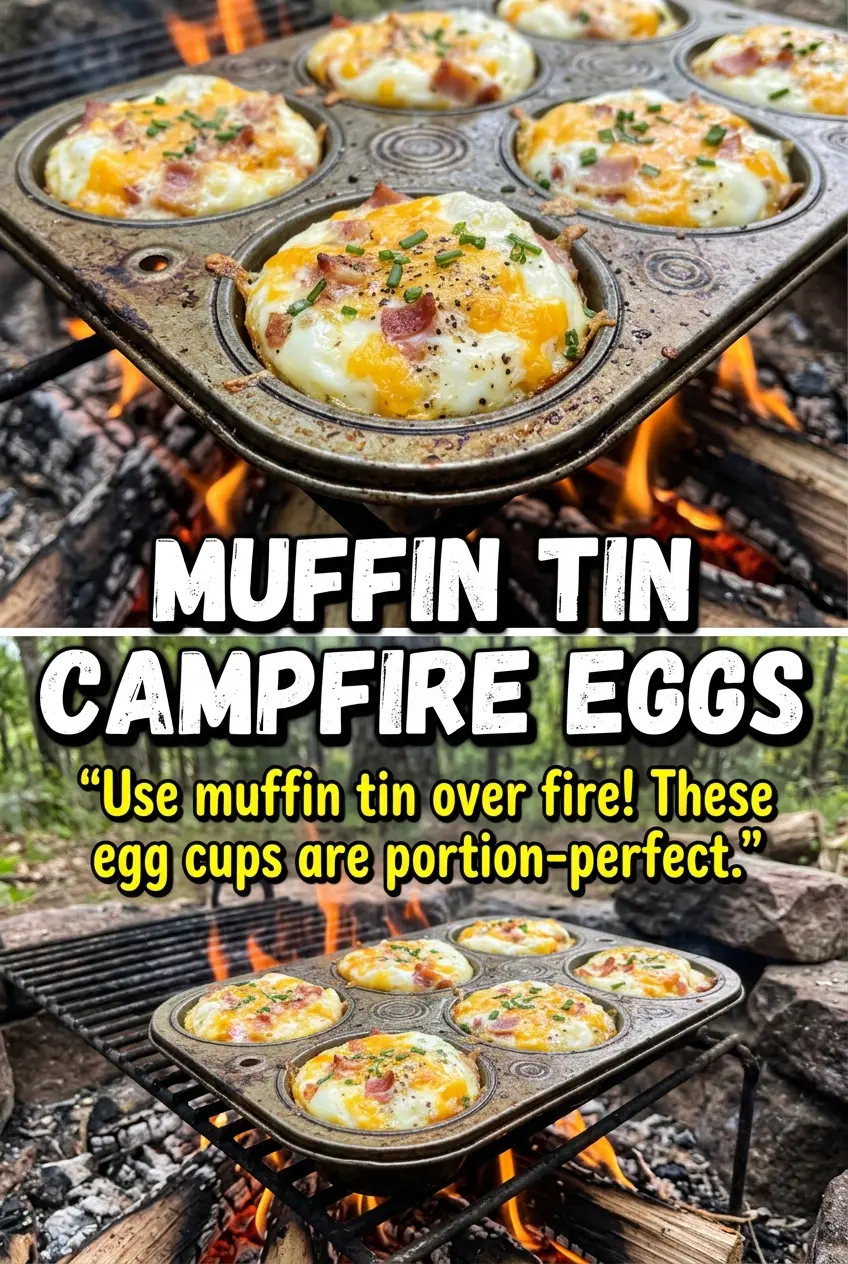
Campfire Egg Cups with Ham
Ingredients
Equipment
Method
- Spray a metal muffin tin with cooking spray to prevent sticking and help the ham cups release cleanly.
- Line each cup with a slice of deli ham, pressing lightly to create a cup shape.
- Crack one egg into each ham cup, keeping the yolks intact as you divide evenly.
- Top each egg with shredded cheddar cheese, bell peppers, and onions, then season with salt and pepper.
- Place the muffin tin on a campfire grate over medium heat, positioning it so heat comes from below and around the sides.
- Cover the muffin tin with aluminum foil and cook for 18-20 minutes until the eggs are set and look puffed and golden at the edges.
- Carefully remove the egg cups and serve warm, letting them rest for a minute so the centers set before eating.