Caribbean jerk smoked pork earns its place on the table fast: deep smoky bark, a sticky-spiced crust, and pork shoulder that pulls apart in soft, juicy shreds. The heat from the scotch bonnets doesn’t just sit on top here. It gets worked into the meat overnight, so every bite carries spice, sweetness, and that unmistakable jerk aroma.
The key is giving the marinade time to do its job and then smoking the pork low enough that the outside darkens without burning the sugar in the rub. Pork shoulder is forgiving, but it still needs patience. If you rush the cook or pull it early, you’ll get slices instead of that tender, pullable texture that makes this dish worth making.
Below you’ll find the small details that matter most: how to handle the peppers, why the bark forms the way it does, and what to do if you want the flavor bold but not punishingly hot.
The bark set up beautifully and the pork hit that pull-apart stage right around the 7-hour mark. The jerk flavor was deep, not just spicy, and it stayed juicy after resting.
Save this jerk-smoked pork shoulder for the kind of smoke session that ends with crispy bark, juicy pulled meat, and plenty of island spice.
The Trick to Jerk Pork That Stays Bold Without Turning Bitter
The biggest mistake with jerk pork is rushing the sugar and spice into high heat too early. Brown sugar, allspice, and cinnamon can scorch on a smoker if the fire runs hot, and once that bitter edge shows up, there’s no fixing it. Keeping the pit steady in the 225-250°F range lets the seasoning darken into bark instead of burning.
Scoring the shoulder matters too. Those shallow cuts give the marinade a path into the meat instead of sitting on the surface, which is especially important on a cut this thick. The overnight rest isn’t optional here; it softens the edge of the peppers and gives the thyme, garlic, and lime time to settle into the pork.
What Each Ingredient Is Actually Doing in This Jerk Marinade
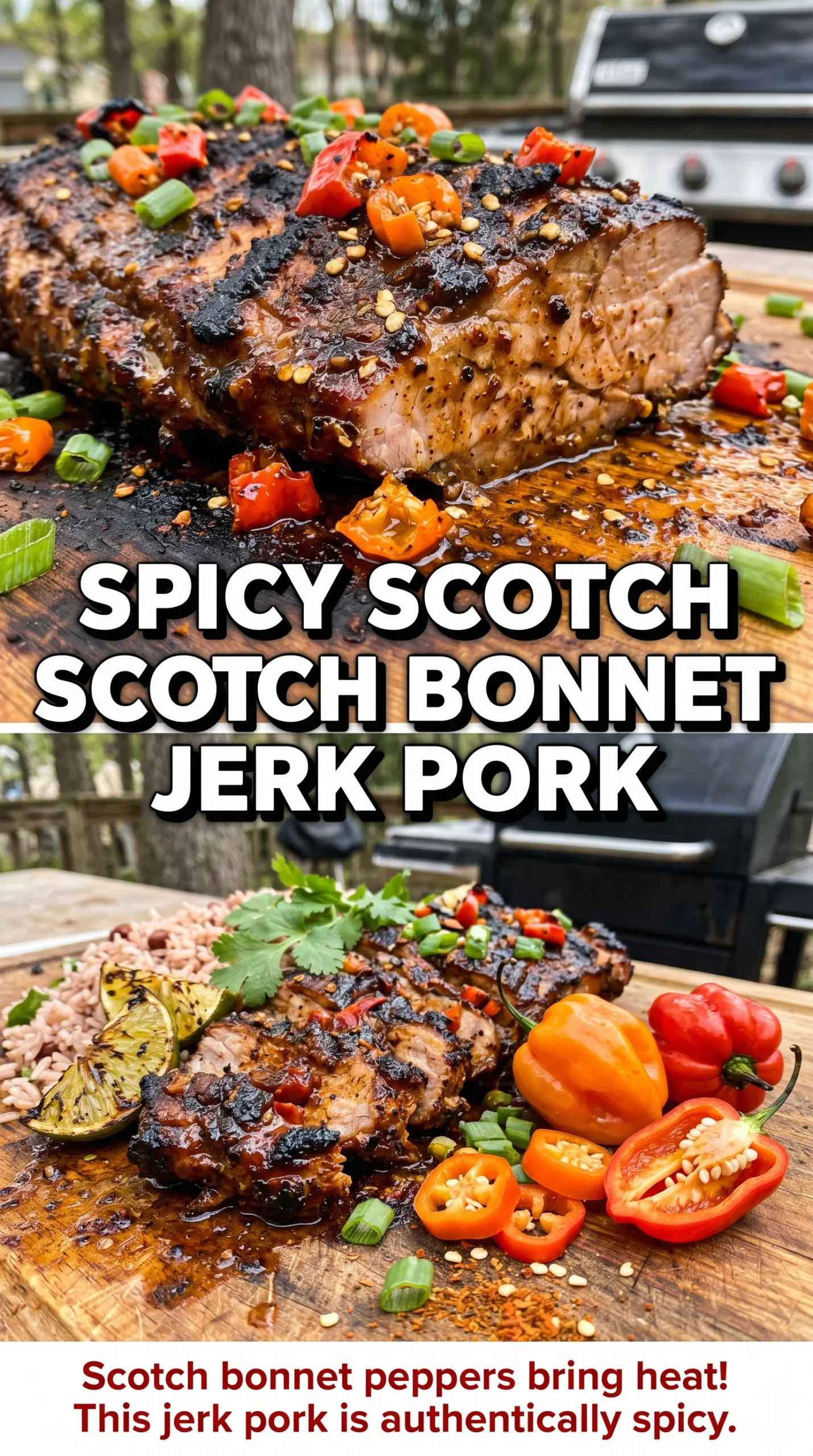
- Pork shoulder — This cut has the fat and connective tissue that turn silky after a long smoke. Leaner cuts dry out before they pick up enough bark, so shoulder is the right choice if you want meat that pulls instead of slices.
- Scotch bonnet peppers — These bring the heat that makes jerk taste like jerk. If you want less fire, seed them as written and use one fewer pepper before reaching for a milder chile, because the floral heat is part of the dish’s identity.
- Allspice, thyme, cinnamon, and nutmeg — This is the backbone of the marinade. Allspice gives the warm clove-like note, thyme adds that woodsy herbal edge, and the cinnamon and nutmeg round everything out without making the pork taste sweet.
- Brown sugar — It helps the bark develop color and gives the spice paste a little caramel depth. You need it for the crust, but not so much that it turns sticky and burns.
- Lime juice and soy sauce — Lime wakes up the seasoning and helps the marinade penetrate the surface, while soy adds salt and a savory backbone. Don’t swap in extra salt for the soy unless you’re adjusting the whole marinade, because the balance shifts fast.
- Green onions and garlic — These keep the marinade bright and sharp. Blend them thoroughly so they disappear into the paste instead of leaving raw chunks that scorch on the smoker.
How to Smoke the Shoulder So the Bark Forms Before the Meat Dries Out
Building the Marinade
Blend everything until the marinade turns smooth and thick enough to cling to the pork. If the garlic or scallions stay in rough pieces, they tend to burn during the long cook and leave harsh spots on the bark. The paste should look loose enough to spread but not watery.
Coating and Resting the Pork
Score the pork shoulder with shallow cuts, then massage the marinade into every surface and into those cuts. Use your hands and work it in until the meat looks stained and heavily coated. Refrigerate it overnight so the seasoning penetrates and the salt starts loosening the outer layer of the meat.
Running the Smoker
Set the smoker up at 225-250°F with fruit wood for a gentler smoke that won’t overwhelm the jerk seasoning. Place the pork fat side up if your smoker runs hotter from below, and don’t keep opening the lid. Every peek drops the temperature and stretches the cook without improving the result.
Knowing When It’s Done
Cook until the internal temperature lands between 195-203°F and a probe slides in with almost no resistance. That range is where the connective tissue gives up and the pork becomes pullable. If you stop at 180-185°F, the shoulder may be safe to eat, but it won’t shred the way you want.
Resting Before You Pull
Let the pork rest for at least 30 minutes before pulling it apart. That pause keeps the juices from running all over the cutting board the moment you shred it. If it looks overly dark at the edges, that’s fine; the bark should be deep, almost black in spots, as long as it doesn’t taste burnt.
How to Adapt This for Milder Heat, a Different Wood, or a Smaller Crowd
Milder Jerk Pork Without Losing the Character
Seed the scotch bonnets well and start with three peppers instead of four. You’ll still get the fruitiness and heat that make jerk taste right, but the burn will sit in the background instead of taking over. Don’t replace all the peppers with bell pepper; that leaves you with spiced pork, not jerk pork.
Gluten-Free Version
Swap the soy sauce for tamari or coconut aminos. Tamari gives the closest savory depth, while coconut aminos are a little sweeter and lighter, so the bark will brown a bit differently. Keep an eye on the sugar in the rub if you use coconut aminos, since the overall sweetness climbs.
No Fruit Wood on Hand
Use apple, cherry, or a light mix of oak and fruit wood if that’s what you have. Heavy hickory or mesquite can crowd out the jerk spices and make the finished pork taste more like a standard barbecue shoulder. You want smoke in the background, not a campfire note on the front end.
Making It for a Smaller Group
Use a smaller pork shoulder if that’s what fits your crowd, but keep the same marinade ratio. The cooking time will drop, yet the temperature target stays the same. Pull based on tenderness and internal temperature, not the clock, because a smaller roast can still stall in the same frustrating way.
Storage and Reheating
- Refrigerator: Store pulled pork in an airtight container for up to 4 days. The bark softens a little, but the flavor gets even deeper after a day.
- Freezer: It freezes well for up to 3 months. Portion it with a spoonful of the juices so the meat doesn’t dry out when thawed.
- Reheating: Reheat covered in a skillet or baking dish with a splash of the reserved juices or a little water at low heat until warmed through. High heat tightens the meat and wipes out the texture you worked for.
Answers to the Questions Worth Asking
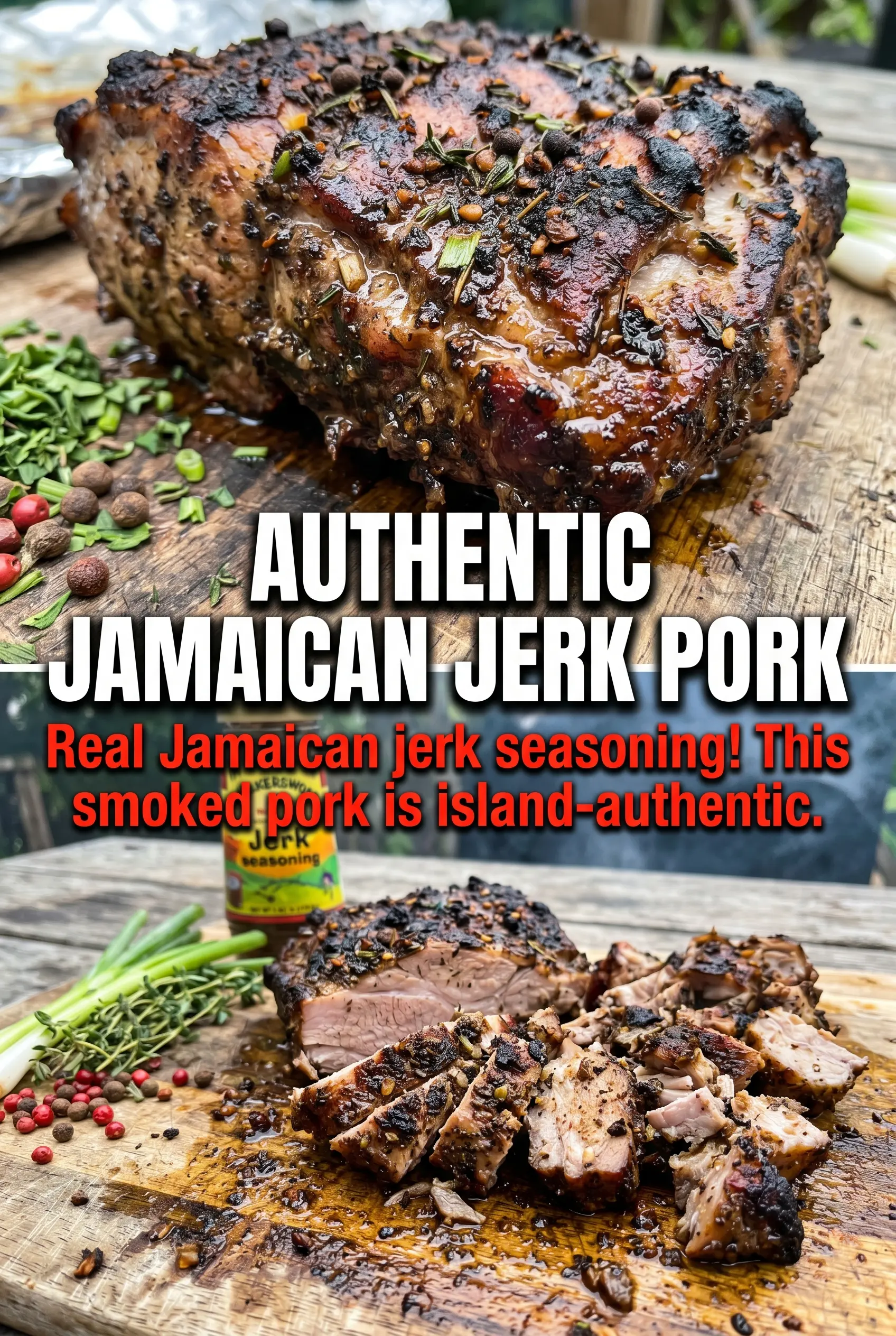
Caribbean Jerk Smoked Pork
Ingredients
Equipment
Method
- Blend green onions, scotch bonnet peppers, garlic, fresh thyme, brown sugar, allspice, black pepper, cinnamon, and nutmeg until smooth, then add soy sauce, lime juice, and vegetable oil and blend again to combine.
- Blend until the mixture looks fully emulsified with no large pepper pieces visible.
- Score pork shoulder by cutting shallow crosshatch lines across the surface so the marinade can reach inside the cuts.
- Rub jerk marinade all over the scored pork shoulder, pressing into the cuts for full coverage of the spice mixture.
- Marinate overnight in the refrigerator, uncovered or loosely covered, so the flavors penetrate and the surface dries slightly for better bark.
- Prepare smoker to 225-250°F using fruit wood for smoky flavor.
- Place the pork shoulder in the smoker and smoke for 6-8 hours, until the internal temperature reaches 195-203°F.
- Continue smoking as needed within the window until the thickest part hits target temperature for pull-apart tenderness.
- Let the pork rest for 30 minutes to redistribute juices before handling.
- Pull the pork and serve as pulled jerk pork with visible spice crust and smoky bark.