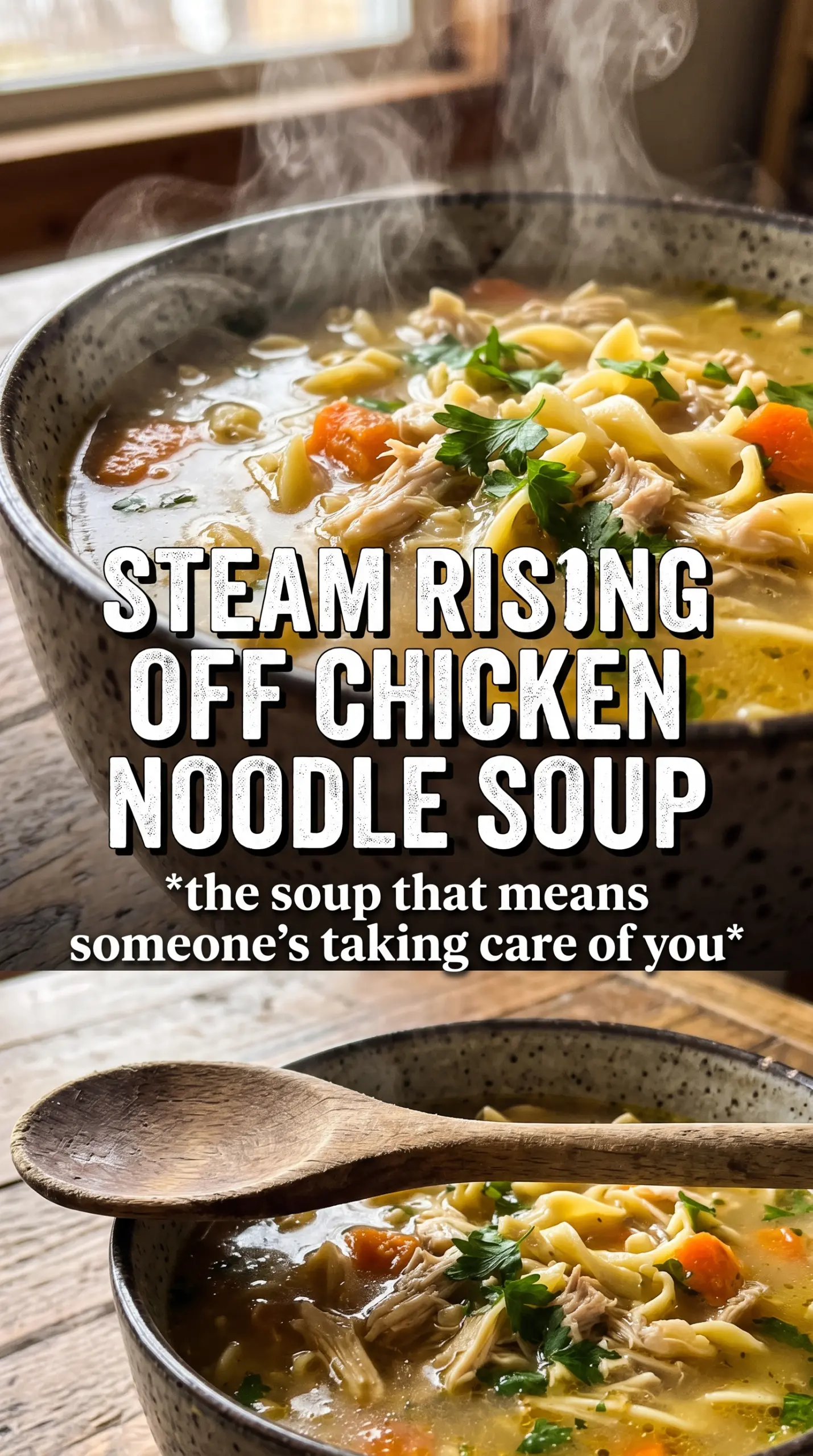
Chicken noodle soup earns its place in the regular rotation when the broth tastes deep enough to stand on its own and the noodles stay tender instead of turning mushy. The best bowls have that balance of soft chicken, sweet carrots, and celery that still gives a little bite. When it’s done right, it tastes like the pot has been working for hours even though most of the time is completely hands-off.
This version starts with bone-in chicken, which gives the broth more body than boneless meat alone can manage. The vegetables are softened first in olive oil so the soup has a real base, not just boiled ingredients floating in liquid. I also wait to add the egg noodles until the chicken is shredded and back in the pot, because they only need a few minutes and overcooking is what turns homemade soup heavy and starchy.
Below, I’ve included the little details that keep the broth clear, the chicken juicy, and the noodles from going soft before you’re ready to eat. There’s also a note on the best swaps if you need to work with what’s already in the pantry.
The broth came out rich and clean, and the noodles were still perfectly tender when I reheated it the next day. My kids kept asking for “just one more bowl.”
Save this chicken noodle soup for the nights when you want a broth with real body, tender chicken, and noodles that still hold their shape.
The Reason the Broth Stays Clear Instead of Cloudy
The biggest mistake in chicken noodle soup is boiling it hard the whole time. A rolling boil breaks the broth into a murky mess and can turn the chicken stringy before the pot is even done. A gentle simmer keeps the meat tender and gives the vegetables time to release flavor without losing all their shape.
Starting with bone-in chicken matters here. The bones lend a little richness that boneless chicken breasts can’t match on their own, especially in a soup this simple. If you use thighs instead of breasts, the soup gets a rounder, slightly fuller taste and the meat stays juicier if it goes a minute or two long.
- Bone-in chicken breasts or thighs — This does the real work in the pot. Boneless chicken will cook faster, but it won’t give the broth the same depth or body.
- Carrots, celery, and onion — These build the soup’s base flavor. Dice the onion finely and slice the vegetables evenly so they soften at the same pace instead of leaving you with crunchy bits in a finished broth.
- Egg noodles — These need to go in late. They swell fast, and if they simmer too long they soak up too much broth and lose their bite.
- Thyme, parsley, and bay leaves — The herbs should support the chicken, not bury it. Dried herbs work well here because they have time to bloom in the broth, but fresh parsley belongs at the end for a cleaner finish.
What Each Ingredient Is Doing in the Pot
- Olive oil — A small amount keeps the vegetables from sticking and gives the onions time to soften instead of scorching. Butter works too, but olive oil keeps the broth a little cleaner-tasting.
- Chicken broth plus water — The broth carries the flavor, while the water keeps it from becoming overly salty or heavy. If your broth is homemade or especially rich, you can lean a little harder on the water.
- Garlic — One minute is enough. Garlic burns fast, and burnt garlic will make the whole pot taste bitter.
- Bay leaves — They won’t make the soup taste like bay leaf in a noticeable way, but they add a quiet background depth. Pull them out before serving, because they’re not meant to be eaten.
- Fresh parsley — This is for the finish, not the base. It wakes up the bowl right before serving and keeps the soup from tasting flat.
Building the Soup So Nothing Turns Mushy
Softening the vegetables first
Warm the olive oil over medium heat and cook the onion, carrots, and celery until the onion turns translucent and the carrots just start to soften. That first five-minute sauté matters because it takes the raw edge off the vegetables before they hit the broth. If you rush this stage, the soup tastes thin even when the ingredients are technically cooked.
Simmering the chicken gently
Add the broth, water, herbs, bay leaves, and chicken, then bring everything just to a boil before lowering the heat to a steady simmer. You want small bubbles, not a hard boil. The chicken is done when it pulls apart easily with two forks and the center is no longer pink, and if the liquid is boiling aggressively, the meat will tighten up instead of shredding softly.
Finishing with the noodles
Shred the chicken, return it to the pot, then add the egg noodles and cook until they’re tender but still springy. Watch them closely in the last few minutes; egg noodles go from perfect to bloated faster than people expect. Season at the end with salt and pepper, because the broth will taste different once the noodles go in and soak up some of the seasoning.
How to Make This Soup Fit What’s in Your Kitchen
Use rotisserie chicken for a faster version
Skip the simmering chicken step and stir in shredded rotisserie chicken after the broth and vegetables have cooked together for about 15 minutes. You’ll lose a little depth from the bones, but the soup comes together much faster and still tastes like home-style chicken noodle soup.
Make it gluten-free with the right noodle swap
Use your favorite gluten-free pasta, but cook it separately if you can. Gluten-free noodles can cloud the broth and go soft faster than egg noodles, so keeping them out of the pot until serving gives you better texture.
Add rice instead of noodles for a heartier bowl
If you want a soup that holds up longer in the fridge, swap the noodles for cooked rice and stir it in at the end. Rice won’t drink up broth quite as fast as egg noodles, and it gives the soup a heavier, more filling texture.
Storage and Reheating
- Refrigerator: Store for up to 4 days. The noodles will keep soaking up broth, so expect the soup to thicken as it sits.
- Freezer: It freezes well if you leave the noodles out and add fresh ones when reheating. Frozen noodles turn soft and grainy after thawing.
- Reheating: Warm it gently on the stove over medium-low heat until steaming. If it has thickened, add a splash of broth or water before serving and avoid a hard boil, which can overcook the chicken and noodles.
Answers to the Questions Worth Asking

Chicken Noodle Soup
Ingredients
Equipment
Method
- Heat the olive oil in a large pot over medium heat, then sauté the onion, carrots, and celery for 5 minutes until slightly softened and glossy.
- Add the garlic and cook for 1 minute, stirring until fragrant.
- Add the chicken broth, water, thyme, dried parsley, bay leaves, and bone-in chicken to the pot.
- Bring the mixture to a boil, then reduce the heat and simmer for 20-25 minutes until the chicken is cooked through and easily shreds.
- Remove the chicken to a plate and shred it with two forks, then remove the bay leaves from the pot.
- Return the shredded chicken to the pot and bring the soup back to a simmer.
- Add the egg noodles and cook for 6-8 minutes until tender.
- Season generously with salt and pepper to taste, then garnish with fresh parsley.