Golden, crisp-skinned chicken thighs tucked in with browned potato wedges and a garlicky white wine sauce are the whole point of Chicken Vesuvio. When it’s done right, the chicken stays juicy, the potatoes catch the pan drippings and roast up with crisp edges, and the sauce turns fragrant and bright instead of heavy. It’s the kind of dish that fills the kitchen with that unmistakable garlic-and-wine smell before it ever reaches the table.
What makes this version work is the layering. The chicken is seared first so the skin has a head start, then the potatoes go into the same pan so they pick up flavor from the fond left behind. The garlic gets a brief sauté in butter, just long enough to soften its bite, before white wine and broth loosen everything into a sauce that can handle the oven without turning muddy. Lemon at the end keeps the whole pan lively.
Below, I’ve laid out the little details that matter most, including how to keep the potatoes crisp, when to add the peas, and what to do if your pan runs a little dark before the sauce goes in.
The chicken skin stayed crisp even after the sauce and the potatoes soaked up all that garlic and wine flavor without getting mushy. I served it with crusty bread and the pan was wiped clean.
Save this Chicken Vesuvio for the nights when you want crispy potatoes, golden chicken, and a garlicky white wine pan sauce in one skillet.
The Reason the Potatoes Need Their Own Turn in the Pan
Chicken Vesuvio falls apart when the potatoes are treated like an afterthought. If they go straight into the oven raw, they usually steam under the chicken instead of browning. Searing them in the same pan after the chicken does two things at once: it gives them color and it picks up the seasoned fat and browned bits that make the dish taste like more than chicken and potatoes in a sauce.
The other common mistake is crowding. If the wedges are packed too tightly, they soften before they ever crisp. Give them contact with the hot pan, let them sit long enough to pick up a crust, and move them only when the underside releases on its own.
What Each Ingredient Is Actually Doing in This Dish
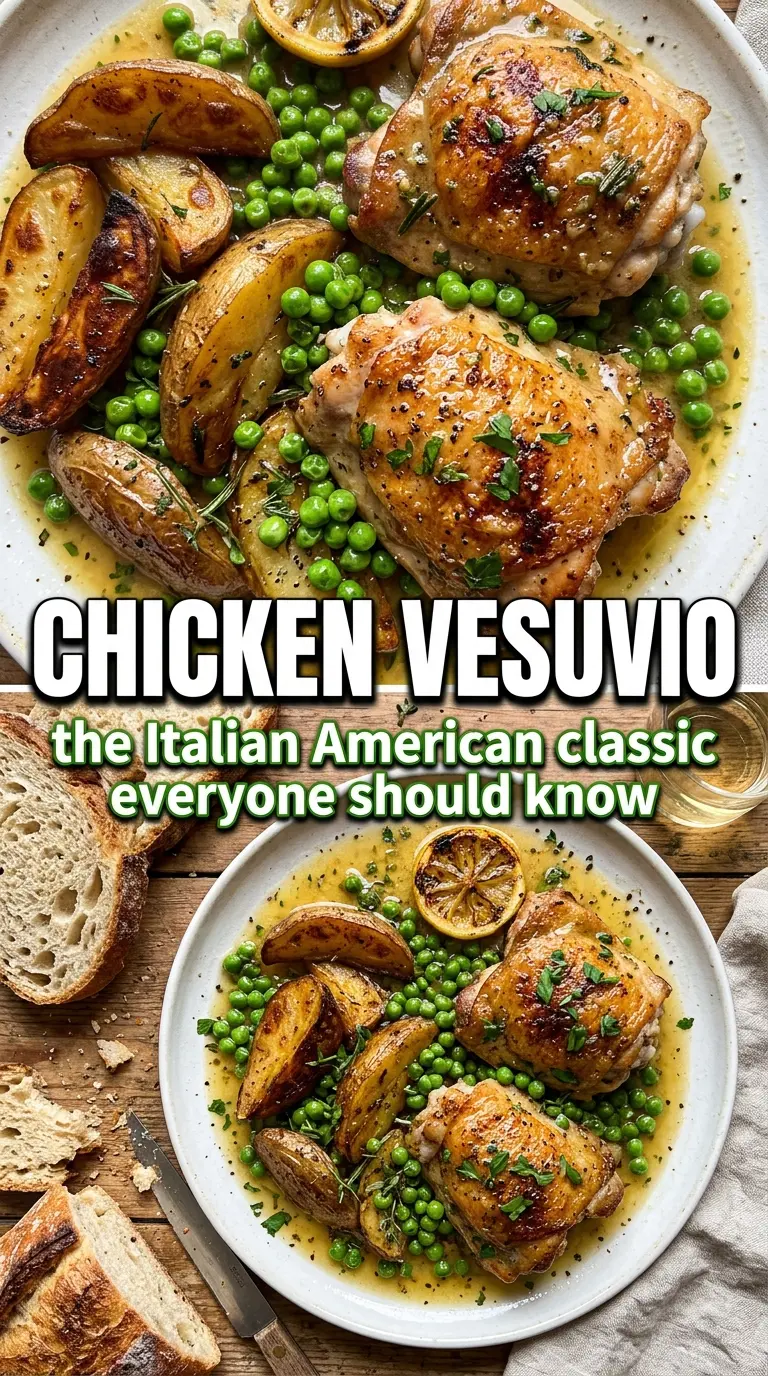
- Bone-in, skin-on chicken thighs — These hold up to the long roast and stay juicy while the skin turns crisp. Boneless chicken won’t give you the same richness or the same pan drippings, which are a big part of the sauce.
- Yukon gold potatoes — They’re the best balance of creamy and sturdy here. Russets can fall apart, and waxy potatoes don’t get that buttery interior. Cut them into even wedges so they brown at the same pace.
- White wine — This is where the sauce gets its lift. Use a dry wine you’d actually drink, because it reduces into something sharp and clean, not sugary. If you need a substitute, use more broth with a small splash of white wine vinegar, but the flavor will be flatter.
- Garlic, oregano, and thyme — Garlic is the loudest flavor in the pan, but the herbs keep it from tasting one-note. Don’t rush the garlic; one minute in butter is enough to soften it without browning it bitter.
- Lemon juice and peas — Lemon wakes up the whole dish right before it goes into the oven, and peas add color and a little sweetness at the end. Add the peas late so they stay bright instead of turning dull and overcooked.
How to Build the Pan Sauce Without Losing the Crisp Skin
Season and Sear the Chicken First
Pat the chicken dry before it ever hits the pan. Moisture on the skin is the enemy of browning, and a dry surface gives you that deep golden color that stays crisp through the roast. Start skin-side down in hot olive oil and let it go until the skin releases easily and looks lacquered, not pale. If it sticks, it needs another minute.
Brown the Potatoes in the Fond
Use the same skillet and don’t wipe it out. The little browned bits from the chicken are what give the potatoes their savory edge and what makes the sauce taste built, not poured. Let each cut face touch the pan long enough to color; if you keep flipping too early, you’ll get soft wedges without the crust you want.
Loosen the Pan and Roast
When the garlic is fragrant, add the wine and broth and scrape the bottom until the pan looks glossy again. That’s when the flavor gets carried into the sauce. Return the chicken and potatoes skin-side up so the tops stay out of the liquid, then roast until the chicken is cooked through and the potatoes are crisp at the edges. If the pan looks dry halfway through, add a splash of broth rather than more wine.
Finish with Peas and Parsley
Scatter the peas over the top near the end of the roast so they heat through without losing their color. Fresh parsley goes on last for a clean finish and a little freshness against the garlic and butter. Serve it right away while the skin is still crisp and the potatoes still have some edge.
How to Adapt Chicken Vesuvio Without Losing What Makes It Work
Make It Gluten-Free Without Changing the Method
This recipe is naturally gluten-free as written, so the only thing to watch is your broth. Use a certified gluten-free chicken broth if you need that guarantee. The technique stays exactly the same, which is one reason this dish is such a reliable dinner.
Dairy-Free with No Loss in the Sauce
Swap the butter for more olive oil if you need to keep it dairy-free. You’ll lose a little roundness, but the garlic, wine, and chicken fat still carry the sauce well. Don’t increase the heat to compensate; butter can mask a hot pan, but olive oil will break down faster.
If You Want More Sauce for Bread
Add an extra 1/2 cup of broth and a splash more wine before the roast. That gives you a looser pan sauce without drowning the potatoes, but keep the liquid at the bottom of the pan and the chicken skin above it. Too much liquid at the start is how you end up steaming the whole dish.
Storage and Reheating
- Refrigerator: Store leftovers in an airtight container for up to 4 days. The chicken stays good, but the potatoes soften as they sit in the sauce.
- Freezer: It freezes reasonably well for up to 2 months, though the potatoes will be softer after thawing. Freeze in a shallow container and cool it completely before packing it away.
- Reheating: Reheat covered in a 350°F oven until hot, then uncover for the last few minutes to help the skin firm up again. The microwave works in a pinch, but it turns the potatoes soggy and the chicken skin rubbery.
Questions I Get Asked About This Recipe
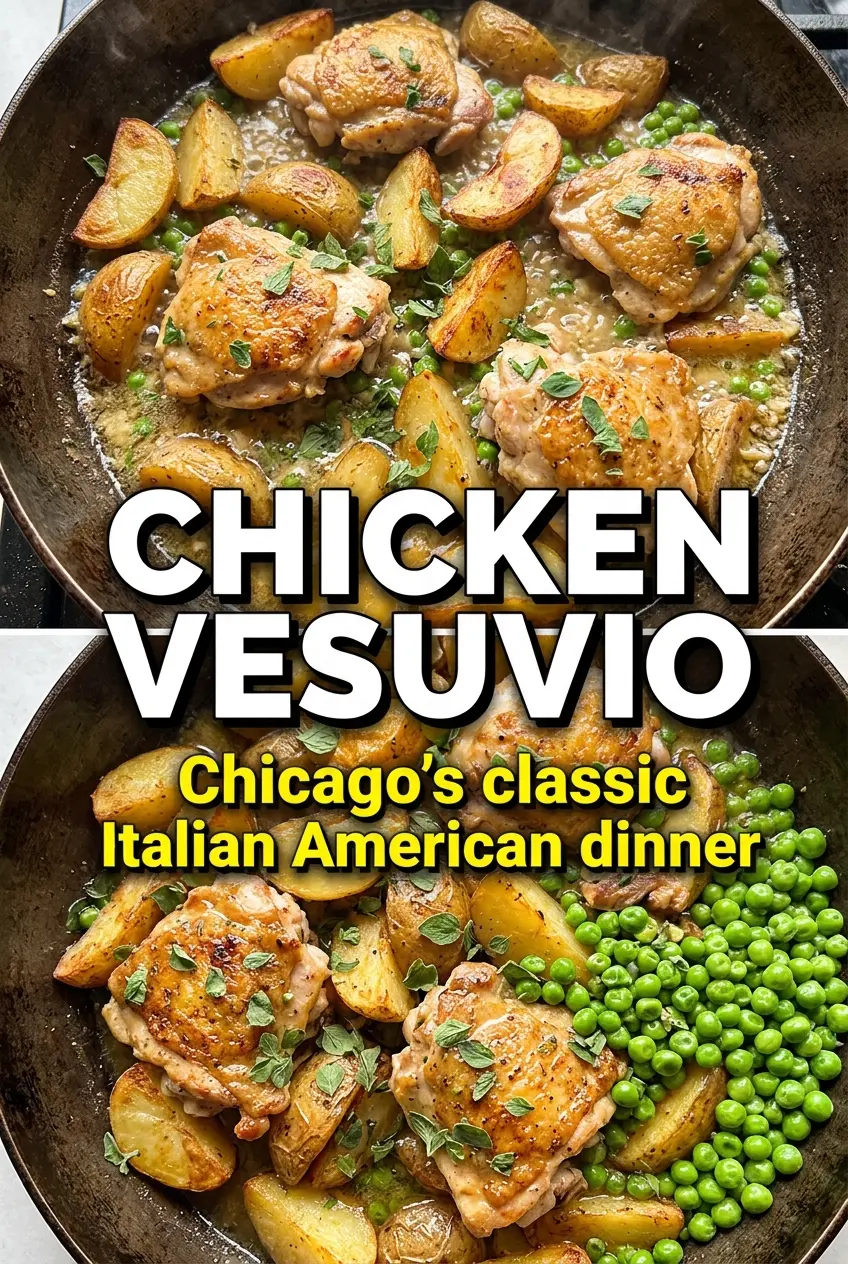
Chicken Vesuvio
Ingredients
Equipment
Method
- Preheat oven to 425F. Season the chicken thighs with salt, black pepper, and dried oregano.
- Heat olive oil in a large oven-safe skillet. Sear chicken skin-side down for 6 minutes, then remove to a plate.
- In the same skillet, sear potato wedges for 4 minutes per side until golden. Remove to the plate with the chicken.
- Sauté minced garlic in melted butter for 1 minute. Deglaze the pan with white wine and chicken broth, scraping up browned bits.
- Add lemon juice and dried thyme to the skillet. Return chicken and potatoes skin-side up.
- Transfer the skillet to the oven and roast for 35 to 40 minutes at 425F. Roast until the chicken is golden and the potatoes are crispy.
- Scatter frozen peas over the top. Roast for 5 more minutes at 425F until peas are heated through.
- Garnish with fresh parsley. Rest 2 minutes off the heat, then serve hot.