Creamy lemon ice cream lands with a bright citrus snap first, then melts into a rich custard finish that keeps each spoonful from tasting sharp or icy. The lemon flavor here is clean and direct, not muddled with extra ingredients, and the texture stays plush because the base starts as a proper egg yolk custard instead of a thin cream mixture.
That balance matters. The cream and milk are heated only until steaming, then slowly tempered into the yolks so the custard stays smooth instead of scrambling. Lemon juice goes in after the custard is cooked and strained, which keeps the dairy from curdling and preserves that fresh, punchy flavor. The result is the kind of homemade ice cream that tastes bright enough to wake up a heavy meal but still feels luxurious on the tongue.
If you’ve ever had lemon ice cream turn dull, chalky, or weirdly sharp, the method below is what fixes it. I’ve also included the exact point where the lemon goes in, because that’s the detail that makes or breaks this dessert.
The custard turned out silky and the lemon flavor stayed bright after freezing, not dull at all. I loved that the zest gave it a fresh finish without making it bitter.
Love the bright custard texture and fresh lemon punch? Save this creamy lemon ice cream for the next time you want a scoop that’s tangy, smooth, and deeply refreshing.
The Step That Keeps Lemon Ice Cream Creamy Instead of Grainy
The biggest mistake with lemon ice cream is adding the juice too early or heating it too hard. Lemon is acidic enough to tighten dairy if it goes into hot cream before the custard is finished, and high heat can push yolks from silky to grainy in a hurry. This recipe avoids both problems by cooking the custard first, straining it, and only then stirring in the lemon juice and zest.
That sequence gives you a smooth base with a bright lemon finish. The custard should coat the back of a spoon and reach about 175F, which is hot enough to thicken the yolks without giving them a scrambled texture. Once you add the citrus, the mixture will smell fresher and taste a little sharper, which is exactly what you want before chilling.
- Egg yolks — They give this ice cream body and that custard richness you can’t get from cream alone. Whole eggs make the texture less velvety, so stick with yolks here.
- Heavy cream and whole milk — The cream brings fat and the milk keeps the finished scoop from feeling heavy. You can swap in half-and-half for part of the milk in a pinch, but the final texture won’t be quite as lush.
- Fresh lemon juice — Bottled juice tastes flatter and can read harsher after freezing. Fresh juice keeps the flavor clean, and it should go in after straining so the custard stays smooth.
- Lemon zest — This is where the most aromatic lemon flavor lives. Finely zest only the yellow peel; if you grate into the white pith, the ice cream picks up a bitter edge.
Building the Custard So the Lemon Stays Bright
Warming the Dairy
Heat the cream and milk until they’re steaming and small bubbles form around the edges, but don’t let them boil. Boiling pushes more water off and can make the base taste cooked instead of clean. If you see the mixture starting to rise hard in the pan, pull it off the heat right away.
Tempering the Yolks
Whisk the sugar into the yolks until the mixture looks pale and thick, then pour the hot dairy in slowly while whisking constantly. That slow stream raises the yolks’ temperature without shocking them, which is what prevents curdled streaks. If you dump it all in at once, the yolks can seize into tiny bits before they ever hit the pan.
Cooking to the Right Thickness
Return everything to the saucepan and cook over medium-low heat, stirring the whole time, until the custard reaches 175F and lightly coats a spoon. The line you draw across the spoon should hold for a second before filling in. If you take it much hotter, the eggs can overthicken and the final ice cream will freeze dense instead of smooth.
Adding the Lemon at the End
Strain the custard into a clean bowl, then stir in the lemon juice, zest, vanilla, and salt. The sieve catches any tiny bits of overcooked egg, and adding the citrus after straining protects the base from curdling. The mixture will look thinner at this point, and that’s normal; it firms up once it chills and churns.
Make it Meyer lemon
Swap part or all of the standard lemon juice for Meyer lemon juice if you want a softer, slightly floral result. Meyer lemons are less sharp, so the ice cream tastes rounder and a little more dessert-like, but the citrus punch will be gentler.
Dairy-free version with coconut milk
Use full-fat canned coconut milk in place of the cream and milk, but expect a light coconut note in the finished ice cream. The texture will still be creamy, though not as custard-rich, and you’ll want to chill the base very thoroughly before churning because coconut fat softens faster.
Lower-sugar scoop
You can trim the sugar a little, but don’t cut it by much. Sugar does more than sweeten here; it keeps the ice cream softer in the freezer, so reducing it too far gives you a harder, icier pint.
Storage and Freezing
- Refrigerator: The churned base should be frozen, not stored in the fridge, but the cooked custard can be refrigerated up to 2 days before churning.
- Freezer: The finished ice cream keeps well for about 2 weeks in an airtight container. After that, the lemon flavor is still there, but the texture starts to pick up more ice crystals.
- Reheating: Not applicable, but for serving, let the container sit at room temperature for 5 to 10 minutes so it scoops cleanly. If you try to dig in straight from the freezer, the edges chip and the texture seems harder than it really is.
Questions I Get Asked About This Recipe
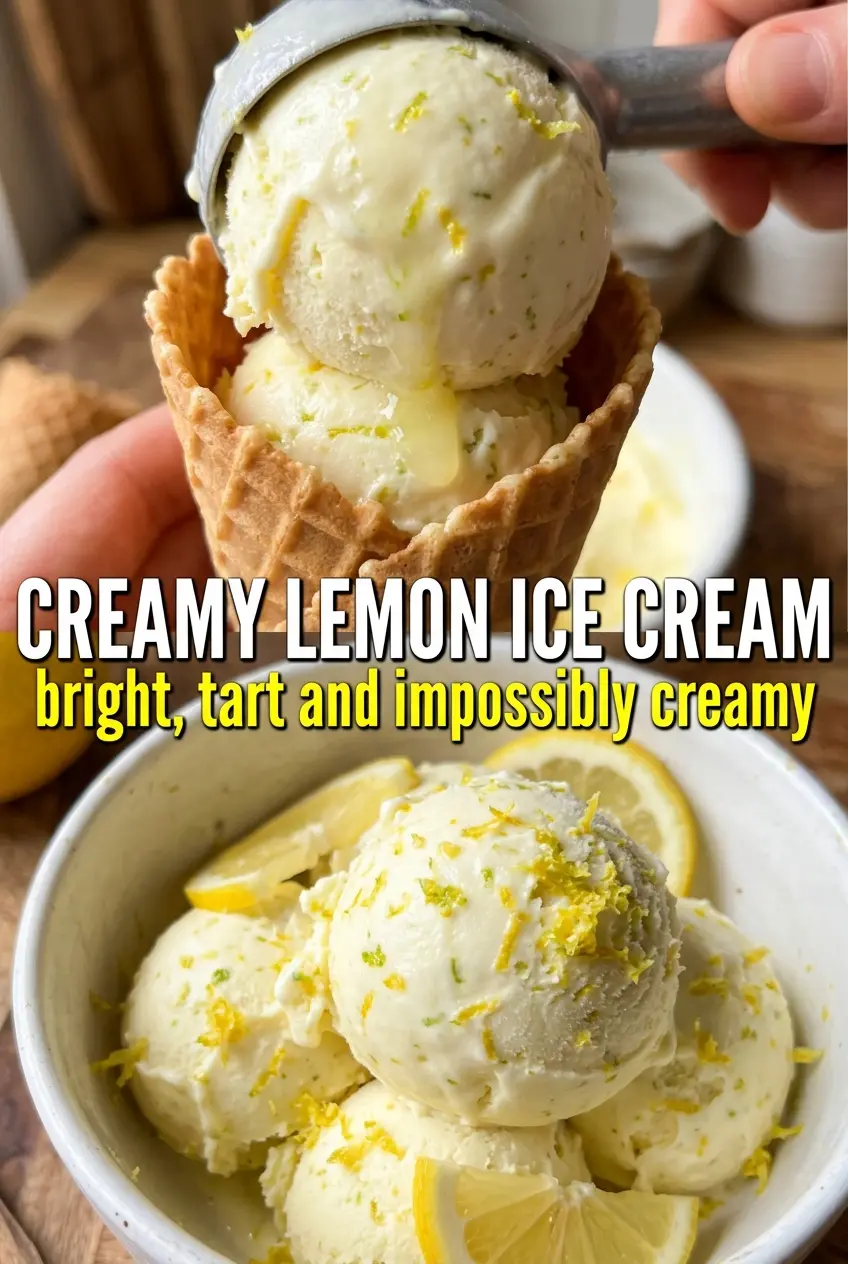
Creamy Lemon Ice Cream
Ingredients
Equipment
Method
- In a saucepan, heat the heavy cream and whole milk until steaming. Stop when you see small steam bubbles at the edges.
- In a bowl, whisk the egg yolks with the granulated sugar until smooth and lighter in color. Whisk steadily so the sugar dissolves.
- Slowly whisk the hot cream mixture into the egg yolks to temper. Pour in a thin stream while whisking to prevent scrambling.
- Return the mixture to the saucepan and cook over medium-low heat, stirring constantly, until the custard reaches 175°F. It should coat the back of a spoon and look slightly thicker.
- Strain the custard through a fine mesh sieve. Press gently to remove any bits so the texture stays silky.
- Stir in the fresh lemon juice, lemon zest, vanilla extract, and salt. Mix until fully combined and evenly bright.
- Cool the custard completely over an ice bath. Continue stirring occasionally until it feels fully cool.
- Refrigerate the custard for at least 4 hours. Chill until cold throughout before churning.
- Churn in an ice cream maker according to the manufacturer’s directions. The mixture should thicken and look like soft-serve.
- Transfer to a container and freeze until firm. Freeze until scoopable with a dense, creamy texture.