High protein chicken noodle soup lands with the kind of comfort that feels familiar right away, but the extra chicken and chickpeas give it more staying power than the usual bowl. The broth stays clear and light, the noodles cook up tender, and every spoonful has enough substance to count as lunch or dinner without needing a second dish beside it.
What makes this version work is the way the chicken gets a quick sauté before the broth goes in, which builds a little depth without turning the soup heavy. The chickpeas add body and a mild, nutty bite that blends in instead of taking over, and the lemon at the end keeps the whole pot from tasting flat. If you’ve ever had chicken noodle soup that felt thin or one-note, this version fixes both problems.
Below you’ll find the one detail that keeps the noodles from going mushy, plus a few smart swaps if you want to change the grains or make the soup stretch a little further.
The broth stayed clear, the noodles held their shape, and the chickpeas made it feel like a full meal instead of just soup and bread. I added extra lemon at the table and it woke everything up.
Save this high protein chicken noodle soup for the nights when you want a clear, lemony broth with extra chicken, chickpeas, and tender egg noodles.
The Part That Keeps the Noodles from Going Soft
Most chicken noodle soup gets watered down by one simple mistake: the noodles sit in the pot too long. Once they cross from tender to swollen, they start drinking up the broth and the whole soup loses its balance. Here, the noodles go in near the end, after the chickpeas have already warmed through, so they cook in just enough liquid to stay supple without turning starchy.
The other thing that matters is the order of the base. Sautéing the onion, carrots, and celery first gives the broth a deeper flavor before the chicken even hits the pot. If you dump everything in at once, you get a soup that tastes boiled instead of built.
What Each Ingredient Is Doing in the Bowl
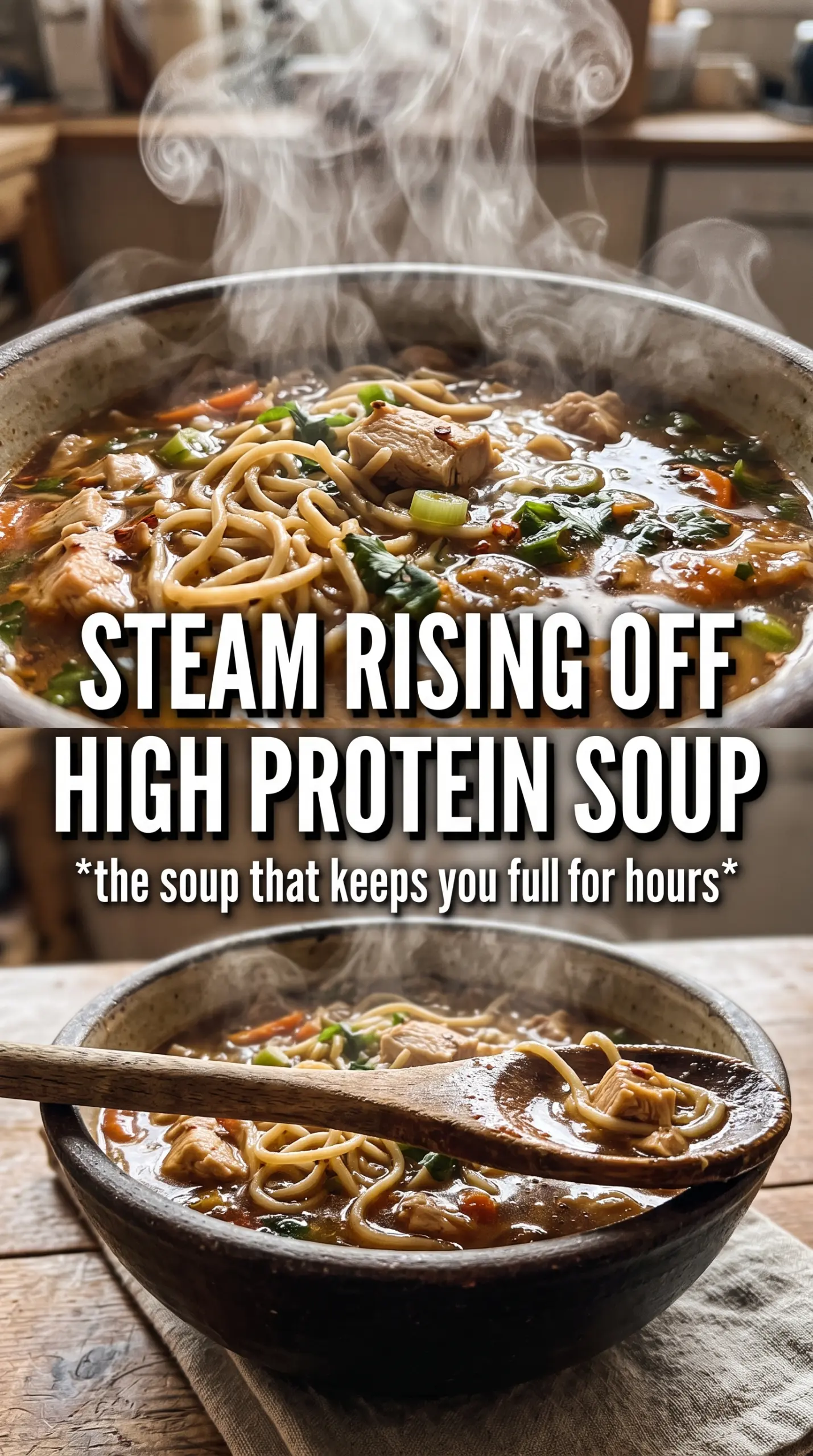
- Chicken breast — Diced breast cooks quickly and keeps the soup lean while still giving you enough protein to make this filling. Thighs work if that’s what you have, but they’ll bring a richer broth and a softer bite. Cut the pieces evenly so they cook at the same pace and don’t turn stringy before the noodles are ready.
- Chickpeas — These are the quiet workhorse here. They add protein, a little creaminess at the edges, and enough body to make the soup feel more substantial without needing cream or flour. Canned chickpeas are perfect; just rinse and drain them well so the broth stays clean.
- High-protein or whole wheat egg noodles — Either one works, but both need to go in at the very end. High-protein noodles hold their shape a little better, while whole wheat brings a nuttier flavor and firmer texture. If you swap in regular egg noodles, cut the simmer time by a minute and watch them closely.
- Lemon juice — This is the piece that pulls the whole pot into focus. It doesn’t make the soup taste lemony in a sharp way; it brightens the broth so the chicken and herbs taste clearer. Add it after the heat is off or very low, because boiling it hard can flatten that fresh finish.
Building the Broth in the Right Order
Softening the Vegetables First
Start with olive oil, onion, carrots, and celery in a large pot over medium heat. Cook them until the onion turns translucent and the carrots just begin to lose their raw edge, about 5 minutes. If the vegetables brown too quickly, the heat is too high and the broth can pick up a bitter note instead of a sweet, rounded base.
Giving the Chicken a Quick Head Start
Add the garlic and cook for just a minute, then stir in the diced chicken. You want the outside to turn opaque and lightly golden, not cooked through completely, because the broth will finish the job. If the chicken releases a lot of liquid, keep cooking until that moisture evaporates a bit; otherwise the soup can taste thin.
Letting the Broth Pick Up Flavor
Pour in the chicken broth, thyme, and parsley, then bring everything up to a boil before lowering it to a steady simmer. This is where the pot starts tasting like soup instead of ingredients. Fifteen minutes is enough to cook the chicken through and let the vegetables soften without collapsing, but don’t boil it hard the whole time or the broth can turn cloudy.
Finishing with Noodles and Brightness
Stir in the chickpeas and noodles and cook until the noodles are just tender, 6 to 8 minutes. Pull the pot from the heat and add the lemon juice, then season with salt and pepper. The soup should taste clean, savory, and balanced; if it tastes flat, it usually needs more salt before it needs more lemon.
How to Adapt This Soup Without Losing the Point
Make it gluten-free
Use gluten-free noodles that hold up well in broth, or swap in rice and cook it separately if you want the cleanest texture. The key is keeping the starch from clouding the soup, so don’t simmer gluten-free pasta longer than the package says. It can go from tender to bloated fast.
Use chicken thighs for a richer pot
Boneless thighs bring more flavor and stay juicier if you plan to simmer the soup a little longer. They do make the broth a touch richer, which works well if you like a more classic, hearty bowl. Trim excess fat first so the surface doesn’t get greasy.
Stretch it for more servings
Add an extra can of chickpeas or another cup of broth if you need to feed more people. The soup will still taste balanced because the lemon and herbs keep it from feeling heavy, but you’ll want to bump the salt a little at the end. More liquid dilutes seasoning faster than it dilutes flavor.
Make it dairy-free and naturally high protein
This recipe is already dairy-free, which is part of why it feels light but still filling. Keep the chickpeas in place and use whole wheat or high-protein noodles so the bowl stays satisfying without any cream. If you’re trying to boost protein even more, add a little extra chicken rather than thickening the broth.
Storage and Reheating
- Refrigerator: Store for up to 4 days. The noodles will keep soaking up broth, so expect the soup to thicken a little.
- Freezer: It freezes, but the noodles don’t stay perfect. For best results, freeze the soup without noodles and add fresh ones when reheating.
- Reheating: Warm it gently on the stove over medium-low heat until steaming, not boiling. If it looks too thick, add a splash of broth or water before heating; boiling hard can make the chicken dry and the noodles mushy.
Answers to the Questions Worth Asking
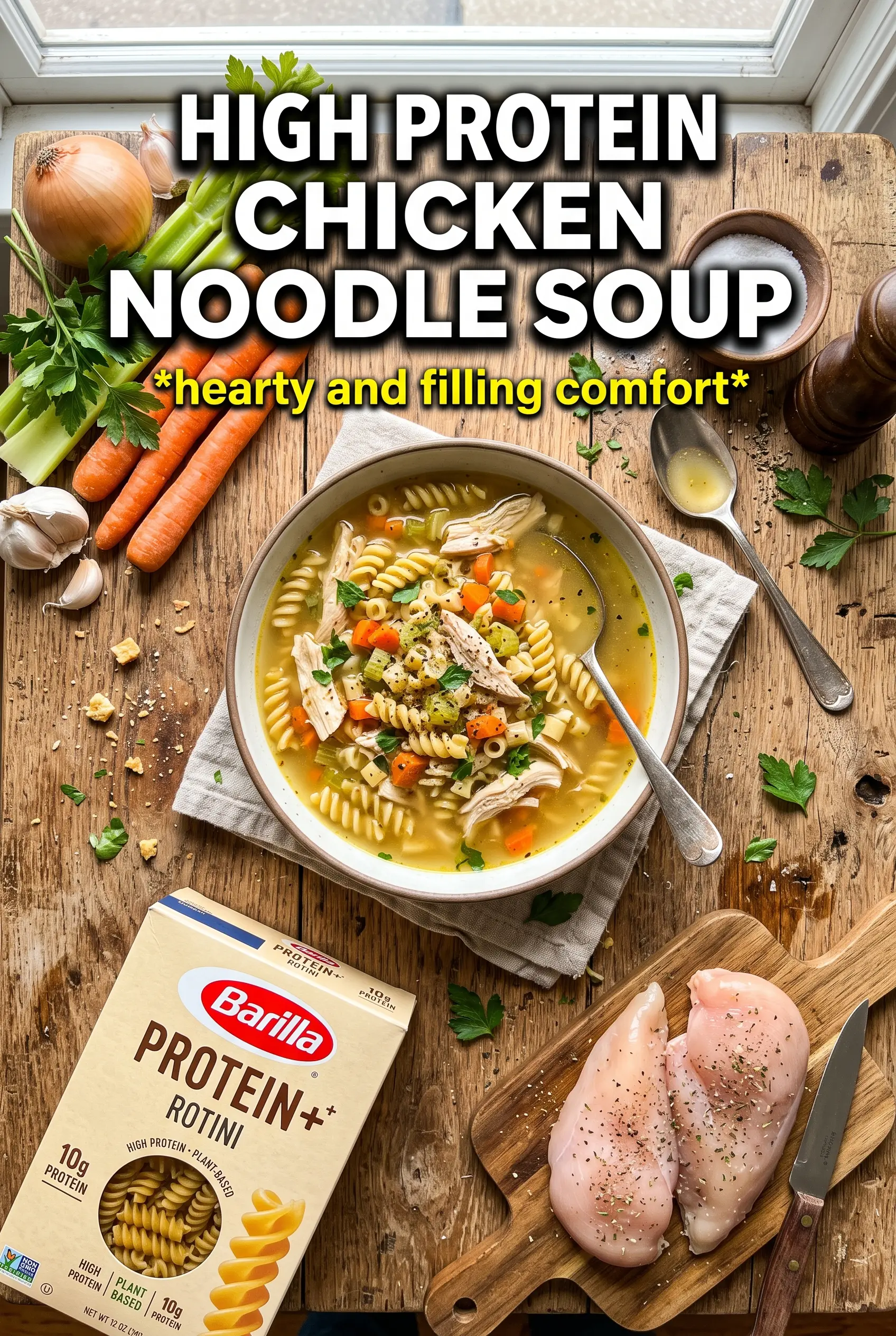
High Protein Chicken Noodle Soup
Ingredients
Equipment
Method
- Heat the olive oil in a large pot, then sauté the onion, carrots, and celery for 5 minutes until softened and fragrant, stirring occasionally.
- Add the garlic and cook for 1 minute, just until fragrant, without browning.
- Add the diced chicken to the pot and cook for 4 minutes until lightly browned, stirring to spread it out.
- Pour in the chicken broth and add dried thyme and dried parsley, then bring everything to a boil.
- Reduce to a simmer and cook for 15 minutes so the flavors meld and the broth turns slightly golden.
- Add the chickpeas and egg noodles, then cook for 6-8 minutes until the noodles are tender.
- Stir in the lemon juice and season with salt and pepper to taste for a balanced, bright finish.
- Garnish with fresh parsley right before serving for a fresh green top note.