Homestyle chicken noodle soup earns its place at the table when the broth tastes deep and clean, the chicken falls apart in tender shreds, and the noodles stay silky instead of bloated. The best bowls don’t rely on a trick. They come from giving the broth time to pull flavor from the chicken, peppercorns, and vegetables before anything delicate goes in.
This version leans on a whole chicken or bone-in pieces because both the meat and the bones do the work. The first simmer builds the broth; the second keeps the sliced vegetables bright and the noodles from turning gummy. Fresh dill goes in at the end, which keeps it tasting fresh instead of muddy. If you’ve ever had soup that came out flat or watery, the difference is usually in the order, not the ingredients.
Below, you’ll find the exact point where the broth should be strained, why the noodles go in late, and a few useful ways to adapt the pot for leftovers, gluten-free noodles, or a richer finish.
The broth had that rich homemade taste and the noodles stayed perfect even after reheating. I loved that the chicken shredded so easily after simmering.
Save this homestyle chicken noodle soup for the nights when you want a deep golden broth, tender chicken, and noodles that hold their shape.
The Broth Tastes Flat When You Rush the First Simmer
The biggest mistake in chicken noodle soup is treating the broth like background noise. The whole chicken, peppercorns, bay leaves, onion, and the first carrots and celery need time together so the broth picks up body before the noodles show up. If you boil it hard the whole time, the broth turns cloudy and the chicken tightens up. A gentle simmer gives you that clear, golden pot that tastes like actual chicken, not salted water with vegetables in it.
Straining the broth is the other part people skip, and it matters here. Those first vegetables have already given what they can, so they’ve done their job. Pull them out, shred the chicken, then build the soup again with fresh sliced carrots and celery so the finished bowl has both a rich broth and vegetables with some texture left in them.
What Each Ingredient Is Doing in the Pot

- Whole chicken or bone-in pieces — This is where the broth gets its depth. A whole chicken gives you meat for the soup and collagen from the bones, which makes the broth taste fuller. If you use bone-in pieces instead, keep the skin on during the simmer for a little extra richness.
- Whole carrots, celery, onion, garlic, peppercorns, and bay leaves — The first set of vegetables is there to flavor the broth, not to be eaten. Keeping some of them whole helps the soup stay clear and prevents the vegetables from disappearing before the broth has enough time to develop. Don’t crush the peppercorns unless you want a sharper, more aggressive pepper flavor.
- Freshly sliced carrots, celery, and diced onion — These go in after the broth is strained so they still taste like vegetables instead of mush. The diced onion softens into the broth faster than the first whole onion did, which gives the finished soup a little more body.
- Wide egg noodles — Wide noodles hold up best in chicken soup because they catch broth in their folds without turning to paste as fast as thinner pasta. If you want to make the soup ahead, cook them separately and add them to each bowl so they don’t soak up all the broth in the fridge.
- Fresh dill — Add it at the end. Heat dulls dill fast, and this soup needs that fresh, grassy finish to lift the broth. Dried dill won’t give the same result here.
Building the Soup So the Noodles Stay Tender
Starting the Broth Cold and Slow
Put the chicken, whole vegetables, garlic, bay leaves, peppercorns, thyme, and water in the pot together, then bring it up gradually. That slow start helps the flavor move into the liquid without beating the chicken apart. As the pot warms, skim the foam that rises to the top; that’s what keeps the broth clean-tasting and clear. Once it’s at a steady simmer, lower the heat until you see only small bubbles breaking the surface.
Straining and Shredding at the Right Moment
When the chicken is very tender, pull it out and strain the broth before you do anything else. If you leave the cooked vegetables in, they’ll keep collapsing and muddy the broth. Shred the chicken while it’s still warm enough to handle easily, and discard any skin or bones you don’t want in the final soup. The meat should come apart in soft chunks, not stringy bits that have been overcooked.
Cooking the Vegetables and Noodles in the Finished Broth
Bring the strained broth back to a simmer before adding the sliced carrots, celery, onion, and garlic. They need that 10-minute head start so they soften without going dull. Add the noodles only after the vegetables have started to turn tender, then stir in the chicken near the end so it warms through instead of drying out. If the pot is boiling hard here, the noodles will break and the broth will get starchy fast.
Finishing with Dill, Salt, and Pepper
Fresh dill goes in at the end, right before serving. That keeps the flavor bright and prevents the herb from losing its clean finish. Taste the broth after the noodles are cooked, then season generously with salt and pepper. Underseasoned chicken soup tastes thin even when the broth was built correctly, so this last adjustment matters more than people think.
How to Adapt This Pot of Soup for Different Kitchens
Gluten-Free Without Losing the Comfort
Swap the egg noodles for a gluten-free noodle that holds up well in broth, or cook them separately and add them to each bowl. Gluten-free pasta can break down faster in a simmering pot, so this keeps the texture closer to what you want. The broth and chicken stay exactly the same.
Extra-Rich Broth Finish
If you want a fuller broth, simmer an extra 20 minutes before straining, but keep the heat low enough that the surface barely moves. That extra time pulls more from the bones without making the chicken tough. It’s the easiest way to get a deeper, more homemade taste without adding cream.
Dairy-Free as Written
This soup is already dairy-free, which is part of why it tastes so clean and classic. Keep it that way by relying on the chicken, vegetables, and dill instead of trying to round it out with cream. The broth stays lighter, and the dill stands out better.
Storage and Reheating
- Refrigerator: Store for up to 4 days. The noodles will keep absorbing broth, so the soup thickens as it sits.
- Freezer: Freeze the broth, chicken, and vegetables without noodles for the best texture. Cook fresh noodles when you reheat it.
- Reheating: Warm gently over medium-low heat until steaming, not boiling. If the pot boils hard, the chicken gets dry and the noodles fall apart.
Questions I Get Asked About This Recipe
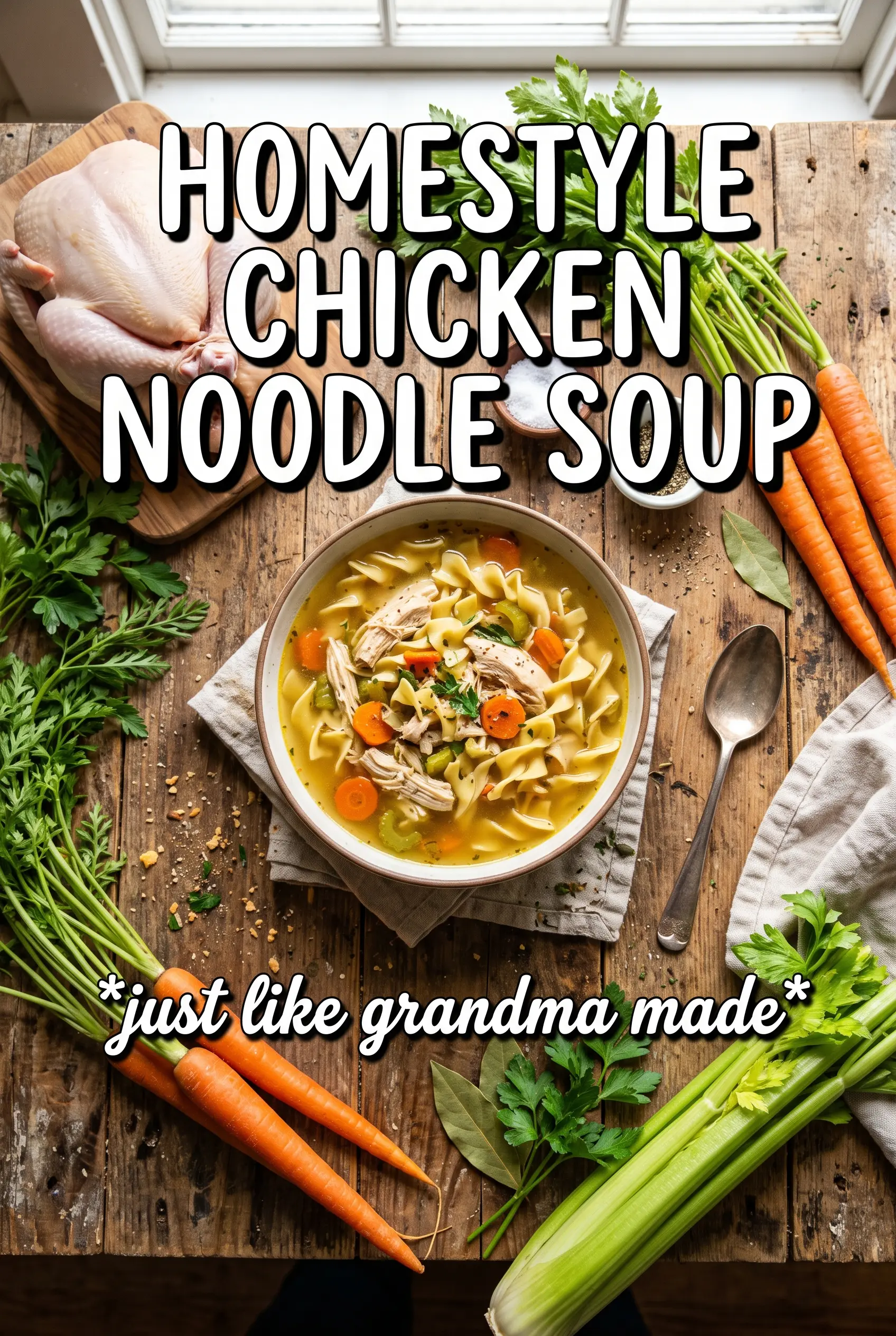
Homestyle Chicken Noodle Soup
Ingredients
Equipment
Method
- Place whole chicken, 2 whole carrots, 2 whole celery stalks, whole onion, 4 garlic cloves, bay leaves, and peppercorns in a large pot with water. Bring to a boil over high heat, then skim foam off the surface.
- Reduce heat to maintain a gentle simmer and cook for 45-60 minutes until chicken is very tender. Skim again if foam collects so the broth stays clear.
- Strain the broth into a clean pot and discard the vegetables and peppercorns. Transfer the chicken to a plate and shred the meat, discarding bones and any skin.
- Return the strained broth to the pot and bring it to a simmer again. Keep it at a steady simmer so the vegetables cook evenly.
- Add sliced carrots, sliced celery, diced onion, and remaining garlic to the simmering broth, then cook for 10 minutes. You want the vegetables to soften but not turn mushy.
- Add wide egg noodles and shredded chicken, then simmer for 6-8 minutes until the noodles are tender. Stir occasionally so noodles don’t clump.
- Stir in fresh dill and season generously with salt and pepper. Turn off the heat and let the soup sit 2-3 minutes to let flavors meld, then serve hot with visible noodles and chicken throughout.