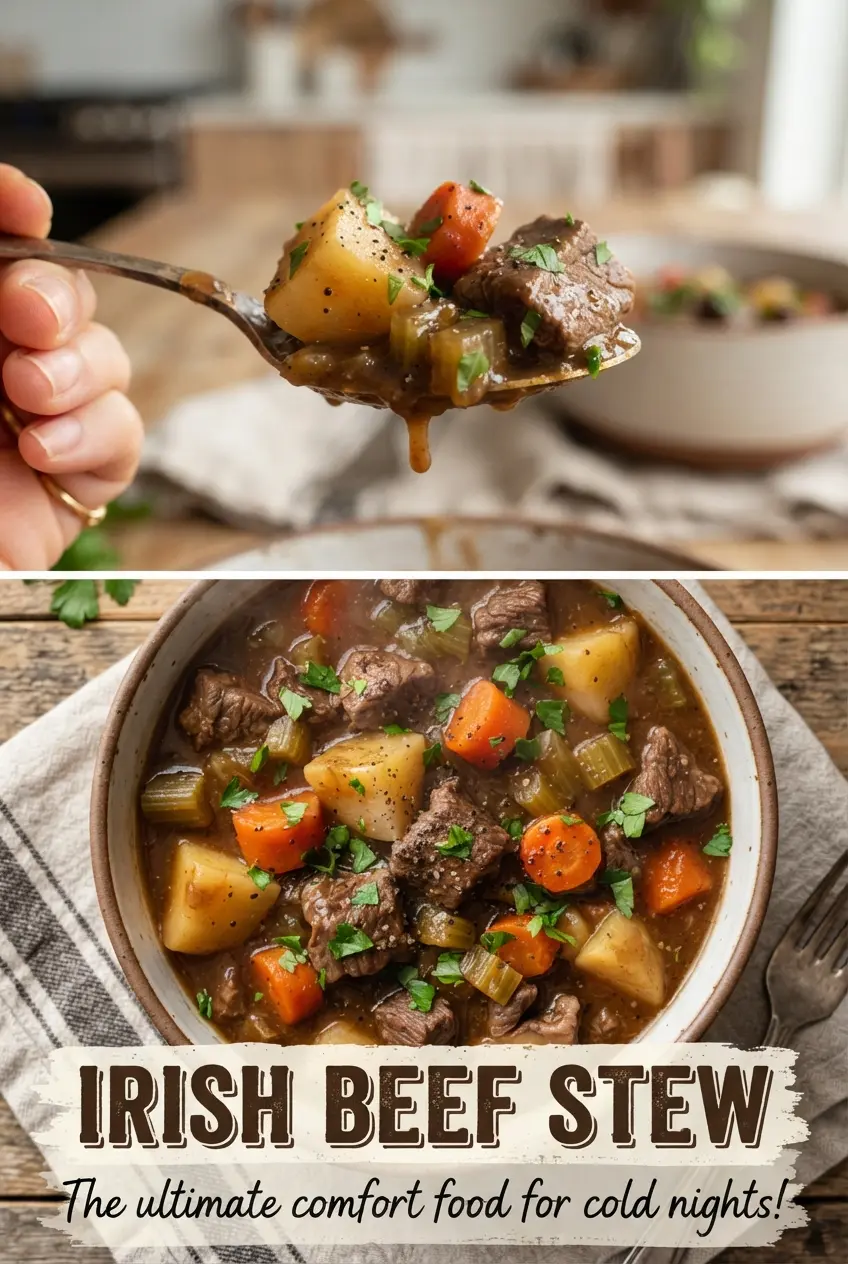
Irish beef stew earns its place in the rotation because it turns a tough cut of meat into something spoon-tender, with potatoes, carrots, and celery soaking up a gravy that tastes like it simmered all day. The broth gets deep and savory instead of thin and flat, and the vegetables stay recognizable instead of disappearing into the pot. That balance is what makes a good stew worth repeating.
The key is building flavor in layers. Browning the beef first gives the stew its backbone, and the stout loosens the browned bits from the pan so none of that flavor gets left behind. Tomato paste adds a little body and a quiet sweetness, while the long simmer gives the chuck time to relax and turn tender without falling apart too early. The vegetables go in later so they keep their shape and don’t turn to mush.
Below, I’ve included the timing that matters most, the best way to keep the stew thick without making it gluey, and a few swaps that still keep the pot tasting like real Irish beef stew.
The gravy thickened up beautifully and the beef was fork-tender after the long simmer. I added the potatoes a little later like you suggested, and they held their shape instead of turning to paste.
Save this Irish beef stew for the nights when you want fork-tender beef, chunky vegetables, and a rich stout gravy in one pot.
The Browning Step That Gives This Stew Its Depth
Most stew recipes fail before the simmer even starts. If the beef goes into the pot damp or crowded, it steams instead of browns, and the finished broth tastes one-dimensional. Brown the meat in batches and give each piece space in the pan so you get a dark crust instead of gray edges.
That crust matters because it becomes part of the gravy. Once the stout hits the pan, scrape the bottom well and let it pull up every browned bit before the broth goes in. If you skip that step, you lose the richest flavor in the pot. The flour on the beef also helps the liquid thicken later, but it only works properly when the meat has had room to sear first.
What Each Ingredient Is Actually Doing in the Pot

- Beef chuck — This is the cut that makes the stew worth making. It has enough fat and connective tissue to turn tender during the long simmer, while leaner cuts would dry out or stay chewy. Cut it into larger chunks so it holds together through the cook.
- Irish stout — This deepens the broth and adds a malty bitterness that balances the sweetness of the carrots and onion. If you need a swap, use a dark beer with some body, not a light lager. Use the same amount, and let it bubble for a minute before adding broth so the sharp edge cooks off a bit.
- Tomato paste — A small spoonful gives the gravy color, concentration, and a little savory sweetness. It blooms in the hot pan with the onion and garlic, which keeps it from tasting raw. Don’t skip the minute of cooking time here; that step changes the whole pot.
- Potatoes, carrots, and celery — These turn the stew into a meal, but they need different timing than the beef. Adding them later keeps the potatoes intact and the carrots pleasantly tender instead of waterlogged. Large chunks hold up best in the long simmer.
- Fresh parsley — This finishes the stew with a clean, bright note that keeps the gravy from tasting heavy. Stir it in at the end so it stays fresh and green.
Building the Stew So the Meat Stays Tender and the Gravy Stays Thick
Seasoning and Coating the Beef
Toss the beef with salt, pepper, and flour until every piece has a light dusty coating. The flour should cling, not clump, because too much flour turns the broth pasty instead of silky. Seasoning before the sear also gives the meat itself a better taste, not just the gravy around it.
Getting the Sear Without Crowding the Pan
Heat the oil until it shimmers, then brown the beef in batches. The pieces need contact with the pan to form a crust; if they’re piled up, they’ll release liquid and sit there boiling. Don’t rush this part. Dark, sticky browned bits on the bottom are exactly what you want.
Cooking the Base Until It Smells Sweet and Savory
After the beef comes out, soften the onion in the same pot, then add the garlic and tomato paste for one minute. The onion should turn soft and translucent, and the tomato paste should darken a shade and smell less sharp. That short cook takes the raw edge off both ingredients and sets up the stew’s backbone.
Simmering Until the Beef Gives Up
Once the stout and broth go in, bring everything to a gentle simmer, then cover and let it cook low and slow. You’re waiting for the beef to become tender enough to cut with a spoon, not for the liquid to boil hard. A hard boil tightens the meat and makes the broth greasy; a slow simmer lets collagen do its job.
Adding the Vegetables at the End
Stir in the potatoes, carrots, and celery after the beef has had time to soften. They need enough time to become tender, but not so much that they lose their shape. The stew is ready when the potatoes are cooked through, the carrots are soft at the edges, and the broth coats the spoon instead of looking thin.
How to Adapt This Irish Stew Without Losing the Character of the Dish
Gluten-Free Version
Skip the all-purpose flour and dust the beef with a gluten-free flour blend or cornstarch instead. Cornstarch thickens more quickly, so use a light hand or the stew can turn glossy and heavy. The flavor stays the same, but the gravy will look a little cleaner and less rustic.
No Stout on Hand
Use more beef broth plus a splash of balsamic vinegar or Worcestershire for depth. You won’t get the same malty bitterness, but the stew will still have a dark, savory backbone. Let the broth simmer a few minutes after the swap so the sharpness mellows.
Lower-Carb Version
Replace some or all of the potatoes with turnips or extra carrots if you want a lighter bowl. The stew will taste a little less creamy and starchy, but the broth and beef still carry it. Cut the vegetables into large pieces so they don’t disappear during the simmer.
Make-Ahead Friendly
This stew tastes even better the next day because the broth has time to settle and deepen. Cook it fully, cool it, then chill it overnight before reheating. If the stew looks too thick after resting, loosen it with a splash of broth when you warm it back up.
Storage and Reheating
- Refrigerator: Store covered for up to 4 days. The gravy will thicken as it sits, which is normal.
- Freezer: Freeze well for up to 3 months in airtight containers. The potatoes soften a little after thawing, but the flavor holds up well.
- Reheating: Warm gently on the stove over low heat with a splash of broth or water. Don’t boil it hard again or the beef can tighten and the potatoes can break apart.
Answers to the Questions Worth Asking
Irish Beef Stew
Ingredients
Equipment
Method
- Season the beef chuck cubes with salt and black pepper, then toss with the all-purpose flour to coat evenly. Heat the vegetable oil in a Dutch oven over medium-high heat.
- Brown the beef in batches, turning as needed, until deeply browned on the outside, about 3-5 minutes per batch. Transfer browned beef to a plate while you finish the rest.
- Add the chopped onion to the Dutch oven and cook until softened, about 5 minutes. Add the minced garlic and tomato paste and cook for 1 minute, stirring constantly (about 1 minute).
- Pour in the Irish stout and scrape the bottom of the pot to loosen the browned bits. Add the beef broth, dried thyme, dried rosemary, and bay leaves, then return the browned beef to the pot.
- Cover and simmer at a gentle, steady bubble for 1 1/2 hours, stirring once or twice to prevent sticking. Keep the heat at a consistent simmer so the beef stays tender.
- Add the potatoes, carrots, and celery, then simmer for 45-60 minutes until the vegetables are tender and the stew has thickened. Adjust the heat as needed to maintain a gentle simmer.
- Remove the bay leaves and stir well, then finish with chopped fresh parsley. Serve hot for the best chunky texture and rich stout gravy.