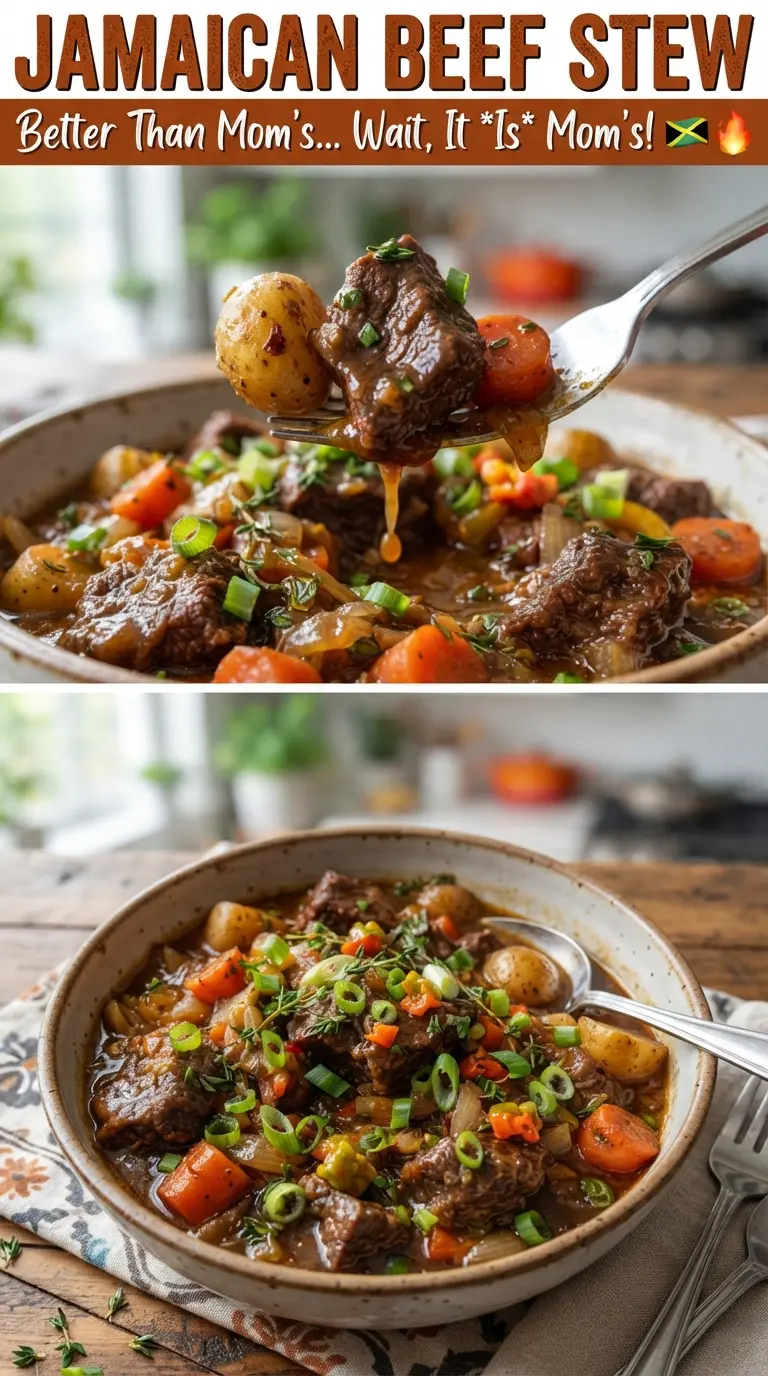
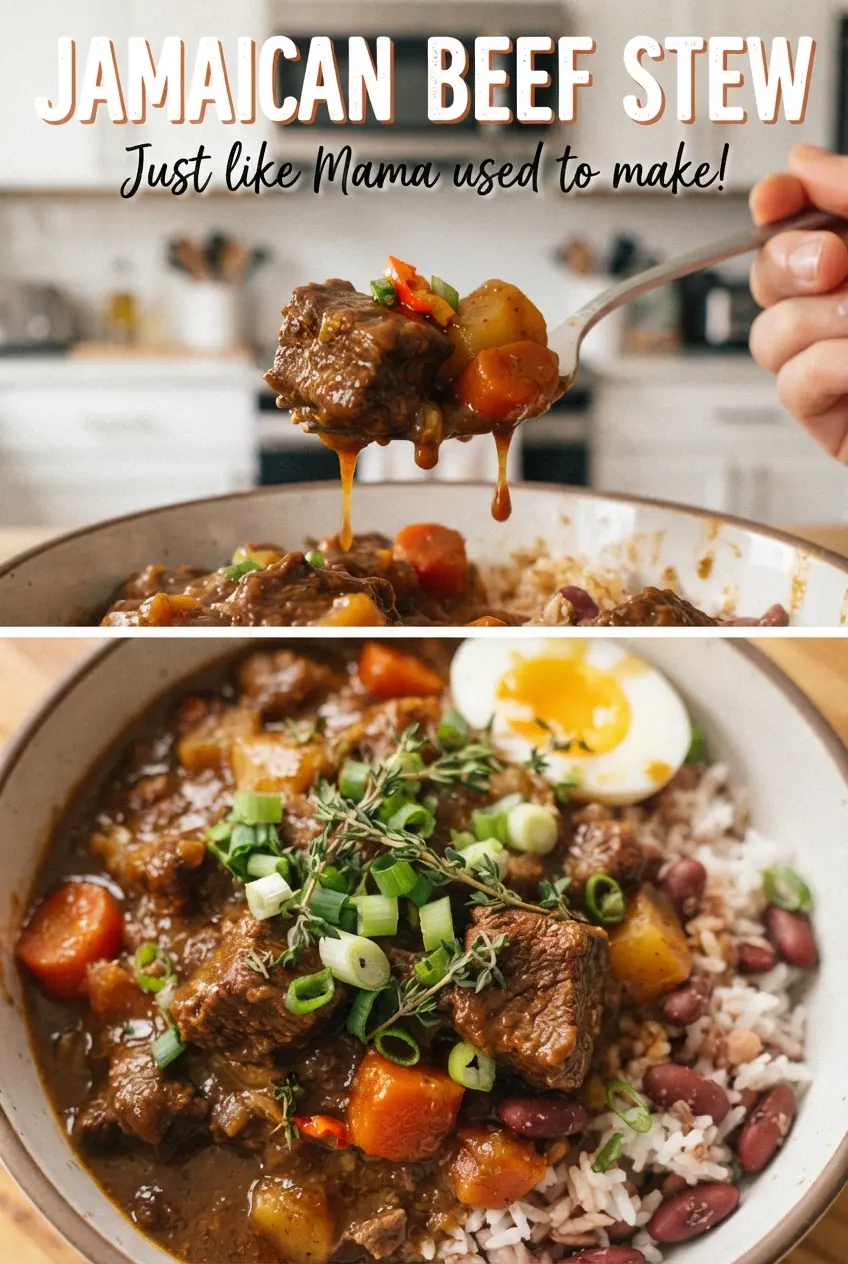
Deep brown, glossy Jamaican beef stew is the kind of pot that turns a regular dinner into something people remember. The beef goes tender without falling apart, the gravy picks up a dark, savory edge from browning sauce and brown sugar, and the carrots, potatoes, and butter beans soak up every bit of that seasoned broth. Served over rice, it lands rich, hearty, and balanced, with just enough heat from the scotch bonnet to keep each bite interesting.
What makes this version work is the layering. The beef gets marinated first, so the seasoning goes beyond the surface, and the sugar is cooked until it darkens before the meat goes in. That step builds the color and depth that separate a good stew from one that tastes flat. The whole scotch bonnet stays intact in the pot, which gives the stew warmth without scattering pepper all through it.
Below, I’ve included the parts that matter most: how to keep the stew from tasting muddy, why the browning step changes the whole pot, and what to watch for when the vegetables go in so they keep their shape instead of dissolving.
The gravy turned deep and glossy just like the photo, and the beef was tender after the full simmer without falling apart. I left the scotch bonnet whole and the heat was perfect with rice.
Save this Jamaican beef stew for the night you want glossy gravy, tender beef, and rice that catches every bit of that thyme-scented sauce.
The Browning Step That Gives This Stew Its Deep Color
The darkest, richest flavor in this stew starts before the liquid ever goes in. Cooking the brown sugar until it deepens in color gives the pot that signature mahogany look and a faint caramel note that balances the savory beef. If you add the beef before the sugar has darkened, the stew still tastes fine, but it won’t have the same depth or glossy finish.
The other thing that matters here is patience with the simmer. Beef chuck needs time to relax into tenderness, and rushing it with a hard boil makes the meat tight and stringy instead of soft. Keep the heat low enough that the surface barely bubbles and the broth stays calm.
What Each Ingredient Is Actually Doing in This Pot
- Beef chuck — This cut has enough connective tissue to turn tender during the long simmer. Leaner stew meat cooks up drier and less forgiving.
- Browning sauce and brown sugar — These build the stew’s dark color and give the broth that deep, almost roasty finish. The sugar has to cook long enough to darken before the liquid goes in, or the pot tastes sweet instead of rich.
- Soy sauce and Worcestershire sauce — Both add salt and layered savoriness that plain salt can’t mimic. They round out the broth and help the beef taste seasoned all the way through.
- Thyme, scotch bonnet, ginger, and allspice — This is the backbone of the dish. Use fresh thyme if you can, and keep the scotch bonnet whole unless you want a much hotter stew.
- Butter beans — These go in at the end so they stay intact. Canned beans are perfect here because they thicken the broth a little without turning grainy or breaking down.
Building the Stew in the Right Order
Marinating for a Seasoned Center, Not Just a Salty Coating
Toss the beef with the browning sauce, soy sauce, Worcestershire, seasoning, allspice, onion, garlic, ginger, and green onions, then give it at least an hour. That short rest does two jobs: it seasons the meat and starts softening the surface before it ever hits the pot. If the beef looks wet and heavily coated, that’s fine — the marinade becomes part of the stew base.
Cooking the Sugar Until It Turns Deep and Foamy
Warm the oil, add the brown sugar, and let it darken before the beef goes in. It should look glossy and just a shade deeper than maple syrup, not burnt and black. If it smells bitter, it’s gone too far, and the whole pot will carry that bitterness, so stay close at this stage.
Searing the Beef Without Crowding the Pan
Add the beef and leave the reserved aromatics out for the moment. Sear until the outside picks up a dark crust and the pan catches little browned bits underneath, about 6 to 8 minutes. If the pot gets crowded, the meat steams instead of browns, and you lose the flavor base that makes the gravy taste like it cooked all day.
Letting the Simmer Do the Heavy Lifting
Stir in the aromatics, ketchup, broth, thyme, and the whole scotch bonnet, then cover and simmer gently until the beef is almost tender. The broth should move with small bubbles, not a rolling boil. Hard heat tightens beef chuck, while a low simmer gives the collagen time to melt into the sauce.
Adding the Vegetables at the End
Carrots and potatoes go in after the meat has already softened a bit. That keeps them from dissolving before the beef is done. Add the butter beans for the last 10 minutes only, just long enough for them to heat through and take on the broth without splitting apart.
How to Adapt This Jamaican Stew Without Losing the Soul of It
Make it milder without flattening the flavor
Leave the scotch bonnet whole and remove it earlier if you want less heat, or substitute a habanero and remove it before serving. The stew will still taste layered and aromatic because the pepper is there for perfume as much as fire.
Gluten-free version
Use gluten-free Worcestershire and confirm your browning sauce is gluten-free, since brands vary. The texture stays the same, and the stew still thickens naturally from the long simmer and the starch from the potatoes.
Swap the beef for goat or lamb
Goat or lamb brings a stronger, more traditional island-style edge, but both need the same long, gentle simmer. Expect a deeper meat flavor and a broth that tastes a little richer and less mellow than beef.
Storage and Reheating
- Refrigerator: Keep for up to 4 days. The flavor gets even better on day two, and the broth thickens as it chills.
- Freezer: It freezes well for up to 3 months. Cool it completely first, then freeze in portions with a little extra broth if you like a looser stew.
- Reheating: Warm it gently on the stove over low heat until hot all the way through. A hard boil can break the potatoes and make the beef dry at the edges.
Answers to the Questions Worth Asking
Jamaican Beef Stew
Ingredients
Equipment
Method
- Combine beef chuck with browning sauce, soy sauce, Worcestershire sauce, all-purpose seasoning, allspice, diced onion, minced garlic, grated ginger, and chopped green onions. Cover and refrigerate for 1 hour.
- In a Dutch oven, heat vegetable oil and brown sugar, stirring until the sugar darkens and looks caramel-colored. Add the marinated beef and sear for 6-8 minutes without moving it too much.
- Stir in the reserved aromatics from the marinade, then add ketchup, beef broth, fresh thyme sprigs, and the whole scotch bonnet pepper. Bring to a simmer over medium-high heat, stirring to release the browned bits.
- Cover the Dutch oven and simmer for 1 1/2 hours, checking occasionally so the stew bubbles gently. Cook until the beef is nearly tender and the sauce looks dark and glossy.
- Add sliced carrots and cubed potatoes, then simmer for 30-40 minutes until they are tender. Keep the lid on between checks to maintain a steady simmer.
- Stir in the drained butter beans and simmer for 10 minutes so the beans heat through. Remove from heat when the stew is thick and the vegetables are fully cooked.
- Remove the scotch bonnet and thyme stems from the stew. Serve hot over rice.