Lemon gelato lands somewhere between a scoop of sunshine and a proper Italian dessert: dense, silky, and bright enough to wake up your whole palate. The texture is what sets it apart. It’s creamier than sorbet, but it still carries the sharp, clean lemon flavor people want when they reach for something cold and citrusy.
The key is building a cooked custard base before the lemon goes in. That gives the gelato its body without turning it heavy, and the cornstarch helps keep the texture smooth after freezing. The lemon juice gets stirred in off the heat so it stays fresh and vivid instead of turning dull or bitter from overcooking.
Below, I’ll walk through the exact moment the base should thicken, the mistake that can make lemon gelato icy, and the best way to freeze it so the texture stays scoopable instead of hard and chalky.
The custard thickened up exactly like pudding, and the lemon flavor stayed bright after freezing instead of tasting flat. I let it churn on the lowest setting like you said, and it came out dense and silky, not icy at all.
Creamy lemon gelato with that dense, scoopable texture is worth saving for dessert nights.
The Secret to Lemon Gelato That Stays Creamy Instead of Icy
Lemon gelato can go icy fast if the base is too thin or the acid gets added too early. The cooked custard gives you richness, but the cornstarch is what helps the mixture hold onto moisture after it freezes. Without that extra bit of structure, you get a hard, brittle scoop instead of the dense, satin-like texture gelato should have.
The other place people run into trouble is the lemon juice. If it goes into boiling milk, the mixture can curdle or taste flat. Stir it in after the custard comes off the heat, when the base is thick but no longer aggressively hot, and the lemon stays sharp and clean.
- Egg yolks — These give the gelato its body and that custardy mouthfeel you can’t fake with milk alone. They also help keep the finished texture smoother after freezing.
- Cornstarch — This is the quiet insurance policy in the recipe. It thickens the base and helps the gelato freeze with less iciness, especially if your ice cream maker runs warm.
- Fresh lemon juice — Bottled juice tastes muted here. Fresh juice keeps the flavor bright, and because it goes in at the end, it keeps its clean edge.
- Lemon zest — The zest carries the fragrant oils that make the gelato smell as lemony as it tastes. Use a fine microplane and only the yellow part; the white pith brings bitterness.
What Each Ingredient Is Actually Doing in This Gelato
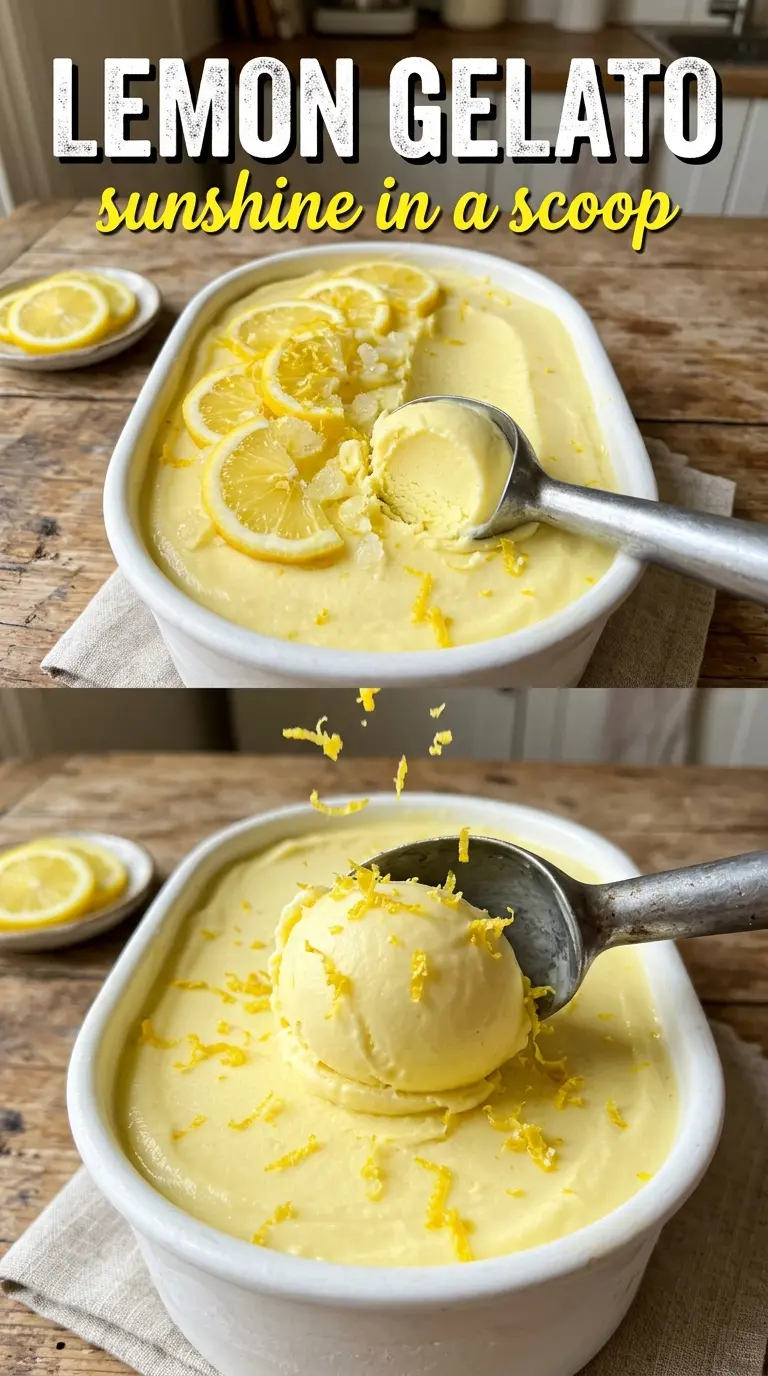
Whole milk and heavy cream give you the right balance for gelato: enough richness to stay creamy, but not so much fat that the lemon gets buried. If you swap in lower-fat milk, the base gets thinner and the finished gelato turns harder in the freezer. The cream doesn’t need to dominate here; it just keeps the texture supple.
The sugar does more than sweeten. It lowers the freezing point so the gelato scoops cleanly instead of freezing into a block. If you cut it too much, the texture suffers fast. The vanilla is subtle, but it rounds off the lemon so the flavor tastes fuller instead of sharp in a one-note way.
A pinch of salt matters more than people think in citrus desserts. It doesn’t make the gelato salty. It keeps the lemon from tasting thin and gives the custard more presence on the tongue.
Building the Custard Base Without Scrambling the Yolks
Warming the Dairy First
Heat the milk and cream until they’re steaming, not boiling. You want the mixture hot enough to temper the yolks, but not so hot that it shocks them into lumps the moment they hit the bowl. If you see tiny bubbles around the edge of the pan, you’re in the right zone.
Tempering the Yolks Slowly
Whisk the yolks, sugar, and cornstarch until pale and thick, then drizzle in the hot dairy while whisking constantly. That slow stream matters. Dumping in too much at once is how you end up with sweet scrambled eggs instead of a smooth base.
Cooking to the Right Thickness
Return everything to the saucepan and stir over medium heat until it looks like thin pudding and coats the back of a spoon. It should leave a clean line when you drag a finger through it. If you rush this stage, the gelato won’t freeze with enough body. If you push it too far, the custard gets grainy and starts to seize.
Adding the Lemon at the End
Take the pan off the heat before stirring in the lemon juice, zest, vanilla, and salt. The base should still be warm, but not bubbling. This is where the flavor wakes up. If the lemon goes in while the custard is boiling, the acid works against the texture you just built.
Three Ways to Adapt This Lemon Gelato
Dairy-Free Version With Coconut Milk
Use full-fat canned coconut milk in place of the milk and cream. The gelato will be a little softer and you’ll pick up a light coconut note, which works well with lemon. Keep the custard step the same so you still get enough structure for freezing.
Stronger Lemon Flavor
Add an extra teaspoon of zest or let the zest sit in the hot dairy for 10 minutes before you temper the yolks. That pulls more aromatic oil into the base without making it more sour. Don’t add extra juice unless you’re prepared for a softer set.
Lighter Texture, Less Custard
If you want something closer to a gelato-sherbet hybrid, use 3 yolks instead of 4 and keep the cornstarch in place. You’ll lose a little richness, but the lemon will come forward even more. The finished texture will be slightly less dense and a touch more delicate.
Storage and Reheating
- Refrigerator: Keep the base covered up to 2 days before churning; the flavor actually improves a bit as the lemon settles in.
- Freezer: The churned gelato freezes well for about 2 weeks. Press parchment or plastic wrap directly on the surface to reduce ice crystals.
- Reheating: Not applicable for serving, but if it freezes too hard, let it sit at room temperature for 8 to 10 minutes before scooping. Microwaving melts the edges and leaves the center icy.
Questions I Get Asked About This Lemon Gelato
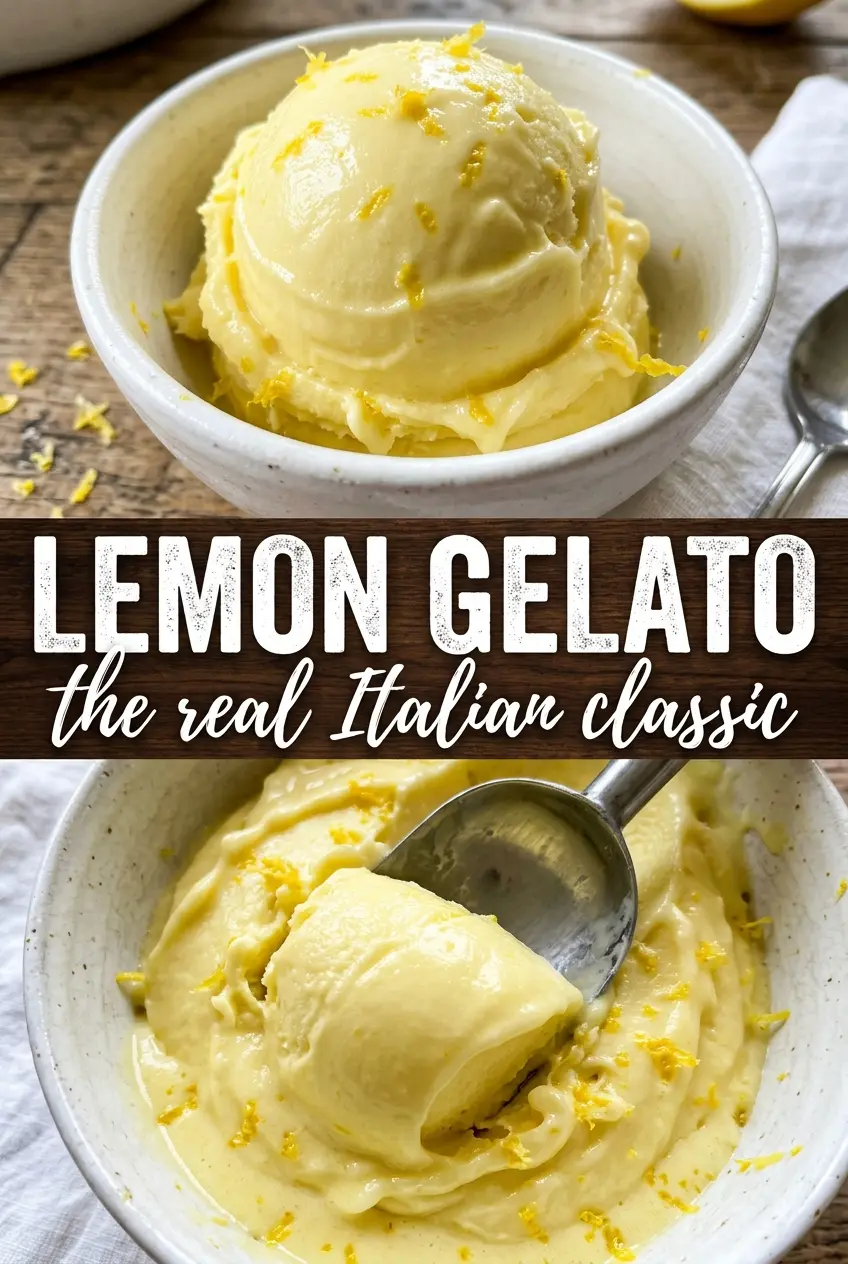
Lemon Gelato
Ingredients
Equipment
Method
- Heat the whole milk and heavy cream together in a saucepan until steaming, with small bubbles forming at the edges (about 5 minutes). Visual cue: the surface should look lightly steamy, not boiling.
- Whisk the egg yolks, granulated sugar, and cornstarch until pale and thick (about 1 to 2 minutes). Visual cue: the mixture should look lighter in color and ribbon off the whisk.
- Slowly whisk the hot milk mixture into the egg mixture in a steady stream, keeping the yolks from scrambling (about 1 to 2 minutes). Visual cue: the custard should turn smooth and glossy.
- Return the mixture to the saucepan and cook over medium heat, stirring constantly, until thickened to a pudding consistency (about 5 to 7 minutes). Visual cue: it should coat the back of a spoon and leave a clear line when you run a finger through it.
- Remove the saucepan from heat and stir in the fresh lemon juice, lemon zest, vanilla extract, and salt. Visual cue: the base should become vivid and intensely lemon-scented.
- Cool completely over an ice bath, stirring occasionally, until the custard feels cool to the touch (about 10 to 15 minutes). Visual cue: the mixture should thicken slightly as it cools.
- Refrigerate the custard for at least 4 hours. Visual cue: it should be very cold all the way through before churning.
- Churn the chilled custard in an ice cream maker on the lowest setting for a dense texture. Visual cue: it should look like thick, pale-yellow gelato that holds shape.
- Serve immediately for soft-set gelato, or freeze for 1 to 2 hours for a firmer scoop. Visual cue: after freezing, it should be dense and easy to form.