Cold, tangy, and unapologetically loud, a mangonada hits every note a frozen mango drink should hit. The mango stays bright instead of muddy, the lime keeps it sharp, and the chamoy-tajín rim adds that salty-sour chile kick that makes each sip taste a little different from the last. It’s the kind of drink that disappears fast because it doesn’t just cool you off — it wakes up your taste buds.
The key is balancing sweetness against acid before the blender ever starts. Frozen mango gives the drink its thick slushy body, but mango juice or nectar alone can make it taste flat if you don’t cut it with enough lime. The honey smooths out the edges without turning it candy-sweet, and the ice keeps the texture spoon-thick if your mango is a little softer than usual.
Below, I’ve broken down the one part that matters most — how to keep the drink thick instead of watery — plus a few smart swaps if you want to adjust the heat, sweetness, or dairy-free ingredients to fit what you have on hand.
The chamoy and tajín on the glass made it taste like the mangonadas I get from the fruit cart, and the texture stayed thick instead of turning watery after a few minutes.
Love the thick mango-chamoy swirl? Save this mangonada for the next time you want a frozen drink with real chile-lime bite.
The Secret to a Mangonada That Stays Thick, Not Watery
The biggest mistake with a mangonada is over-blending. Once the frozen mango breaks down, keep going only until the mixture looks smooth and slushy. If you run the blender too long, the friction warms the drink and melts the ice, which is how you end up with a thin mango juice instead of a spoonable frozen drink.
Another thing that matters is the balance between frozen fruit and liquid. Frozen mango does the heavy lifting here, and the juice should loosen it just enough for the blades to move. If your blender struggles, add a splash more juice in short bursts rather than pouring in a full extra half-cup all at once.
The rim and the drizzle are not decoration. Tajín on the glass seasons every sip, and chamoy inside the glass gives you those sweet-sour streaks as the drink melts. Skip either one and the whole thing tastes flatter.
What Each Ingredient Is Actually Doing in This Mangonada
Frozen mango chunks are the backbone of the drink. Use fruit that’s fully frozen, not just cold, because that’s what gives you the thick slushy body without needing a lot of ice. Fresh mango can work in a pinch, but you’ll need more ice and the texture won’t be as plush.
Mango juice or nectar adds body and sweetness. Nectar is usually richer and a little thicker, which helps if your mango isn’t super ripe. If you only have juice, keep the honey, but taste before adding all of it because some brands run sweeter than others.
Lime juice keeps the drink from tasting one-note. Bottled lime juice works if that’s what you have, but fresh lime gives a cleaner, brighter finish. Tajín and chamoy are the signature flavors, and there isn’t a real substitute that gives the same chile-sour-salty balance, though a chili-lime seasoning plus a tart fruit syrup can get you partway there.
- Frozen mango chunks — These create the frozen body, so use a bag of fruit that’s solidly frozen. Soft, half-thawed mango will make the drink loose and foamy.
- Mango juice or nectar — This helps the blender move and deepens the mango flavor. Nectar makes a creamier, more rounded drink; juice makes a lighter one.
- Lime juice — This keeps the mango from tasting dull. Fresh lime is best because it tastes sharper and less processed.
- Honey — Use it to round out the tartness, especially if your mango is a little sour. If your fruit is very sweet, start with less and add only if needed.
- Tajín seasoning and chamoy sauce — These define the drink. Tajín seasons the rim and chamoy brings sweet, sour, and spicy notes inside the glass.
Building the Slushy Without Melting It Down
Blending the Fruit Base
Start with the frozen mango, juice, lime juice, honey, and ice in the blender. Blend on high just until the mixture looks smooth and thick with a soft, spoonable texture. If the blender stalls, stop it and stir the mixture down with a spatula before blending again. A mangonada should move slowly in the glass, not pour like a smoothie.
Rimming the Glasses
Run a lime wedge around the outside of each glass, then press the rim into tajín. The lime gives the seasoning something to grab onto and adds a little extra brightness right at the first sip. If the rim is too wet, the tajín will clump and slide off, so dip and serve soon after.
Adding the Chamoy Swirl
Drizzle chamoy down the inside of each glass before you pour in the mango mixture. That creates those red streaks people expect in a mangonada, and it also seasons the drink as it melts. Don’t stir it in completely or you lose the contrast that makes the drink taste layered instead of one-dimensional.
Finishing and Serving Fast
Divide the smoothie between the glasses, top with fresh mango, and finish with a lime wedge and a little cilantro if you like the herbal note. Serve right away while the texture is still thick and icy. Once it sits, the ice loosens and the drink turns thinner, so this is one of those recipes that rewards moving quickly.
How to Adapt This for a Thicker, Spicier, or Dairy-Free Mangonada
Make It Thicker Like a Fruit Stand Version
Cut the ice back to 2 tablespoons or skip it entirely if your mango is deeply frozen. That gives you a denser, more spoonable drink with stronger fruit flavor and less dilution. If the blender needs help, add the juice in small splashes instead of all at once.
Turn Up the Heat Without Losing Balance
Add extra tajín to the rim and a little more chamoy in the glass, not more honey. That keeps the drink bright and punchy instead of candy-sweet. If you want actual heat, add a tiny pinch of cayenne or chile powder to the blender and taste before adding more.
Make It Vegan
Swap the honey for agave syrup or simple syrup. Agave keeps the texture smooth and blends in cleanly, which makes it the closest stand-in here. The flavor stays just as bright, and you don’t lose any of the fruit-forward character.
What to Change for a Crowd
Blend the mango base in batches so it doesn’t warm up in the pitcher. Rim the glasses ahead of time, but add the chamoy and pour the drink at the last minute so the presentation stays sharp. If you need to hold it briefly, keep the blended base in the freezer for a few minutes and stir before pouring.
Storage and Serving Prep
- Refrigerator: Not ideal once blended. The drink separates and loses its slushy texture within an hour or two.
- Freezer: You can freeze the base in a shallow container for a short time, but it will firm up hard. Let it sit at room temperature for a few minutes and stir before serving.
- Reheating: Not applicable. For the best texture, blend and serve immediately, since thawing too much turns the drink thin and icy in the wrong way.
Answers to the Questions Worth Asking
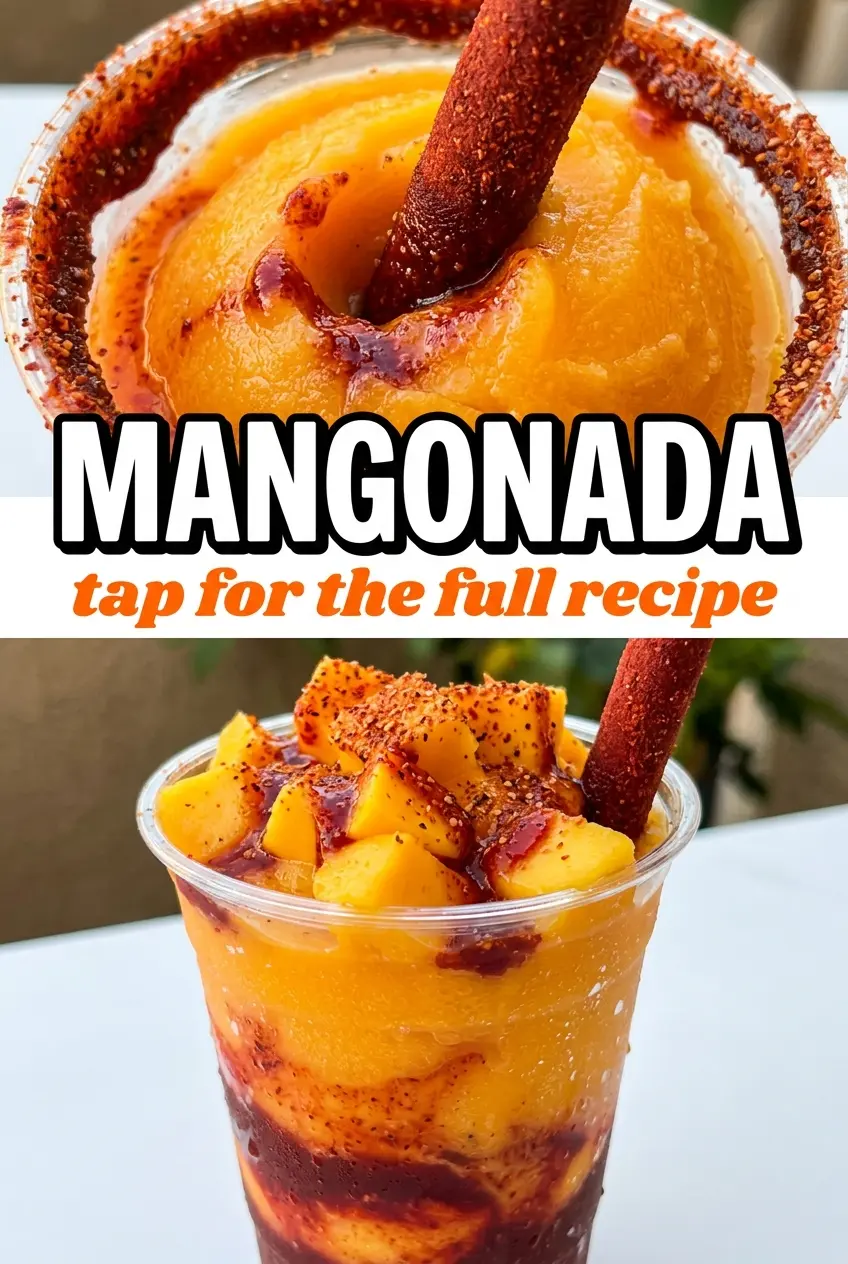
Mangonada
Ingredients
Method
- Add frozen mango chunks, mango juice (or nectar), lime juice, honey, and ice cubes to a blender.
- Blend until smooth and slushy, scraping down as needed so the texture is consistently thick.
- Rim two glasses with tajín seasoning so a bright, tangy coating shows around the edge.
- Drizzle chamoy sauce down the inside of each glass to create streaks that flavor every sip.
- Divide the smoothie between the two glasses.
- Top each glass with fresh mango chunks for a chunky, fruity finish.
- Insert a straw and garnish each drink with a lime wedge and fresh cilantro, then serve immediately.