Moist chocolate cake, warm with cinnamon and a faint kick of cayenne, is the kind of dessert that gets attention fast. The sweetened condensed milk and chocolate syrup soak into every fork-pricked hole, turning an ordinary sheet cake into something dense, fudgy, and almost truffle-like at the center. Then the whipped cream goes on top and the whole thing settles into that sweet-spicy balance that keeps people going back for a second slice.
What makes this version work is the contrast. The coffee deepens the chocolate without making the cake taste like coffee, and the buttermilk keeps the crumb tender enough to absorb all that topping without falling apart. The cinnamon belongs here; it softens the cocoa and makes the cayenne feel intentional instead of sharp. You don’t need much heat to notice it. Just enough to give the cake a little tension at the finish.
Below, I’ve laid out the part that matters most for poke cake success: when to poke, how warm the cake should be, and how to pour the topping so it sinks in instead of sitting on the surface. There are also a few swaps that keep the texture right if you need to change the dairy or want a slightly milder version.
The cinnamon and tiny bit of cayenne gave it such a grown-up chocolate taste, and the condensed milk soaked in perfectly without making the top soggy. I brought it to a potluck and the pan was scraped clean.
Save this Mexican Chocolate Poke Cake for the kind of dessert that turns a simple sheet cake into a fudgy, cinnamon-kissed crowd-pleaser.
The Part That Makes This Cake Stay Fudgy Instead of Dry
A lot of poke cakes miss the mark because the holes are either too shallow or the topping goes on after the cake has cooled too much. Once that happens, the mixture just puddles on top and you lose the whole point. Poke cake needs heat. The cake should still be warm enough to drink in the condensed milk and chocolate syrup, but not so hot that it turns slack.
The other mistake is overbaking the base. This chocolate cake should come out as soon as a toothpick comes out clean or with a few moist crumbs. If it bakes past that point, it won’t absorb the topping as gracefully and the final texture turns dry at the edges. The cinnamon and cayenne also matter here because they make the cake taste more complex before any garnish goes on.
- Cocoa powder — Use unsweetened cocoa, not Dutch-process unless that’s what you already keep on hand. Natural cocoa works cleanly with the baking soda and gives the cake a deeper, sharper chocolate note.
- Strong coffee — This doesn’t make the cake taste like coffee. It wakes up the cocoa. Brew it strong and let it cool so it doesn’t scramble the eggs or thin the batter too much.
- Buttermilk — This keeps the crumb tender and gives the baking soda something to react with. If you don’t have it, mix 1/2 cup milk with 1/2 tablespoon lemon juice or vinegar and let it sit for 5 minutes.
- Sweetened condensed milk — This is the engine of the poke cake. It’s thick, sweet, and built to soak in without disappearing. Evaporated milk won’t give you the same sticky, fudgy result.
- Cinnamon and cayenne — The cinnamon rounds out the chocolate, and the cayenne gives a warm finish instead of a loud spicy bite. Cut the cayenne in half if you want a gentler cake, but don’t skip it entirely if you want the Mexican chocolate character.
How to Poke and Pour So the Filling Goes All the Way In
Mixing the Batter Without Beating Out the Tender Crumb
Whisk the dry ingredients first so the cocoa and spices distribute evenly. When the wet ingredients go in, stir only until the flour disappears. If you keep mixing after that, the cake tightens up and bakes denser than a poke cake should. The batter will look loose; that’s exactly what you want for a moist sheet cake.
Baking Until the Center Springs Back, Not Until It Dries Out
Pour the batter into a greased 9×13-inch pan and bake at 350°F for 30 to 35 minutes. Look for a center that springs back lightly when touched and a toothpick that comes out clean or with a few crumbs. If the middle still looks wet, give it a few more minutes, but don’t wait for the top to look dark and dry. That’s how you lose the soft texture that makes the filling work.
Poking While It’s Still Warm
As soon as the cake comes out of the oven, run a fork all over the surface. Go deep enough to make real channels, not just tiny holes across the top. Warm cake opens itself up; cooled cake resists the filling. If the holes are too close together, the top can get overly soft, so leave a little space between rows.
Pouring the Filling in Two Passes
Stir the sweetened condensed milk and chocolate syrup together, then pour about half over the cake first. Let it sit for a minute so the cake starts soaking, then add the rest. This helps the mixture settle into the holes instead of sliding off the surface. If the top looks shiny but dry in spots, nudge the filling into those areas with the back of a spoon.
Finishing After the Cake Cools Completely
Let the cake cool all the way down before adding whipped cream. If you rush this part, the topping melts and turns thin. A cold cake gives you a clean layer of cream and better slices later. Finish with chocolate shavings right before serving so they stay crisp and don’t melt into the whipped cream.
Three Ways to Adjust This Cake Without Losing the Texture
Make it less spicy without losing the Mexican chocolate note
Drop the cayenne to a pinch instead of removing it completely. The cake will still read as Mexican chocolate because the cinnamon stays in the batter, but the finish will be softer and more kid-friendly. If you skip cayenne entirely, add a tiny extra pinch of cinnamon so the spice balance doesn’t fall flat.
How to make it dairy-free
Use a dairy-free buttermilk substitute made with unsweetened plant milk and a little lemon juice, then swap in a dairy-free whipped topping. For the soaking layer, use a thick coconut-based sweetened condensed milk if you can find one. The texture will still be rich, though the flavor leans a little more toward coconut.
What to do if you want a deeper chocolate flavor
Use a dark cocoa powder and swap the chocolate syrup for a thicker fudge sauce. That gives you a more intense, less candy-sweet finish. Keep the coffee in the batter, because it helps the darker cocoa taste round instead of bitter.
How to turn it into a party dessert bar
Bake the cake in advance, chill it overnight, and top it with whipped cream and shavings right before serving. Chilling makes the slices cleaner and helps the filling set into a fudgy layer. Cut small squares if it’s going on a buffet, because this cake is richer than it looks.
Storage and Reheating
- Refrigerator: Store covered for up to 4 days. The cake gets even more moist by day two, but the whipped cream softens a little.
- Freezer: Freeze the unfrosted cake well wrapped for up to 2 months. Thaw in the refrigerator, then add whipped cream and chocolate shavings after it’s fully thawed.
- Reheating: This cake is best served cold or at cool room temperature, not warmed. If you want a softer slice, let it sit out for 15 to 20 minutes before serving instead of microwaving it, which can make the topping melt and separate.
Answers to the Questions Worth Asking
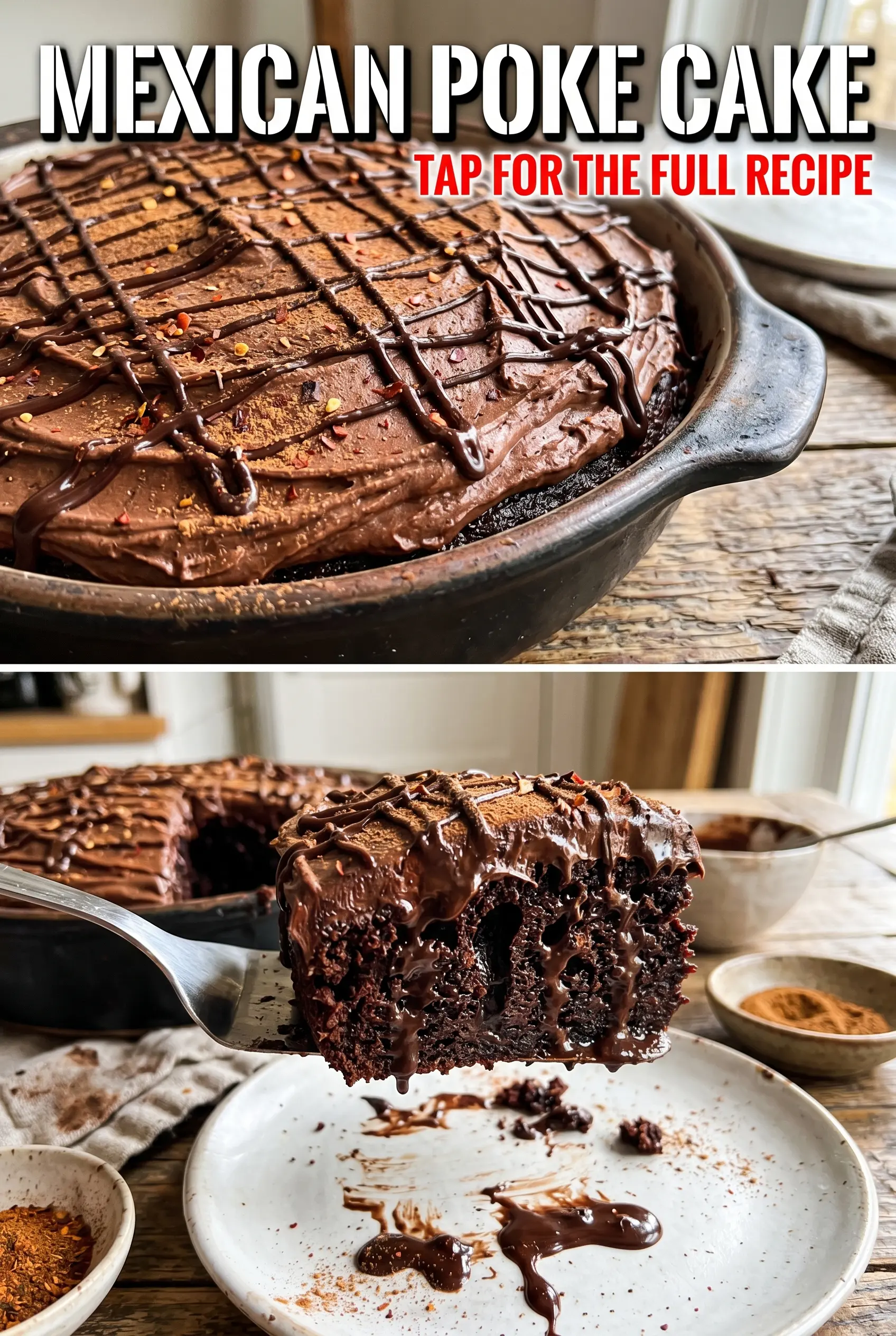
Mexican Chocolate Poke Cake
Ingredients
Equipment
Method
- Preheat the oven to 350°F and grease a 9x13 inch baking pan. Set the pan aside so the batter can go in right after mixing.
- Whisk together all-purpose flour, granulated sugar, unsweetened cocoa powder, baking soda, baking powder, salt, cinnamon, and cayenne pepper in a large bowl. Whisk until the dry ingredients look evenly tinted.
- Beat together eggs, strong brewed coffee (cooled), vegetable oil, buttermilk, and vanilla extract until smooth. The mixture should look uniform with no streaks.
- Fold wet ingredients into dry ingredients until just combined. Stop mixing as soon as no dry pockets remain to keep the cake tender.
- Pour the batter into the prepared pan and spread evenly. Tap the pan once to settle the surface before baking.
- Bake for 30-35 minutes at 350°F until a toothpick comes out clean. Look for the center to spring back lightly when touched.
- While the cake is still warm, pierce all over with a fork. Make many holes so the glaze soaks deeply.
- Combine sweetened condensed milk and chocolate syrup, then pour evenly over the warm cake. Watch for the liquid to seep into the fork holes.
- Let the cake cool completely for 30 minutes. The top should look set and slightly glossy before chilling.
- Top the cooled cake with whipped cream. Spread to the edges so every slice gets creamy layers.
- Finish with chocolate shavings for topping right before serving. Use a light hand so the chocolate texture stays visible on the surface.