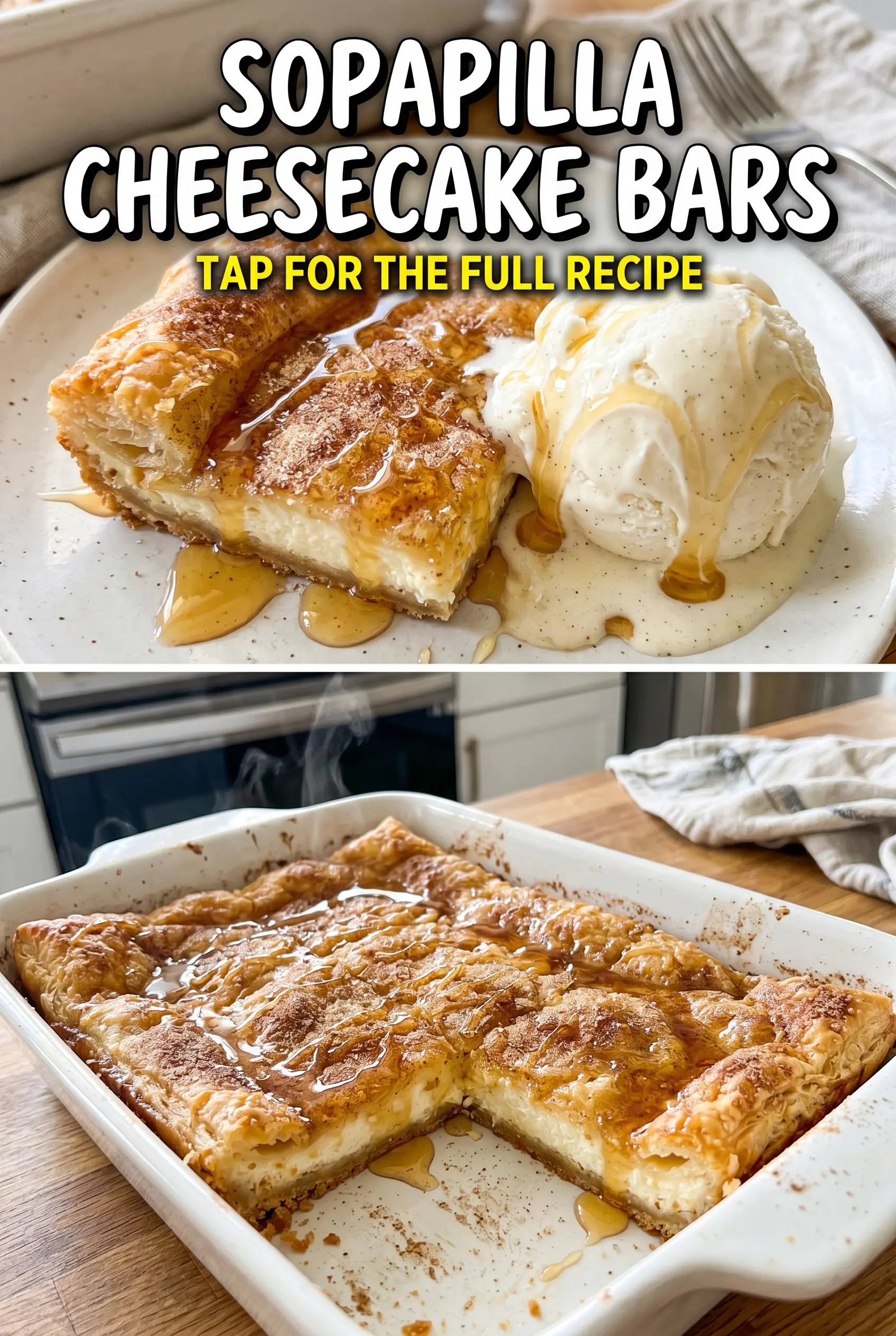
Flaky, creamy, and crackly with cinnamon sugar, sopapilla cheesecake bars hit that sweet spot between a bakery-style dessert and the kind of pan you bring out when you want clean squares and zero leftovers. The bottom layer bakes into a soft, buttery crust, the center stays rich and tangy, and the top turns golden with just enough crunch to keep each bite from feeling heavy. A warm drizzle of caramel pulls everything together and gives the bars that sticky finish people remember.
What makes this version work is the balance of textures. The crescent dough bakes up best when it goes into a greased pan in an even layer, then gets a light dusting of cinnamon sugar before the filling goes in. The cream cheese mixture needs to be smooth before the eggs go in, and the bars need that full chill after baking so the cheesecake layer sets enough to slice cleanly. Skip the cooling time and the layers slide apart.
Below, you’ll find the small details that keep the filling creamy instead of lumpy, the topping crisp instead of soggy, and the caramel drizzle exactly where it belongs.
The cheesecake layer turned out smooth and the top stayed crisp even after chilling overnight. The caramel soaked in just enough without making the bars soggy, and they cut into neat squares for the potluck.
These sopapilla cheesecake bars bake up with crisp cinnamon-sugar layers and a creamy center, then slice neatly after a good chill.
The Reason the Center Stays Creamy Instead of Curdled
The filling in sopapilla cheesecake bars looks simple, but it can go grainy fast if the cream cheese isn’t soft enough or if the eggs go in too quickly. Cold cream cheese leaves little lumps that never fully disappear in the oven. Overbeating after the eggs are added pulls in too much air, which can make the center puff, crack, and sink as it cools.
The other trap is overbaking. These bars should come out when the top is deeply golden and the center still has a slight wobble. That wobble turns into a set cheesecake once the pan cools and chills. If you wait until the middle looks firm in the oven, it usually ends up dry by the time you cut it.
- Softened cream cheese — This is non-negotiable. It needs to yield easily when pressed so the filling turns smooth without a fight.
- Eggs at room temperature — They blend more evenly into the batter and help the filling bake without curdling around cold spots.
- Crescent dough — It bakes into the buttery, flaky layers that give these bars their sopapilla feel. Puff pastry will work in a pinch, but it changes the texture and bakes up thinner and shatterier.
- Caramel sauce — Warm it before drizzling so it spreads in ribbons instead of tearing the top. Jarred caramel is fine here.
Building the Layers So the Bottom Stays Tender and the Top Stays Crisp
Press the first can of crescent dough into an even layer and seal the seams as best you can. Thin spots bake up hard and thick seams can stay doughy, so spend a minute smoothing it out before the cinnamon sugar goes on. A light sprinkle is enough; too much sugar on the bottom can melt into a sticky patch.
For the topping, lay the second sheet over the filling in broad sections rather than trying to stretch it into place. The dough will relax as it bakes. Brush the melted butter all the way to the corners so the top browns evenly, then scatter the cinnamon sugar while the butter is still wet.
Let the bars cool completely before adding the caramel and chilling. If you cut them early, the filling will ooze and the top layer will tear instead of slicing.
Preparing the Pan
Grease a 9×13 baking dish well so the bottom crust releases cleanly. Press the dough into the corners and up against the sides in one even layer. If the seams look loose, pinch them together before the filling goes in; that keeps the cheesecake from seeping underneath and creating a soggy base.
Mixing the Cheesecake Layer
Beat the cream cheese and sugar until the mixture looks smooth and glossy, with no visible lumps. Add the eggs one at a time and stop mixing as soon as each one disappears. Stir in the vanilla and cinnamon at the end. If the batter starts to look loose or airy, the mixer stayed on too long and the cheesecake may rise unevenly.
Finishing with the Top Crust
Place the second layer of dough over the filling and let it rest where it naturally falls. Brush on the melted butter, then add the cinnamon sugar so it clings to the surface. Bake until the top is golden and the center has only the slightest jiggle. A dry knife test isn’t the goal here; a cheesecake-style wobble is what you want.
How to Adapt These Bars Without Losing the Texture
Gluten-Free Version
Use a gluten-free crescent-style dough if you can find one, but expect a slightly more delicate top crust. If you use a gluten-free pastry substitute, keep the filling the same and cool the bars fully before cutting, since the crust will be more fragile when warm.
Lighter Caramel Finish
If you want less sweetness, drizzle only half the caramel over the finished bars and serve the rest on the side. You still get the sticky-sweet contrast, but the cheesecake layer stays front and center instead of turning into a full sugar rush.
Extra-Crunchy Cinnamon Top
Add a little more cinnamon sugar over the buttered top just before baking if you want a more crackly finish. Don’t go heavy, or the sugar will melt into a lacquer-like layer instead of staying crisp at the edges.
Storage and Reheating
- Refrigerator: Store covered for up to 5 days. The top softens a little in the fridge, but the cheesecake layer stays creamy.
- Freezer: These freeze well. Wrap individual bars tightly and freeze for up to 2 months, then thaw in the refrigerator before serving.
- Reheating: Serve cold or let a bar sit at room temperature for 15 to 20 minutes. If you warm them, use brief low-power microwave bursts or the top crust can turn greasy and lose its texture.
Questions I Get Asked About This Recipe
Sopapilla Cheesecake Bars
Ingredients
Equipment
Method
- Preheat oven to 350°F, then grease a 9x13 baking dish.
- Press the first can of crescent roll dough into the bottom of the greased 9x13 baking dish, then sprinkle lightly with a mix of 1 tbsp sugar and 1/2 tsp cinnamon.
- Beat the softened cream cheese and 1 cup sugar until creamy, then beat in the eggs one at a time, mixing well after each addition.
- Stir in vanilla extract and 1/2 tsp cinnamon, then pour the cheesecake filling over the crust.
- Press the second can of crescent roll dough over the cheesecake filling, then brush with melted butter and sprinkle with the remaining cinnamon sugar mixture (2 tbsp sugar and 1 tsp cinnamon).
- Bake at 350°F for 30-35 minutes, until the top is golden and the cheesecake is set but slightly jiggly in the center.
- Drizzle warm caramel sauce over the bars so it seeps slightly into the layers.
- Cool completely at room temperature, then refrigerate for at least 2 hours before cutting into squares.