Chicken noodle soup hits the table with the kind of comfort that makes the whole kitchen feel calmer. The broth turns golden and savory fast, the vegetables soften just enough to give the soup body, and the egg noodles stay tender without turning mushy. It tastes like it simmered all afternoon, but the whole pot comes together in about half an hour.
The shortcut that makes this version work is starting with cooked chicken and good broth. That means the soup gets its flavor from smart building blocks instead of long simmering. A quick sauté on the onion, carrots, and celery gives the broth a deeper base, and a small splash of lemon at the end wakes everything up so the soup doesn’t taste flat.
Below, I’ll walk through the part that matters most: how to keep the noodles from overcooking and the broth from tasting thin. There’s also a simple way to adjust it if you want it a little heartier or need to stretch it for another meal.
The broth had that slow-cooked taste even though it was done in under 30 minutes, and the egg noodles stayed perfectly tender. My husband went back for a second bowl before I had even sat down.
Save this 30-minute homemade chicken noodle soup for nights when you want a golden broth, tender noodles, and real comfort without a long simmer.
The Broth Gets Its Depth Before the Noodles Go In
A thin soup usually happens when everything goes in at once and the pot never gets a chance to build a base. The onions, carrots, and celery need a few minutes in butter first so they soften and release their sweetness. That short sauté gives the broth a rounder taste, and it matters more here because there isn’t hours of simmering to make up for it.
Keep the broth at a real boil only when the noodles go in, then drop it back to a lively simmer. If you cook the noodles too aggressively, they break apart and cloud the soup. If the broth never comes to a boil, the noodles stay a little gummy in the center instead of turning tender all the way through.
What Each Ingredient Is Actually Doing in This Bowl
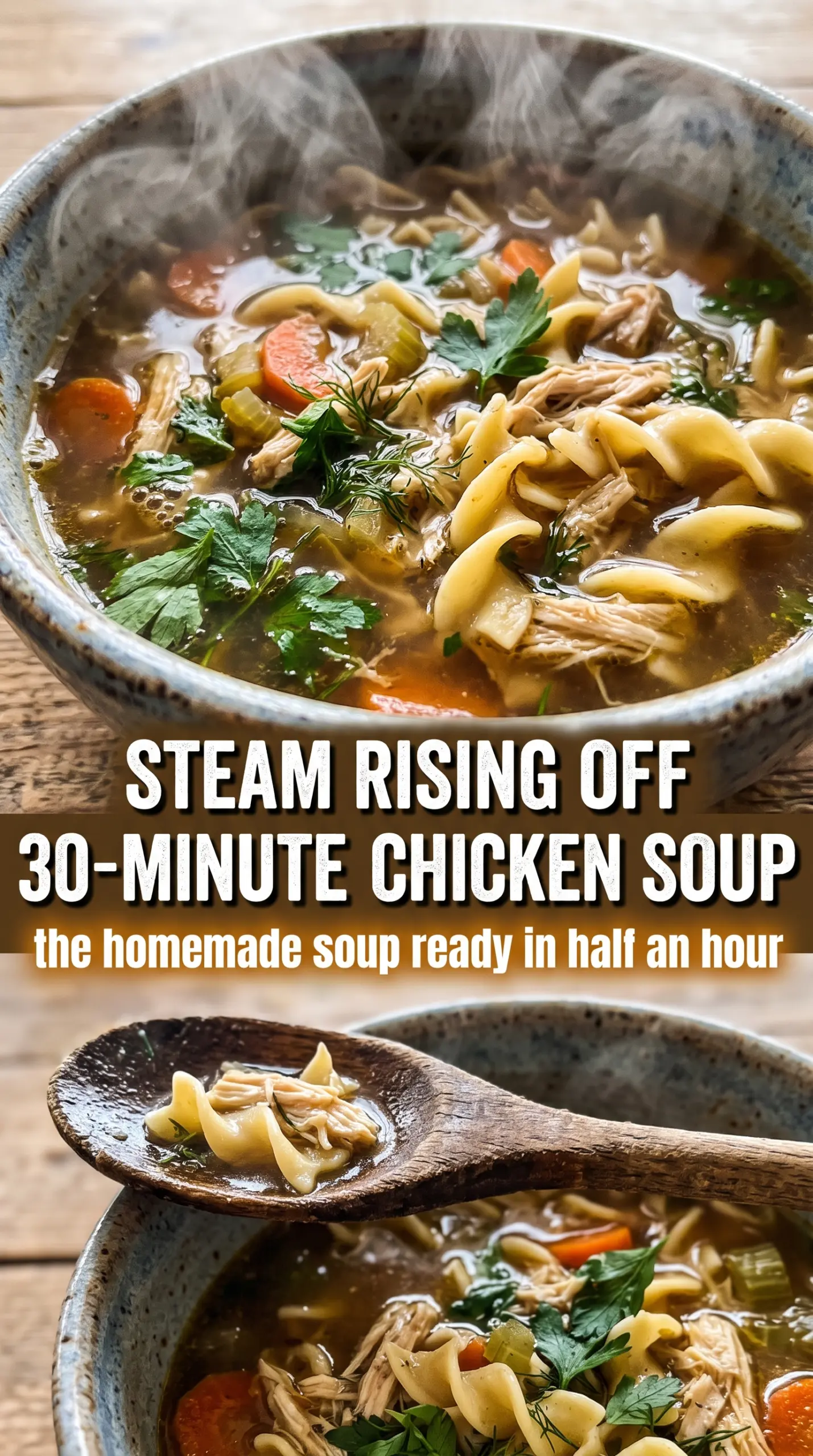
- Cooked chicken — Rotisserie chicken is the fastest route here, and it brings more flavor than plain poached breast meat. Leftover roast chicken works just as well. Shred it into bite-size pieces so it warms through in minutes instead of drying out.
- Chicken broth — This is the backbone of the soup, so use the best one you can reasonably buy. If your broth tastes weak straight from the carton, the finished soup will taste weak too. A low-sodium broth is easier to season properly than one that starts out too salty.
- Egg noodles — These give the soup its classic texture and they cook fast, which is exactly what you want in a 30-minute recipe. Don’t swap in a thick pasta unless you’re willing to extend the cook time and add more broth, because heavier pasta drinks up liquid quickly.
- Carrots, celery, and onion — This is the soup base, and skipping the quick sauté leaves the broth flat. Slice the carrots and celery evenly so they soften at the same pace. Smaller pieces also fit nicely on the spoon with the noodles and chicken.
- Lemon juice — It doesn’t make the soup taste lemony. It sharpens the broth and pulls the chicken flavor forward. Add it at the end so the soup stays bright instead of dull.
Building the Soup So the Noodles Stay Tender
Softening the Vegetables First
Melt the butter in a large pot, then cook the onion, carrots, and celery until the onion turns translucent and the carrots lose their raw edge. Four minutes is enough to take the harshness off without turning the vegetables mushy. If the pot looks dry, your heat is too high or the vegetables are too crowded. Keep the heat at medium-high and stir often enough that nothing catches on the bottom.
Letting the Broth Take on the Base
Once the garlic goes in for a minute, pour in the broth and add the dried thyme, parsley, and garlic powder. This is where the soup starts tasting finished, so don’t rush past the simmer. Let the broth come up fully before the noodles go in, because the noodles need that heat to cook evenly. If the pot only barely steams, they’ll sit there getting soft on the outside and stubborn in the center.
Cooking the Noodles Without Overdoing Them
Add the egg noodles and cook them just until tender, usually 6 to 8 minutes. Taste one a minute or two before the timer ends; you want the center cooked through but not bloated or falling apart. The noodles will keep softening a little once the chicken goes back in, so pull the pot a touch early if you’re on the fence. That one habit keeps the soup from turning into broth with broken pasta.
Finishing With Chicken and Lemon
Stir in the shredded chicken and simmer just long enough to heat it through. Since the chicken is already cooked, it only needs a couple of minutes. Turn off the heat, squeeze in the lemon juice, and season with salt and pepper until the broth tastes clean and complete. The parsley goes on at the end for freshness and color, not because it needs to cook.
How to Adapt It When You’re Low on Time or Ingredients
Dairy-Free and Naturally Light
This soup is already dairy-free as written if you use butter only for the sauté, and you can swap in olive oil if you want to avoid dairy altogether. The flavor will be a little less rich up front, but the broth, herbs, and lemon still carry the bowl. Olive oil gives a cleaner finish, while butter gives the vegetables a slightly rounder taste.
Using Uncooked Chicken Instead
You can simmer diced raw chicken in the broth before the noodles if that’s what you have, but it changes the timing. Add the chicken after the broth comes to a simmer and cook until it reaches 165°F, then continue with the noodles. The soup will taste a little more homemade and the broth picks up extra body from the chicken, but it won’t be quite as fast.
Making It Heartier
If you want a fuller meal, add an extra handful of chicken or increase the noodles slightly, but don’t overdo the pasta or the broth disappears fast. Another good move is extra celery and carrots, which make the soup feel more substantial without throwing off the seasoning. If you do add more noodles, plan on an extra splash of broth.
Storage and Reheating
- Refrigerator: Store in an airtight container for up to 4 days. The noodles will keep soaking up broth, so the soup gets thicker as it sits.
- Freezer: It freezes, but the noodles soften a lot after thawing. For the best texture, freeze the broth, chicken, and vegetables without noodles, then cook fresh noodles when you reheat.
- Reheating: Warm gently on the stove over medium-low heat until steaming. If the soup looks too thick, add a splash of broth or water before heating fully. High heat can make the chicken dry and push the noodles past their best texture.
Questions I Get Asked About This Recipe
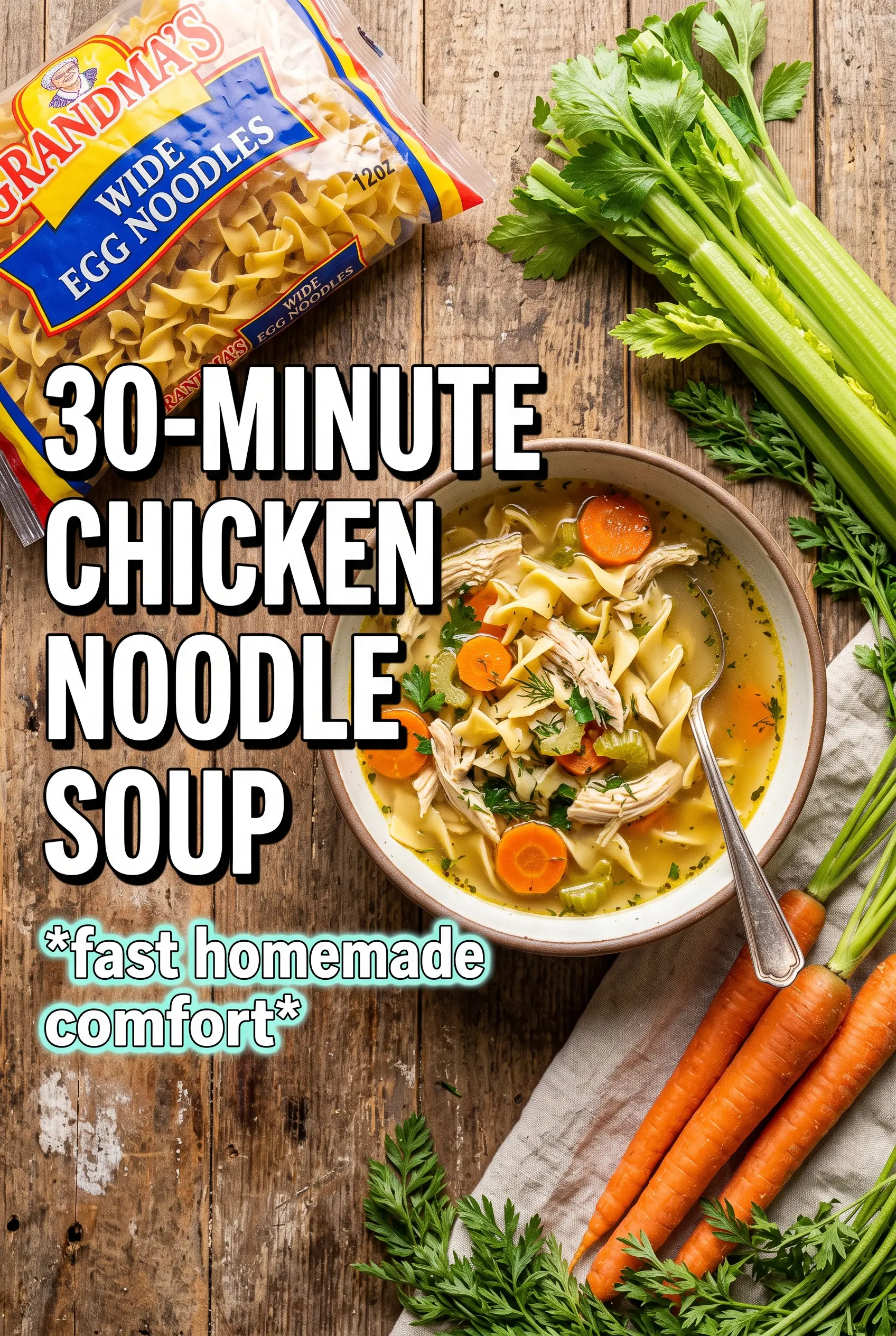
30-Minute Homemade Chicken Noodle Soup
Ingredients
Equipment
Method
- Melt the butter in a large pot over medium-high heat, then sauté the onion, carrots, and celery for 4 minutes, stirring until they start to soften.
- Add the garlic and cook for 1 minute, until fragrant, then pour in the chicken broth and add the thyme, dried parsley, and garlic powder.
- Bring the soup to a boil, then add the egg noodles and cook for 6-8 minutes until tender.
- Add the shredded chicken and simmer for 2-3 minutes until heated through.
- Squeeze in the lemon juice, then season generously with salt and pepper.
- Turn off the heat and garnish with fresh parsley just before serving.