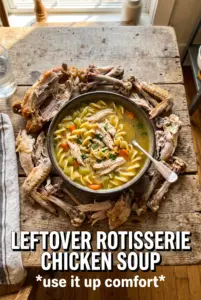
Leftover rotisserie chicken noodle soup turns yesterday’s chicken into a bowl that tastes like you meant to make it all along. The broth stays clear and savory, the vegetables soften just enough to give the soup body, and the egg noodles soak up all that flavor without going mushy. It’s the kind of dinner that feels calm and practical, but still tastes like someone paid attention.
The trick is using the rotisserie chicken at the end, not at the beginning. That keeps the meat tender and keeps the broth from getting dull or stringy. A little lemon at the finish matters too; it wakes up the broth and keeps the whole pot from tasting flat after the noodles go in.
Below, I’ve included the little timing details that keep the noodles from overcooking, plus a few swaps for when you’ve got different vegetables on hand. It’s a simple soup, but the order matters.
The noodles stayed perfectly tender and the lemon at the end kept the broth bright instead of heavy. I used what was left from a store-bought rotisserie chicken and it tasted like a full homemade soup.
Save this leftover rotisserie chicken noodle soup for the nights when you need a fast pot of broth, noodles, and tender chicken without extra fuss.
The Broth Stays Better When the Chicken Goes in Late
Rotisserie chicken is already cooked, so the main goal is to warm it through without pulling all the moisture out of the meat. If you add it too early, the shredded pieces break apart and the broth takes on that tired, over-simmered taste. Waiting until the noodles are nearly done keeps the chicken tender and keeps the soup tasting fresh.
The other thing people miss is how fast egg noodles keep cooking once the heat is off. If you boil them until they’re fully tender in the pot, they’ll go soft in the bowl. Pull the soup as soon as the noodles are just barely done, then let the residual heat finish the job.
What Each Ingredient Is Actually Doing in This Soup
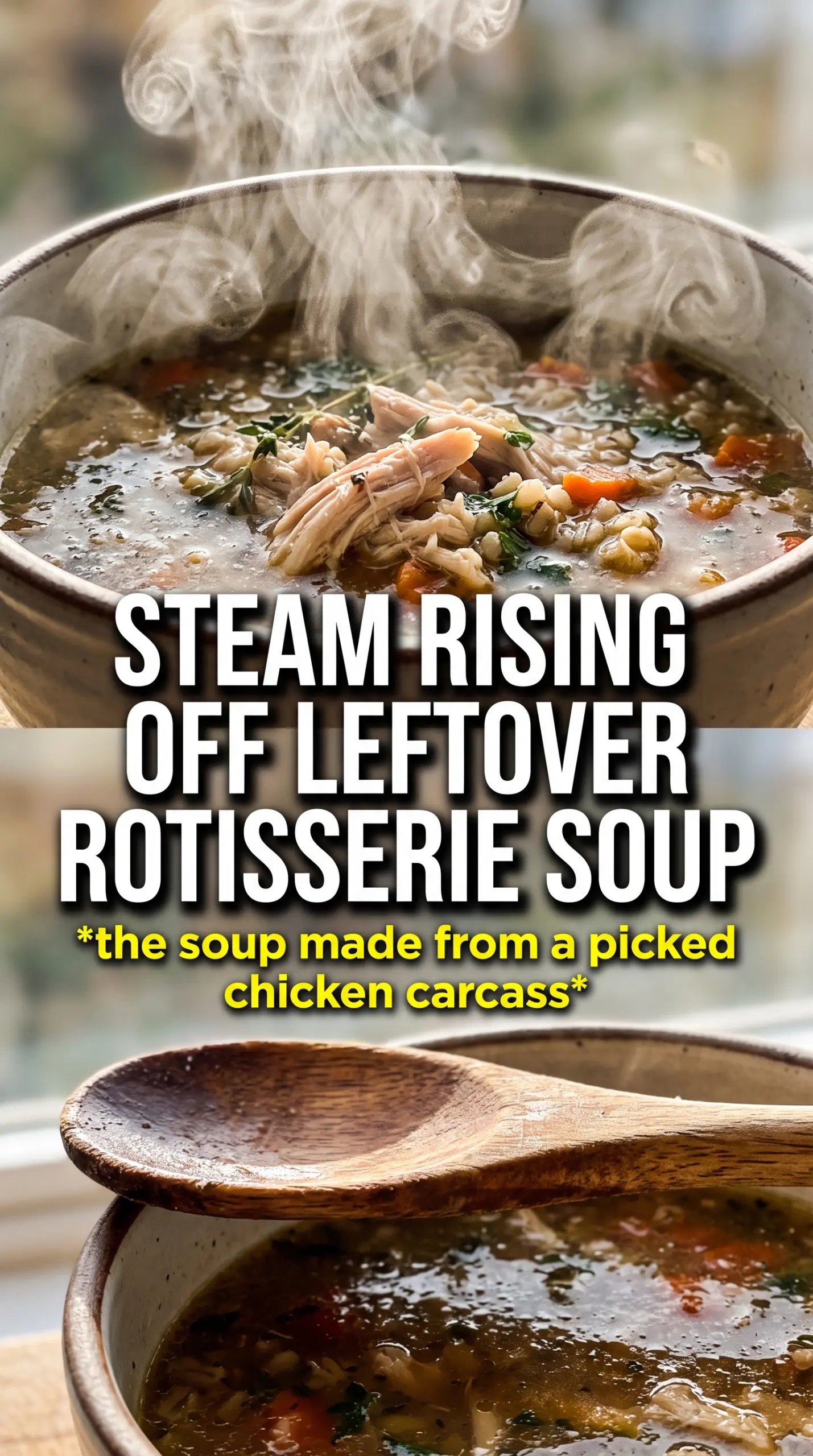
- Rotisserie chicken — This is the whole reason the soup comes together so fast. Dark and white meat both work, but pull off any very crisp skin before adding it in or the texture gets distracting. If you only have about 2 cups, the soup still works; the broth just carries a little more of the load.
- Chicken broth — Use the best broth you’ve got, because there isn’t much time here for flavor to build from scratch. A bland broth stays bland, so if yours is mild, add a little extra salt and let the lemon do some of the lifting at the end. Homemade or a rich boxed broth both work well.
- Carrots, celery, and onion — This is the base that gives the soup its familiar backbone. Dice the onion small enough that it softens fully in the short cook time, and slice the carrots and celery thin so they don’t stay too firm. If you cut them thick, they’ll still taste raw by the time the noodles are ready.
- Egg noodles — Egg noodles are the right choice because they soften quickly and give the soup that classic noodle-soup texture. Regular pasta can work in a pinch, but it won’t taste quite as cozy or soak up the broth the same way. Keep an eye on them because they go from barely tender to overdone fast.
- Lemon juice — This isn’t there to make the soup taste lemony. It sharpens the broth and keeps the chicken flavor from falling flat after the noodles cook. If your broth is already very salty or rich, even a small squeeze makes a noticeable difference.
Building the Soup in the Right Order
Softening the Vegetables First
Melt the butter or warm the oil in a large pot, then cook the onion, carrots, and celery until the onion turns translucent and the carrots start to lose their raw edge. You’re not trying to brown them here. You want a gentle base that perfumes the broth without adding fried flavor. If the pot seems dry or the vegetables are sticking, lower the heat before they take on color.
Letting the Broth Take on the Aromatics
Add the garlic and cook it just until fragrant, then pour in the broth and stir in the thyme, parsley, and garlic powder. The pot should smell savory and a little herbal within a minute or two. If the garlic sits in the pan too long before the liquid goes in, it can turn bitter, so move fast once it’s in the pot.
Cooking the Noodles Without Overdoing Them
Bring the soup to a boil, add the egg noodles, then lower the heat enough to keep a steady simmer. Cook them until they’re almost tender with just a little firmness in the center. That slight bite matters because the noodles keep softening after you add the chicken and finish the soup.
Warming the Chicken and Finishing Bright
Stir in the shredded rotisserie chicken and let it heat through for a few minutes, just until it’s hot and the broth has picked up some of the chicken’s flavor. Turn off the heat, squeeze in the lemon juice, and taste for salt and pepper. The parsley goes on at the end so it stays fresh instead of disappearing into the broth.
How to Adjust This Soup When You’re Using What You Have
Make It Dairy-Free Without Losing Body
Use olive oil instead of butter and keep the rest the same. The soup still tastes rich because the broth, chicken, and vegetables carry it, and you don’t lose any of the texture that matters. This swap works cleanly because dairy isn’t doing any thickening here.
Swap the Egg Noodles for Gluten-Free Pasta
Use a sturdy gluten-free noodle and cook it just shy of done, because many gluten-free pastas soften fast once they sit in hot broth. If you know the brand tends to break down, cook it separately and add it to each bowl instead of the pot. That keeps the soup from turning starchy.
Use Turkey or Leftover Roast Chicken
Leftover turkey works almost exactly the same way, especially after a holiday meal when you want something lighter and less fussy. Leftover roast chicken also fits right in as long as it isn’t heavily seasoned with smoky or sweet spices. The broth still does the heavy lifting, so the protein swap doesn’t change the method.
Storage and Reheating
- Refrigerator: Keep in an airtight container for up to 4 days. The noodles will keep soaking up broth, so expect the soup to thicken as it sits.
- Freezer: It freezes well, but the noodles soften after thawing. For the best texture, freeze the broth, vegetables, and chicken without the noodles, then cook fresh noodles when you reheat.
- Reheating: Warm gently over medium-low heat until steaming, adding a splash of broth or water if needed. Don’t boil it hard or the noodles can go mushy and the chicken can dry out.
Questions I Get Asked About This Recipe
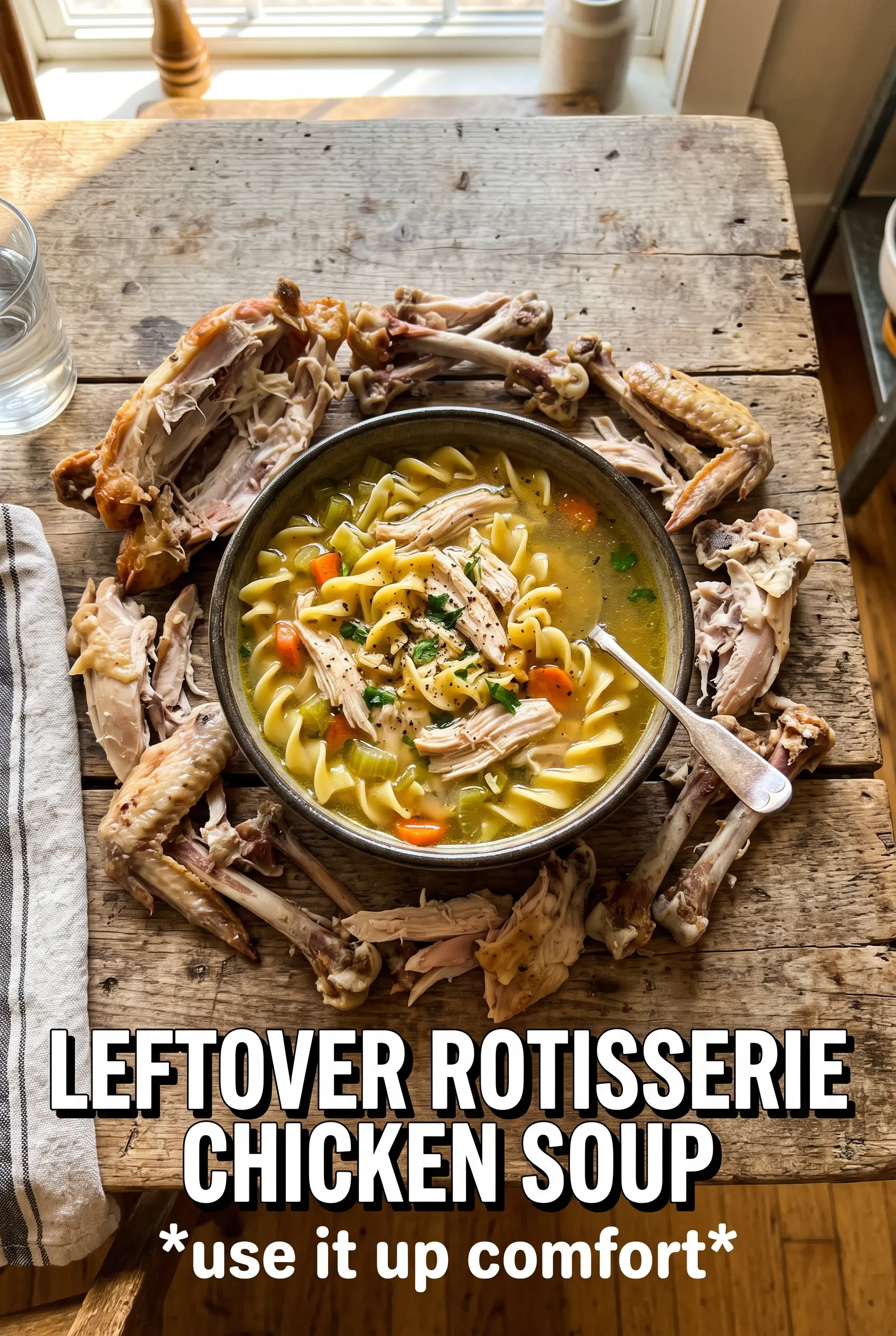
Leftover Rotisserie Chicken Noodle Soup
Ingredients
Equipment
Method
- Melt butter (or olive oil) in a large pot and sauté onion, carrots, and celery until softened, 4-5 minutes.
- Add garlic and cook for 1 minute, stirring, until fragrant; don’t brown it.
- Pour in chicken broth and add thyme, dried parsley, and garlic powder, then bring the mixture to a boil.
- Add egg noodles and cook 5-6 minutes until almost tender.
- Stir in leftover rotisserie chicken and simmer 3-4 minutes until heated through.
- Squeeze in lemon juice and season with salt and pepper to taste.
- Garnish with fresh parsley and serve hot.