Clear broth, tender shredded chicken, and soft egg noodles make stovetop chicken noodle soup the kind of dinner that settles everything down fast. It’s light enough to feel easy, but it still eats like a full meal, and the best part is how quickly the pot turns basic pantry ingredients into something that tastes slow-simmered.
The trick here is building flavor in the pot before the broth goes in. Onion, carrots, and celery need a few minutes in olive oil so they lose their raw edge and start tasting sweet and savory. Adding the chicken breasts whole keeps them juicy while they cook, and the noodles go in only at the end so they stay tender instead of bloated and dull.
Below, I’ve included the little timing details that keep the broth clean, the noodles from overcooking, and the soup balanced at the end. The celery seed is optional, but if you’ve ever wished chicken noodle soup tasted a little deeper without turning cloudy, that’s the nudge worth knowing about.
The broth stayed clear, the noodles held up, and the chicken shredded into perfect little pieces without getting stringy. I loved that the celery seed gave it that classic soup flavor without making it taste heavy.
Pin this stovetop chicken noodle soup for the nights when you want clear broth, tender chicken, and noodles that stay perfectly cooked.
The Reason the Broth Stays Clear Instead of Cloudy
The broth stays clean when you don’t boil the chicken hard for too long and you keep the noodles out until the end. A rolling boil can make the chicken tough and murky the broth, while noodles left simmering for the whole cook time will release starch and turn the pot heavier than it should be. The goal is a gentle simmer that cooks the chicken through without beating up the liquid.
The second thing that matters is timing the vegetables and seasonings before the broth goes in. That short sauté gives the onion, carrot, and celery a head start so the soup tastes rounded instead of flat. If your past chicken soup has tasted thin, it usually needed more time at the beginning, not more salt at the end.
What Each Ingredient Is Doing in the Pot
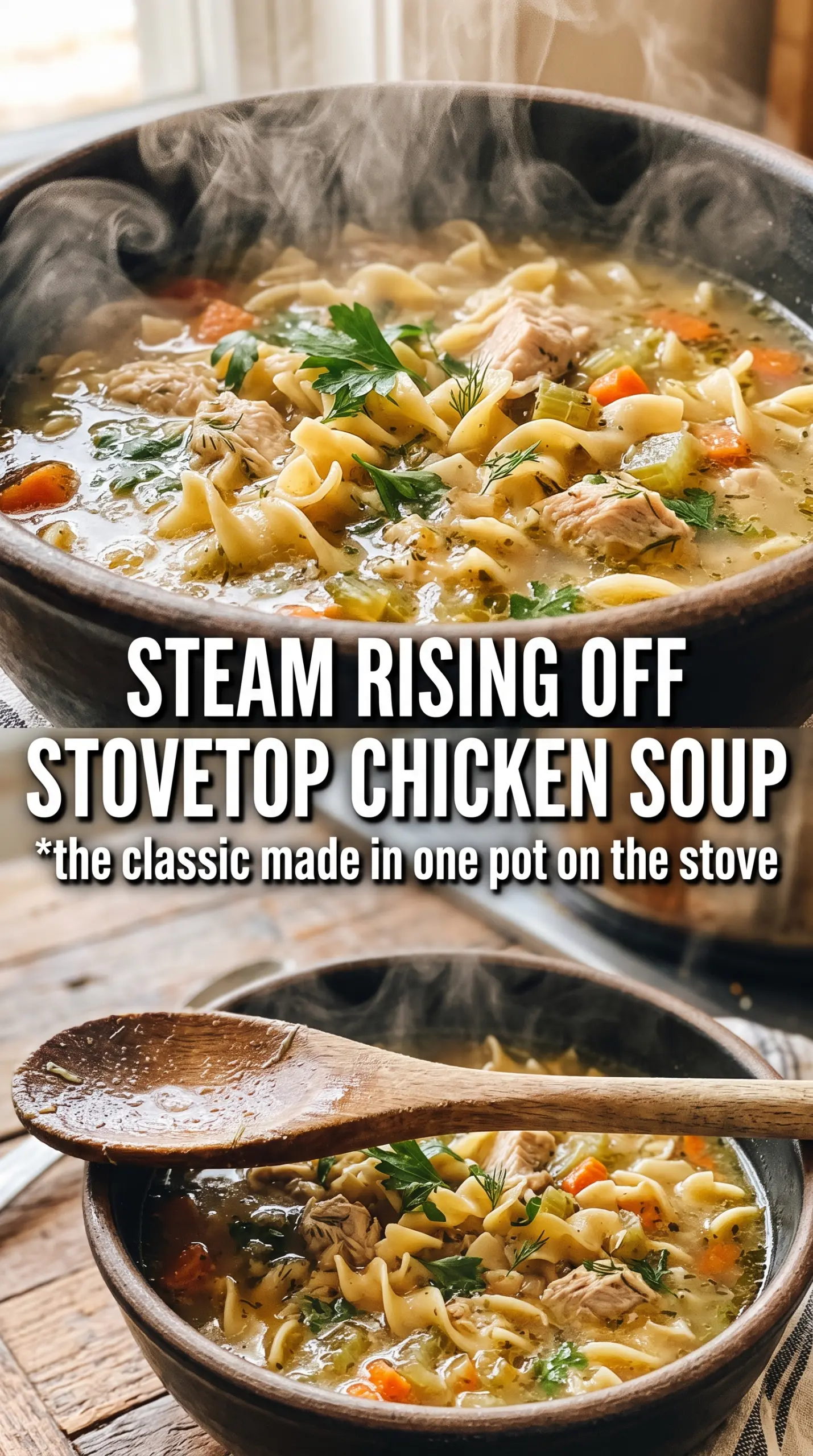
- Chicken breast — Whole breasts are the easiest way to keep the meat juicy, then shred it once it’s cooked. If you use pre-cooked chicken, add it only at the end so it doesn’t dry out.
- Chicken broth — This is the base of the soup, so use one you’d actually drink. A good boxed broth works fine here, but if yours is especially salty, hold back on the final seasoning until the chicken and noodles are in.
- Carrots, celery, and onion — This is the classic soup backbone. Cut them evenly so they soften at the same pace; if the dice is too large, they’ll stay crunchy while the noodles are already done.
- Egg noodles — These cook fast and give the soup that familiar comfort-food texture. Regular egg noodles are the right choice here; thicker pasta takes longer and changes the whole feel of the broth.
- Celery seed — Optional, but it adds the kind of old-fashioned soup depth people notice even if they can’t name it. Use a light hand, because too much can push the broth into bitter territory.
Building the Soup in the Right Order
Softening the Vegetables First
Start with olive oil over medium heat, then add the onion, carrots, and celery. Cook them for about 5 minutes until the onion turns translucent and the carrots look a little glossy at the edges. If the vegetables brown hard, the soup can taste sweet in the wrong way, so keep the heat moderate and stir often.
Poaching the Chicken in the Broth
Once the garlic has cooked for a minute, add the broth and seasonings, then drop in the whole chicken breasts. Bring the pot to a boil only long enough to get everything moving, then lower the heat and let it simmer gently. The chicken is done when the center is no longer pink and it shreds cleanly; if it feels rubbery, it needed a little more time at the simmer, not more heat.
Cooking the Noodles at the End
Pull the chicken out first and shred it with two forks while the soup base comes back to a boil. Add the egg noodles and cook just until they’re tender, usually 6 to 8 minutes, then return the chicken to the pot. If you let the noodles sit in the hot broth too long before serving, they’ll keep drinking liquid and the soup will turn thick and starchy.
The Final Seasoning Pass
Taste after the chicken and noodles are back in the pot, then add salt and pepper until the broth wakes up. Broth brands vary a lot, so this last adjustment matters more than the earlier seasoning. Fresh parsley on top gives the bowl a clean finish and keeps the soup tasting bright instead of heavy.
How to Adapt This Soup for Different Kitchens and Different Nights
Use chicken thighs for a richer bowl
Boneless skinless thighs bring more flavor and stay tender even if they simmer a little longer. They make the soup slightly richer, which is great if you want a deeper, more comforting bowl. Shred them the same way, but skim a little fat from the top if the broth looks greasy.
Make it gluten-free with a pasta swap
Use a gluten-free egg noodle or a small gluten-free pasta shape, but cook it separately if you want the best texture. Gluten-free pasta can cloud the broth and turn mushy faster than regular noodles, so adding it to each bowl keeps the soup cleaner and more predictable.
Add extra vegetables without throwing off the balance
A handful of peas, corn, or chopped spinach fits in well at the end. Add quick-cooking vegetables during the last few minutes so they stay bright, and stir in spinach just long enough for it to wilt. If you add too many extras, you’ll lose the clean chicken noodle flavor, so keep the additions modest.
Make it ahead without overcooking the noodles
If you know you’ll have leftovers, cook the noodles separately and add them to each bowl before serving. That keeps them from soaking up all the broth overnight. The soup base holds up well on its own, and this small change is the difference between a fresh bowl and a pot of swollen noodles the next day.
Storage and Reheating
- Refrigerator: Store for up to 4 days. The noodles will keep absorbing broth, so expect a thicker soup on day two.
- Freezer: Freeze the broth, chicken, and vegetables without the noodles for the best texture. Thaw and add fresh noodles when reheating.
- Reheating: Warm gently on the stovetop over medium-low heat until steaming. If it boils hard, the chicken can dry out and the noodles can fall apart, so go slow and add a splash of broth if needed.
Answers to the Questions Worth Asking
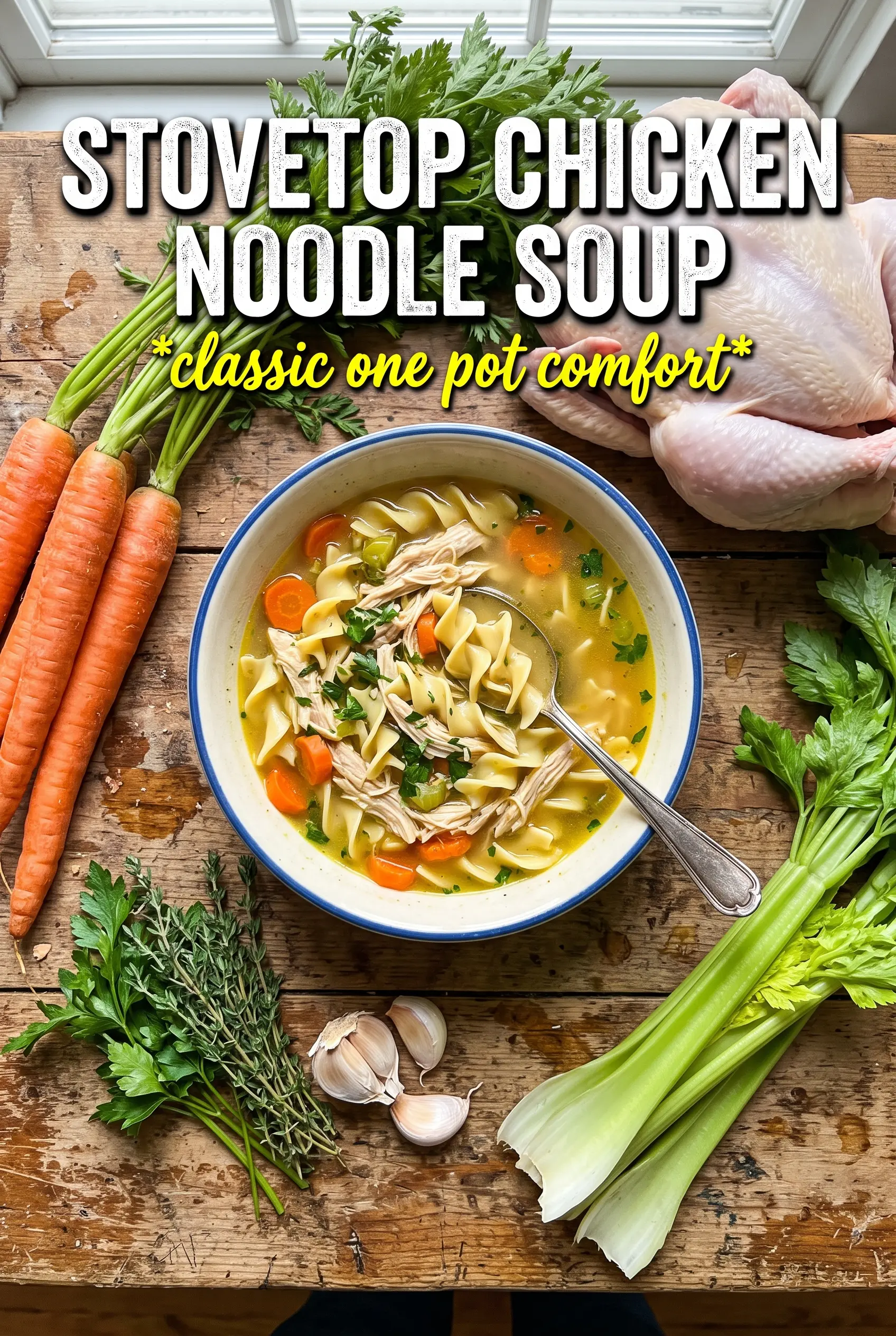
Stovetop Chicken Noodle Soup
Ingredients
Equipment
Method
- Heat the olive oil in a large heavy-bottomed pot over medium heat, then sauté the onion, carrots, and celery for 5 minutes, stirring until glossy and slightly softened.
- Add the garlic and cook for 1 minute, stirring constantly until fragrant but not browned.
- Pour in the chicken broth and add the dried thyme, garlic powder, onion powder, and celery seed, stirring to combine.
- Place the whole chicken breasts into the pot and bring the mixture to a boil.
- Reduce the heat to a simmer and cook for 18-20 minutes, until the chicken is fully cooked and no longer pink in the center.
- Remove the chicken from the pot and shred it with two forks until you have bite-size pieces.
- Bring the soup back to a boil, then add the egg noodles.
- Simmer for 6-8 minutes, until the noodles are tender, then return the shredded chicken to the pot.
- Season generously with salt and pepper to taste, stirring so the seasoning is evenly distributed.
- Ladle into bowls and garnish with fresh parsley and cracked black pepper, using a fresh herb finish on top.