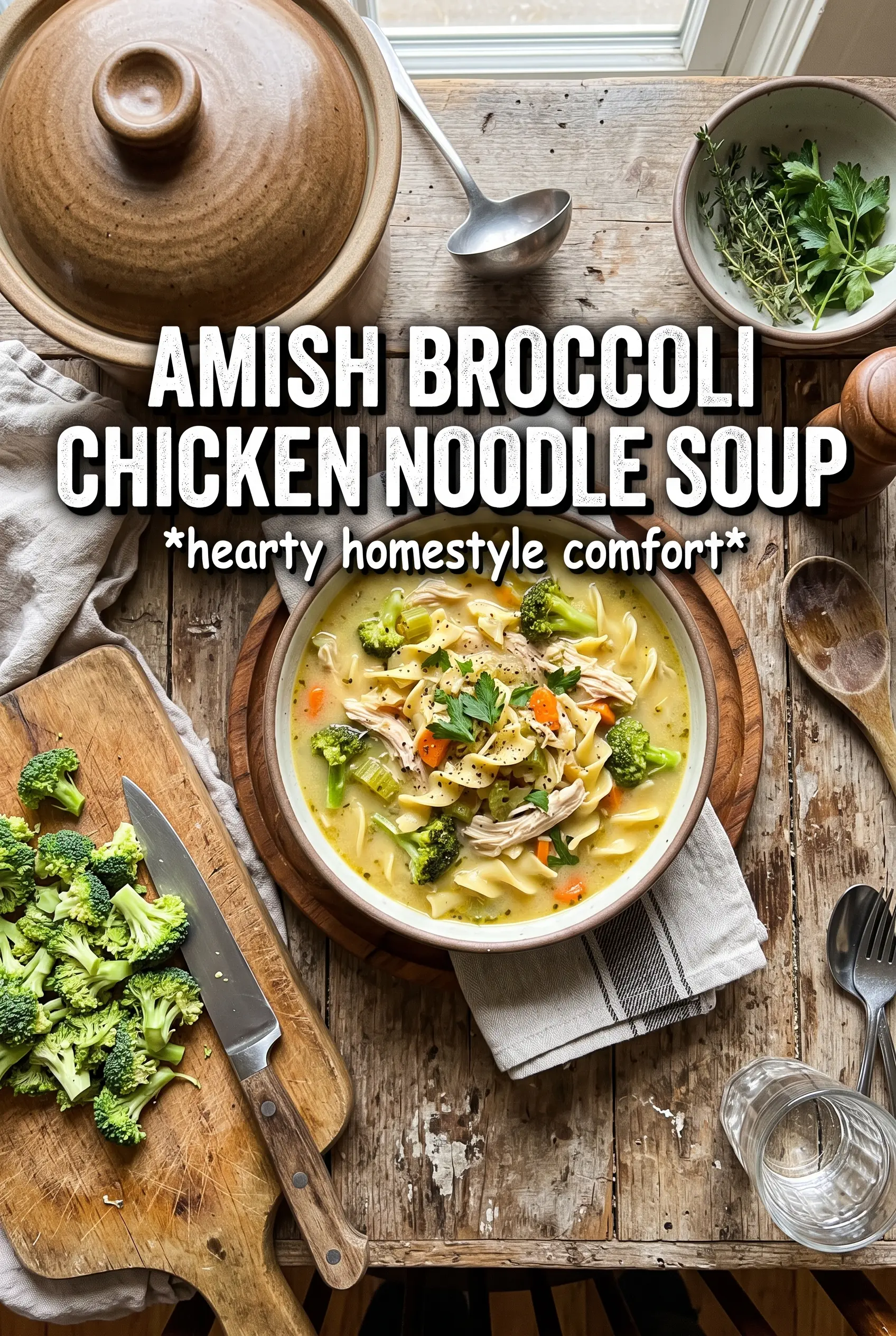
Amish broccoli chicken noodle slow cooker soup comes out with the kind of creamy, farmhouse broth that clings to every noodle and settles into the chicken instead of sitting thin and watery in the bowl. The broccoli stays tender but still tastes like broccoli, the carrots bring a little sweetness, and the cheddar melts into the broth for a finish that feels rich without turning heavy. It’s the sort of soup that gets scraped up with the last spoonful because nobody wants to leave that broth behind.
The trick is letting the slow cooker do the hard work on the chicken and base first, then adding the noodles only near the end so they don’t swell into mush. I also like stirring in the sour cream after the heat has done its job, since that keeps the broth smooth instead of grainy. The canned soups don’t just add convenience here; they give the broth body, which is what makes this taste like a full meal instead of chicken soup with extras floating in it.
Below, I’ve laid out the one timing point that matters most, plus the swaps that still keep the soup creamy and cozy if you need to work with what’s in the pantry.
The broth turned out creamy and thick, and the egg noodles stayed tender instead of falling apart. I loved that the broccoli still had a little bite, and my husband went back for a second bowl before I even sat down.
Save this Amish broccoli chicken noodle slow cooker soup for the nights when you want a creamy chicken dinner with tender noodles and no stove-watching.
The One Mistake That Turns Slow Cooker Chicken Soup Watery
The biggest failure point here is treating the slow cooker like a soup pot and letting every ingredient go in at the same time for the full cook. Chicken breasts need the long, gentle heat, but egg noodles and broccoli don’t. If they cook for six hours, the noodles collapse and the broccoli loses its color and flavor. The broth also gets muddied instead of creamy and clean-tasting.
The order matters because each ingredient has a different job. The chicken, broth, canned soups, and aromatics build the base first. The broccoli and noodles join only at the end, when the chicken is already tender and the broth has had time to thicken around the dairy in the canned soups. That last short burst on high keeps the vegetables bright and the noodles intact.
- Chicken breasts — Raw chicken breasts stay juicy in the slow cooker as long as you don’t overcook them. If you use chicken thighs instead, you’ll get a richer broth and a slightly silkier texture.
- Cream of chicken and cream of celery soup — These are what give the broth its body. A homemade white sauce won’t behave the same way in a slow cooker unless you build it carefully at the end, which defeats the point of this recipe.
- Egg noodles — Standard egg noodles hold up best here. Wide noodles work, but thinner pasta softens faster and can go mushy if the soup sits too long after cooking.
- Cheddar and sour cream — Stir them in off heat so they melt smoothly. If the soup is boiling when they go in, the dairy can turn grainy or separate.
What Each Ingredient Is Actually Doing in This Recipe
- Primary ingredient (the star) — Quality matters most. Choose the best you can find.
- Cooking medium (oil, butter, or broth) — This carries flavors and prevents dryness.
- Seasonings (salt, pepper, spices, herbs) — Layer flavors so nothing overpowers. Build depth gradually.
- Aromatics (garlic, onion, herbs) — Cook with fat to bloom flavors. Become the foundation.
- Supporting ingredients — Complement the main ingredient without overpowering it.
- Sauce or liquid (if applicable) — Brings flavors together. Balance richness with acid.
- Acid (lemon, vinegar, wine, or other) — Brightens and prevents flat-tasting results.
- Final finish (garnish, glaze, or sauce) — Prevents one-dimensional taste and adds visual appeal.
How to Layer the Soup So the Noodles Stay Tender
Building the Slow Cooker Base
Start with the raw chicken in the bottom of the crockpot, then pile the carrots, celery, onion, garlic, broth, canned soups, and seasonings on top. The chicken sits under the vegetables and liquid so it cooks through evenly and stays moist. Don’t stir everything aggressively at this stage; just nudge it together enough that the soups loosen into the broth. A heavy stir right at the beginning doesn’t help anything, and it can make the chicken cook unevenly.
Cooking Until the Chicken Shreds Easily
Cook on low for 5 to 6 hours, or on high for about 3 hours, until the chicken pulls apart with almost no resistance. If it’s still springy in the center, it needs more time. The goal is tender, shreddable chicken, not dry chunks that fight back when you try to fork them apart. Once it’s ready, lift the chicken out, shred it, and return it to the pot so it can soak up the broth again.
Adding the Broccoli and Noodles at the End
Stir in the broccoli and egg noodles, then cook on high for 25 to 30 minutes. Watch the noodles, not the clock alone, because different brands soften at different speeds. The broccoli should turn bright green and tender, not olive and limp. If you leave them in too long, the noodles steal too much liquid and the soup turns starchy instead of creamy.
Finishing With Cheese and Sour Cream
Turn in the shredded cheddar and sour cream once the heat has done the work and the noodles are tender. Stir until the cheese melts and the broth looks smooth and glossy. If the soup looks a little loose before the dairy goes in, that’s fine; the cheese and sour cream tighten it up as they melt. Taste at the end and season with salt and pepper after the cheese is in, since the canned soups and broth already bring their own salt.
How to Adapt This Creamy Chicken Soup Without Losing the Comfort
Make It Gluten-Free
Use gluten-free condensed soups and gluten-free egg noodles, then keep the same timing. The texture will still be creamy, but gluten-free noodles can go from tender to soft faster, so check them a few minutes early.
Use Chicken Thighs for a Richer Broth
Boneless thighs work well if you want deeper chicken flavor and a slightly softer shred. They’re more forgiving than breasts, so the soup can go a little long without drying out. The broth will taste richer, especially after the cheddar melts in.
Swap the Dairy for a Lighter Finish
You can swap the sour cream for plain Greek yogurt if you want a little tang with less richness. Stir it in after the slow cooker is off the heat, or it may curdle. The soup will taste a touch brighter and less velvety, but it still works.
Storage and Reheating
- Refrigerator: Keep leftovers in a sealed container for up to 4 days. The noodles will keep absorbing broth, so the soup thickens as it sits.
- Freezer: It freezes, but the noodles and dairy soften after thawing. For the best result, freeze the soup before adding the noodles, cheddar, and sour cream, then finish those when you reheat.
- Reheating: Warm gently on the stove over low heat or in the microwave at medium power. Add a splash of broth if it has thickened too much, and don’t boil it hard or the dairy can separate.