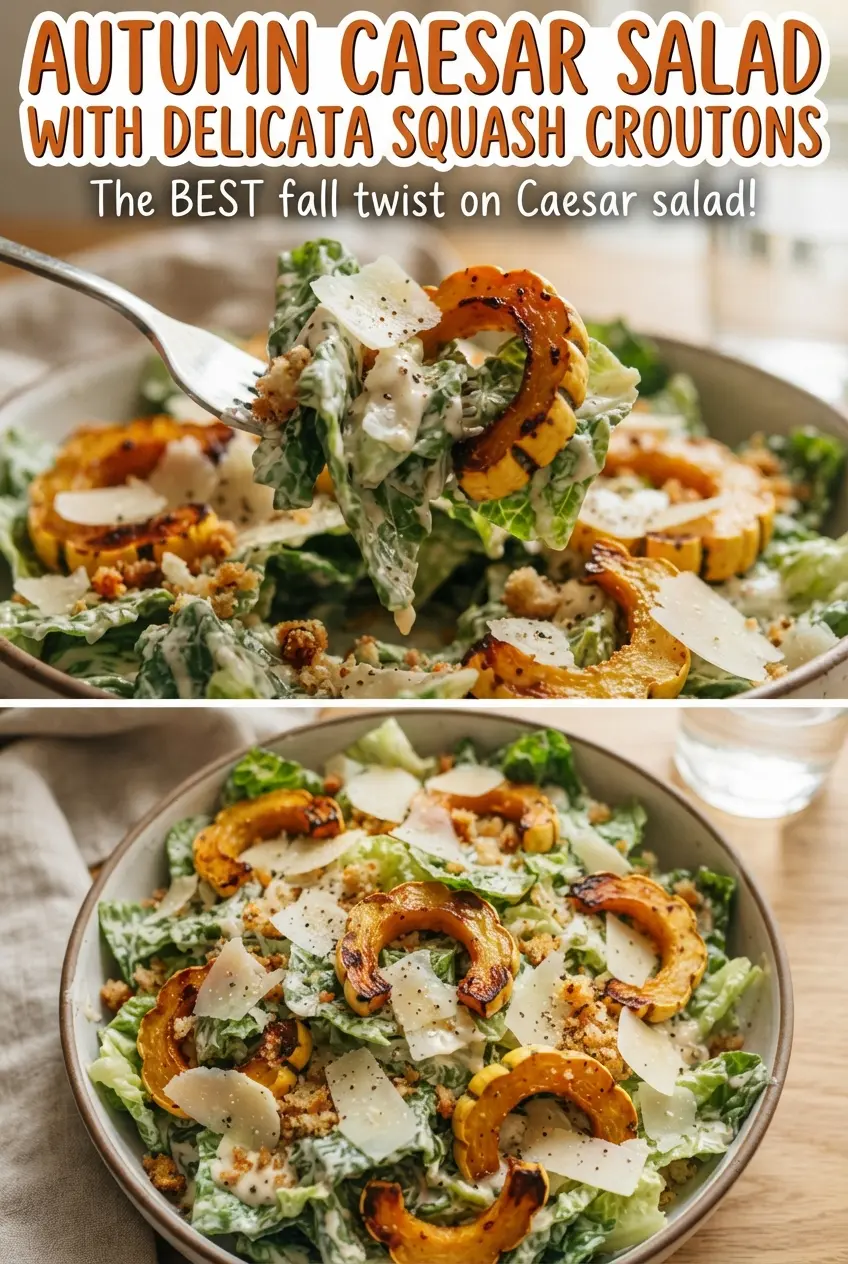
Golden roasted delicata squash gives Caesar salad a crisp, sweet edge that makes the bowl feel complete instead of just dressed up. The squash turns into little caramelized croutons at the edges, while romaine stays cold and snappy and the kale adds enough backbone to hold the dressing without collapsing.
The trick is roasting the squash hot enough to brown it before it softens too much, then massaging the kale just long enough to take the bite out of the leaves. A little maple syrup helps the squash caramelize, and smoked paprika gives the croutons a deeper, savory note that plays well with Parmesan and lemon.
Below, you’ll find the roasting cue that keeps the squash crisp, the ingredient swap that matters most if you need to change the greens, and a few practical variations for making this salad fit different meals.
The squash stayed crisp around the edges even after tossing it with the dressing, and the maple-smoked paprika combo made the whole salad taste like it had been built by a restaurant kitchen.
Like this autumn Caesar salad? Save it for the nights when you want crisp romaine, roasted delicata squash, and a punchy Parmesan finish in one bowl.
The Part That Keeps the Squash Crisp Instead of Softening Into the Dressing
Delicata squash behaves differently from the heavier winter squash people usually roast for salads. Its thin skin turns tender in the oven, which means you don’t have to peel it, and the cut half-moons hold their shape long enough to act like croutons instead of mashy chunks. The main failure point is overcrowding the pan. If the pieces sit on top of one another, they steam and lose the edges that make this salad work.
Roast at 425°F so the outside browns before the centers overcook. The maple syrup is there for color and a little lacquer, not sweetness alone, and the smoked paprika gives the squash enough savory depth to stand up to Caesar dressing. Flip the pieces once so both sides get contact with the pan. That’s what gives you the crisp, browned edges that contrast with the cool greens.
What Each Ingredient Is Actually Doing in This Bowl

- Delicata squash — This is the ingredient that makes the salad feel seasonal and substantial. It roasts quickly, keeps its shape, and gives you a sweet-savory bite that regular croutons can’t match. If you need a stand-in, use cubed butternut, but expect a softer edge and a longer roast time.
- Kale — Massaging the kale with a little dressing softens the fibers so it doesn’t eat like a pile of rough leaves. Lacinato kale works best because the leaves are flatter and more tender than curly kale. Curly kale can work, but it needs a little more massage time.
- Caesar dressing — This ties the salad together, so use one you like enough to eat by the spoonful. A thicker dressing clings better to the greens and keeps the bowl from getting watery. If your dressing is very sharp or thin, start with less and add it gradually.
- Pepitas — They add the crunch the squash can’t provide on its own. Roasted pepitas bring a toasty, nutty finish that keeps every bite from feeling soft. If you don’t have them, sunflower seeds are the closest swap.
- Lemon — The wedges matter more than they look. A squeeze right at the end wakes up the dressing and keeps the squash from reading too sweet.
Roasting, Massaging, and Tossing: The Order That Keeps Everything Balanced
Roasting the Squash First
Toss the sliced delicata with olive oil, maple syrup, smoked paprika, and salt until every piece is lightly coated. Spread the pieces in a single layer so the edges can brown instead of steaming. Roast until the bottoms are deep golden and the edges look crisp, then flip them halfway through so the caramelization stays even. If the squash looks pale, give it a few more minutes; if it’s getting too soft before it browns, the pan is too crowded.
Softening the Kale Without Making It Limp
The tablespoon of dressing you use on the kale is doing a specific job: breaking down the leaves just enough so they’re pleasant to eat. Massage for about a minute until the color deepens and the leaves look glossy, not wilted. If you skip this step, the kale stays tough and fights the rest of the salad. Stop early rather than overworking it, because over-massaged kale goes from tender to floppy fast.
Finishing the Bowl Right Before Serving
Toss the romaine and kale with the remaining dressing, then add the squash, Parmesan, and pepitas on top. Hold back the lemon until the end so you can brighten the bowl right before it hits the table. If you toss the squash in too early, the edges soften faster. This salad is best when the warm, sweet squash lands on cold greens and the contrast is still obvious.
Three Ways to Adapt This Salad Without Losing What Makes It Good
Make it dairy-free
Swap in a dairy-free Caesar-style dressing and skip the Parmesan or use a plant-based shaved cheese. You’ll lose some of the salty sharpness Parmesan brings, so lean harder on the lemon and pepitas for balance.
Turn it into a fuller meal
Add sliced grilled chicken, salmon, or a jammy egg on top. The salad already has enough structure to support extra protein, and the roasted squash keeps the bowl from feeling like a side dish.
Use a different winter squash
Butternut works if that’s what you have, but cut it into thin, even cubes so it roasts on the same schedule. You’ll get a softer, more spoonable result and lose the crisp ring shape that makes delicata feel like croutons.
Storage and Reheating
- Refrigerator: Store the dressed greens and roasted squash separately for up to 2 days. The squash softens a bit, but the flavor holds.
- Freezer: Don’t freeze this salad. The greens collapse and the dressing separates.
- Reheating: If you want the squash warm again, spread it on a sheet pan and reheat at 375°F for a few minutes. Don’t microwave it unless you don’t mind losing the crisp edges.