Melty chocolate under a blanket of toasted marshmallows is one of those desserts that disappears fast, and this skillet version earns that reaction every time. You get the campfire flavor of classic s’mores without building a separate little stack for each person, and the whole thing lands in the middle of the table hot, gooey, and ready to scoop up with graham crackers.
The trick here is keeping the heat steady enough to melt the chocolate before the marshmallows scorch. A cast iron skillet helps a lot because it holds warmth evenly and gives you a little buffer against hot spots, especially over coals. The chocolate chips go in first so they can soften underneath while the marshmallows turn deeply golden on top.
Below, I’ve included the timing cues that matter most, plus a few smart swaps if you want to change up the chocolate or make it work with what you already have on hand.
The chocolate melted all the way through and the marshmallows browned evenly instead of burning on top. I brought it to a campsite potluck and it was gone before the fire even died down.
Love this gooey cast iron Campfire S’mores Dip? Save it to Pinterest for the next time you need a fast, shareable campfire dessert with toasted marshmallow topping.
The Part Where the Chocolate Melts Before the Marshmallows Burn
The biggest mistake with s’mores dip is giving the marshmallows too much direct heat too soon. They brown fast, and if the chocolate underneath is still in solid chips, you end up with a toasted top and a stubborn center. The answer is simple: use steady heat, not aggressive heat, and let the cast iron do its job. The skillet holds warmth long enough for both layers to finish at the same time.
Over a campfire grate, medium heat is the sweet spot. Over coals, give the skillet a little more distance if the marshmallows are coloring too quickly. You want the tops puffed and deeply golden, with the chocolate underneath visibly soft when you dip a cracker through the center. If the marshmallows are blackening before the chocolate moves, the fire is too hot.
What Each Ingredient Is Doing in the Skillet
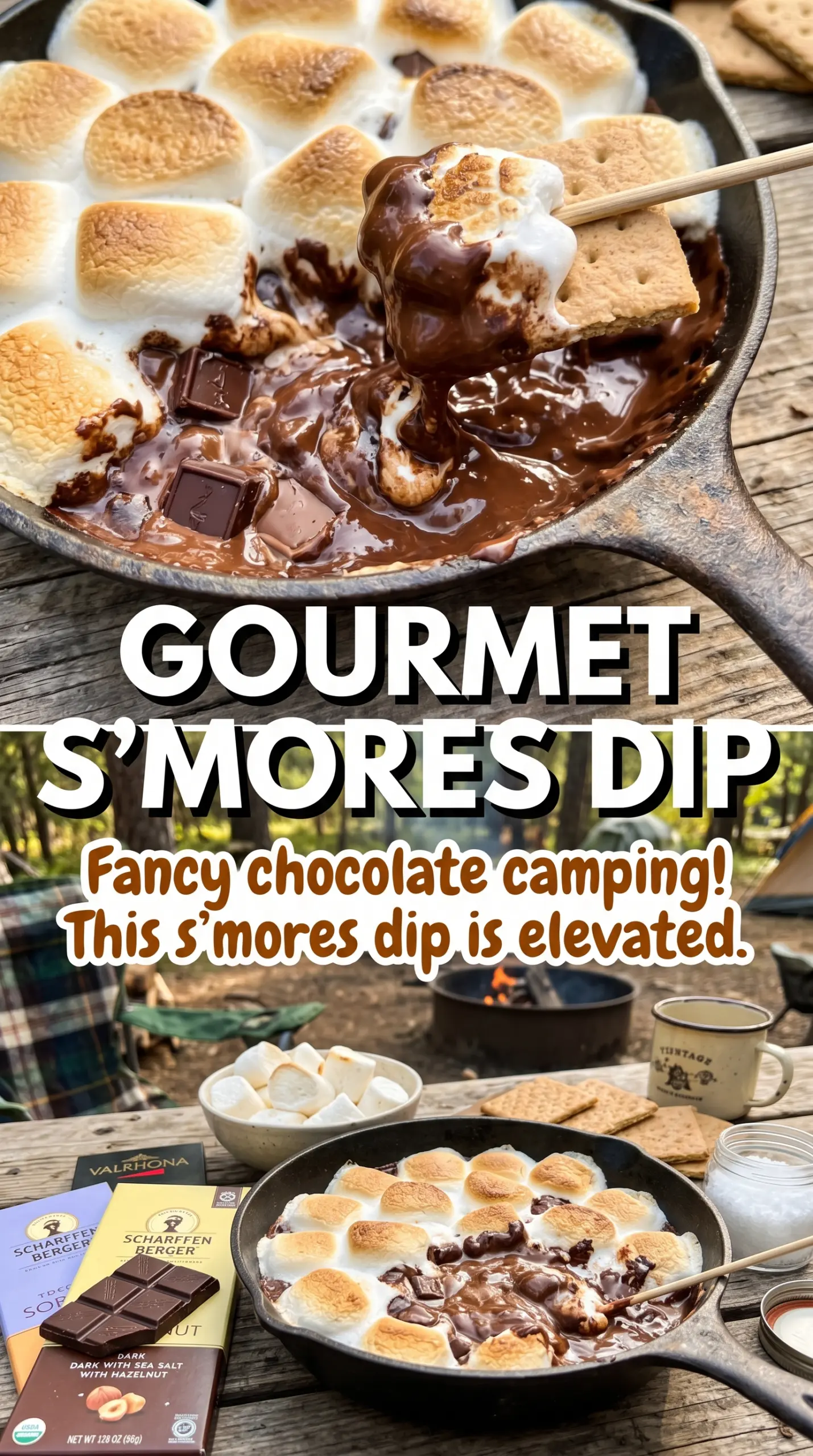
- Chocolate chips — Chips are easy and dependable here because they melt into a thick, scoopable layer without turning watery. Semi-sweet is the best all-purpose choice since the marshmallows bring plenty of sweetness already. Milk chocolate works if you want a softer, sweeter dip, and chopped chocolate bars melt a little faster and taste a touch richer.
- Mini marshmallows — Mini marshmallows toast more evenly than big ones and give you that golden, craggy top everyone wants to break into. Full-size marshmallows can work, but you’ll need to space them out and they won’t blanket the chocolate as neatly. Fresh marshmallows toast best; older ones can dry out and brown unevenly.
- Graham crackers — You need something sturdy enough to scoop hot chocolate without collapsing. Standard graham crackers are the classic pick, but chocolate grahams or cinnamon grahams both work if you want a little extra flavor. Break them into neat dippers before the skillet goes over the heat so you’re not fumbling once it’s ready.
How to Layer It So the Center Stays Soft and the Top Turns Golden
Building the Chocolate Base
Spread the chocolate chips into an even layer across the bottom of the cast iron skillet. Uneven piles melt unevenly, and the pieces at the edges can overheat while the center stays firm. A level layer gives you that soft, spoonable middle that stretches from edge to edge when you dip in.
Blanketing With Marshmallows
Top the chocolate with mini marshmallows in a tight, even layer. Don’t leave big gaps, because exposed chocolate can scorch before the top finishes browning. You want the marshmallows to look crowded but not piled high enough to tumble off the skillet as they soften.
Watching the Fire, Not the Clock
Set the skillet on a campfire grate over medium heat or suspend it over coals, then watch for visual cues instead of chasing the exact minute mark. The marshmallows should puff, then turn golden at the peaks, and the chocolate should look glossy around the edges. If one side is coloring faster, rotate the skillet for a more even finish.
Serving Before It Sets
Pull the skillet off the heat the moment the marshmallows are toasted and the chocolate is fully melted underneath. This dessert waits for nobody; once it sits too long, the top firms up and the center loses that scoopable texture. Serve it right away with graham crackers and get to the middle while it’s still molten.
Three Ways to Change It Without Losing the Campfire Feel
Use dark chocolate for a less sweet dip
Swap the semi-sweet chips for dark chocolate chips or chopped dark chocolate. The result is deeper and less sugary, which balances nicely with the marshmallows if you prefer a more grown-up dessert. Dark chocolate still melts well, but bars melt more smoothly than chips.
Make it dairy-free
Use dairy-free chocolate chips and check that your marshmallows are gelatin-free if that matters for your diet. The texture stays the same, and nobody at the table will miss the dairy once the skillet is hot and gooey. This is the easiest adaptation to make because the recipe already relies on a very short ingredient list.
Add a salty finish
A light pinch of flaky salt over the marshmallows after cooking sharpens the chocolate and keeps the dessert from tasting flat. Don’t add a heavy hand; this should read as contrast, not saltiness. It’s the simplest way to make the skillet taste a little more polished.
Use peanut butter cups for a richer center
Swap part of the chocolate chips for chopped peanut butter cups if you want a sweeter, more decadent middle. The peanut butter adds a softer, nuttier layer that tastes great with toasted marshmallow, but it does make the dip richer and a little heavier. Keep the total amount of chocolate mixture about the same so the skillet still melts evenly.
Storage and Reheating
- Refrigerator: Store leftovers covered for up to 3 days. The marshmallow top will collapse and the chocolate will firm up, so expect a much denser texture after chilling.
- Freezer: I don’t recommend freezing this dip. Marshmallows get sticky and odd after thawing, and the chocolate can separate.
- Reheating: Warm leftovers in the skillet over very low heat just until the chocolate loosens again. High heat will scorch the marshmallows before the center softens, which is the easiest way to ruin the texture.
Answers to the Questions Worth Asking

Campfire S'mores Dip
Ingredients
Equipment
Method
- Spread chocolate chips in the bottom of a cast iron skillet in an even layer so they melt uniformly.
- Top the chocolate evenly with mini marshmallows so the surface is fully covered.
- Place the skillet on a campfire grate over medium heat or suspend it over coals, keeping the top uncovered for even browning.
- Cook for 8-10 minutes until the chocolate is fully melted and the marshmallows are golden and toasted, checking after 8 minutes for quick color change.
- Remove from heat and serve immediately with graham crackers for dipping while the marshmallows are hot.