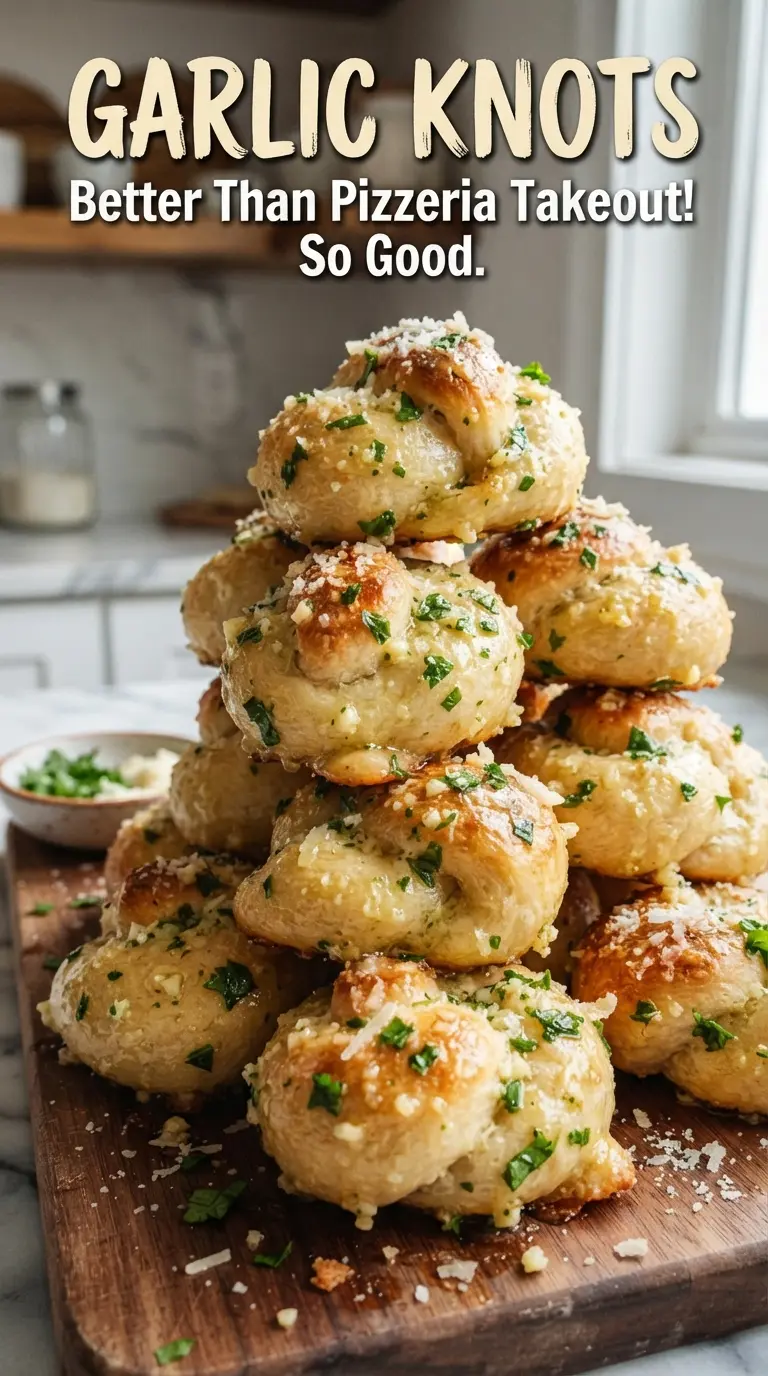
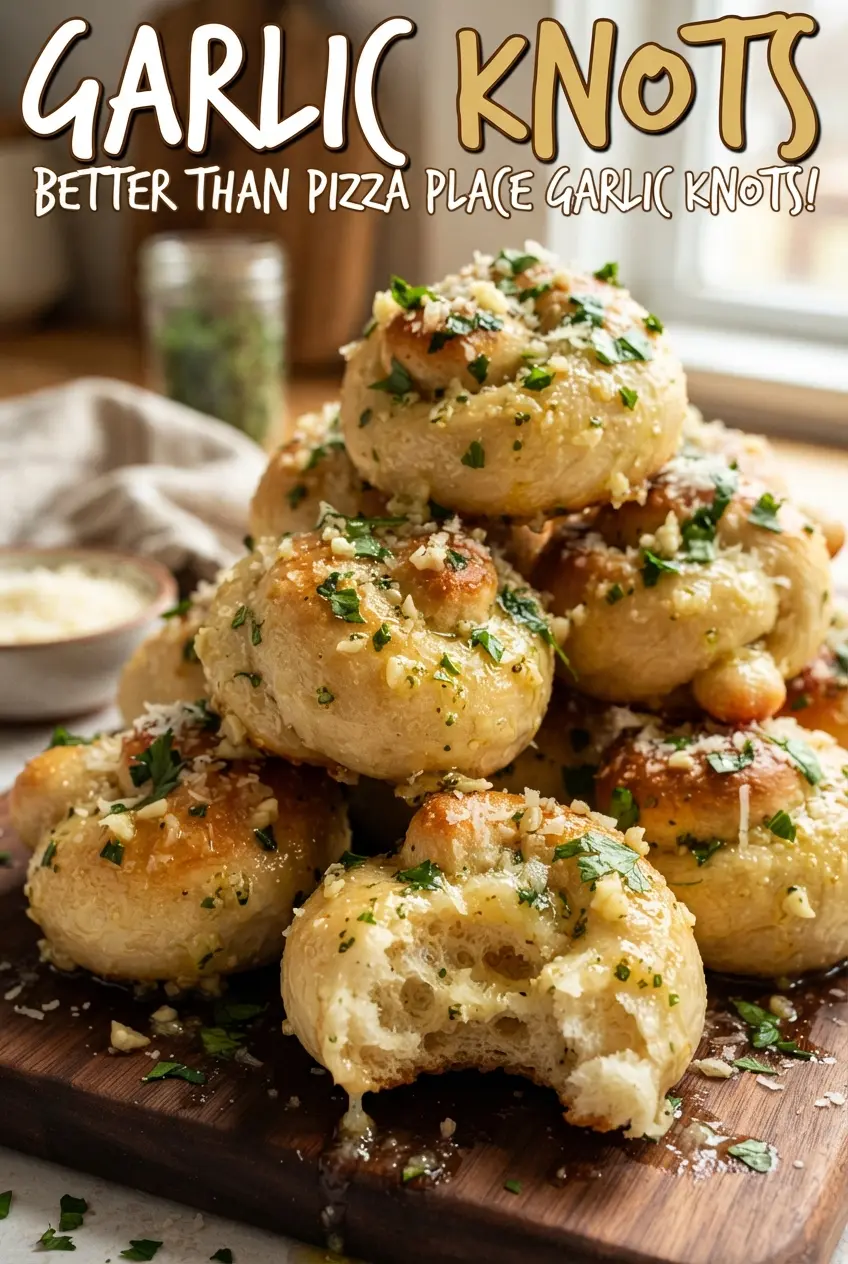
Golden garlic knots come out soft in the center, lightly crisp on the outside, and glossy with butter the second they leave the oven. The best ones pull apart in warm strands, with garlicky butter caught in every twist and just enough Parmesan to give each bite a salty finish. They disappear fast because they do the one thing bread on the side should do: make the main meal better without stealing the show.
This version leans on refrigerated pizza dough, which keeps the process quick without sacrificing that bakery-style chew. Room-temperature dough is easier to stretch and knot cleanly, and brushing the knots with a little butter before baking helps the surface color evenly. The garlic goes in after baking, not before, so it stays fragrant instead of turning bitter in the oven.
Below, you’ll find the simple trick for shaping knots without fighting sticky dough, plus a few smart swaps if you want to adjust the topping or make them work with what’s already in your kitchen.
The knots baked up soft in the middle with crisp edges, and brushing on the garlic butter after baking kept the garlic flavor fresh and strong. My kids ate four before I even set out the marinara.
These garlic knots bake up soft, buttery, and perfect for dunking in marinara.
The Mistake That Makes Garlic Knots Dense Instead of Tender
The biggest problem with garlic knots is overworking the dough while shaping. Pizza dough has enough structure to hold a knot, but if you keep stretching and re-knotting the pieces, the strands tighten up and bake into something chewy in the wrong way. Cut the dough into even pieces, roll each one into a rope with a light hand, and tie once. That’s enough.
The other trap is loading on garlic before the bake. Minced garlic can scorch quickly in a hot oven, and once it burns, the whole batch tastes harsh. Brushing with plain butter before baking gives the knots color and keeps the garlic butter reserved for the finish, where it can cling to the hot bread instead of drying out.
What the Dough, Butter, and Parmesan Each Bring to the Table
- Refrigerated pizza dough — This gives you the right chewy, stretchy crumb without making dough from scratch. Let it sit at room temperature before shaping or it will fight you and snap back instead of rolling smoothly.
- Butter — Melted butter coats the knots and carries the garlic flavor. Use real butter here; margarine won’t give the same richness or glossy finish.
- Garlic — Fresh minced garlic is worth using because it tastes sharp and alive after the knots bake. If you only have garlic powder, use it in a pinch, but the final flavor will be flatter and less punchy.
- Parmesan — The cheese adds a salty, nutty finish that sticks to the butter on top. Finely grated Parmesan clings better than large shreds, so it melts into the surface instead of falling off.
- Parsley — Fresh parsley brightens the butter and keeps the knots from tasting heavy. Dried parsley won’t give the same fresh finish, though it can stand in if that’s all you have.
How to Shape, Bake, and Finish Them So They Stay Soft
Cutting and tying the dough
Divide the dough into 16 even pieces so they bake at the same pace. Roll each piece into a rope about 7 inches long, then tie a simple knot and tuck the loose ends under just enough to hold the shape. If the dough springs back, let it rest for a few minutes and try again instead of forcing it; that rest relaxes the gluten and makes shaping easier.
Brushing before the oven
Lay the knots on parchment so they release cleanly and brush each one lightly with melted butter. A thin coat is enough to help the surface color and keep the bread from drying out. If you drench them now, the butter pools on the pan and the bottoms can fry instead of bake.
Finishing while they’re hot
Pull the knots when they’re deeply golden, not pale. Stir the garlic, parsley, and salt into the remaining butter right before brushing so the garlic stays fragrant and doesn’t sit long enough to lose its bite. Brush the butter over the hot knots, then finish with Parmesan while the surface is still tacky so the cheese sticks instead of sliding off.
How to Adapt These Garlic Knots for Different Tables
Add mozzarella for a cheesy center
Press a small cube of mozzarella into each dough piece before tying it into a knot. The cheese melts into the center and gives you a softer, richer bite, but keep the pieces small or they’ll leak out during baking.
Make them dairy-free
Use a good dairy-free butter and skip the Parmesan, or replace it with a dairy-free grated topping that melts well. The knots will still bake up tender, but the finish will be a little less rich and less salty, so add a pinch more salt to the garlic butter if needed.
Use garlic powder when fresh garlic is missing
Swap the fresh garlic for garlic powder stirred into the melted butter, then taste and adjust. You’ll lose some sharp, fresh aroma, but the flavor will still read clearly as garlic knots instead of plain butter bread.
Storage and Reheating
- Refrigerator: Store in an airtight container for up to 3 days. They soften a bit as they sit, but the flavor holds up well.
- Freezer: Freeze baked knots in a single layer, then transfer to a freezer bag for up to 2 months. Thaw at room temperature before reheating so the centers warm evenly.
- Reheating: Warm in a 350F oven for 5 to 8 minutes. The mistake is microwaving them too long, which makes the dough rubbery instead of soft.
Answers to the Questions Worth Asking
Garlic Knots
Ingredients
Equipment
Method
- Preheat your oven to 400F and line a sheet pan with parchment for easy release.
- Cut the room-temperature pizza dough into 16 pieces, then roll each piece into a 7-inch rope and tie into a knot.
- Place the knots on the prepared sheet pan and brush lightly with melted butter so they brown evenly.
- Bake for 13-15 minutes at 400F until the knots are golden brown and look slightly crisp at the edges.
- Stir the remaining butter with the minced garlic, chopped parsley, and salt, then brush the hot knots immediately so the garlic scent blooms.
- Sprinkle with grated Parmesan and serve warm with marinara sauce for dipping.