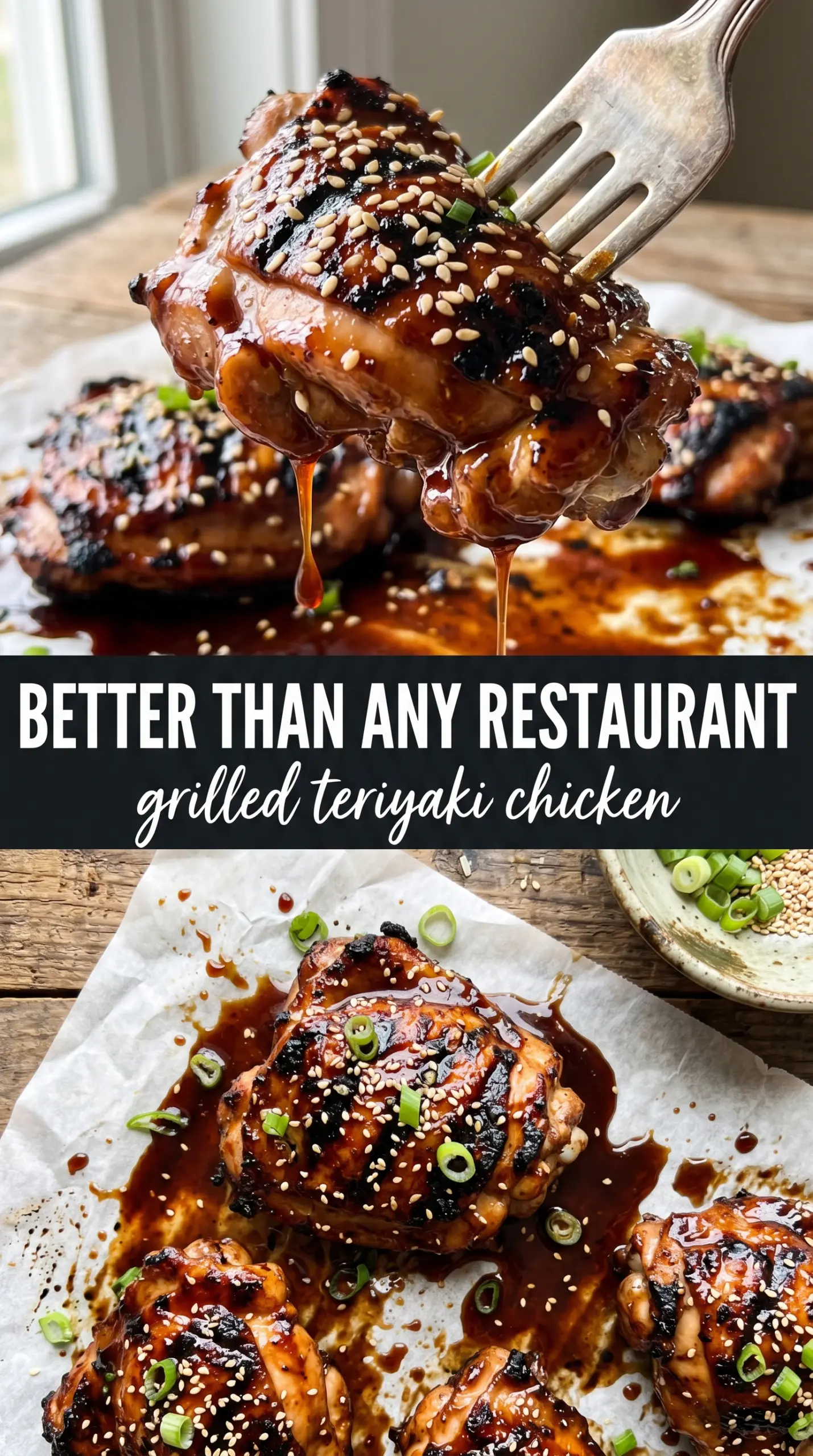
Grilled teriyaki chicken earns its spot in the rotation because the marinade does two jobs at once: it seasons the meat all the way through and turns into a glossy glaze that clings to every ridge from the grill. The thighs stay juicy, the edges caramelize, and the sauce lands somewhere between sticky and smoky in the best way. Served over rice, it tastes like the kind of dinner that disappears fast.
The balance matters here. Soy sauce brings salt and depth, honey and brown sugar give the glaze its lacquered finish, and sesame oil adds the nutty note that makes teriyaki taste like teriyaki instead of just sweet soy sauce. I like using chicken thighs because they hold up on a hot grill without drying out, and they forgive the extra few minutes it takes for the glaze to thicken on the stove.
Below, I’ve included the small things that keep the sauce from staying thin and the chicken from sticking to the grates. If you’ve ever had teriyaki burn before the chicken cooked through, the timing note in the process section will save you some frustration.
The glaze thickened up perfectly on the stove, and brushing it on during the last few minutes gave the chicken that sticky finish without burning the sugars. We served it with rice and there wasn’t a bite left.
Save these sticky grilled teriyaki chicken thighs for the nights when you want a glossy glaze, smoky grill marks, and dinner on the table fast.
The Mistake That Makes Teriyaki Chicken Burn Before It Glazes
The biggest trap with teriyaki on a grill is putting all of the sauce on too early. The honey and brown sugar need a little time to turn thick and shiny, but they also scorch fast once they hit direct heat. That’s why the marinade gets split in half from the start: one portion seasons the chicken, and the reserved portion gets cooked down separately into a proper glaze.
That small change keeps the flavors clean. The marinating liquid can do its job without any cross-contamination issues, and the glaze goes on only when the chicken is close to done. If you brush it on in the last few minutes, you get caramelization instead of blackened spots and a bitter finish.
- Boneless skinless chicken thighs — Thighs stay tender on a hot grill and handle a sticky glaze better than breasts. If you use breasts, pound them to an even thickness so they cook through before the sugar in the sauce overcooks.
- Mirin or rice vinegar — Mirin gives the sauce a softer, rounder sweetness. Rice vinegar works fine if that’s what you have, but it’s sharper, so the glaze will taste a little brighter and less mellow.
- Sesame oil — This is where the marinade gets its toasted, nutty backbone. Don’t swap in a neutral oil unless you have to; you’ll lose the familiar teriyaki depth that makes the sauce taste finished.
- Cornstarch slurry — The glaze needs starch to turn from thin marinade into something that coats the chicken. Whisk the slurry into the simmering reserved sauce and give it a few minutes; if you stop too soon, it will look loose in the pan and run right off the meat.
What Each Ingredient Is Actually Doing in This Chicken Dish
- Chicken (pat dry for browning) — Room temperature cooks more evenly. Even pieces ensure uniform doneness.
- Oil or butter (the browning medium) — High-heat oil essential for proper searing. Creates pan flavor.
- Seasonings (salt, pepper, spices) — Apply generously. Chicken carries the entire flavor profile.
- Aromatics (garlic, ginger, herbs) — Cook with fat to bloom flavors. Become the foundation.
- Sauce or braising liquid (if using) — This keeps chicken moist. Balance richness with acid.
- Vegetables (if using) — Layer by cooking time so everything finishes together.
- Acid (vinegar, wine, lime, or pineapple) — This brightens and prevents one-dimensional flavor.
- Proper doneness (165°F internal temperature) — Use thermometer for accuracy. Overcooked is dry.
Building the Glaze Without Losing the Grill Marks
Mixing the Marinade
Whisk the soy sauce, honey, mirin, brown sugar, sesame oil, garlic, and ginger until the sugar starts dissolving and the mixture looks glossy. Reserve one-third before the chicken goes in so you have a clean portion for glazing later. If you forget and use the same bowl for basting, the sauce that touched raw chicken can’t be boiled safely enough to serve as a finishing glaze.
Marinating the Chicken
Add the chicken thighs to the remaining sauce and turn them until every piece is coated. Two hours gives the flavor time to get into the meat, and overnight works even better if you want a deeper savory edge. Keep the chicken chilled while it marinates; leaving it out on the counter softens the texture and raises the risk of uneven cooking.
Turning the Marinade Into a Glaze
Pour the reserved sauce into a small saucepan and bring it to a gentle simmer over medium heat. Stir in the cornstarch slurry and let it bubble for 3 to 4 minutes until it goes from thin and foamy to thick enough to coat a spoon. If it still looks watery, keep cooking; if you rush this part, the glaze slides off the chicken instead of clinging in that sticky layer.
Grilling and Basting at the End
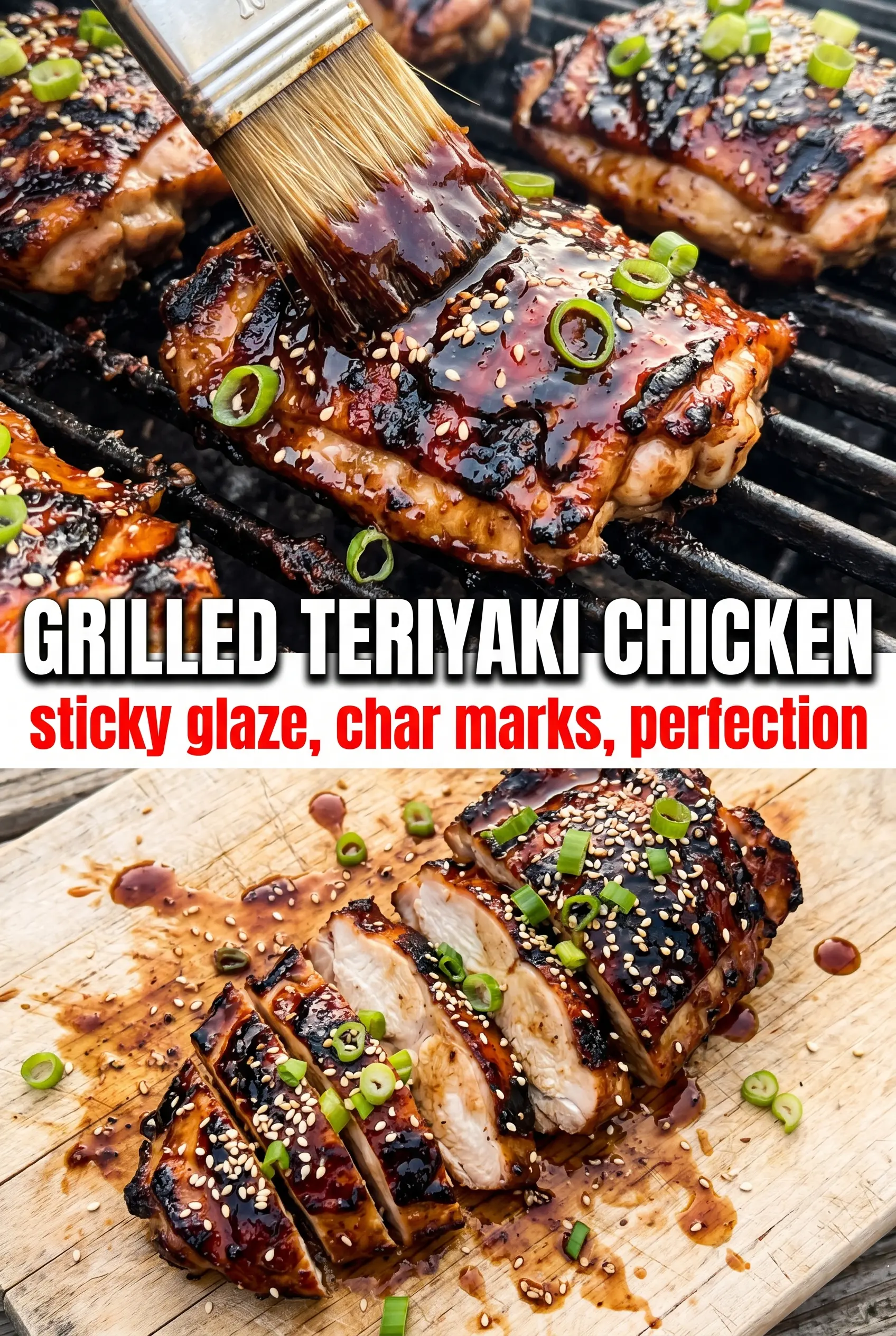
Preheat the grill to medium-high and oil the grates well before the chicken goes on. Grill the thighs for 6 to 7 minutes per side, then brush on the glaze during the last 4 minutes so the sugars caramelize without burning. Pull the chicken when the thickest part reaches 165°F and the surface has deep mahogany edges with clear grill marks underneath.
Three Ways to Bend This Recipe Without Breaking It
Gluten-Free Version
Use a gluten-free soy sauce or tamari and keep everything else the same. The glaze still thickens the same way, and the flavor stays balanced, but tamari usually tastes a touch rounder and less sharp.
No-Mirin Backup
Use rice vinegar if mirin isn’t in your pantry, but keep the honey and brown sugar as written so the sauce doesn’t turn sour. If you want to soften the tang a little, add an extra teaspoon of honey rather than more vinegar.
Using Chicken Breasts Instead
Chicken breasts can work, but they need more attention because they dry out faster than thighs. Pound them to an even thickness, start checking early, and pull them as soon as they hit 165°F so the glaze doesn’t keep cooking the meat past its sweet spot.
Storage and Reheating
- Refrigerator: Store leftovers in an airtight container for up to 4 days. The glaze will thicken in the fridge, so the chicken may look darker and a little firmer the next day.
- Freezer: This freezes well for up to 2 months. Slice the chicken first if you want faster thawing, then freeze with a little extra glaze so it doesn’t dry out.
- Reheating: Reheat gently in a covered skillet over low heat with a splash of water, or warm it in the oven at 325°F until hot. High heat makes the glaze turn sticky in the wrong way and can dry the edges before the center is warmed through.
Answers to the Questions Worth Asking
Grilled Teriyaki Chicken
Ingredients
Equipment
Method
- Whisk soy sauce, honey, mirin or rice vinegar, brown sugar, sesame oil, garlic, and ginger together, then reserve 1/3 for glazing.
- Marinate chicken thighs in the remaining sauce for at least 2 hours or overnight, turning once if possible.
- Simmer the reserved marinade with the cornstarch slurry (cornstarch stirred with water) in a small saucepan over medium heat for 3-4 minutes, until thickened and glossy.
- Preheat the grill to medium-high heat and oil the grates well to prevent sticking.
- Grill chicken thighs for 6-7 minutes per side, brushing with the teriyaki glaze in the last 4 minutes to caramelize.
- Continue cooking until the internal temperature reaches 165°F and the glaze is deeply caramelized.
- Garnish with sesame seeds and green onions, then serve with steamed rice.