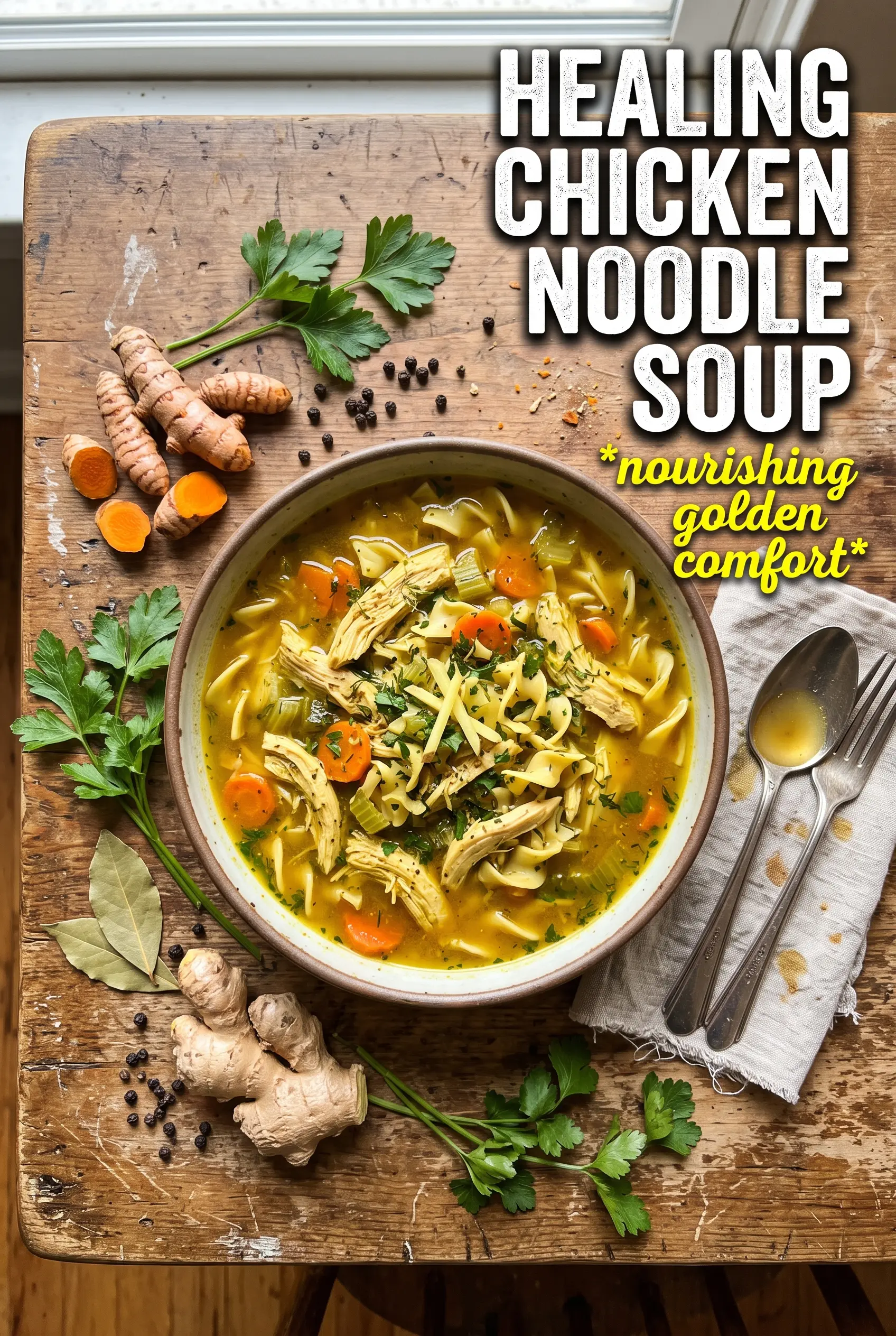
Golden broth, tender shredded chicken, and soft noodles make this the kind of soup that lands exactly where you need it. The turmeric and ginger bring warmth without turning it into something heavy, while lemon and apple cider vinegar brighten the pot at the end so every spoonful tastes awake, not flat. It’s the bowl I want when someone needs dinner to feel like care.
Bone-in chicken thighs do a lot of work here. They give the broth body and a richer chicken flavor than boneless pieces usually do, and simmering them with onion, garlic, celery, and carrots builds a base that tastes like it’s been going longer than it has. The final splash of acid matters just as much as the simmer time; it keeps the soup from tasting muddy after the noodles and greens go in.
Below, I’m walking through the part that keeps the broth clear and balanced, plus the little finishing move that makes this soup taste brighter the next day too.
The broth stayed clear, the chicken shredded beautifully, and the lemon at the end kept it from tasting heavy. I made it with spinach and it still had that cozy, restorative feel my husband asked for again the next night.
Save this Healing Chicken Noodle Soup for the nights when you want a turmeric-gold broth, tender chicken, and bright lemon in one bowl.
The Broth Needs to Simmer Before the Noodles Go In
The biggest mistake with chicken noodle soup is rushing the noodles into a broth that hasn’t had time to build flavor. Here, the chicken thighs, vegetables, ginger, garlic, turmeric, and thyme simmer together first, which gives you a broth that tastes rounded instead of thin. If the soup tastes flat at the end, it’s usually because the base never had enough time to extract flavor from the chicken and aromatics.
Chicken thighs are the right cut for this pot. They stay tender during a longer simmer, and the bones help the broth pick up more body. If you use boneless thighs, the soup will still work, but the broth won’t have the same depth. The noodles go in only after the chicken is shredded, because cooking them too early turns them bloated and dull.
What Each Ingredient Is Actually Doing in the Pot
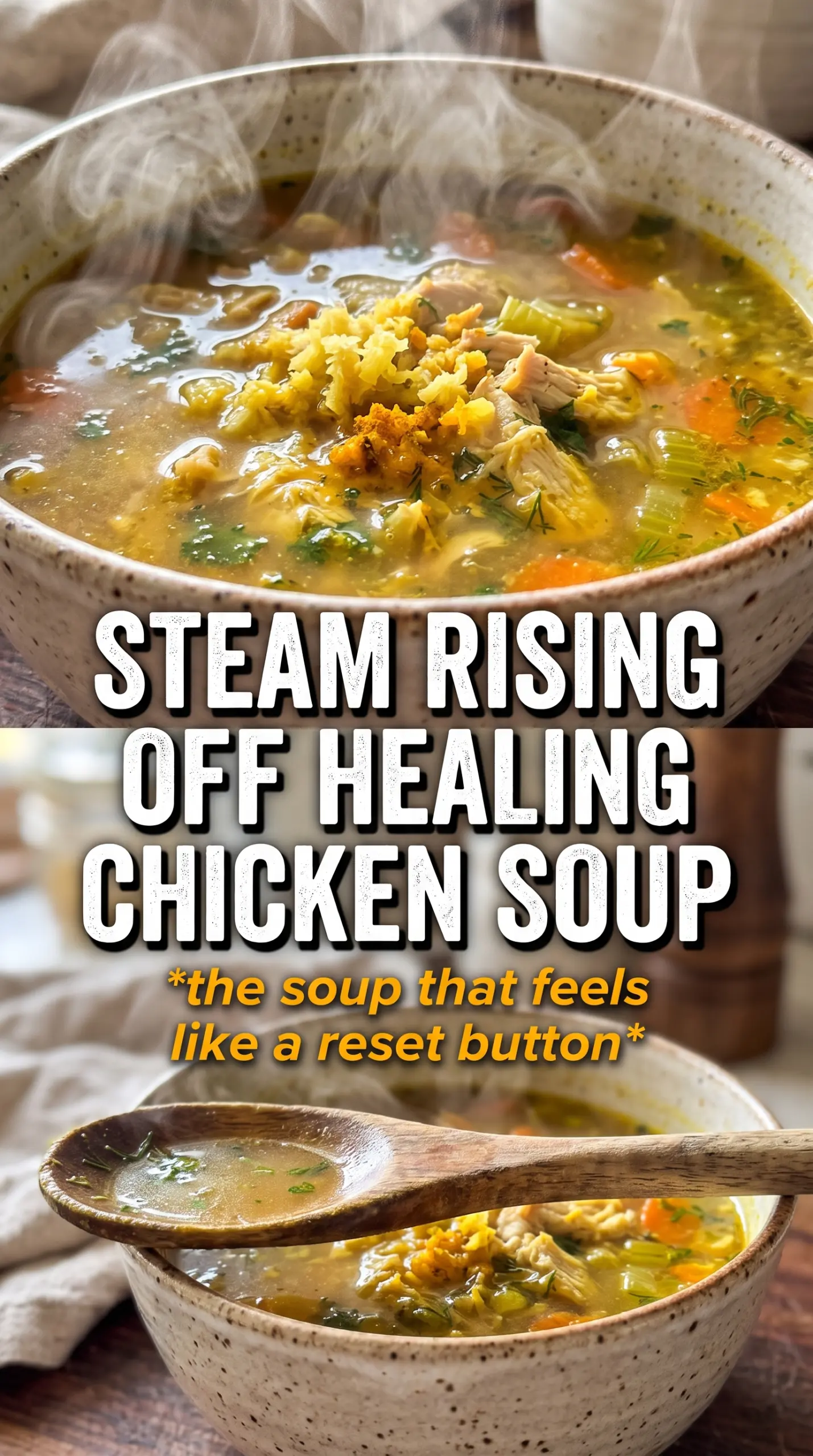
- Bone-in chicken thighs — These give the soup its richest flavor and keep the meat juicy after simmering. Boneless thighs work in a pinch, but they won’t season the broth the same way. If you use bone-in breasts instead, pull them earlier so they don’t dry out.
- Fresh ginger and garlic — These are what make the broth taste lively instead of plain chicken soup. Fresh really matters here; dried ginger won’t give you the same clean heat. Grate the ginger fine so it melts into the broth instead of floating in fibrous bits.
- Turmeric — This adds color and a warm, earthy note. It’s not there to make the soup taste like curry; it just gives the broth that golden look and a subtle background depth. Use good turmeric if you can, because old turmeric can taste dusty.
- Lemon juice, apple cider vinegar, and honey — This trio finishes the soup. The acid wakes up the broth, and the honey smooths the sharp edges so it tastes balanced instead of sour. Add them at the end, after the soup comes off a hard simmer, so the brightness stays clean.
- Kale or spinach — Kale holds its texture a little better, while spinach turns softer and more delicate. Either one works, but don’t add it too early or it will lose color and taste tired. Stir it in only long enough for it to wilt.
How to Build the Soup So the Broth Stays Bright and Clean
Starting with the Chicken and Aromatics
Put the chicken, vegetables, garlic, ginger, broth, and spices in the pot all at once, then bring everything up to a boil before lowering it to a steady simmer. You want small bubbles, not a hard rolling boil, because aggressive heat can make the broth cloudy and can toughen the chicken before it has a chance to relax. After about 30 minutes, the thighs should pull apart easily with a fork.
Shredding Without Losing the Good Flavor
Lift the chicken out and let it cool just enough to handle, then shred it and discard the bones and skin. Return the meat to the pot right away so it can soak back up some broth. If you wait too long, the chicken dries out on the cutting board while the soup keeps cooking without it.
Cooking the Noodles at the Right Moment
Add the egg noodles only after the chicken is back in the pot. They need just 6 to 8 minutes, and the broth will thicken slightly as they cook. If you leave them in too long, they’ll soak up too much liquid and turn the soup heavy instead of brothy, so watch for noodles that are tender but still hold their shape.
Finishing with Greens, Lemon, and Salt
Stir in the kale or spinach and cook just until it wilts, then add the lemon juice, apple cider vinegar, and honey. Taste before adding salt; broth brands vary a lot, and some need none while others need a generous pinch. The final seasoning should taste balanced and bright, not sharp, and the broth should feel clean on the tongue.
How to Adapt This Bowl for Different Kitchens and Schedules
Make It Dairy-Free and Naturally Gluten-Free
This recipe already skips dairy, so the only thing to watch is the noodles. Use certified gluten-free egg-style noodles or rice noodles if you need the bowl to stay gluten-free. Rice noodles soften faster, so add them near the very end and pull the pot as soon as they’re tender.
Use Spinach Instead of Kale for a Softer Finish
Spinach melts into the broth faster and gives you a lighter, softer texture. Stir it in during the last minute or two, just long enough to wilt. Kale keeps more bite, so this swap changes the bowl from hearty and rustic to gentler and silkier.
Make It Ahead for Easy Lunches
If you know you’ll have leftovers, cook the noodles separately and add them to each bowl before serving. That keeps them from soaking up all the broth overnight. The soup base itself gets even better after a day in the fridge because the ginger, garlic, and thyme settle into the chicken.
Storage and Reheating
- Refrigerator: Up to 4 days. The noodles will keep absorbing broth, so expect the soup to thicken.
- Freezer: The broth and chicken freeze well for up to 3 months, but freeze it without the noodles and greens for the best texture.
- Reheating: Warm it gently on the stove over medium-low heat. If it’s too thick, add a splash of broth or water. Don’t boil it hard or the noodles can break down and the chicken can turn stringy.