Golden chicken thighs in a creamy white wine sauce earn their spot in the rotation because they deliver a lot of payoff without asking for much fuss. The skin turns crisp in the pan, the shallots melt into the sauce, and the finished dish tastes like it took far more effort than it did. It’s the kind of dinner that lands on the table looking polished and still feels manageable on a weeknight.
The key is building the sauce in the same pan you used for the chicken. Those browned bits on the bottom are what give the wine sauce its depth, and the Dijon keeps the cream from tasting flat. I also like using bone-in, skin-on thighs here because they stay juicy in the oven and hold up beautifully against the sauce.
Below, I’ve included the small details that matter most: how to keep the skin from going soft, when the wine needs a minute to reduce, and what to swap if you want a lighter or dairy-free version.
The sauce thickened up perfectly and the chicken skin stayed crisp even after baking. I served it with mashed potatoes, and there wasn’t a drop of sauce left in the pan.
Save this creamy herb roasted chicken in white wine sauce for the night you want crisp skin, a glossy pan sauce, and dinner that feels special without extra work.
The Pan Sauce Starts With the Chicken, Not the Cream
The biggest mistake in a dish like this is rushing straight to the sauce before the chicken has done its job in the pan. You want real browning on the thighs, because that crust does more than look good. It leaves behind the savory base that the wine and cream will carry all the way to the end.
Skin-on thighs are the right cut here because they stay moist through the oven time and they give you something worth searing. If the skin sticks when you try to turn it, it needs another minute. Pulling too early tears the skin and leaves you with a pale, patchy surface instead of a clean, crisp finish.
- Bone-in, skin-on chicken thighs — These hold up better than breasts in a rich sauce and stay juicy through baking. If you use boneless thighs, cut the oven time down and watch for the sauce to reduce faster.
- Dry white wine — This adds brightness and depth, but it needs a full simmer so the sharp alcohol edge cooks off. Pick something you’d actually drink; a cheap, overly sweet wine will muddy the sauce.
- Heavy cream — This gives the sauce its body and helps it cling to the chicken. Half-and-half will work in a pinch, but the sauce will be thinner and a little less stable.
- Dijon mustard — Just a teaspoon wakes up the cream and keeps the sauce from tasting heavy. It doesn’t make the sauce taste mustardy; it sharpens everything around it.
What Each Ingredient Is Actually Doing in This Recipe

- Primary ingredient (the star) — Quality matters most. Choose the best you can find.
- Cooking medium (oil, butter, or broth) — This carries flavors and prevents dryness.
- Seasonings (salt, pepper, spices, herbs) — Layer flavors so nothing overpowers. Build depth gradually.
- Aromatics (garlic, onion, herbs) — Cook with fat to bloom flavors. Become the foundation.
- Supporting ingredients — Complement the main ingredient without overpowering it.
- Sauce or liquid (if applicable) — Brings flavors together. Balance richness with acid.
- Acid (lemon, vinegar, wine, or other) — Brightens and prevents flat-tasting results.
- Final finish (garnish, glaze, or sauce) — Prevents one-dimensional taste and adds visual appeal.
Building the Sauce So It Stays Silky in the Oven
Getting Color on the Chicken
Season the thighs well, then lay them skin-side down in the butter and olive oil without crowding the pan. You want steady sizzling, not loud splattering and steaming. After about 6 minutes, the skin should be deep golden and release easily; if it tears, it wasn’t ready yet. Remove the chicken while the skin is still facing up so it stays crisp while you build the sauce.
Softening the Shallots and Herbs
The shallots need a few minutes in the rendered fat so they soften without browning too fast. Once they’ve turned translucent, add the garlic, thyme, and rosemary and cook just until fragrant. If the garlic starts to brown, the heat is too high and the sauce will pick up a bitter edge. Keep things moving and stay close to the pan.
Reducing the Wine Before the Cream Goes In
Pour in the white wine and let it bubble for about 3 minutes. This is where the flavor sharpens and the alcohol cooks down. If you add cream too soon, the sauce can taste thin and hot rather than rounded and balanced. The wine should lose its raw smell before you move on.
Finishing in the Oven
Stir in the broth, cream, and Dijon, then bring the sauce to a gentle simmer before the chicken goes back in. Set the thighs skin-side up so the top stays exposed and doesn’t go soggy. Bake until the chicken is cooked through and the sauce has thickened slightly around the edges. If the sauce looks thin when it comes out, give it a few minutes to settle on the stovetop before serving.
How to Adapt This Chicken for a Lighter Table or a Different Pantry
Dairy-Free Cream Sauce
Swap the butter for olive oil and use full-fat coconut cream or an unsweetened dairy-free cooking cream. Coconut cream gives the richest body, but it brings a mild coconut note that changes the dish a little. Keep the Dijon in place so the sauce still tastes balanced, and don’t boil it hard or the texture can separate.
Chicken Breasts Instead of Thighs
Chicken breasts work, but they need more attention because they dry out faster in the oven. Sear them the same way, then shorten the bake time and pull them as soon as they hit temperature. The sauce still tastes great, but you lose some of the richness and forgiveness that thighs bring.
Gluten-Free Without Sacrificing the Sauce
This dish is naturally gluten-free as written, which makes it an easy one to keep in the rotation. Just check your broth and Dijon label if you’re cooking for someone with a strict intolerance. The sauce gets its thickness from the cream and reduction, not from flour.
Make It Ahead for Company
You can sear the chicken and build the sauce up to the point of baking, then finish it in the oven right before serving. That keeps the skin from losing too much texture and gives you a fresher final sauce. Leftovers hold well, but the skin softens after chilling, so I treat this more like a make-ahead sauce dish than a crisp-skin leftover dish.
Storage and Reheating
- Refrigerator: Store leftovers in an airtight container for up to 3 days. The sauce will thicken and the skin will soften, but the flavor stays strong.
- Freezer: You can freeze it, though the cream sauce may separate a bit after thawing. Freeze in a shallow container for up to 2 months and thaw overnight in the fridge.
- Reheating: Warm it gently in a covered skillet over low heat with a splash of broth to loosen the sauce. High heat can break the cream and dry out the chicken before the center is hot.
Answers to the Questions Worth Asking
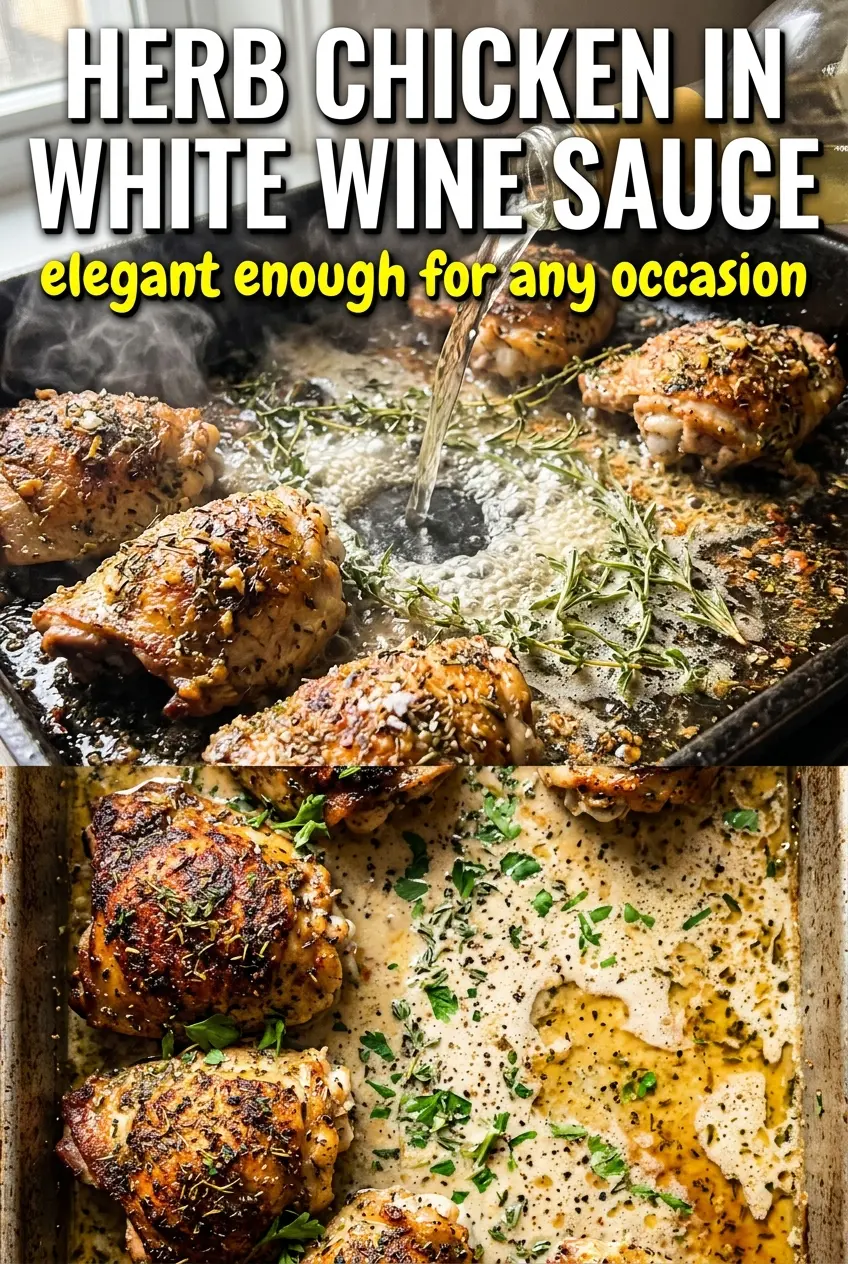
Herb Roasted Chicken in Creamy White Wine Sauce
Ingredients
Equipment
Method
- Preheat the oven to 400F. Season the chicken thighs with salt and pepper.
- Heat the unsalted butter and olive oil in a Dutch oven over medium-high heat. Sear the chicken skin-side down for 6 minutes until the skin is golden, then remove to a plate.
- Sauté the minced shallots for 3 minutes until softened. Add the minced garlic, fresh thyme, and chopped rosemary and cook for 1 minute.
- Deglaze with the dry white wine and simmer for 3 minutes, scraping up browned bits from the pan.
- Stir in the chicken broth, heavy cream, and Dijon mustard. Bring everything to a simmer.
- Return the chicken to the Dutch oven skin-side up. Transfer to the oven and bake for 25-30 minutes until golden and cooked through.
- Garnish with fresh parsley and let rest briefly before serving.