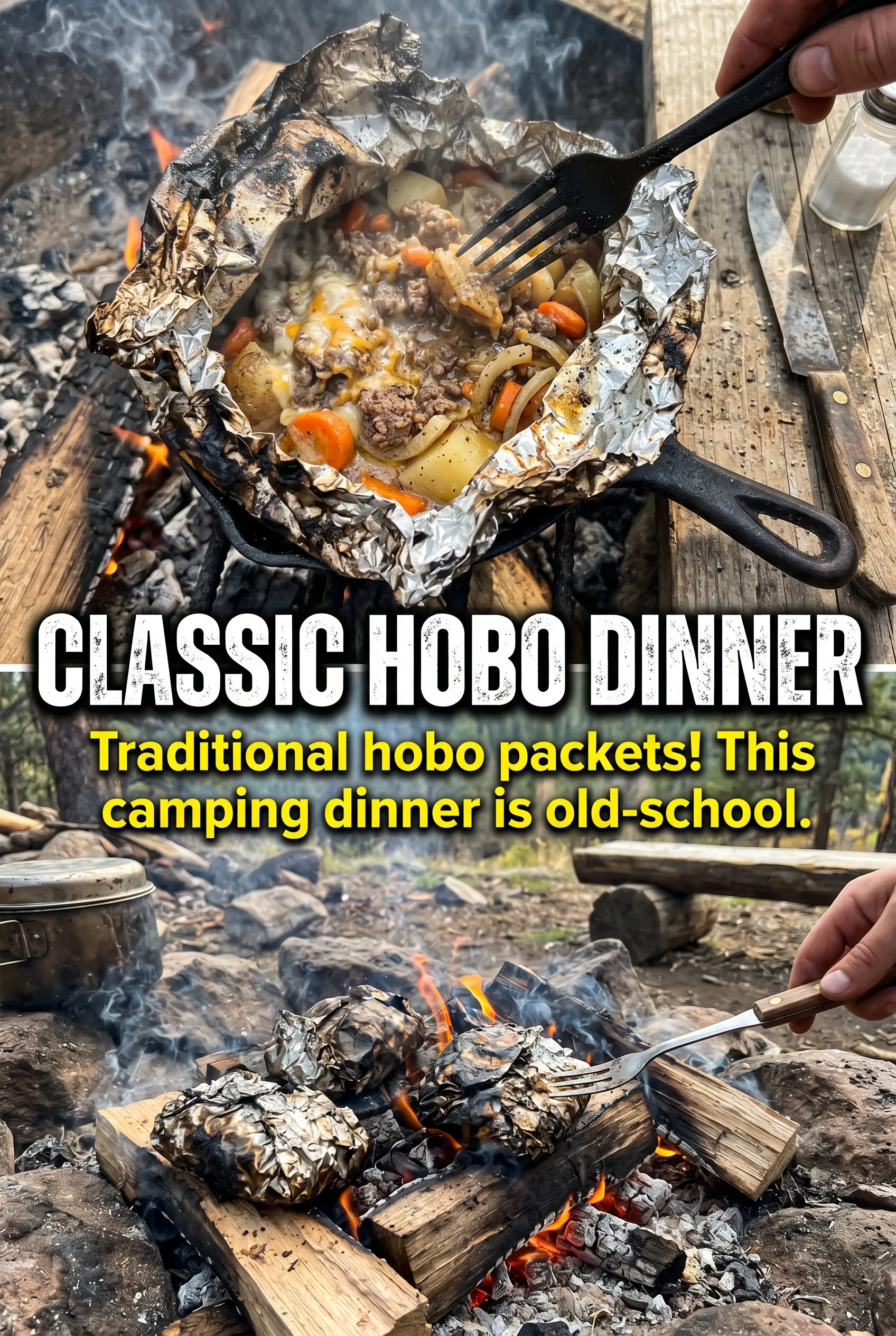
Hobo foil packets come out with the kind of simple, hearty payoff that keeps them in the regular camping rotation: tender meat, soft potatoes, sweet carrots, and onions all steaming together in one tidy bundle. When the foil opens, you get that little burst of butter and smoke that makes the whole meal feel bigger than the effort it took to make it.
The trick is layering the vegetables where they can actually cook through. Potatoes and carrots need the most time, so they go down first and get sliced thin enough to soften in the same window as the meat. Heavy-duty foil matters here because thin foil tears once the butter melts and the packet gets flipped over the grate.
Below, I’ve included the small details that keep the packets from turning soggy or underdone, plus a few swaps if you’re working with different meat or cooking at home instead of over a campfire.
The potatoes were tender and the butter kept everything moist without making the packet soggy. I used ground beef and it came out browned on top with the vegetables cooked through right on time.
Hobo foil packets are the kind of campfire dinner that opens steaming and finishes with tender potatoes, buttery vegetables, and juicy meat.
The Part That Keeps the Potatoes from Coming Out Hard
The biggest mistake with foil packets is stacking everything evenly and expecting it all to finish at once. Potatoes and carrots need a head start, and if they’re cut too thick they’ll still be firm when the meat is done. Thin slices are what make this work, especially over a campfire where heat moves around and doesn’t stay perfectly steady.
Another thing that matters is the seal. You want the packet closed tightly enough to trap steam, but not packed so full that the foil bursts when the butter melts. A little air space inside helps the vegetables cook without turning the whole packet into a flat, watery mess.
What Each Ingredient Is Actually Doing in the Packet
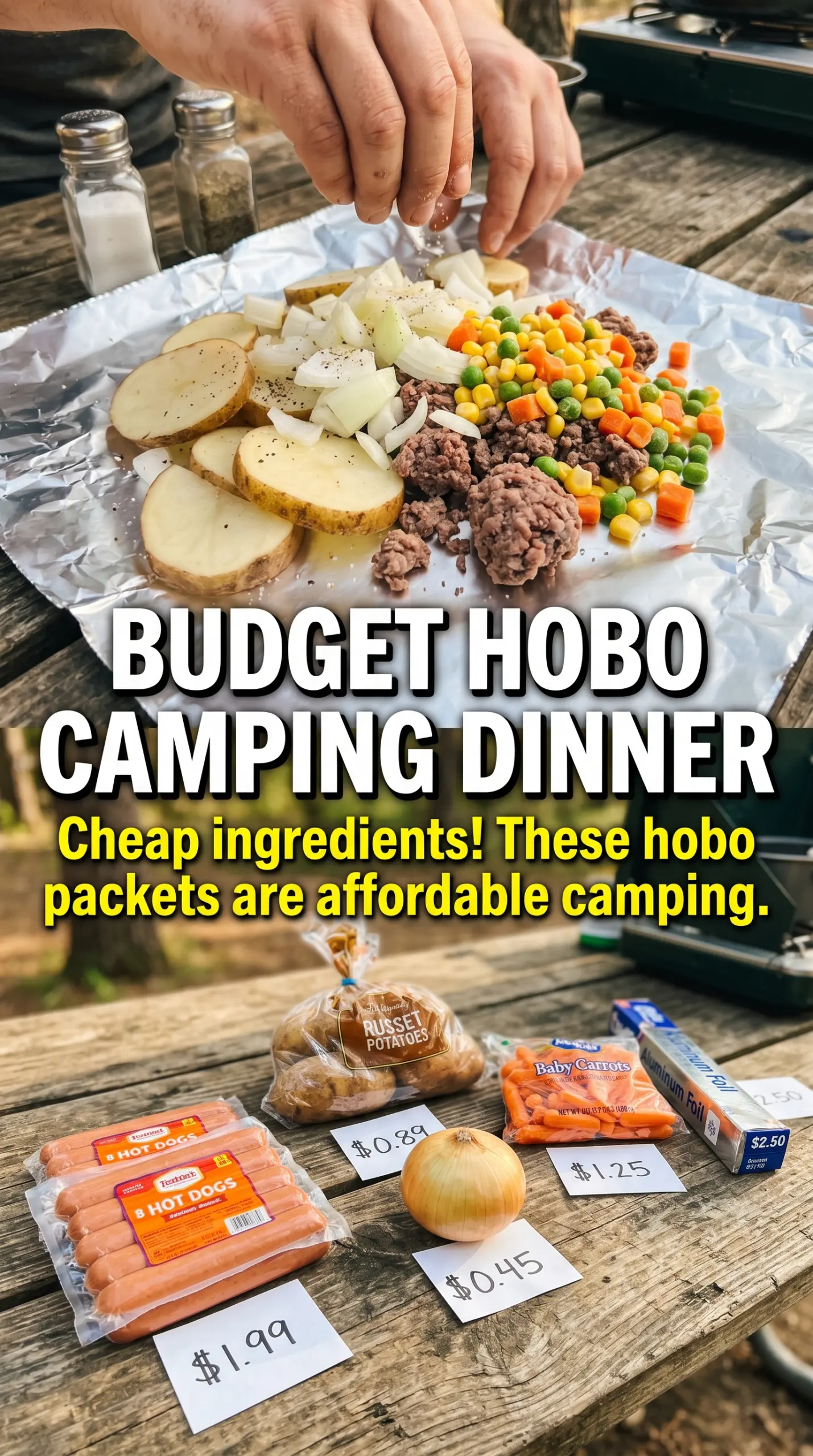
- Ground beef or stew meat — Ground beef cooks faster and gives you a softer, more classic foil-dinner texture. Stew meat brings a meatier bite, but it needs the full cook time and does best when cut into smaller pieces. If you use ground beef, form it into patties so it stays together and browns a little instead of crumbling into the vegetables.
- Potatoes — These are the backbone of the packet, and they need to be sliced thin and evenly. Russets work fine, but Yukon Golds hold their shape better and come out creamier. If you cut them thick, the rest of the packet can finish before the centers soften.
- Carrots and onions — Carrots bring sweetness as they steam, while onions melt into the butter and season the whole packet from the inside. Slice the onions thick enough that they don’t disappear completely, but not so thick that they stay sharp and crunchy.
- Green beans — Canned green beans are convenient and absorb the juices well, though fresh green beans stay firmer and taste brighter. If using fresh, trim them and expect them to need a little more time than canned ones. Drain canned beans well so the packet doesn’t get watery.
- Butter — Butter carries the seasonings and gives the packet that rich finish you taste the moment it opens. Margarine can work in a pinch, but it won’t give the same round, savory coating. If you want the vegetables to taste fuller, don’t skip it.
- Heavy-duty foil — This is not the place for thin kitchen foil. Heavy-duty foil holds up to flipping and keeps the packet from tearing when the butter melts and the steam builds.
Building the Packet So Everything Finishes at the Same Time
Start with the Vegetables
Lay the potatoes down first, then carrots, onion, and green beans on top. That gives the denser vegetables the most direct contact with the heat and lets the softer vegetables pick up flavor as the packet steams. If the slices are uneven, the packet cooks unevenly too, so keep the potatoes and carrots close in thickness.
Set the Meat on Top
Place the beef or stew meat over the vegetables instead of burying it underneath. The drippings run down through the packet and season everything below, which is the whole point of this style of meal. If you’re using ground beef, the patties should be loose enough to cook through but not so thin they fall apart as soon as you flip the packet.
Seal, Flip, and Watch the Steam
Fold the foil tightly so the seams are secure and the packet looks plump, not flat. Set it over medium heat and let it cook without constantly lifting it; every time you open the foil, you lose steam and slow the potatoes down. Flip halfway through, then check for steady steam and a soft packet feel before opening. If it feels stiff, give it a few more minutes.
Let It Rest Before Opening
Rest the packets for five minutes before cutting into them. That short wait lets the steam settle so the juices don’t run out all over the grate the second you open them. Use a knife or fork to open carefully, because the burst of steam is hot enough to burn your hands fast.
How to Adapt These Packets for Different Cooktops and Diets
Dairy-Free Version
Swap the butter for olive oil or a dairy-free butter spread. Olive oil gives a cleaner, lighter finish, while dairy-free butter keeps the familiar richness. Either way, add it before sealing so the seasonings can coat the vegetables as they cook.
Using Stew Meat Instead of Ground Beef
Stew meat gives the packet a more old-school campfire feel, but it needs to be in small, even pieces. Larger chunks stay chewy when the potatoes are already done, so cut them smaller than you would for a stew. This version tastes meatier and stands up well to smoky heat.
Vegetarian Packet
Skip the meat and add extra potatoes, mushrooms, or sliced bell peppers for more body. You’ll lose the beef drippings, so the best replacement is a drizzle of olive oil plus a little extra salt and garlic powder. The result is lighter, but still hearty enough to eat straight from the foil.
Storage and Reheating
- Refrigerator: Store leftovers in an airtight container for up to 3 days. The potatoes soften a bit more after chilling, but the flavor holds up well.
- Freezer: These packets freeze, but the vegetables turn softer after thawing, so I prefer them fresh. If you do freeze them, cool completely first and wrap tightly before freezing for up to 2 months.
- Reheating: Reheat in a covered skillet over low heat or in a 350°F oven until hot. The biggest mistake is blasting them in the microwave, which dries out the meat and makes the potatoes rubbery before the center heats through.
Questions I Get Asked About This Recipe
Hobo Foil Packets
Ingredients
Equipment
Method
- If using ground beef, form it into 4 patties; if using stew meat, divide it into 4 portions.
- Keep the portions ready so they can be placed onto the vegetables without delay.
- Preheat a campfire grate over medium heat so it holds steady at a gentle sizzle.
- On each foil sheet, layer the vegetables: sliced potatoes, carrots, and onions, then add the drained green beans.
- Place one meat patty or portion on top of the vegetable layer on each packet.
- Season each packet with salt, pepper, and garlic powder, then top with 1 tablespoon butter.
- Fold the foil into sealed packets, pressing the seams closed so the contents steam inside.
- Place the packets on the campfire grate over medium heat and cook for 25-30 minutes, keeping the foil tightly sealed.
- Flip the packets halfway through cooking so they brown and steam evenly, adjusting the fire as needed to maintain medium heat.
- Let the packets cool for 5 minutes before carefully opening to avoid steam burns.
- Serve immediately, keeping the juices from the opened packet over the meat and vegetables.