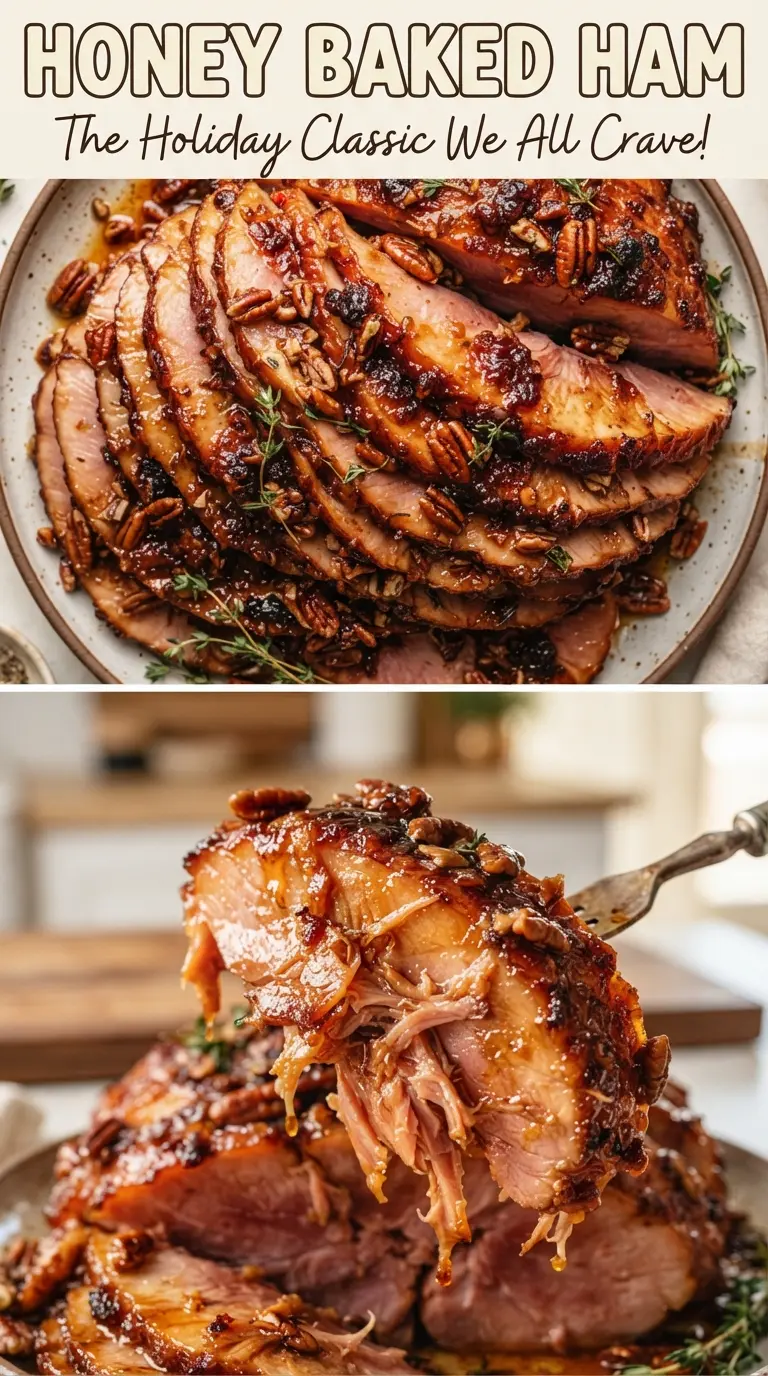
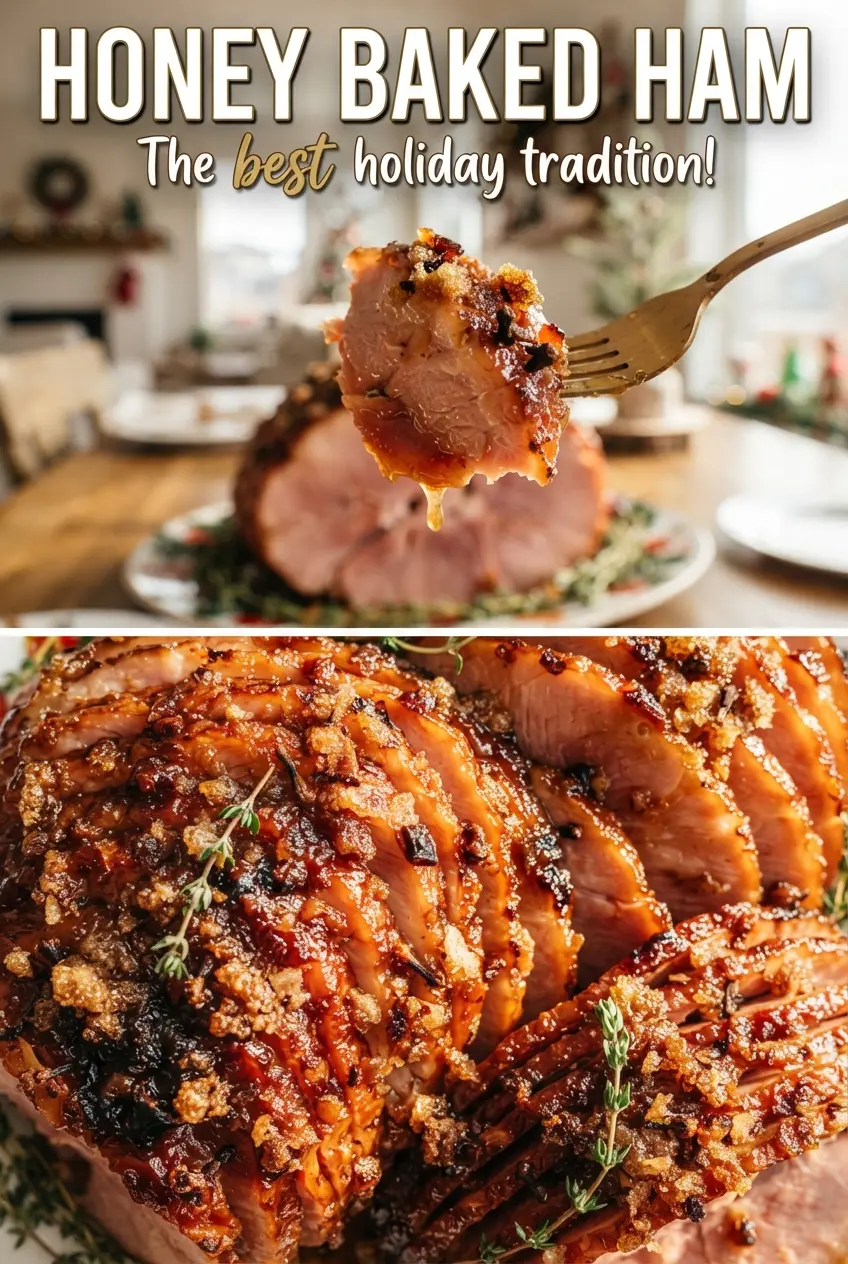
Honey baked ham comes out with a crackly, burnished crust that shatters a little when you slice through it, then gives way to tender, salty-sweet meat underneath. The glaze turns sticky at the edges and darkens just enough in the oven to taste like caramel without crossing into bitterness. It’s the kind of centerpiece that looks festive on the table and disappears faster than you expect.
This version works because the ham is already fully cooked, so the oven’s job is to warm it gently first and then build the crust at the end. The honey-butter mixture helps the sugar cling, while the brown sugar and spices create that classic glazed-ham flavor without needing a long simmer on the stove. Starting low protects the ham from drying out, and finishing hot gives you that signature lacquered finish.
Below, I’ve included the timing that keeps the meat juicy, the reason the crust needs multiple layers, and a few smart swaps if you want to adjust the spice level or make it work with what’s already in the pantry.
The glaze set up with that crackly crust I always want on ham, and the slices stayed juicy all the way through. I kept going back for the edges where the sugar caramelized best.
Save this honey baked ham for the holiday table — that caramelized sugar crust and juicy spiral-sliced center are what make it worth bookmarking.
The trick to keeping spiral ham juicy while the crust crisps
A spiral-sliced ham dries out fast if you blast it in the oven from the start. The first bake is all about gentle heat and patience, because the ham only needs to come up to temperature before the glaze goes on. If you skip the foil or rush the first stage, the outside overcooks long before the center is warm.
The crust builds in layers for a reason. Honey butter gives the sugar something to grab onto, and the repeated passes in the hot oven let each layer melt, cling, and caramelize instead of sliding off the ham in a wet sheet. That contrast between the sticky glaze and the dry, crackly finish is what makes this version stand out.
- Bone-in spiral-sliced ham — The bone helps protect the meat from drying out, and the pre-sliced shape lets the glaze seep into the cuts. A boneless ham will work, but it won’t have quite the same juicy texture or presentation.
- Honey and butter — This is the glue for the sugar and spice mixture. Don’t replace both with just honey; the butter mellows the sweetness and helps the glaze brush on evenly.
- Brown sugar plus granulated sugar — The brown sugar adds depth and a little molasses flavor, while the granulated sugar helps the crust set and crisp. You need both for that classic bakery-style finish.
- Warm spices — Cinnamon, cloves, ginger, nutmeg, and allspice build the familiar honey-baked flavor. If you only have cinnamon and cloves, the ham will still taste good, but it won’t have the same layered finish.
What Each Ingredient Is Actually Doing in This Recipe
- Primary ingredient (the star) — Quality matters most. Choose the best you can find.
- Cooking medium (oil, butter, or broth) — This carries flavors and prevents dryness.
- Seasonings (salt, pepper, spices, herbs) — Layer flavors so nothing overpowers. Build depth gradually.
- Aromatics (garlic, onion, herbs) — Cook with fat to bloom flavors. Become the foundation.
- Supporting ingredients — Complement the main ingredient without overpowering it.
- Sauce or liquid (if applicable) — Brings flavors together. Balance richness with acid.
- Acid (lemon, vinegar, wine, or other) — Brightens and prevents flat-tasting results.
- Final finish (garnish, glaze, or sauce) — Prevents one-dimensional taste and adds visual appeal.
Building the glaze in layers so it turns crackly, not runny
Heating the ham through first
Set the ham cut-side down in the roasting pan and cover it tightly with foil so the steam stays in the pan. Bake it at 325°F until the center reaches about 120°F. That gentle first stage warms the ham without stripping the juices, and it gives you a head start before the glaze goes on. If the foil is loose, the edges dry out before the middle is ready.
Mixing the sugary crust
While the ham bakes, melt the honey and butter together and stir the sugars with all the spices in a separate bowl. The mixture should look sandy and fragrant, not wet, so it can be patted onto the ham instead of sliding off. If the sugar clumps from leftover warmth in the butter, break it up with a fork before you start glazing.
Glazing and re-glazing
Remove the foil, brush the ham generously with the honey butter, then press on a layer of the spiced sugar. Raise the oven temperature to 400°F and bake for 5 minutes, then repeat the brushing and sugaring two more times. Those short bursts of heat are what build the crackly shell; if you try to pile on all the glaze at once, it melts into a sticky puddle instead of forming a crust.
Finishing at the right temperature
Keep baking until the crust is deep golden and the ham reaches 140°F. That final temperature matters because the ham is already cooked, and you’re just finishing it for serving. Pull it from the oven and let it rest for 15 minutes before slicing so the juices settle and the glaze sets enough to stay on the meat instead of running across the cutting board.
Three smart ways to adjust the glaze without losing the crust
Less-spiced glaze
Cut the cloves and allspice in half if you want a milder glaze. The ham will still caramelize beautifully, but the finish will taste more honey-forward and less holiday-spiced.
Maple variation
Swap half the honey for pure maple syrup if you want a deeper, woodsy sweetness. The glaze will brown a little faster, so watch the last rounds in the oven closely.
Gluten-free and dairy-free version
This recipe is naturally gluten-free if your ham is certified gluten-free, and you can swap the butter for a dairy-free baking stick or refined coconut oil. Butter gives the glossiest glaze, but the sugar crust still sets well without it.
Storage and Reheating
- Refrigerator: Store leftovers tightly wrapped or in airtight containers for up to 4 days. The crust softens in the fridge, but the flavor stays strong.
- Freezer: Ham freezes well for up to 2 months, especially sliced into portions and wrapped with a little of the glaze. Thaw overnight in the refrigerator before reheating.
- Reheating: Warm slices covered in a 300°F oven with a splash of water or pan juices until heated through. High heat dries out the edges fast, so keep the reheating gentle.
Answers to the questions worth asking before the ham goes in the oven
Honey Baked Ham
Ingredients
Equipment
Method
- Preheat oven to 325F. Place the ham cut-side down in a roasting pan and cover tightly with foil.
- Bake at 325F for 12-14 minutes per pound, until the center reaches 120F. Keep the foil on during this stage to prevent drying; use a thermometer to verify doneness.
- Melt honey and butter together in a small pan. Stir until smooth and glossy, then keep warm for brushing.
- Mix granulated sugar and brown sugar with the cinnamon, cloves, ginger, nutmeg, allspice, and paprika in a separate bowl. Stir until evenly speckled and fragrant.
- Remove the foil and brush the ham generously with the honey butter. Make sure glaze fills the spiral ridges for better crusting.
- Pat on a layer of the spiced sugar coating. Press lightly so the sugar adheres, then return to the oven.
- Raise oven temperature to 400F and bake for 5 minutes. Look for bubbling syrup at the edges and the beginning of a golden sheen.
- Brush with honey butter again and re-apply the spiced sugar coating. Use a generous but even layer so the next crust forms without bare spots.
- Bake again at 400F for 5 minutes. Continue watching for a deepening color and a crackly surface forming.
- Brush with honey butter and pat on another layer of the spiced sugar coating. Aim for full coverage so the final crust turns uniformly caramelized.
- Bake until the crust is deep golden and crackly and the ham reaches 140F. Check the temperature at the thickest part and stop as soon as it hits 140F to keep slices juicy.
- Rest the ham for 15 minutes before serving. Let the juices settle so the honey sugar crust stays crisp when sliced.