Honey mustard chicken thighs land in that sweet spot between weeknight-simple and the kind of dinner people notice when it comes out of the oven. The skin turns crisp at the edges, the glaze bubbles down into a sticky, caramelized coat, and the mustard keeps the whole dish from tipping into cloying sweetness. Bone-in, skin-on thighs are the right cut here because they stay juicy long enough for the glaze to darken properly without drying out.
The sauce works because it uses two kinds of mustard. Dijon gives the glaze backbone and sharpness, while whole grain mustard leaves little pops of texture that cling to the chicken as it bakes. A little lemon juice cuts through the honey, and the olive oil helps the glaze spread evenly instead of tightening up in the bowl. That balance matters more than people think; without it, honey mustard can go flat or burn before the chicken is done.
Below, I’m walking through the part that matters most: how to get the glaze deep and glossy without scorching it, plus a few ways to adjust the recipe if you need to change the mustard, the cut of chicken, or the timing.
The glaze thickened right in the oven and the skin got sticky and caramelized without turning bitter. I used the broiler for just a couple minutes at the end and it looked like something from a restaurant.
Keep these honey mustard chicken thighs handy for nights when you want crisp skin, a sticky glaze, and almost no cleanup.
The Glaze Needs Enough Structure to Survive the Oven
Honey is the ingredient most likely to cause trouble here. On its own, it browns fast and can burn before bone-in thighs finish cooking. Dijon and whole grain mustard change that by bringing acidity and bulk to the glaze, which helps it cling to the chicken and caramelize instead of turning thin and bitter.
The other thing that matters is the skin. Chicken thighs with skin on give you a built-in barrier that protects the meat while the top gets deeply colored. If you use boneless thighs, the timing drops, but you also lose some of that contrast between crisp edges and juicy meat. That’s the tradeoff.
- Bone-in, skin-on thighs — These hold up best in a hot oven and give you the most forgiving texture. Boneless thighs work, but pull them a few minutes earlier and watch the glaze closely because they cook faster and can over-reduce.
- Dijon mustard — This is the sharp, smooth backbone of the sauce. A coarse mustard alone won’t give the same tight, even glaze.
- Whole grain mustard — It adds texture and a deeper mustard bite. If you only have Dijon, use it for all of the mustard, but the sauce will be smoother and a little less interesting.
- Fresh thyme — Dried thyme can work in a pinch, but fresh thyme tastes cleaner and stays more present after baking. Use dried if needed, but reduce it to about one-third the amount.
What Each Part of the Sauce Is Doing
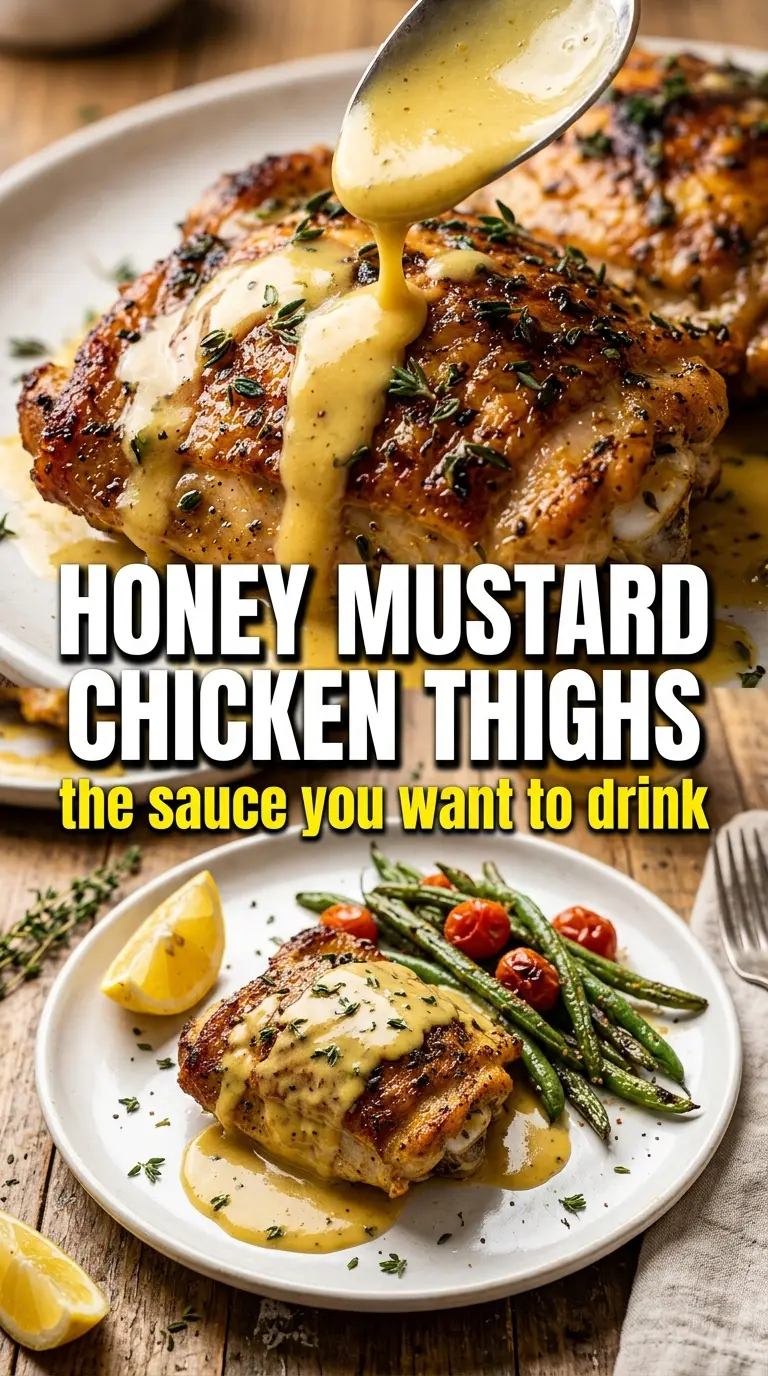
Honey sweetens and helps the top turn glossy and lacquered. It’s also the ingredient that can go too far, which is why the oven temperature is high and the chicken is watched near the end.
Olive oil loosens the mixture so it spreads over the chicken instead of sitting in thick clumps. Without it, the mustard can seize up a little and bake on unevenly.
Garlic and lemon juice keep the glaze from tasting one-note. The garlic softens in the oven, and the lemon sharpens the whole dish so the honey doesn’t dominate.
Fresh thyme perfumes the sauce and the garnish. If you chop the thyme finely, it blends in better; if you leave the leaves whole, they stay a little more visible on the finished chicken.
The Part Where the Glaze Turns Deeply Caramelized
Season the Chicken Before the Sauce Goes On
Salt and pepper on the chicken first give the meat its own seasoning underneath the glaze. If you skip that step, the sauce does all the work and the finished dish tastes flat in the middle. Pat the thighs dry before seasoning so the skin can brown instead of steaming. A dry surface is what gives you that crisp, blistered edge.
Whisk the Glaze Until It Looks Smooth and Loose
The sauce should look shiny and pourable, not stiff or pasty. If the honey is cold and thick, it helps to stir a minute longer so everything comes together evenly. Coat the chicken generously, then tuck any extra sauce around and over the top, because those drips in the baking dish turn into the best sticky bits.
Roast Hot and Let the Edges Darken
Bake at 425F until the glaze is deeply caramelized and the chicken reaches 165F at the thickest part. If the tops are browning too fast before the thighs are done, tent loosely with foil for the last few minutes. Most of the flavor comes from that final stretch in the oven, when the sauce bubbles and concentrates.
Use the Broiler for a Short Finish
Broil for 2 to 3 minutes at the end if you want a darker, stickier top. Stay close, because honey can go from glossy to burnt in a moment under direct heat. The right finish is a dark amber sheen with a few nearly-black edges, not a charred crust.
How to Adapt These Thighs Without Losing the Sticky Glaze
Make It Gluten-Free Without Changing the Method
This recipe is naturally gluten-free as written, as long as your mustard brand doesn’t include hidden thickeners or additives. Check the label on both mustards if you’re cooking for someone sensitive, but the technique stays exactly the same.
Swap in Boneless Thighs for a Faster Dinner
Boneless thighs work well, but they’ll finish sooner and won’t need the full roast time. Start checking a few minutes early, and pull them as soon as the center reaches temperature so the glaze doesn’t over-reduce.
Use Maple Instead of Honey
Maple syrup gives a deeper, woodsy sweetness and browns a little less aggressively than honey. The sauce will taste rounder and less sharp, so I’d keep the Dijon as written to balance it out.
Dairy-Free and Low-Carb Serving Ideas
The chicken itself is already dairy-free and low-carb; the part to watch is what you serve with it. Pair it with roasted vegetables, cauliflower mash, or a simple salad so the glaze stays the star instead of getting lost in a heavier side dish.
Storage and Reheating
- Refrigerator: Store leftovers in an airtight container for up to 4 days. The skin softens in the fridge, but the sauce stays flavorful.
- Freezer: It freezes well if you remove the chicken from the bone first or accept that the skin won’t stay crisp. Wrap tightly and freeze for up to 2 months.
- Reheating: Rewarm in a 350F oven, covered at first so the glaze doesn’t dry out, then uncover for the last few minutes. The biggest mistake is microwaving it too long, which makes the sauce separate and the chicken rubbery.
Questions I Get Asked About This Recipe

Honey Mustard Chicken Thighs
Ingredients
Equipment
Method
- Preheat oven to 425F. Season the chicken thighs with salt and pepper.
- Whisk Dijon mustard, honey, whole grain mustard, olive oil, garlic, lemon juice, and thyme together until smooth. The mixture should look thick and glossy.
- Coat the chicken thighs generously with the honey mustard mixture and place them in a baking dish. Make sure the glaze covers the skin side well.
- Bake for 30-35 minutes at 425F until the glaze is deeply caramelized and the chicken reaches 165F. The surface should be bronze-gold with slightly darkened edges.
- Broil for 2-3 minutes until the glaze gets extra caramelized. Watch closely to prevent burning.
- Garnish with fresh thyme and serve right away. Let it rest 3-5 minutes so juices settle.