Deep, brown, and spoon-tender, Scottish beef stew earns its place by turning a short list of sturdy ingredients into a pot that tastes like it simmered all afternoon. The barley gives the broth body without making it heavy, the turnip brings a clean earthy note, and the beef ends up soft enough to cut with the side of a spoon. It’s the kind of stew that settles in and gets better with every minute on the stove.
The trick is building flavor in layers. Browning the beef in batches leaves the good bits behind in the pan, and that fond becomes the base of the gravy once the ale goes in. Pearl barley is added late on purpose so it holds its shape instead of turning mushy, and the turnip joins with the carrots near the end so the vegetables keep some character instead of disappearing into the pot.
Below you’ll find the small details that matter most: how to keep the flour from clumping, when to expect the broth to thicken, and what to swap if you don’t have Scottish ale on hand.
The gravy turned out glossy and thick, and the barley stayed chewy instead of getting soft and bloated. I made it on a Sunday and it tasted even better the next day.
Love this Scottish beef stew with pearl barley and turnip? Save it to Pinterest for a thick, hearty pot that gets even better the next day.
The Browning Step That Gives This Stew Its Deep Color
The biggest mistake with beef stew is crowding the pan and rushing the sear. If the meat steams, the broth tastes flat later no matter how long it simmers. Brown the beef in batches and let each side pick up a dark crust before turning it; those browned bits are what turn the finished gravy from gray to rich brown.
The flour belongs on the beef before it hits the pan, not whisked in at the end. It helps the surface brown and gives the stew a little built-in thickness. If the flour looks pasty in the pot, the heat is too high or the pan is too crowded. Keep the pieces moving just enough to brown, not enough to cool the pan down.
What Each Ingredient Is Actually Doing In This Pot
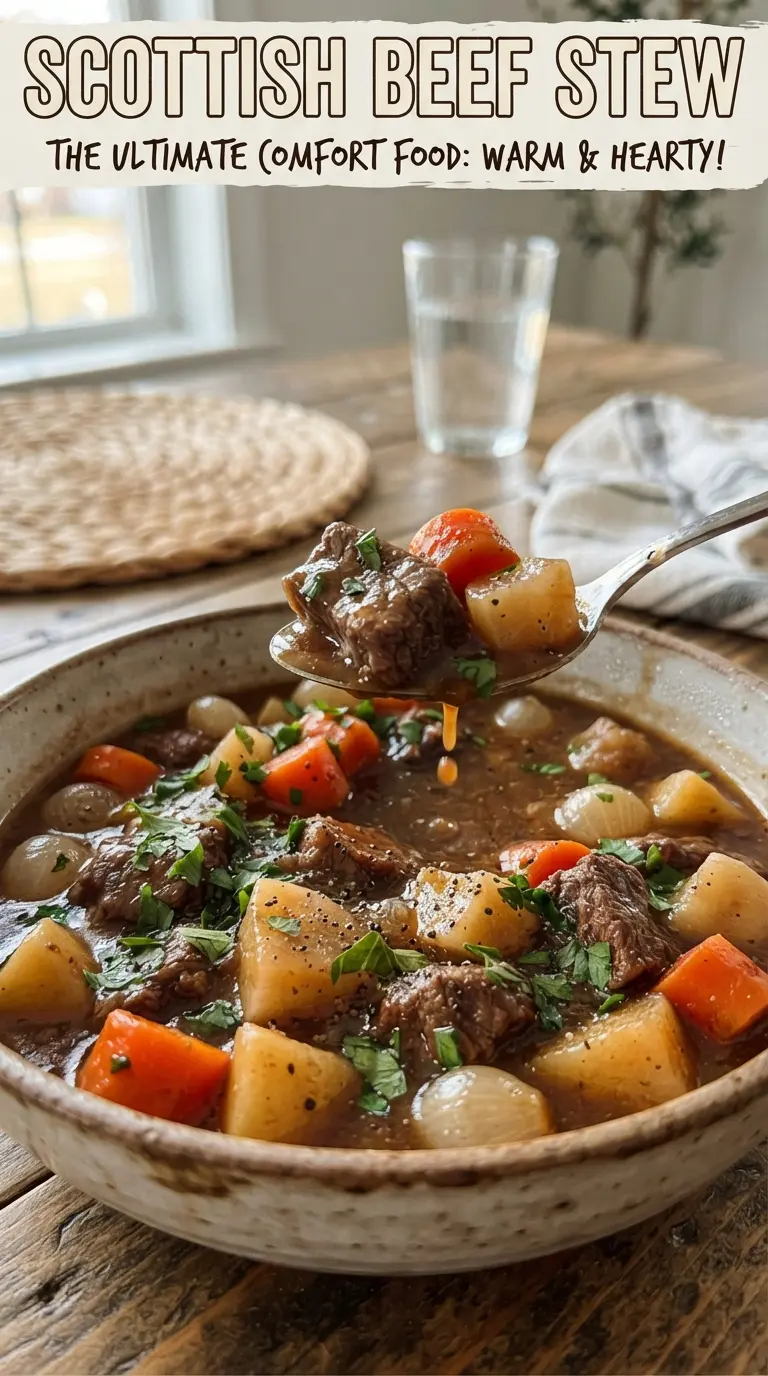
- Beef chuck — This cut needs time, but it pays you back with rich flavor and tender shreds. Leaner stew meat can work, but it won’t give you the same silky texture after the long simmer.
- Scottish ale — The ale adds maltiness and depth that plain broth can’t fully copy. If you skip it, use extra beef broth and a splash of balsamic or red wine vinegar to bring back some of the brightness.
- Pearl barley — This is what makes the stew feel distinctly Scottish. Add it late so it stays pleasantly chewy; if it goes in from the start, it can break down and steal too much liquid.
- Turnip or swede — This brings a gentle earthy bite that balances the beef. Swede is a little sweeter and softer, while turnip stays sharper and more rustic.
- Leeks and onions — Together they build a sweeter, rounder base than onions alone. Slice the leeks cleanly and rinse them well; grit trapped between the layers will end up in the pot if you rush this part.
Building the Pot So the Barley Stays Chewy and the Beef Goes Tender
Season and Sear the Beef First
Toss the beef with salt, pepper, and flour before browning so the surface can develop color and the stew has a little body later. Use butter and oil together: butter for flavor, oil so the pan doesn’t scorch. If the cubes are packed in too tightly, they’ll release liquid and gray out instead of browning, so work in batches and leave space between pieces.
Soften the Aromatics Without Coloring Them Hard
Once the beef comes out, cook the onions and leeks until they’re soft and fragrant. You’re looking for translucent edges and a sweet smell, not deep browning. If the bottom of the pot looks dark, that’s fine as long as it’s not burnt; the ale will loosen those browned bits and pull them back into the stew.
Deglaze, Then Let the Simmer Do the Work
Pour in the ale and scrape the bottom right away. The liquid should sizzle and lift the stuck-on bits, turning the pot base into the start of the gravy. Add the broth, Worcestershire, thyme, and beef, then keep the simmer low and steady. A hard boil tightens the meat instead of relaxing it, and it can make the broth greasy and cloudy.
Add the Barley and Vegetables Late
The barley, turnip, and carrots go in after the beef has already had time to soften. That timing keeps the barley chewy and the vegetables intact instead of faded and overcooked. Simmer until the barley is tender and the beef pulls apart easily; if the pot looks a little loose at first, give it a few minutes off the heat because barley keeps absorbing liquid even after the burner goes off.
How to Adapt This Scottish Beef Stew Without Losing Its Character
Gluten-Free Version
Skip the flour and brown the beef plain, then thicken the stew at the end with a small cornstarch slurry if you want a thicker gravy. Use a gluten-free ale or replace it with extra broth, since regular ale will no longer fit the diet. The stew still tastes hearty, but the body will be a touch lighter.
No Ale, Still Deep and Savory
Use extra beef broth in place of the ale and add a teaspoon of balsamic vinegar or a small splash of red wine vinegar near the end. That replaces some of the malt brightness the ale would normally bring. The flavor will be a little cleaner and less rounded, but still fully satisfying.
Make It Even Heartier
Add a handful of parsnips or another half cup of barley if you want a thicker, more filling bowl. Just keep an eye on the liquid level, because both barley and extra roots keep drinking broth as they cook. If it starts looking dry before the beef is tender, add broth in small splashes rather than all at once.
Storage and Reheating
- Refrigerator: Store for up to 4 days. The barley will keep absorbing broth, so the stew thickens as it sits.
- Freezer: It freezes well for up to 3 months. Cool it completely first, and leave a little room in the container because the liquid expands.
- Reheating: Reheat gently on the stove over low heat with a splash of broth or water. A hard boil can make the beef stringy and push the barley past its best texture.
Answers to the Questions Worth Asking
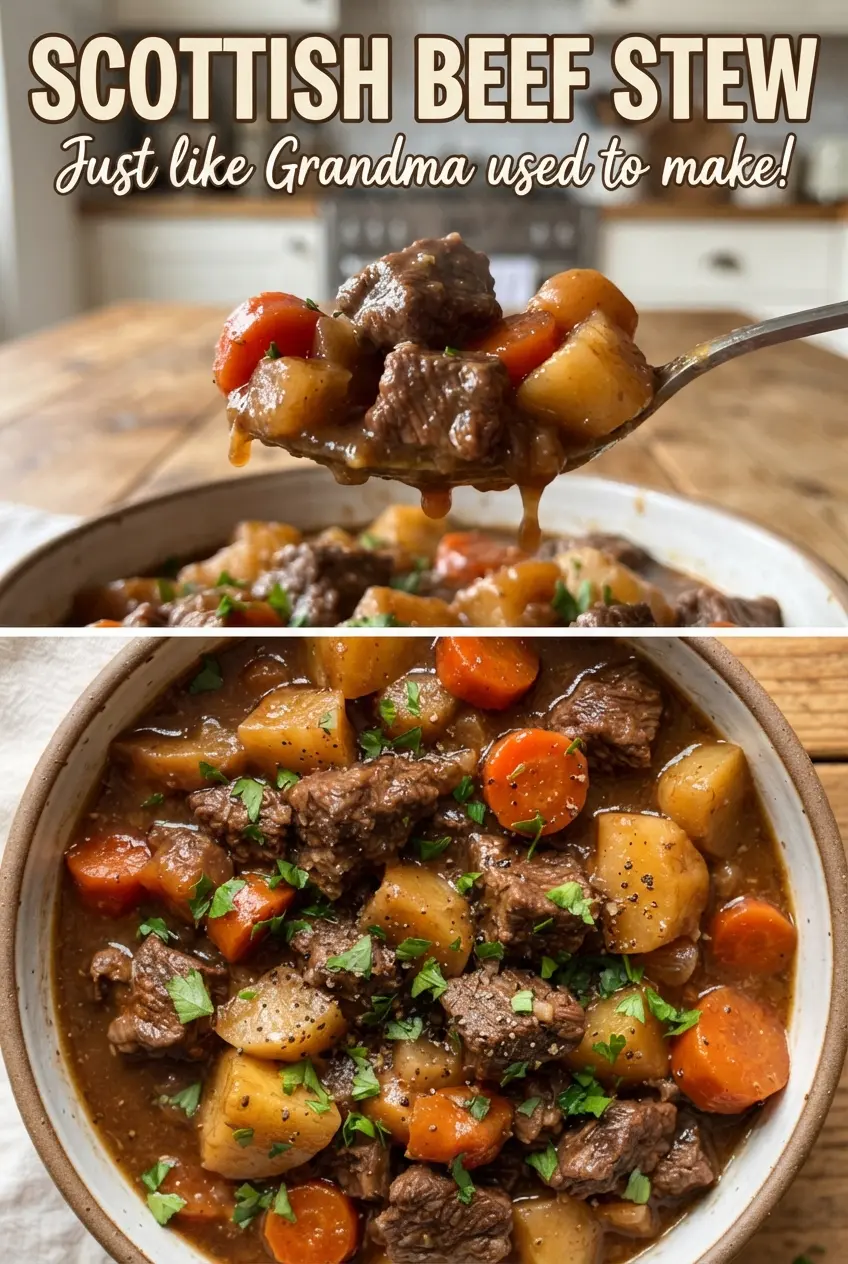
Scottish Beef Stew
Ingredients
Equipment
Method
- Season the beef cubes with salt and black pepper, then toss with the flour until evenly coated.
- Heat butter and vegetable oil in a Dutch oven, then brown the beef in batches over medium-high heat until deeply golden, turning as needed to color all sides.
- Add the chopped onions and sliced leeks to the same Dutch oven and cook for 6 minutes, stirring, until soft.
- Pour in the Scottish ale (or extra beef broth) and scrape up the browned bits from the bottom of the pot.
- Add the beef broth, Worcestershire sauce, and dried thyme, then return the browned beef to the pot.
- Bring to a gentle simmer, cover, and simmer for 1 1/2 hours, stirring occasionally so nothing sticks to the bottom.
- Stir in the rinsed pearl barley, cubed turnip (or swede), and sliced carrots.
- Simmer uncovered or partially covered for 45-60 minutes, until the barley and beef are tender and the gravy has thickened.
- Taste and season to adjust, then top with chopped fresh parsley before serving.