Pico de gallo should taste crisp, bright, and clean, with tomatoes that hold their shape instead of collapsing into juice. The best bowls have a little bite from the onion, a steady lime tang, and just enough jalapeño heat to wake everything up without burying the tomato flavor. When it’s made well, it disappears fast because every scoop tastes fresh.
What separates a good pico from a watery one is how you handle the tomatoes and the resting time. Roma tomatoes are the right choice here because they’re meatier and less juicy than many other varieties, and removing some of the seeds keeps the bowl from turning soupy. The short rest after mixing matters, too. It gives the salt time to pull the flavors together without breaking down the vegetables too early.
Below, you’ll find the little details that keep this salsa crisp, the ingredient swaps that still make sense, and the questions that come up most often when people make pico de gallo at home.
I let it sit the full 15 minutes and the lime pulled everything together without making it watery. The tomatoes stayed chunky, and it was perfect on scrambled eggs the next morning.
Save this pico de gallo for taco night, eggs, or chips when you want a bright, chunky salsa that stays fresh.
Why This Pico Stays Chunky Instead of Turning Watery
The biggest mistake with pico de gallo is treating the tomatoes like they’re just there to be chopped. Roma tomatoes give you less juice and a firmer bite, which matters because this salsa has no cooked base to soak up extra liquid. Once the tomatoes are diced, a quick drain of the seedier center keeps the bowl from thinning out after it sits.
Salt also does more than season here. It draws out moisture, which is why the 15-minute rest is built into the recipe instead of treated like an optional pause. If you serve it immediately, it still tastes fresh, but the flavors haven’t had time to settle into each other yet. If you let it sit much longer than a few hours, the tomatoes soften and the texture starts to lose that clean crunch.
What Each Ingredient Is Doing in the Bowl
- Roma tomatoes — These are the backbone of the salsa. They’re firmer and less watery than many slicing tomatoes, so the finished pico stays scoopable instead of sliding into a puddle. If you have to use another tomato, seed it well and expect a softer result.
- White onion — White onion brings sharpness and crunch without making the salsa taste sweet. Red onion can work in a pinch, but it shifts the flavor and color. Dice it finely so the bite is spread through the bowl instead of hitting in big chunks.
- Jalapeños — This is where the heat lives. For a milder pico, remove the seeds and white ribs before mincing; for more bite, leave some of the ribs in. Fresh jalapeños matter here because pickled peppers change the whole flavor.
- Cilantro — Cilantro gives the salsa its fresh finish and ties the lime and tomato together. If you leave it out, the pico still works, but it tastes flatter and less lifted. Chop it just before mixing so it keeps its bright aroma.
- Fresh lime juice — Bottled lime juice tastes dull and slightly bitter compared with fresh. The acidity sharpens the tomatoes and helps the onion and cilantro taste cleaner. Add it right before the rest so it can coat everything evenly.
The 15 Minutes That Make the Flavor Come Together
Start with the Tomatoes, Not the Seasoning
Put the diced tomatoes in the bowl first and let them sit while you chop the rest. If they’re especially juicy, tip the bowl and spoon off a little of the liquid before adding anything else. That one move keeps the final salsa from turning soupy after the salt hits it.
Keep the Cuts Small and Even
Finely dice the onion and mince the jalapeños so every bite has a little of everything. Big, uneven pieces throw off the texture and make the heat feel random instead of balanced. You want the salsa to look rustic, not rough.
Mix Gently, Then Walk Away
Once the lime, salt, and pepper are in, fold everything together with a light hand. Hard stirring breaks the tomatoes and speeds up the watery stage. Letting it rest for 15 minutes gives the salt time to season the vegetables from the inside out while the lime rounds off the sharp onion bite.
Serve It Cold and Crisp
Pico de gallo tastes best soon after the rest, while the tomatoes are still firm and the cilantro is bright. If it sits in the fridge, give it a quick stir and drain off any extra liquid before serving. That keeps the texture lively instead of muddy.
How to Adjust Pico de Gallo Without Losing the Fresh Crunch
Milder Pico for Heat-Sensitive Eaters
Use one jalapeño instead of two and remove every seed and rib. You’ll still get the green pepper flavor, but the heat will stay in the background. If you want it even gentler, swap one jalapeño for finely diced green bell pepper, which keeps the crunch without adding spice.
Cilantro-Free Version
Leave the cilantro out and add a little extra onion and lime to keep the salsa lively. The result is still fresh, but it loses that classic herbal note that makes pico taste unmistakably Mexican-style. This version works well for anyone who doesn’t like cilantro’s flavor.
Low-Sodium Adjustment
Cut the salt back to 1/2 teaspoon and let the pico sit a little longer before tasting. The lime and onion still need time to meld, and the flavor will seem flatter at first than it does after resting. If it tastes shy after 15 minutes, add the remaining salt a pinch at a time.
How to Make It Ahead
You can chop the vegetables a few hours ahead and keep them separate in the fridge, then add lime and salt just before serving. That preserves the crisp texture better than mixing everything too early. Once dressed, pico is best the same day.
Storage and Reheating
- Refrigerator: Store in an airtight container for up to 2 days. The tomatoes will soften and release more juice as it sits.
- Freezer: Don’t freeze pico de gallo. The tomatoes and onion turn mushy when thawed, and the fresh texture is gone.
- Reheating: There’s no reheating needed. If the salsa has pooled liquid after chilling, drain off the excess and stir before serving.
Questions I Get Asked About This Recipe
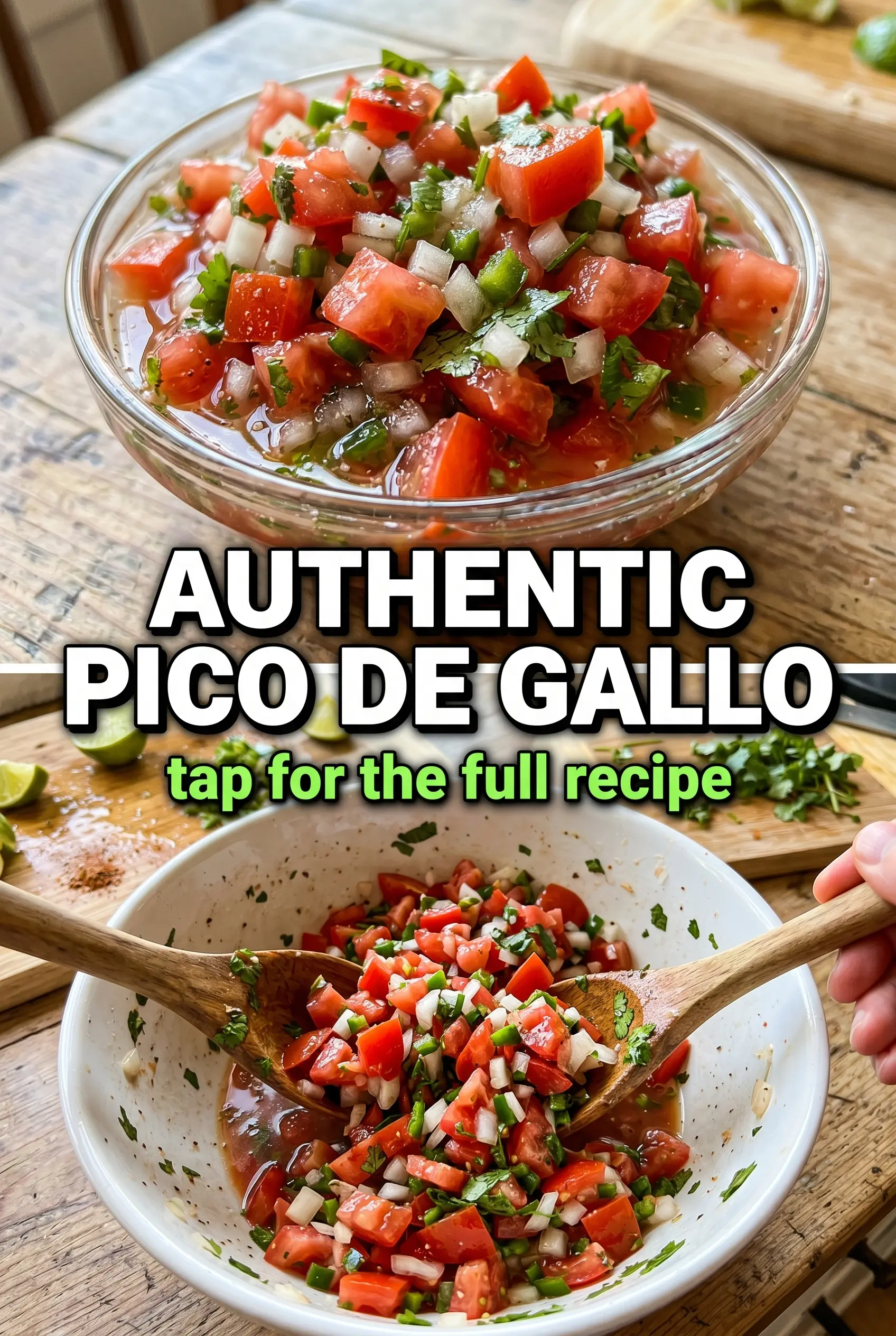
Authentic Pico de Gallo
Ingredients
Method
- Dice Roma tomatoes, removing excess seeds and juice, then place them in a bowl. Aim for small, even pieces so the salsa stays chunky, not watery.
- Finely dice white onion and add it to the tomatoes in the bowl. Keep the pieces bite-sized for a crisp texture.
- Mince jalapeños and cilantro, then add them to the bowl. Spread them through the tomatoes so each scoop has green flecks and heat.
- Squeeze lime juice over the mixture and sprinkle with salt and black pepper. Toss lightly as you season so the juices start coating the tomatoes.
- Gently toss all ingredients together. Avoid aggressive stirring to keep the tomato pieces intact.
- Let the salsa sit for at least 15 minutes before serving to allow flavors to meld. Keep it at cool room temperature or refrigerate if your kitchen is warm.