Campfire cinnamon roll ups on a stick hit that sweet spot between nostalgic and practical: warm, golden dough with a crackly cinnamon-sugar shell and a soft center that pulls apart in steamy layers. They taste like a campsite version of a bakery treat, and they disappear fast because everyone wants the one that’s still warm enough for the glaze to slide down the sides.
The trick is using refrigerated breadstick dough and keeping the spiral snug but not tight as it roasts. That shape gives the dough enough structure to cook through before the outside burns, and the constant turning matters more than the flame size. Butter helps the sugar cling and browns the surface, while a quick drizzle of glaze at the end gives you that classic cinnamon roll finish without needing an oven.
Below, I’ll walk through the little details that keep these from tearing on the stick or going doughy in the middle, plus a few easy swaps if you only have biscuit dough or want to make them back-to-back for a crowd.
The dough cooked all the way through and the cinnamon sugar formed this crisp little shell on the outside. I rotated it the whole time over low flames, and the glaze on top made it taste like a real cinnamon roll from a bakery.
These campfire cinnamon roll ups on a stick are all about that golden spiral and warm glaze—save them for your next fire night when you want dessert without hauling extra gear.
The Part That Keeps the Dough Cooked, Not Charred
The biggest mistake with campfire desserts is putting them too close to open flame and hoping they brown before they burn. These need steady heat, not a blast of fire. Keep the stick moving the whole time so the sugar doesn’t scorch on one side while the center stays raw. If the outside is darkening too fast, lift it higher over the coals and keep rotating. The dough should feel firm to the touch and sound a little hollow when tapped with a utensil or another stick.
The spiral also matters more than it looks. A tight wrap traps raw dough in the center, while a loose spiral leaves gaps that cook unevenly. Aim for even spacing and an end tucked under itself so the roll-up stays put while you turn it. That gives you a crisp exterior and a soft, cooked-through middle instead of a burnt tube with a doughy seam.
What Each Ingredient Is Actually Doing in the Fire
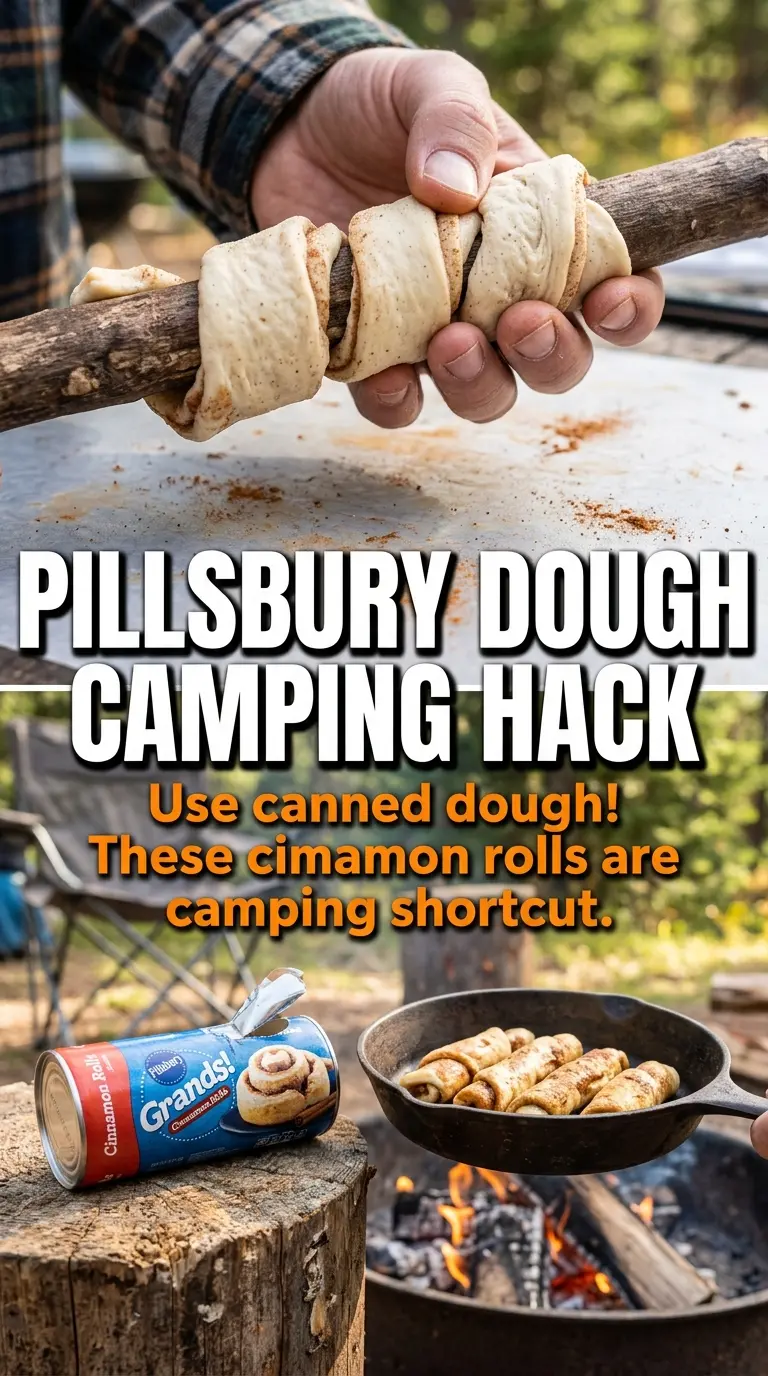
- Refrigerated breadstick dough — This is the best choice because it stretches into a long spiral and cooks more evenly than a thick biscuit would. Biscuit dough works in a pinch, but it tends to puff and crack more, so the shape is a little messier. If you use biscuit dough, flatten each piece slightly before wrapping so the middle doesn’t stay raw.
- Melted butter — Butter gives the cinnamon sugar something to stick to and helps the outside brown instead of drying out. You can brush it on generously here; this isn’t the place to be shy. If you want a dairy-free version, melted coconut oil works, though the flavor is less rich and a little cleaner tasting.
- Cinnamon sugar — A pre-mixed blend is fine, but a fresh mix of cinnamon and sugar tastes brighter and clings better if the sugar is fine-grained. If your mixture is too heavy on cinnamon, it can turn bitter over the fire, so keep it balanced and use enough to coat, not bury, the dough.
- Roasting sticks — Long metal or properly cleaned wooden roasting sticks keep you farther from the heat and make rotating easier. If you’re using wooden sticks, soak them first so the exposed ends don’t scorch. The dough should sit on the metal or the thickest part of the wood, not right at the tip where it can slip.
- Powdered sugar and milk — This glaze is intentionally thin so it drips into the warm crevices instead of sitting on top like frosting. Add the milk a little at a time until it runs off a spoon in a ribbon. If it gets too thin, stir in a little more powdered sugar; if it’s too thick, it won’t melt into the hot roll ups.
Turning the Stick Often Is the Whole Trick
Wrapping the Dough
Separate the dough into individual pieces and stretch each one just enough to make a longer strip, then spiral it around the end of the stick. The key is gentle tension, not stretching it thin. If you pull too hard, the dough tears and opens up while it cooks. Tuck the end under the last wrap so it grips the stick instead of unraveling the minute it hits the heat.
Butter and Cinnamon Sugar
Brush on the melted butter while the dough is still cool and smooth, then sprinkle the cinnamon sugar over every exposed surface. The butter should look glossy, not pooled, because too much will drip into the fire and flare up. A light, even coating gives you a caramelized crust; a heavy one can blacken before the center cooks.
Roasting Over the Fire
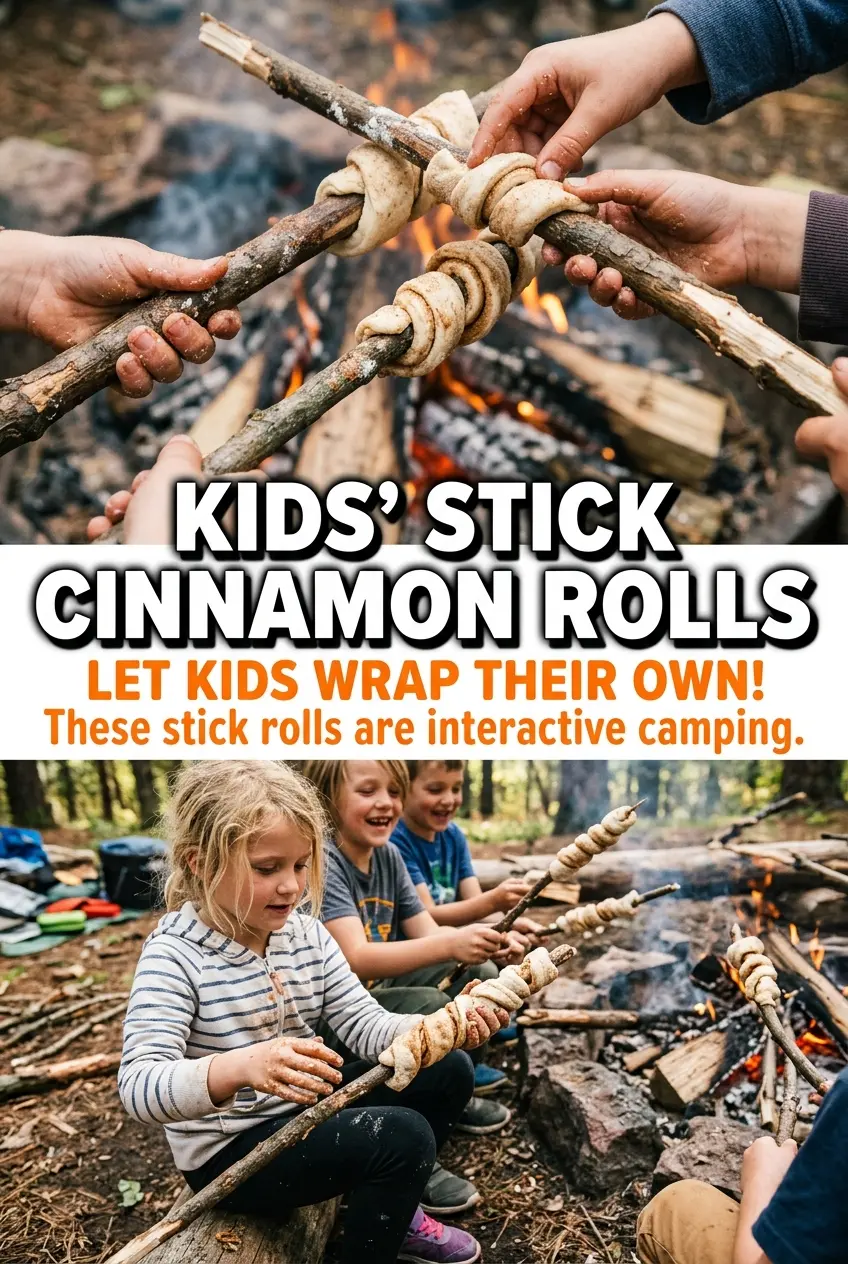
Hold the stick over glowing coals or a low, steady flame and turn it every few seconds. You’re watching for deep golden color, a little blistering on the outside, and a firm feel when you gently press the dough. If the fire is aggressive, lift the stick higher. If the outside is done before the middle, the heat was too high from the start.
Finishing with Glaze
Let the roll ups cool for about 2 minutes before glazing so the sugar doesn’t melt off completely. Mix the powdered sugar and milk until it’s smooth and pourable, then drizzle it over while the dough is still warm. That warmth helps the glaze sink into the ridges instead of sitting in a puddle on top.
Add a little orange zest to the glaze
A small pinch of orange zest makes the glaze taste brighter and cuts through the buttery dough. It’s a good move if you want the roll ups to lean a little more bakery-style and a little less straight sugar.
Use biscuit dough for a more rustic texture
Biscuit dough gives you a softer, more bread-like center and a puffier finished shape. It won’t spiral as neatly as breadstick dough, so expect a slightly more open, craggy look once it roasts.
Make them dairy-free
Swap the butter for melted coconut oil or a plant-based butter and use a dairy-free milk in the glaze. You’ll still get a crisp sugar coating, though the finished flavor will be a little lighter and less rich.
Skip the glaze and finish with extra cinnamon sugar
If you want a less sticky camp dessert, stop at the butter and cinnamon sugar. The roll ups still taste complete, and the outside will have a drier, crunchier finish that’s easier to eat outdoors.
Storage and Reheating
- Refrigerator: Store leftover roll ups in an airtight container for up to 2 days. The sugar coating softens as they sit, so they’re best eaten the same day.
- Freezer: Freezing isn’t a great fit here because the glaze and cooked dough both change texture after thawing. If you need to prep ahead, mix the cinnamon sugar and glaze ingredients separately instead.
- Reheating: Warm them in a low oven or air fryer for a few minutes until heated through. Don’t microwave them unless you’re fine with a soft, slightly soggy outside.
Answers to the Questions Worth Asking
Campfire Cinnamon Roll Ups On A Stick
Ingredients
Method
- Separate the refrigerated breadstick dough into individual pieces. Keep pieces ready so you can wrap them quickly around the stick ends.
- Wrap each dough piece around the end of a roasting stick in a spiral pattern. Press lightly so the dough adheres as it roasts.
- Brush the dough with melted butter and sprinkle with cinnamon sugar. Make sure every spiral gets a light, even coating.
- Hold the sticks over the campfire and rotate constantly for 8-10 minutes until golden brown and cooked through. Keep the dough moving so it browns evenly without scorching.
- Slide the roll ups off the stick and let them cool for 2 minutes. This short rest helps the dough set before glazing.
- Mix powdered sugar and milk until smooth for the glaze, then drizzle over the warm roll ups. Use the glaze immediately so it stays fluid and ribbons over the surface.